1900s (20th Century) Maps of Bernardino, Arizona
Explore 11 historic maps of Bernardino from the 1900s (20th Century). These maps offer a rare glimpse into what life looked like during the 1900s — showing old roads, neighborhoods, homes, and landmarks that have changed or disappeared over time.
Whether you're researching your family's past, planning a metal detecting trip, or studying how Bernardino's landscape evolved across the 1900s, these high-resolution maps are a powerful tool for exploring the history of this region.
- Focus on a specific era: All maps on this page are from the 1900s, giving you a focused view of this time period.
- See what’s changed: Compare century-old streets, trails, and buildings to today's modern landscape using overlays and satellite layers.
- Research with precision: Use these maps for genealogy, historical research, land use analysis, or educational projects.
- View, download, or print: Maps are fully viewable online in high resolution, and can be downloaded or printed for your own records.
Start exploring Bernardino's history through authentic maps from the 1900s. This is your window into the past.
Bernardino, AZ maps
(11)- 1917 Map of Chiricahua, 1954 Print
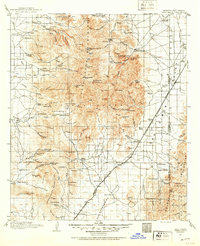 1917 Chiricahua1954 Print · USGSSoutheastern Arizona and the New Mexico borderlands are shown here during a period of mining expansion and cattle ranching. Genealogists can locate family homesteads like Staffords Ranch or trace remote outposts like Paradise and the Hilltop Mine.
 - 1919 Map of Chiricahua
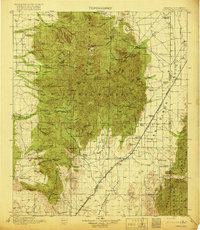 1919 Chiricahua1919 Print · USGSSoutheastern Arizona ranching and mining operations are captured here during the late nineteen-teens. Genealogists can trace family homesteads like Staffords Ranch and Hampe Ranch alongside the Hilltop Mine and several rural schoolhouses.3 unique versions available
 - 1926 Map of Pedregosa
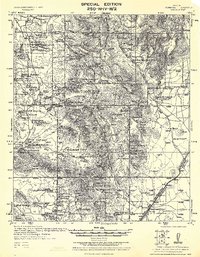 1926 Pedregosa1926 Print · USGSCochise County ranching life during the mid-twenties centers on a network of remote homesteads and critical water infrastructure. Family historians can trace ancestral lands like the High Lonesome Ranch and locate vanished local landmarks including the Rucker P O and Hunt Canyon School.
 - 1955 Map of Douglas
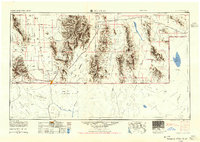 1955 Douglas1955 Print · USGSThe Arizona and New Mexico borderlands come into focus in the mid-1950s, highlighting the mining and ranching hubs of the Desert Southwest. Genealogists and historians can trace the foundations of Bisbee, the operations at Hachita Mine, and rural landmarks like the Double Adobe School.2 unique versions available
 - 1958 Map of Pedregosa Mountains, 1959 Print
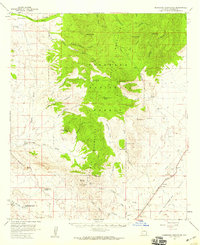 1958 Pedregosa Mountains1959 Print · USGSSoutheastern Arizona's high desert reveals its ranching and railroad history in the late fifties. Researchers can trace family-named homesteads like the OK Ranch and Castle Dome Ranch or locate the Rucker Cemetery along the Southern Pacific rail line.2 unique versions available
 - 1959 Map of Douglas, 1968 Print
 1959 Douglas1968 Print · USGSSoutheast Arizona and southwest New Mexico meet at the border in the late fifties, showcasing a high-desert landscape defined by industrial copper mining and ranching. Genealogists and historians can trace the foundations of Bisbee, locate the Lavender Pit, and follow the Southern Pacific line through Douglas.4 unique versions available
 - 1961 Map of Douglas
 1961 Douglas1961 Print · USGSThe Arizona-Mexico borderlands come into focus at mid-century, detailing the vital mining and ranching hubs of Cochise County and southwest New Mexico. Genealogists and historians can trace the Southern Pacific Railroad through Bisbee and Douglas, or locate early sites like the Old Hachita Mine and Rucker School.
 - 1964 Map of Douglas
 1964 Douglas1964 Print · USGSThe Arizona-New Mexico borderlands in the early sixties reveal a landscape of deep-rooted copper mining and high-desert ranching. Genealogists and researchers can trace the legacy of settlements like Pirtleville, the industrial site of the Copper Smelter, and remnants of the Cochise Mines.
 - 1986 Map of Pedregosa Mountains East
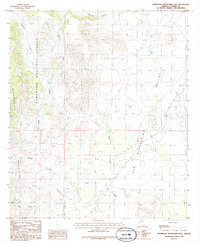 1986 Pedregosa Mountains East1986 Print · USGSCochise County’s high-desert landscape is captured here in the mid-1980s, where the western peaks meet the valley floor. Researchers can trace land use through features like the Cinder Pit, Danger Wash, and the boundaries of the Coronado National Forest.
 - 1994 Map of Chiricahua Peak
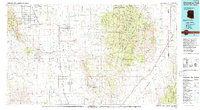 1994 Chiricahua Peak1994 Print · USGSSoutheast Arizona in the mid-nineties shows a land of high sky islands and broad cattle valleys transitioning into New Mexico. Trace the legacy of old mining camps and railroad stops from Pearce and Gleeson to the canyons of the Chiricahua Mountains.2 unique versions available
 - 1996 Map of Pedregosa Mountains East, 2003 Print
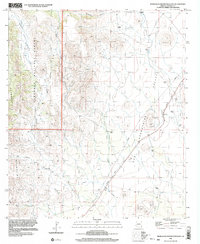 1996 Pedregosa Mountains East2003 Print · USGSCochise County’s high desert landscape is recorded here in the mid-1990s, where the foothills of the Pedregosa Mountains meet the basin floor. You can trace the path of the Old Railroad Grade and locate scattered water sources like the many Water Tanks across the San Bernardino Valley.
End of results
Showing maps 1-11 of 11
Top cities near Bernardino
Frequently asked questions
- What are the different types of historical maps available for Bernardino?
- What is the oldest map of Bernardino?
- Where can I purchase historical maps of Bernardino for my home or office?
- Where can I download high-res historical maps of Bernardino?
- Are there historical topographic maps available for Bernardino?
- Is there historical aerial imagery available for Bernardino?
- Where are historical maps of Bernardino sourced from?