1900s (20th Century) Maps of Supai, Arizona
Explore 7 historic maps of Supai from the 1900s (20th Century). These maps offer a rare glimpse into what life looked like during the 1900s — showing old roads, neighborhoods, homes, and landmarks that have changed or disappeared over time.
Whether you're researching your family's past, planning a metal detecting trip, or studying how Supai's landscape evolved across the 1900s, these high-resolution maps are a powerful tool for exploring the history of this region.
- Focus on a specific era: All maps on this page are from the 1900s, giving you a focused view of this time period.
- See what’s changed: Compare century-old streets, trails, and buildings to today's modern landscape using overlays and satellite layers.
- Research with precision: Use these maps for genealogy, historical research, land use analysis, or educational projects.
- View, download, or print: Maps are fully viewable online in high resolution, and can be downloaded or printed for your own records.
Start exploring Supai's history through authentic maps from the 1900s. This is your window into the past.
Supai, AZ maps
(7)- 1953 Map of Grand Canyon, 1967 Print
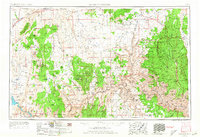 1953 Grand Canyon1967 Print · USGSArizona's northern frontier is captured here in the mid-twentieth century, from the high plateaus to the desert basins. Trace early routes like Arizona 67, explore the isolated Moccasin settlement, or locate early landmarks such as Mount Trumbull.3 unique versions available
 - 1957 Map of Grand Canyon
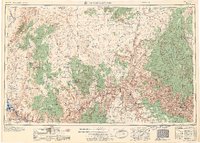 1957 Grand Canyon1957 Print · USGSNorthern Arizona in the mid-fifties presents a sparsely settled expanse of high plateaus and ranching outposts surrounding the great canyon. Genealogists and historians can trace family land at Diamond Butte Ranch, locate the Moccasin settlement, or study the magnesium works at Black Diamond Mine.
 - 1958 Map of Grand Canyon
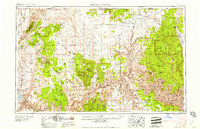 1958 Grand Canyon1958 Print · USGSNorthern Arizona in the late fifties was a landscape of remote cattle ranches and timber operations spanning from the Virgin Mountains to the Kaibab Forest. Researchers can locate family outposts like Bundy Ranch, trace the Temple Trail, or find the Parashant Lumber Mill.
 - 1960 Map of Grand Canyon
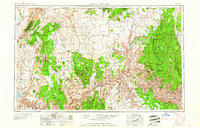 1960 Grand Canyon1960 Print · USGSThe Arizona strip and the Colorado River corridor appear in the 1950s as a vast network of isolated plateaus and remote outposts. Researchers can trace historic ranching and tribal lands including Supai, the Kaibab Indian Reservation, and the Mt Trumbull Post Office.
 - 1962 Map of Supai, 1964 Print
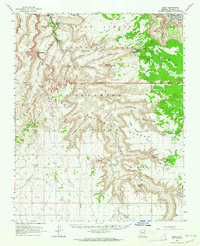 1962 Supai1964 Print · USGSSupai and the Havasupai reservation are captured here in the early sixties, showing the isolated canyon floor and its iconic waterfalls. Researchers can trace the traditional trails and water sources that sustained this community, from Havasu Falls and Wigleeva to the remote Topocoba Hilltop.2 unique versions available
 - 1984 Map of Grand Canyon
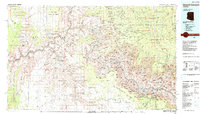 1984 Grand Canyon1984 Print · USGSThe Grand Canyon and surrounding plateaus are mapped here in the mid-1980s, detailing a complex landscape of tribal lands and national park boundaries. Trace historic routes like the Bright Angel Trail or locate remote sites such as Supai and the Orphan Mine.2 unique versions available
 - 1988 Map of Supai
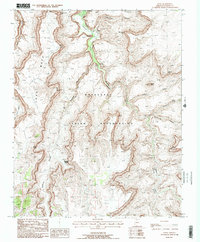 1988 Supai1988 Print · USGSSupai and the surrounding canyonlands appear here in the late eighties, documenting the remote reach of the Havasupai Indian Reservation. Researchers can trace the steep descent of the Lee Pack Trail past landmarks like Havasu Falls and Hualapai Hilltop.2 unique versions available
End of results
Showing maps 1-7 of 7
Top neighborhoods of Supai
Frequently asked questions
- What are the different types of historical maps available for Supai?
- What is the oldest map of Supai?
- Where can I purchase historical maps of Supai for my home or office?
- Where can I download high-res historical maps of Supai?
- Are there historical topographic maps available for Supai?
- Is there historical aerial imagery available for Supai?
- Where are historical maps of Supai sourced from?