1900s (20th Century) Maps of Robles Junction, Arizona
Explore 12 historic maps of Robles Junction from the 1900s (20th Century). These maps offer a rare glimpse into what life looked like during the 1900s — showing old roads, neighborhoods, homes, and landmarks that have changed or disappeared over time.
Whether you're researching your family's past, planning a metal detecting trip, or studying how Robles Junction's landscape evolved across the 1900s, these high-resolution maps are a powerful tool for exploring the history of this region.
- Focus on a specific era: All maps on this page are from the 1900s, giving you a focused view of this time period.
- See what’s changed: Compare century-old streets, trails, and buildings to today's modern landscape using overlays and satellite layers.
- Research with precision: Use these maps for genealogy, historical research, land use analysis, or educational projects.
- View, download, or print: Maps are fully viewable online in high resolution, and can be downloaded or printed for your own records.
Start exploring Robles Junction's history through authentic maps from the 1900s. This is your window into the past.
Robles Junction, AZ maps
(12)- 1934 Map of Tucson Mountains
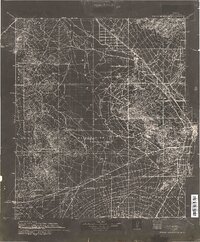 1934 Tucson Mountains1934 Print · USGSThe desert northwest of Tucson comes into focus during the mid-1930s, showing the early footprints of the Papago Indian Reservation and the railroad corridor. Genealogists and historians can trace family-named sites and ranching outposts like Maisi Ayra Ranch, Rodriguez, and the Maish Roadside Mine.
 - 1941 Map of Cocoraque Butte, 1942 Print
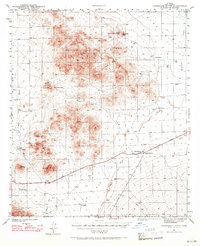 1941 Cocoraque Butte1942 Print · USGSPima County ranching and reservation life are captured here in the early 1940s, just as the local road network began to stabilize. Researchers can trace historic property boundaries and desert outposts like Cocoraque Ranch, Robles Junction, and the indigenous settlement of Viopuli.2 unique versions available
 - 1943 Map of Cocoraque Butte
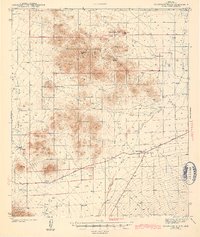 1943 Cocoraque Butte1943 Print · USGSThe Papago Indian Reservation and Pima County ranchlands are documented here in the early 1940s during a period of transition for desert travel. Researchers can trace historic family holdings like Dill Ranch and Cocoraque Ranch or locate the old Three Points Sch.3 unique versions available
 - 1956 Map of Tucson, 1967 Print
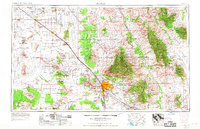 1956 Tucson1967 Print · USGSPost-war Southern Arizona comes into focus as the copper and aviation industries expand around Tucson. Trace family roots in South Tucson or locate early mining sites like the San Manuel Mine and Silver Bell Mine near the Santa Cruz River.3 unique versions available
 - 1958 Map of Tucson
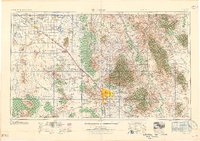 1958 Tucson1958 Print · USGSSouthern Arizona in the late fifties reveals a landscape of desert agriculture and rising military aviation. Trace the rail lines of the Southern Pacific or locate the historic San Xavier Del Bac Mission and the Casa Grande Natl Mon.
 - 1959 Map of Tucson
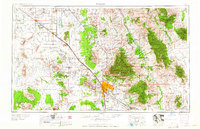 1959 Tucson1959 Print · USGSSouthern Arizona in the late fifties shows a landscape of military growth and desert industry. Genealogists and historians can trace the footprint of Davis-Monthan Air Force Base and old mining sites like the San Manuel Mine near Mammoth.2 unique versions available
 - 1962 Map of Tucson
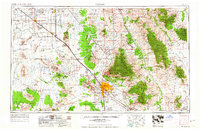 1962 Tucson1962 Print · USGSSouthern Arizona in the early sixties showcases a landscape defined by burgeoning desert cities and massive military installations. Researchers can trace tribal settlements like Schuchk, legacy mining sites at Silver Bell Mine, and the early footprint of Davis-Monthan Air Force Base.
 - 1964 Map of Tucson
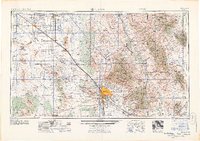 1964 Tucson1964 Print · USGSSouthern Arizona in the mid-1960s shows a landscape of burgeoning desert cities and industrial-scale copper mining. Researchers can trace the development of Tucson and its outlying mining districts, including the Silver Bell Mine and San Manuel Mine.
 - 1979 Map of Three Points
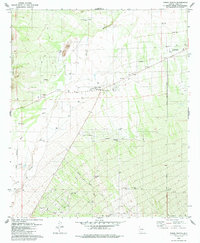 1979 Three Points1979 Print · USGSThree Points and Robles Junction are shown at the end of the 1970s as this Pima County desert crossroads began to expand. Genealogists and historians can trace the early residential grid along Diamond Bell Ranch Road and locate rural landmarks like the Mary E Dill Sch and Santa Teresa Well.3 unique versions available
 - 1992 Map of Three Points, 1995 Print
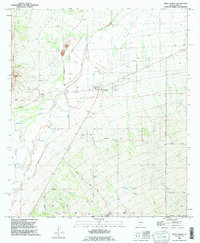 1992 Three Points1995 Print · USGSThe desert crossroads of Pima County come into focus during the early nineties as residential grids began to meet traditional ranch lands. Researchers can trace the development of the Diamond Bell Ranch Road area or locate rural landmarks like Robles Junction and the Corner Windmill.
 - 1994 Map of Silver Bell Mountains
 1994 Silver Bell Mountains1994 Print · USGSSouthern Arizona in the mid-nineties shows a land of transition between desert wilderness, tribal lands, and the growing Tucson suburbs. Genealogists and historians can trace settlements like San Luis and Ko Vaya, or follow the industrial legacy of the Silver Bell Mine.2 unique versions available
 - 1996 Map of Three Points, 2002 Print
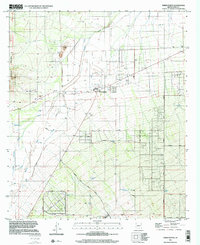 1996 Three Points2002 Print · USGSThree Points and Robles Junction are seen here in the late twentieth century, situated at a vital crossroads in the Pima County desert. Genealogists and local historians can trace ranching infrastructure and early neighborhood layouts along Diamond Bell Ranch Road, Guy Street, and Santa Teresa Well.
End of results
Showing maps 1-12 of 12
Frequently asked questions
- What are the different types of historical maps available for Robles Junction?
- What is the oldest map of Robles Junction?
- Where can I purchase historical maps of Robles Junction for my home or office?
- Where can I download high-res historical maps of Robles Junction?
- Are there historical topographic maps available for Robles Junction?
- Is there historical aerial imagery available for Robles Junction?
- Where are historical maps of Robles Junction sourced from?