Old Maps of TKO Subdivision, Arkansas for Academic Research
Study the evolution of TKO Subdivision with 16 high-resolution historic maps. Whether you're teaching, researching, or modeling changes in land use, these maps provide essential visual documentation of urban, environmental, and geographic change.
- Analyze long-term change: Track patterns in development, transportation, and natural features.
- Ideal for environmental or urban studies: Support academic projects with primary historical map data.
- Use in the classroom or lab: Educators and researchers rely on these maps to bring historical context to life.
These maps are a powerful tool for teaching, research, and visualizing how TKO Subdivision has changed over the decades.
TKO Subdivision, AR maps
(16)- 1891 Map of Little Rock
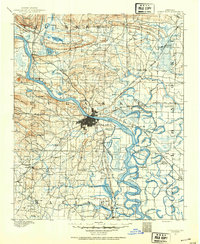 1891 Little Rock1891 Print · USGSLittle Rock and the central Arkansas river valley are shown in detail during the 1890s, when rail travel and river trade dominated the local economy. Genealogists can trace early homesteads and communities near Argenta, the Indian Mounds at Toltec, and Sweet Home.
 - 1893 Map of Little Rock
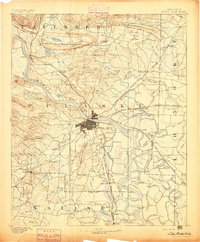 1893 Little Rock1893 Print · USGSLittle Rock and the Arkansas River valley are shown here in the early 1890s, just as the regional rail network was maturing. Genealogists can trace family roots through old settlements like Argenta, Shilcott, and Collegeville, or locate archaeological sites such as the Indian Mounds.5 unique versions available
 - 1941 Map of Cabot, 1945 Print
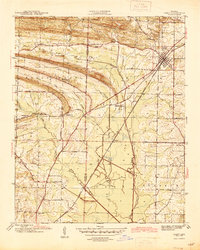 1941 Cabot1945 Print · USGSLonoke and Pulaski counties are captured in detail during the early 1940s, showing a landscape defined by prominent ridges and the Missouri Pacific rail line. Researchers can trace family sites near Concord Cem or locate historic rural centers like Holland and Mt Tabor Ch.2 unique versions available
 - 1954 Map of Cabot, 1957 Print
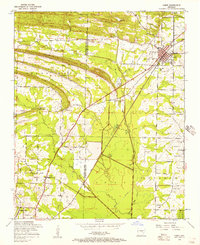 1954 Cabot1957 Print · USGSThe Lonoke and Pulaski county line comes alive in the mid-1950s as military expansion meets traditional rail towns. Researchers can trace the early footprint of Little Rock Air Force Base or locate local landmarks like Concord Cemetery and the Midway School.3 unique versions available
 - 1955 Map of Little Rock, 1978 Print
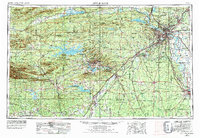 1955 Little Rock1978 Print · USGSCentral Arkansas in the mid-fifties exhibits a landscape of growing cities, massive military installations, and mountain reservoirs. Genealogists and historians can trace the industrial Bauxite Mines, regional rail lines, and local landmarks like Antioch Church.
 - 1956 Map of Little Rock
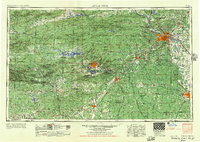 1956 Little Rock1956 Print · USGSCentral Arkansas in the mid-fifties shows a landscape defined by burgeoning military bases and the timber-and-mineral wealth of the Ouachitas. Genealogists and researchers can trace old rail lines like the Missouri Pacific and find established communities such as Bauxite, Sheridan, and Mabelvale.
 - 1960 Map of Little Rock
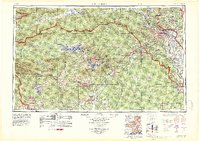 1960 Little Rock1960 Print · USGSCentral Arkansas in the late fifties shows a landscape of growing military bases and massive new reservoirs. Local historians can trace the mid-century expansion of Little Rock and Hot Springs alongside the industrial works at Bauxite and the Pine Bluff Arsenal.
 - 1964 Map of Little Rock
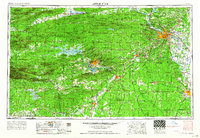 1964 Little Rock1964 Print · USGSCentral Arkansas in the mid-sixties is a landscape of mountain ridges, industrial rail lines, and growing military hubs. Researchers can trace the development of Bauxite and Hot Springs or locate rural landmarks like Sparkman and the Pine Bluff Arsenal.
 - 1985 Map of Little Rock, 1988 Print
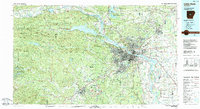 1985 Little Rock1988 Print · USGSLittle Rock and its surrounding river valley are shown in the mid-eighties as the region balanced urban expansion with its industrial and military roots. Genealogists and historians can locate dozens of institutions and family landmarks, including Mount Holly Cem, the Bauxite Mines, and Central High Sch.
 - 1987 Map of Cabot
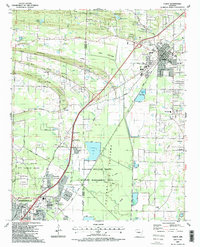 1987 Cabot1987 Print · USGSCabot and Jacksonville were expanding rapidly in the late eighties as the local landscape transitioned from military airbase to residential suburb. Genealogists can locate family landmarks like Concord Cem, Mt Tabor Ch, and the rural homesteads along Backbone Ridge.2 unique versions available
 - 1994 Map of Cabot, 2000 Print
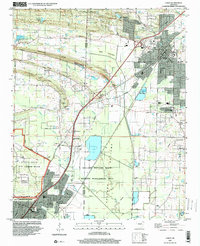 1994 Cabot2000 Print · USGSThe growing corridor between Cabot and Jacksonville is captured here during the mid-nineties, showing the mix of military, residential, and wild spaces. Genealogists and local historians can locate several family cemeteries like King Cem and Mt Carmel Cem, alongside landmarks like Crow Stadium.
 - 2011 Map of Cabot, 2011 Print
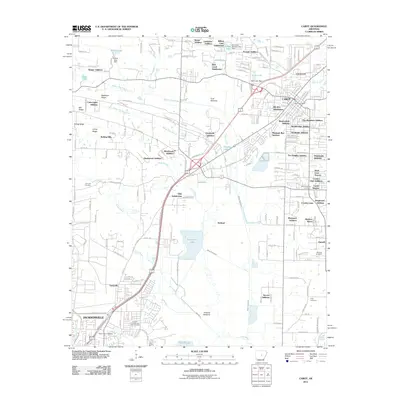 2011 Cabot2011 Print · USGSThe growing suburban corridor between Cabot and Jacksonville is captured here during a period of significant expansion. Local researchers can locate several family and community burial grounds, such as Concord Cemetery and Red Oak Cemetery, alongside landmarks like Pickthorne Lake.
 - 2014 Map of Cabot, 2014 Print
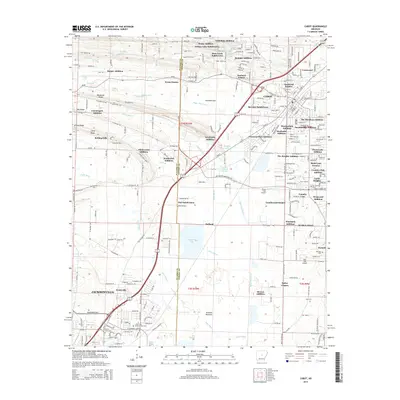 2014 Cabot2014 Print · USGSCabot and Jacksonville show their modern suburban growth at the Pulaski and Lonoke county line in the mid-2010s. Genealogists and local historians can trace legacy sites like Concord Cem, Pickthorne Lake, and the small settlement of Parnell.
 - 2017 Map of Cabot, 2017 Print
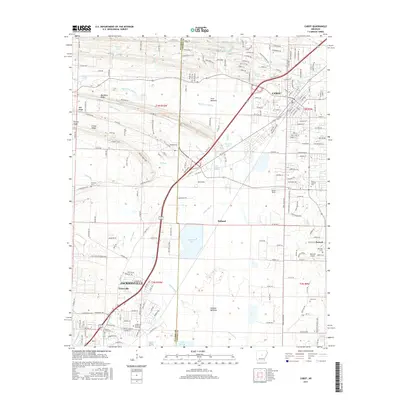 2017 Cabot2017 Print · USGSThe Cabot and Jacksonville area of central Arkansas shows a blend of developing suburban centers and rural lowlands during the late twenty-teens. Researchers can locate family landmarks like Concord Cem and trace the paths of Bayou Two Prairie or the Quapaw Mineral Springs.
 - 2020 Map of Cabot, 2020 Print
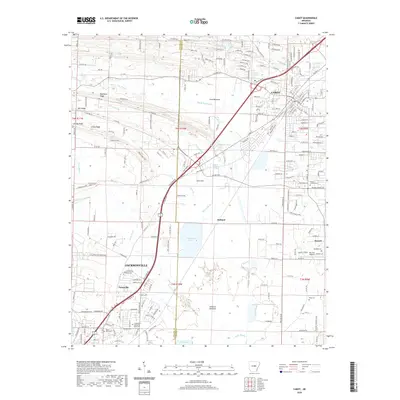 2020 Cabot2020 Print · USGSCabot and Jacksonville anchor this Central Arkansas landscape during a period of modern growth and military importance. Genealogists and local historians can trace family sites at Mount Carmel Cem or Bayou Meto Cem and locate landmarks like Quapaw Mineral Springs.
 - 2024 Map of Cabot, 2024 Print
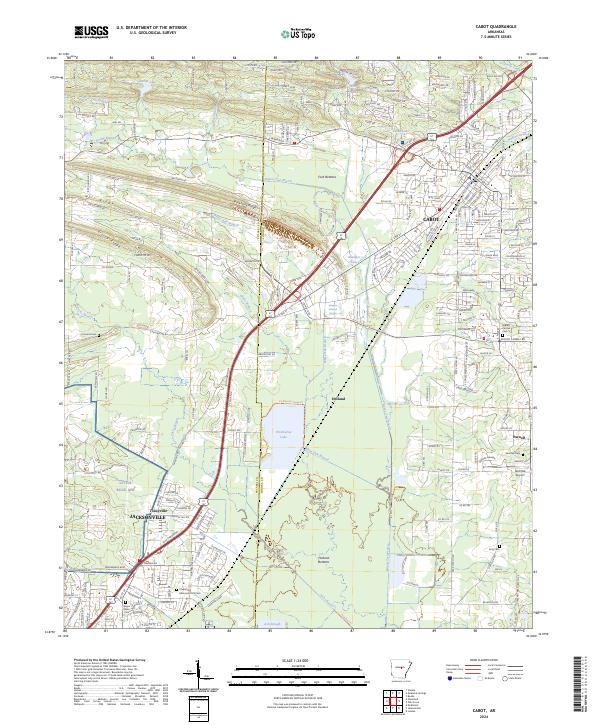 2024 Cabot2024 Print · USGSThe growing corridor between Pulaski and Lonoke Counties comes into focus in this recent survey. Local historians and genealogists can trace the expansion of Cabot and Jacksonville or locate family sites like Mount Carmel Cem and Toneyville.
End of results
Showing maps 1-16 of 16
Top cities near TKO Subdivision
- Little Rock historical maps
- North Little Rock historical maps
- Jacksonville historical maps
- Cabot historical maps
- Sherwood historical maps
- Beebe historical maps
See more
Frequently asked questions
- What are the different types of historical maps available for TKO Subdivision?
- What is the oldest map of TKO Subdivision?
- Where can I purchase historical maps of TKO Subdivision for my home or office?
- Where can I download high-res historical maps of TKO Subdivision?
- Are there historical topographic maps available for TKO Subdivision?
- Is there historical aerial imagery available for TKO Subdivision?
- Where are historical maps of TKO Subdivision sourced from?