1940s Maps of Muir, Martinez
Explore 6 historic maps of Muir from the 1940s. These maps offer a rare glimpse into what life looked like during the 1940s — showing old roads, neighborhoods, homes, and landmarks that have changed or disappeared over time.
Whether you're researching your family's past, planning a metal detecting trip, or studying how Muir's landscape evolved across the 1940s, these high-resolution maps are a powerful tool for exploring the history of this region.
- Focus on a specific era: All maps on this page are from the 1940s, giving you a focused view of this time period.
- See what’s changed: Compare century-old streets, trails, and buildings to today's modern landscape using overlays and satellite layers.
- Research with precision: Use these maps for genealogy, historical research, land use analysis, or educational projects.
- View, download, or print: Maps are fully viewable online in high resolution, and can be downloaded or printed for your own records.
Start exploring Muir's history through authentic maps from the 1940s. This is your window into the past.
Muir, Martinez maps
(6)- 1942 Map of Concord
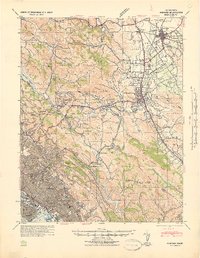 1942 Concord1942 Print · USGSThe East Bay interior was a landscape of expanding valley towns and deep-rooted ranching tracts in the early 1940s. Genealogists and historians can trace rail-era settlements like Concord, Lafayette, and Walnut Creek alongside local landmarks like St Marys College and Sherman Field.
 - 1943 Map of Concord
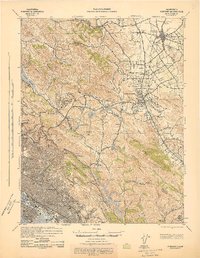 1943 Concord1943 Print · USGSThe East Bay and Contra Costa interior appear here during the wartime era, showing the transition from urban waterfronts to rural valley communities. Researchers can trace early rail lines like the Sacramento Northern RR and locate local landmarks such as St Marys College and Acalanes Sch.
 - 1947 Map of San Francisco, 1948 Print
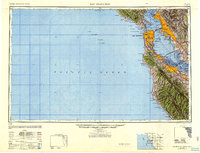 1947 San Francisco1948 Print · USGSThe Bay Area in the late 1940s reveals a region transitioning from wartime intensity to post-war suburban growth. Trace the historic rail lines of the Southern Pacific RR or locate early military footprints at Fort Funston and Moffett Field.
 - 1947 Map of Briones Valley, 1954 Print
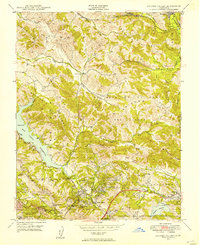 1947 Briones Valley1954 Print · USGSContra Costa County at the dawn of the postwar era shows the early expansion of Orinda and Lafayette into the surrounding hills. Genealogists and hikers can trace the original Briones Valley Sch, the winding path of Bear Creek, and the massive San Pablo Reservoir.
 - 1948 Map of San Francisco, 1951 Print
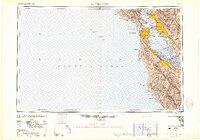 1948 San Francisco1951 Print · USGSThe Bay Area in the late 1940s reveals a landscape defined by rapid post-war growth and a heavy military presence at the Golden Gate. Trace the development of early trans-bay infrastructure like the Oakland-Bay Bridge and historic coastal defense sites such as Fort Funston and Alcatraz Island.
 - 1949 Map of Briones Valley
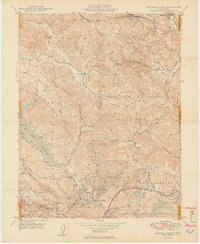 1949 Briones Valley1949 Print · USGSThe East Bay hills were in a state of quiet transition in the late 1940s, balancing rural ranching with vital municipal water projects. Researchers can find old landmarks like the Briones Valley Sch and trace the original path of the Atohison Topeka and Santa Fe railroad near Muir.2 unique versions available
End of results
Showing maps 1-6 of 6
Top cities near Muir
- San Francisco historical maps
- Oakland historical maps
- Concord historical maps
- Vallejo historical maps
- Berkeley historical maps
- Fairfield historical maps
See more
Frequently asked questions
- What are the different types of historical maps available for Muir?
- What is the oldest map of Muir?
- Where can I purchase historical maps of Muir for my home or office?
- Where can I download high-res historical maps of Muir?
- Are there historical topographic maps available for Muir?
- Is there historical aerial imagery available for Muir?
- Where are historical maps of Muir sourced from?