Old Maps of Boles, California for Metal Detecting
Plan your next treasure hunt with 14 historic maps of Boles. Find old homesites, ghost towns, trails, and gathering spots that may be lost to time — perfect for identifying promising metal detecting locations.
- Locate forgotten sites: Uncover places like long-lost settlements, abandoned rail lines, or gathering spots.
- Plan better hunts: Use map overlays combined with LiDAR or satellite views to narrow in on historically rich areas.
- Made for detectorists: Thousands of hobbyists use these maps to discover relics, coins, and hidden history.
Use these historic maps to boost your research and find new opportunities beneath the surface of Boles.
Boles, CA maps
(14)- 1886 Map of Modoc Lava Bed
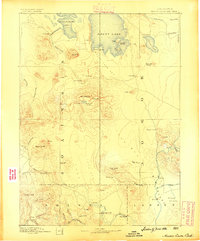 1886 Modoc Lava Bed1886 Print · USGSNortheastern California is surveyed here in the years following the Modoc War, showing the volcanic terrain of the Modoc Lava Bed and early river settlements. Trace pioneer history through Modoc Rifle Pits, a Ferry on the Pit River, and old outposts like Bieber and Lookout.
 - 1892 Map of Modoc Lava-Bed
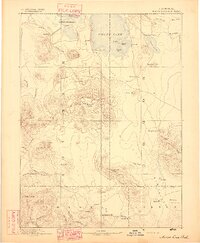 1892 Modoc Lava-Bed1892 Print · USGSNortheastern California's volcanic terrain is meticulously charted in the 1890s, before modern irrigation altered the great northern basins. Genealogists and historians can locate early outposts like Burgettville, the Modoc Rifle Pit, and the high-altitude Ice Cave.7 unique versions available
 - 1952 Map of Hackamore, 1954 Print
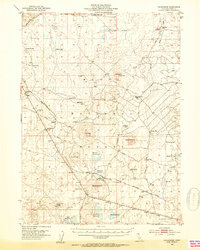 1952 Hackamore1954 Print · USGSHigh desert timberlands and volcanic peaks define the Modoc National Forest in the early fifties as the railroad connected remote outposts. Trace the rail-and-resource economy through Meares, the Pumice Brick Plant, and the complex of Hackamore Reservoir.4 unique versions available
 - 1954 Map of Alturas, 1968 Print
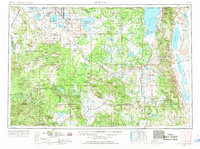 1954 Alturas1968 Print · USGSThe Modoc Plateau and Surprise Valley appear in the mid-1950s as a landscape of remote ranching towns and vast wildlife refuges. Researchers can trace early settlements like Fort Bidwell, locate the McArthur Grain Elevator, and follow the Southern Pacific rail lines.4 unique versions available
 - 1958 Map of Alturas
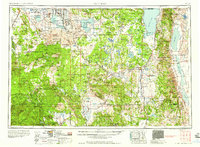 1958 Alturas1958 Print · USGSThe Modoc Plateau and Warner Mountains appear here during the late fifties, showcasing a landscape of high-desert ranching and volcanic terrain. Researchers can trace the rail-and-water economy through Alturas, Cedarville, and the Fort Bidwell Indian Res.2 unique versions available
 - 1962 Map of Alturas
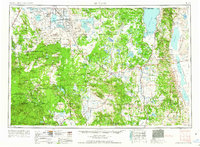 1962 Alturas1962 Print · USGSThe high desert of Modoc and Siskiyou counties is shown in the early sixties as a hub of timber, rail, and agriculture. Genealogists and historians can trace rail-side life via the Southern Pacific RR, the Tionesta PO, and the McArthur Grain Elevator.
 - 1965 Map of Alturas
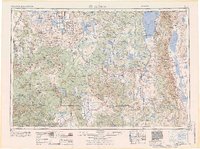 1965 Alturas1965 Print · USGSNortheastern California and southern Oregon appear in this mid-century survey of the high plateau and volcanic highlands. Researchers can trace the path of the Southern Pacific railroad through Alturas or locate rural outposts like Stronghold and Eagleville.
 - 1984 Map of Tulelake, 1985 Print
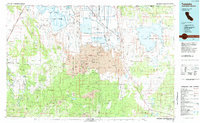 1984 Tulelake1985 Print · USGSThe high desert and volcanic basins of the California-Oregon border are captured here in the mid-eighties. Researchers can trace the legacy of the Southern Pacific railroad through settlements like Stronghold, Newell, and the sprawling Lava Beds National Monument.2 unique versions available
 - 1988 Map of Knobcone Butte
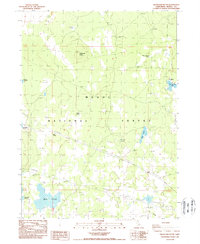 1988 Knobcone Butte1988 Print · USGSThis high-desert forest landscape in northeastern California shows the region's mid-century water and power infrastructure. Researchers can locate Browns Well (Site) and trace water sources like Hog Lake and Spaulding Reservoir among the volcanic ridges.
 - 1993 Map of Knobcone Butte, 1996 Print
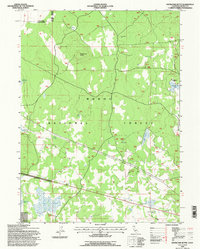 1993 Knobcone Butte1996 Print · USGSModoc County's high plateau country is captured here in the early 1990s as a managed landscape of timber and grazing. Researchers can trace remote water sources like Hackamore Reservoir, the Browns Well (Site), and the distinct Quaking Aspen Grove.
 - 2012 Map of Knobcone Butte, 2012 Print
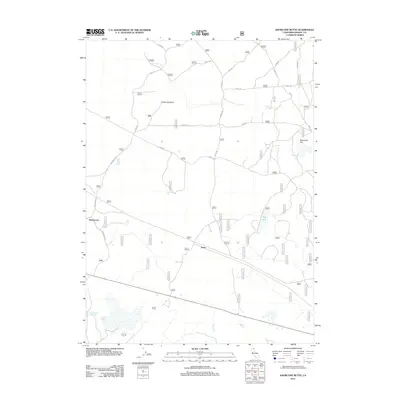 2012 Knobcone Butte2012 Print · USGSModoc County's high-plateau landscape is captured here in the early twenty-first century, showing a remote region of forest routes and volcanic features. Genealogists and historians can locate the small communities of Hackamore and Boles or trace water rights at Hog Lake and Spaulding 3 Reservoir.
 - 2015 Map of Knobcone Butte, 2015 Print
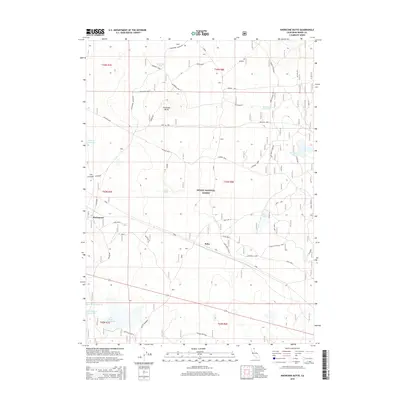 2015 Knobcone Butte2015 Print · USGSModoc County’s high country is captured here in the mid-2010s, showing a landscape defined by forest management and vital water infrastructure. Researchers can locate remote sites like Hackamore or trace the geography of Knobcone Butte and Spaulding Reservoir.
 - 2018 Map of Knobcone Butte, 2018 Print
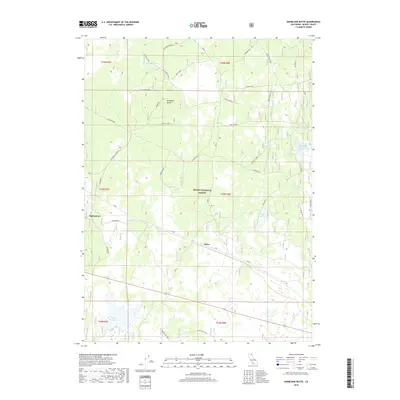 2018 Knobcone Butte2018 Print · USGSNortheastern California's high plateau comes into focus here in 2018, centered on the forest outpost of Hackamore. Researchers can trace the layout of Modoc National Forest, identifying remote sites like Boles and livestock landmarks like Stovepipe Flat Tank.
 - 2021 Map of Knobcone Butte, 2021 Print
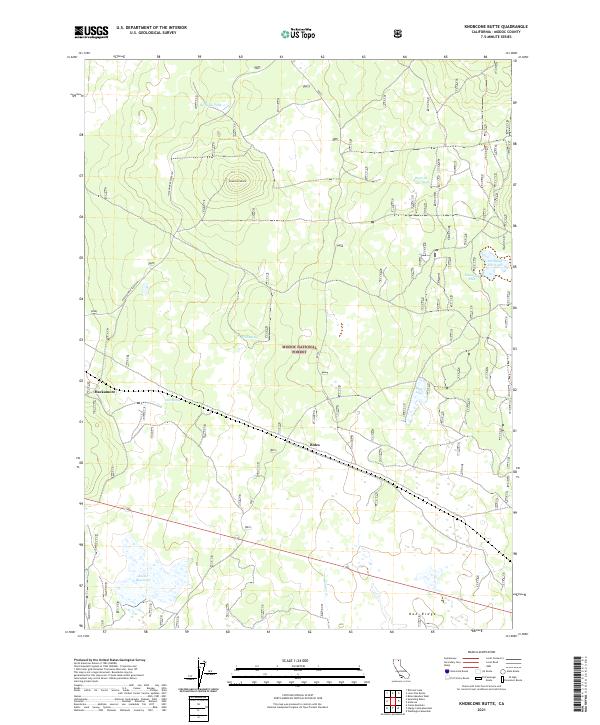 2021 Knobcone Butte2021 Print · USGSModoc County’s high-country landscape is captured here in the early twenty-first century, showing the intersection of forest management and early settlements. Trace the geography around Hackamore and Boles, or locate water sources like Beeler Reservoir and Sorhalus Tank.
End of results
Showing maps 1-14 of 14
Frequently asked questions
- What are the different types of historical maps available for Boles?
- What is the oldest map of Boles?
- Where can I purchase historical maps of Boles for my home or office?
- Where can I download high-res historical maps of Boles?
- Are there historical topographic maps available for Boles?
- Is there historical aerial imagery available for Boles?
- Where are historical maps of Boles sourced from?