1940s Maps of Orchard Hills, Irvine
Explore 11 historic maps of Orchard Hills from the 1940s. These maps offer a rare glimpse into what life looked like during the 1940s — showing old roads, neighborhoods, homes, and landmarks that have changed or disappeared over time.
Whether you're researching your family's past, planning a metal detecting trip, or studying how Orchard Hills's landscape evolved across the 1940s, these high-resolution maps are a powerful tool for exploring the history of this region.
- Focus on a specific era: All maps on this page are from the 1940s, giving you a focused view of this time period.
- See what’s changed: Compare century-old streets, trails, and buildings to today's modern landscape using overlays and satellite layers.
- Research with precision: Use these maps for genealogy, historical research, land use analysis, or educational projects.
- View, download, or print: Maps are fully viewable online in high resolution, and can be downloaded or printed for your own records.
Start exploring Orchard Hills's history through authentic maps from the 1940s. This is your window into the past.
Orchard Hills, Irvine maps
(11)- 1942 Map of Anaheim
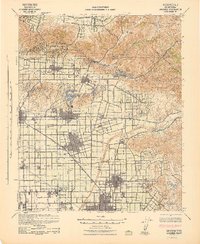 1942 Anaheim1942 Print · USGSOrange County's agricultural heart is captured mid-century during a period of rapid wartime development. Genealogists can locate family landmarks like Diamond Bar Ranch, local schools such as Alamitos Sch, and communities like Garden Grove or Stanton.2 unique versions available
 - 1942 Map of Santa Ana
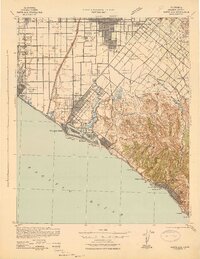 1942 Santa Ana1942 Print · USGSOrange County was still a landscape of coastal towns and sprawling citrus groves during the early years of the war. Genealogists and researchers can trace the early footprints of Costa Mesa, the rail-side industry of Sugar, and the distinct shorelines of Newport Bay.2 unique versions available
 - 1942 Map of Santiago Peak, 1943 Print
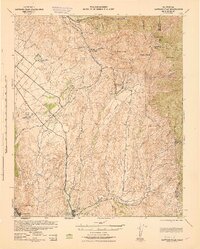 1942 Santiago Peak1943 Print · USGSOrange County and the inland canyons appear here in the early 1940s, showing a landscape of small settlements and rugged mountain reaches. Genealogists and local historians can trace early holdings near San Juan Capistrano, the station at El Toro, and mountain landmarks like Modjeska.3 unique versions available
 - 1942 Map of Corona, 1947 Print
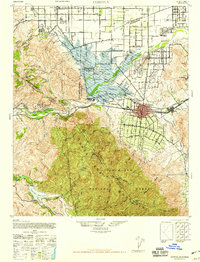 1942 Corona1947 Print · USGSRiverside County at the dawn of the 1940s reveals a unique mix of agricultural roots, mountain canyons, and significant regional infrastructure projects. Genealogists and local historians can trace the early street plans of Corona and Norco, or locate landmarks like the East Vale Sch and the Santiago Reservoir.2 unique versions available
 - 1943 Map of Corona
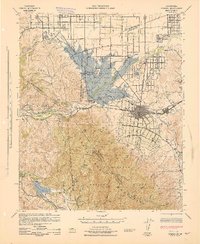 1943 Corona1943 Print · USGSThe Santa Ana River valley during the mid-forties shows a landscape shaped by water management and early inland growth. Trace the development of Corona and Norco alongside the massive Prado Dam and local landmarks like the East Vale Sch.
 - 1947 Map of Santa Ana, 1949 Print
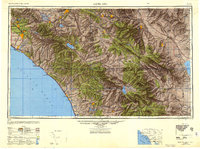 1947 Santa Ana1949 Print · USGSSouthern California is depicted here in the late forties, showing the expansion of the Inland Empire and the Orange County coast. Researchers can trace the early layout of Palm Springs or locate long-standing tribal lands like the Pala Indian Reservation and Rincon Indian Res.
 - 1948 Map of Tustin, 1957 Print
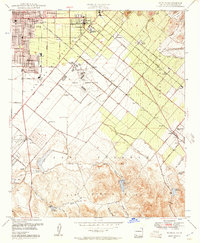 1948 Tustin1957 Print · USGSOrange County's agricultural heart was beginning to transform after the war as Tustin and the Irvine Ranch expanded toward the coast. Researchers can trace historic landmarks like Orange County Airport, the Naval Reservation, and old school sites like Delhi Sch.2 unique versions available
 - 1949 Map of Santa Ana
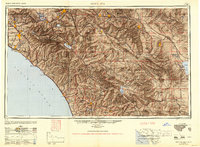 1949 Santa Ana1949 Print · USGSSouthern California underwent a profound transformation in the late 1940s as military installations and citrus groves shared the landscape. Researchers can trace early coastal growth at Laguna Beach, military history at Camp Pendleton, and the rail corridors of the Pacific Electric.
 - 1949 Map of Black Star Canyon, 1955 Print
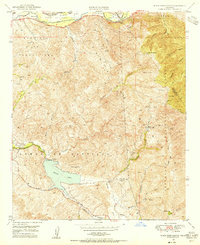 1949 Black Star Canyon1955 Print · USGSThe Orange County backcountry during the post-war era shows a landscape of deep canyons and early mineral works. Researchers can trace historic industrial sites like the Santiago Coal Mine or visit the remote Hidden Ranch near Irvine Lake.2 unique versions available
 - 1949 Map of Orange, 1956 Print
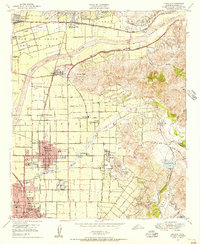 1949 Orange1956 Print · USGSThe Orange and Santa Ana valley floor shows its transition from citrus groves to post-war suburbs during the late 1940s. Researchers can trace historic family burial sites at Fairhaven Cem or follow the old Southern Pacific line past Villa Park and El Modena.
 - 1949 Map of El Toro, 1958 Print
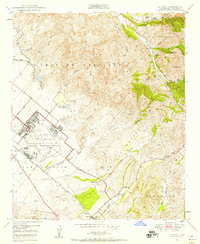 1949 El Toro1958 Print · USGSPost-war Orange County centers on the massive El Toro Naval Air Station Reservation and the nearby rural settlement of El Toro. Genealogists and local historians can trace the early layout of the El Toro Cem, the Silverado School, and family landmarks like Serrano Place.2 unique versions available
End of results
Showing maps 1-11 of 11
Frequently asked questions
- What are the different types of historical maps available for Orchard Hills?
- What is the oldest map of Orchard Hills?
- Where can I purchase historical maps of Orchard Hills for my home or office?
- Where can I download high-res historical maps of Orchard Hills?
- Are there historical topographic maps available for Orchard Hills?
- Is there historical aerial imagery available for Orchard Hills?
- Where are historical maps of Orchard Hills sourced from?