Old Maps of Encinitas, California for Academic Research
Study the evolution of Encinitas with 44 high-resolution historic maps. Whether you're teaching, researching, or modeling changes in land use, these maps provide essential visual documentation of urban, environmental, and geographic change.
- Analyze long-term change: Track patterns in development, transportation, and natural features.
- Ideal for environmental or urban studies: Support academic projects with primary historical map data.
- Use in the classroom or lab: Educators and researchers rely on these maps to bring historical context to life.
These maps are a powerful tool for teaching, research, and visualizing how Encinitas has changed over the decades.
Encinitas, CA maps
(44)- 1893 Map of Oceanside
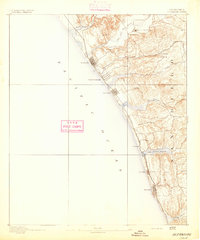 1893 Oceanside1893 Print · USGSCoastal San Diego County was just beginning its transformation into a series of rail-side resort towns in the early 1890s. Researchers can trace the early grids of Oceanside, Carlsbad, and Encinitas alongside landmarks like the San Luis Rey Mission and Bati Quitos Lagoon.2 unique versions available
 - 1893 Map of Escondido
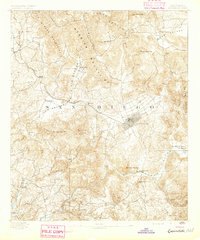 1893 Escondido1893 Print · USGSNorth County San Diego emerges in the early 1890s as a region of new railroad towns and foothill settlements. Genealogists and historians can trace early grids in Escondido and locate smaller outposts like Olivenhain, Bernardo, and Vista.2 unique versions available
 - 1898 Map of Oceanside, 1955 Print
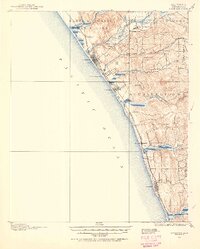 1898 Oceanside1955 Print · USGSNorthern San Diego County's coast appears at the end of the nineteenth century as the rail lines sparked new growth in seaside towns. Genealogists and historians can trace early settlements and landmarks like Oceanside, the San Luis Rey Mission, and Encinitas.5 unique versions available
 - 1901 Map of Escondido
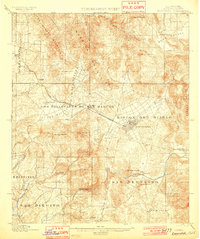 1901 Escondido1901 Print · USGSInland San Diego County was a landscape of citrus groves and cattle ranges at the dawn of the twentieth century. Genealogists can trace family footprints in early settlements like Escondido and Bernardo, or follow the rail path of the Southern California R. R. Escondido Branch.6 unique versions available
 - 1901 Map of Oceanside
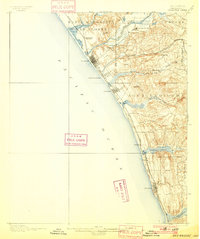 1901 Oceanside1901 Print · USGSCoastal San Diego County is captured at the turn of the century, showing the early rail-driven growth of the shoreline. Genealogists and historians can trace the foundations of Oceanside, Carlsbad, and the San Luis Rey Mission along the Surf Line rail route.8 unique versions available
 - 1901 Map of San Luis Rey
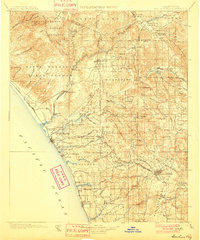 1901 San Luis Rey1901 Print · USGSNorthern San Diego County is shown at the turn of the century as a landscape of sprawling ranchos, early coastal railroads, and secluded mountain valleys. Researchers can trace the routes of the California Southern RR or locate early settlements like De Luz, Pala, and the Temecula Indian Res.8 unique versions available
 - 1904 Map of Southern California Sheet No. 2
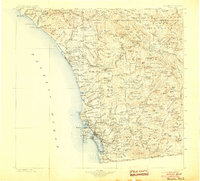 1904 Southern California Sheet No. 21904 Print · USGSSouthern California during the early 1900s shows the transition from vast ranchos to coastal rail towns. Genealogists and researchers can trace the Southern California R.R. through Oceanside, explore old land grants like Mission Viejo, and locate early settlements from Fallbrook to Julian.5 unique versions available
 - 1942 Map of Oceanside
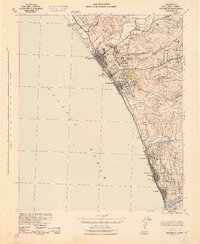 1942 Oceanside1942 Print · USGSNorthern San Diego County coastal life during the early 1940s is shown here along the Pacific shoreline. Researchers can trace the original footprints of Carlsbad, Encinitas, and Leucadia, or find family landmarks like Libby Sch and the San Luis Rey Mission.
 - 1942 Map of Escondido
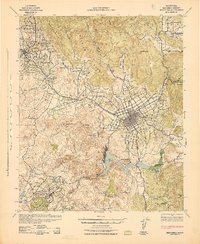 1942 Escondido1942 Print · USGSNorthern San Diego County is captured here in the early 1940s, showing the inland citrus and ranching valleys before major development. Researchers can locate early schoolhouses like Rincon Sch and trace the original Escondido Branch rail line.
 - 1947 Map of Santa Ana, 1949 Print
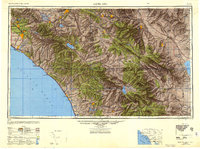 1947 Santa Ana1949 Print · USGSSouthern California is depicted here in the late forties, showing the expansion of the Inland Empire and the Orange County coast. Researchers can trace the early layout of Palm Springs or locate long-standing tribal lands like the Pala Indian Reservation and Rincon Indian Res.
 - 1948 Map of Rancho Santa Fe, 1955 Print
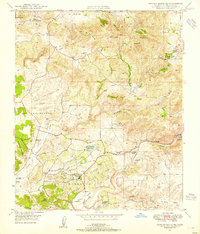 1948 Rancho Santa Fe1955 Print · USGSCoastal San Diego County appears here shortly after the war, when the landscape was still defined by large ranchos and quiet canyons. Genealogists and local historians can trace the footprint of Rancho Santa Fe, find early mining sites like the Pyrophyllite Mine, or locate ancient Petroglyphs.3 unique versions available
 - 1948 Map of Encinitas, 1955 Print
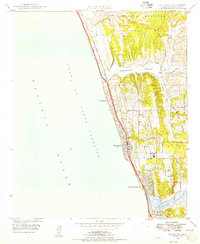 1948 Encinitas1955 Print · USGSNorthern San Diego County’s coastline comes alive in the late 1940s as a series of distinct surfside villages. Trace the early development of Leucadia, Encinitas, and Solana Beach along the historic Coast Highway.2 unique versions available
 - 1949 Map of Encinitas
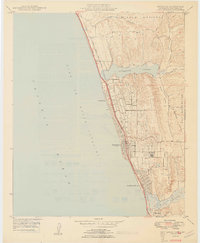 1949 Encinitas1949 Print · USGSCoastal San Diego County comes alive in the late 1940s as rail and road connected seaside towns like Leucadia and Solana Beach. Genealogists and historians can trace the early footprints of the San Dieguito Union H. S. and the historic Atchison Topeka and Santa Fe rail line.2 unique versions available
 - 1949 Map of Rancho Santa Fe
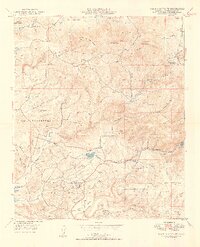 1949 Rancho Santa Fe1949 Print · USGSNorth coastal San Diego County is shown here in the late 1940s, a landscape of sprawling ranchos and early hilltop settlements. Researchers can trace historic boundaries like Los Encenitos and locate landmarks such as Olivenhain and the Pyrophyllite Mine.2 unique versions available
 - 1949 Map of Santa Ana
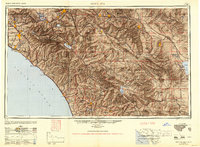 1949 Santa Ana1949 Print · USGSSouthern California underwent a profound transformation in the late 1940s as military installations and citrus groves shared the landscape. Researchers can trace early coastal growth at Laguna Beach, military history at Camp Pendleton, and the rail corridors of the Pacific Electric.
 - 1950 Map of San Diego, 1954 Print
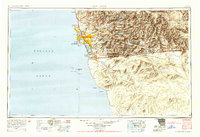 1950 San Diego1954 Print · USGSCoastal San Diego and the Baja California border region come alive in this mid-century survey. Trace the early layout of National City and Chula Vista, or locate historic landmarks like the San Diego and Arizona Eastern RR and Fort Rosecrans.
 - 1953 Map of Del Mar, 1954 Print
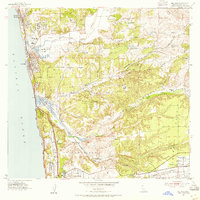 1953 Del Mar1954 Print · USGSCoastal San Diego County comes alive in the early fifties, showing the transition from agricultural ranch lands to a growing military and suburban corridor. Trace the historic SANTA FE line past Del Mar Race Track or locate the original Sorrento PO.3 unique versions available
 - 1954 Map of San Diego
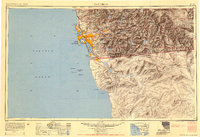 1954 San Diego1954 Print · USGSSan Diego and the northern reaches of Baja California are captured here during a decade of rapid post-war growth and military expansion. Researchers can trace the mid-century shoreline of Mission Beach, find established tribal lands like Capitan Grande Indian Reservation, and follow the border crossing into Tijuana.
 - 1955 Map of San Diego
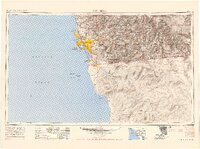 1955 San Diego1955 Print · USGSSouthern California underwent massive growth in the post-war years, as suburban development pushed into the canyons and foothills. Researchers can trace the mid-century infrastructure of Lindbergh Field, the Otay River, and numerous sites like Lemon Grove.
 - 1956 Map of Santa Ana
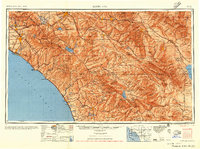 1956 Santa Ana1956 Print · USGSSouthern California underwent massive mid-century transformation as suburban growth met major military and water projects. Trace the postwar expansion of Santa Ana and Riverside, the layout of Camp Pendleton, and the path of the Colorado River Aqueduct.
 - 1958 Map of San Diego, 1961 Print
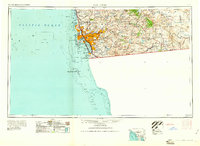 1958 San Diego1961 Print · USGSSan Diego and its inland mountain ranges are captured here in the late fifties as coastal suburbs began to climb the mesas. Researchers can trace the mid-century footprint of Miramar Naval Air Station, the winding San Diego & Arizona Eastern Ry, and local landmarks like Cabrillo Nat Mon.4 unique versions available
 - 1959 Map of Santa Ana, 1971 Print
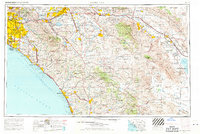 1959 Santa Ana1971 Print · USGSSouthern California is captured in a decade of transformation, from the Orange County coast to the desert floor. Researchers can trace the mid-century footprints of Camp Pendleton, March Air Force Base, and the original Ortega Highway.3 unique versions available
 - 1960 Map of Santa Ana
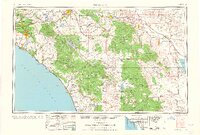 1960 Santa Ana1960 Print · USGSSouthern California's coastal plains and inland deserts meet in this mid-century survey of the burgeoning Orange and Riverside county corridors. Researchers can trace the layout of early freeway systems, find tribal lands like the Soboba Indian Reservation, and locate military landmarks such as March Field.2 unique versions available
 - 1965 Map of Santa Ana
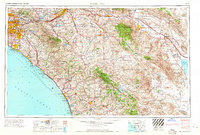 1965 Santa Ana1965 Print · USGSSouthern California is captured in a decade of rapid growth, showing the coastal expansion from Santa Ana down to Oceanside. Genealogists and historians can trace the mid-century development of places like Garden Grove or the rural reaches of Escondido and the Palomar Observatory.
 - 1967 Map of Del Mar, 1970 Print
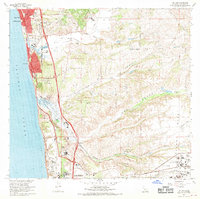 1967 Del Mar1970 Print · USGSCoastal San Diego is captured here in the late sixties as the suburban and institutional landscape began to transform the canyons and bluffs. Trace the early footprints of the Salk Institute, Del Mar Race Track, and the expansive Miramar Naval Air Station.3 unique versions available
Showing maps 1-25 of 44
Top cities near Encinitas
- San Diego historical maps
- Oceanside historical maps
- Escondido historical maps
- Carlsbad historical maps
- Vista historical maps
- San Marcos historical maps
See more
Top neighborhoods of Encinitas
- Olivenhain historical maps
- Cardiff-by-the-Sea historical maps
- Leucadia historical maps
- Manzanita Cove historical maps
Frequently asked questions
- What are the different types of historical maps available for Encinitas?
- What is the oldest map of Encinitas?
- Where can I purchase historical maps of Encinitas for my home or office?
- Where can I download high-res historical maps of Encinitas?
- Are there historical topographic maps available for Encinitas?
- Is there historical aerial imagery available for Encinitas?
- Where are historical maps of Encinitas sourced from?