1900s (20th Century) Maps of Callender, California
Explore 11 historic maps of Callender from the 1900s (20th Century). These maps offer a rare glimpse into what life looked like during the 1900s — showing old roads, neighborhoods, homes, and landmarks that have changed or disappeared over time.
Whether you're researching your family's past, planning a metal detecting trip, or studying how Callender's landscape evolved across the 1900s, these high-resolution maps are a powerful tool for exploring the history of this region.
- Focus on a specific era: All maps on this page are from the 1900s, giving you a focused view of this time period.
- See what’s changed: Compare century-old streets, trails, and buildings to today's modern landscape using overlays and satellite layers.
- Research with precision: Use these maps for genealogy, historical research, land use analysis, or educational projects.
- View, download, or print: Maps are fully viewable online in high resolution, and can be downloaded or printed for your own records.
Start exploring Callender's history through authentic maps from the 1900s. This is your window into the past.
Callender, CA maps
(11)- 1900 Map of San Luis
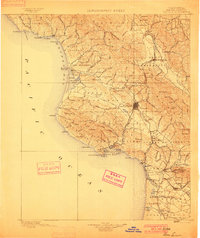 1900 San Luis1900 Print · USGSCoastal California at the turn of the century shows a landscape where rail lines like the Pacific Coast Ry met the sea. Trace early industrial sites like the Asphalt Mines or follow the coast from Morro Rock to the pier at Port Harford.4 unique versions available
 - 1942 Map of Arroyo Grande
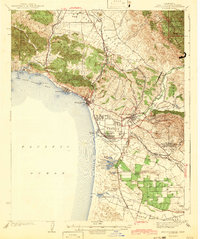 1942 Arroyo Grande1942 Print · USGSThe San Luis Obispo coastline and the fertile Cienega Valley are shown here in the early 1940s, as steam and narrow-gage rails still shaped the local economy. Genealogists can locate vanished schools like Belleview Sch and trace the paths of the Pacific Coast Railway and Southern Pacific Railroad through Oceano and Edna.3 unique versions available
 - 1947 Map of San Luis Obispo, 1948 Print
 1947 San Luis Obispo1948 Print · USGSCoastal California at the dawn of the Cold War reveals a landscape of massive military reservations and quiet seaside towns. Genealogists and researchers can trace the Southern Pacific rail line, old mining sites like Los Burros Mine, and local landmarks from Point Buchon to the Carrizo Plain.
 - 1948 Map of San Luis Obispo
 1948 San Luis Obispo1948 Print · USGSCentral Coast life in the late 1940s is centered on the Southern Pacific rail line and expanding military bases. Genealogists can trace early rural life through Union School and local operations like the Klau Mine or Buena Vista Mine.
 - 1952 Map of Arroyo Grande, 1953 Print
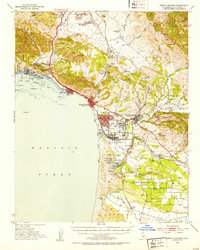 1952 Arroyo Grande1953 Print · USGSThe Central Coast comes alive in the early fifties as coastal tourism and inland agriculture thrive side-by-side. Genealogists and historians can trace the Southern Pacific RR corridor through Grover City, locate family landmarks like Branch School, or study the Sand Dunes and lakes around Oceano.3 unique versions available
 - 1956 Map of San Luis Obispo, 1963 Print
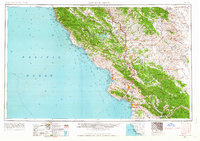 1956 San Luis Obispo1963 Print · USGSCentral California coastal and valley life unfolds in the mid-fifties, from the shoreline of Pismo Beach to the arid Carrizo Plain. Trace early travel routes along the Southern Pacific RR or locate family sites near the Templeton Cemetery and Paso Robles County Cemetery.5 unique versions available
 - 1957 Map of San Luis Obispo
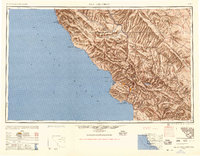 1957 San Luis Obispo1957 Print · USGSCoastal California in the late fifties is defined by the steep Santa Lucia Range and the rail-connected hub of San Luis Obispo. Genealogists and researchers can trace rural life via Union School, the Southern Pacific line, and old sites like the Polar Star Mine.
 - 1958 Map of San Luis Obispo
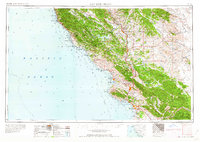 1958 San Luis Obispo1958 Print · USGSThe Central Coast in the late fifties reveals a landscape of ranching and early tourism before the massive expansion of the modern era. Trace the path of the Southern Pacific through Atascadero or locate family roots in coastal towns like Cayucos and Cambria.
 - 1965 Map of Oceano, 1966 Print
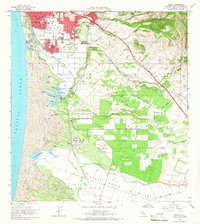 1965 Oceano1966 Print · USGSThe coastal dunes and agricultural mesas of San Luis Obispo County are captured here in the mid-sixties during a period of industrial and residential growth. Genealogists and historians can trace the rail-side infrastructure of Callender, including an oil refinery, or locate family sites in Grover City and Halcyon.2 unique versions available
 - 1979 Map of Oceano
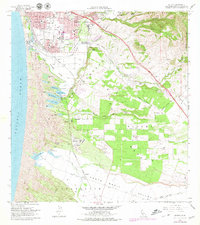 1979 Oceano1979 Print · USGSThe Central Coast landscape transitioned from quiet dunes to industrial and suburban growth in the late seventies. Researchers can trace the Southern Pacific rail infrastructure through Oceano and past the Oil Refinery and Coke Ovens at Callender.
 - 1981 Map of San Luis Obispo
 1981 San Luis Obispo1981 Print · USGSThe Central Coast comes alive in the early eighties as the Southern Pacific railroad connects growing coastal towns and rugged inland ranges. Researchers can trace land grants like Santa Manuela, locate Cem sites, and explore the footprint of California Polytechnic State University.3 unique versions available
End of results
Showing maps 1-11 of 11
Top cities near Callender
- Santa Maria historical maps
- San Luis Obispo historical maps
- Orcutt historical maps
- Arroyo Grande historical maps
- Grover Beach historical maps
- Pismo Beach historical maps
See more
Frequently asked questions
- What are the different types of historical maps available for Callender?
- What is the oldest map of Callender?
- Where can I purchase historical maps of Callender for my home or office?
- Where can I download high-res historical maps of Callender?
- Are there historical topographic maps available for Callender?
- Is there historical aerial imagery available for Callender?
- Where are historical maps of Callender sourced from?