Old Maps of Igo, California
Explore 13 old maps of Igo, spanning from 1890 to today. These high-resolution historic maps reveal how streets, neighborhoods, landmarks, and natural features evolved over time — perfect for genealogy, metal detecting, research, and local history exploration.
What you can do with these maps:
- See how Igo changed over time: Compare historical maps to modern-day views to trace roads, homesites, rail lines & more.
- View detailed metadata: Each map includes creators, publishers, year, scale, and archive source.
- Overlay maps with satellite & LiDAR: Visualize the past alongside modern tools to explore terrain & human change.
- Trusted historical sources: Maps sourced from the USGS, Library of Congress, and other archives.
- Access maps your way: View online, download high-res files, or order prints for personal or research use.
Start exploring old maps of Igo to uncover forgotten places, hidden landmarks, and the deep history beneath your feet.
Igo, CA maps
(13)- 1890 Map of Red Bluff
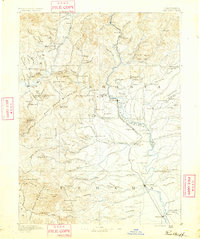 1890 Red Bluff1890 Print · USGSNorthern California in the late nineteenth century was a hub of river-and-rail activity where the Central Pacific Railroad met the rugged Klamath Mountains. Researchers can trace old ferry crossings like Ball's Ferry, locate the U.S. Fishery, or find early mining camps and stations such as Minersville and Buck Horn Station.
 - 1894 Map of Red Bluff, 1896 Print
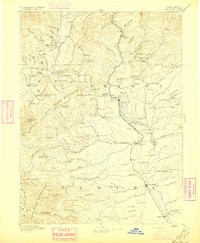 1894 Red Bluff1896 Print · USGSNorthern California's mining and river-trading frontier comes alive in this survey of the late nineteenth century. Genealogists and historians can trace the growth of rail hubs like Redding or locate early river crossings and industrial sites such as Jelley's Ferry and the Copper Mine.6 unique versions available
 - 1913 Map of Weaverville
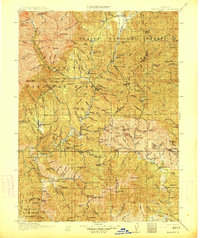 1913 Weaverville1913 Print · USGSTrinity and Shasta counties appear here during a peak era of mountain mining and ranching before the mid-century reservoirs were built. Genealogists can trace early homesteads and industrial sites like Whiskytown, Minersville, and the Gladstone Mine.6 unique versions available
 - 1944 Map of French Gulch, 1957 Print
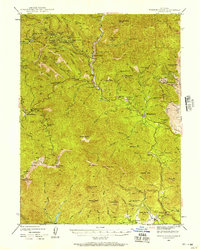 1944 French Gulch1957 Print · USGSThe mining districts of Shasta and Trinity counties are captured here in the mid-1940s, showcasing a landscape defined by gold extraction and rugged mountain summits. Researchers can trace historic claims and camps like French Gulch, the Brown Bear Mine, and the original site of Whiskeytown.2 unique versions available
 - 1948 Map of French Gulch
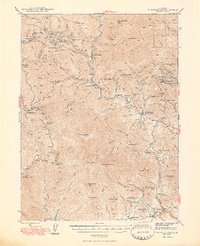 1948 French Gulch1948 Print · USGSShasta and Trinity counties are shown here in the late 1940s, capturing the region's deep mining heritage and rugged summit peaks. Genealogists and historians can locate vanished mining camps and landmarks like Deadwood, the Niagara Mine, and Whiskeytown.2 unique versions available
 - 1958 Map of Redding
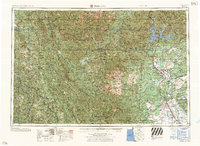 1958 Redding1958 Print · USGSNorthern California's valley and mountain landscapes are captured in the late fifties, showing the region as new reservoirs reshaped the river systems. Genealogists and historians can trace rail-side towns like Cottonwood, the military presence at Red Bluff Air Force Station, and mountain outposts like Weaverville.5 unique versions available
 - 1979 Map of Igo
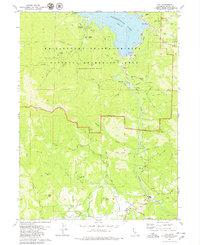 1979 Igo1979 Print · USGSThe Shasta County hills in the late 1970s reveal a landscape shaped by both the gold rush and modern engineering. Genealogists and researchers can locate the Whiskeytown Cemetery, the Igo-Ono School, and several legacy mining sites like the Potosi Mine.2 unique versions available
 - 1984 Map of Redding
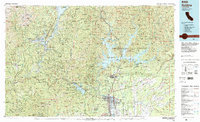 1984 Redding1984 Print · USGSThe Shasta County region in the mid-1980s reveals a landscape of massive reservoirs and active mining districts. Researchers can trace the development of Redding and Enterprise or locate historic mineral sites like Iron Mountain Mine and Keystone Mine.2 unique versions available
 - 1998 Map of Igo, 2002 Print
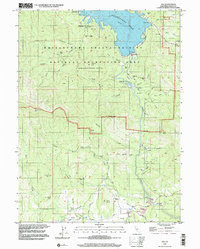 1998 Igo2002 Print · USGSShasta County’s mining and recreation history meet in the late nineties near the town of Igo. Researchers can locate old mining claims like the Potosi Mine and Mt-Shasta Mine, or trace genealogy at the Whiskeytown Cem and Igo-Ono Sch.
 - 2012 Map of Igo, 2012 Print
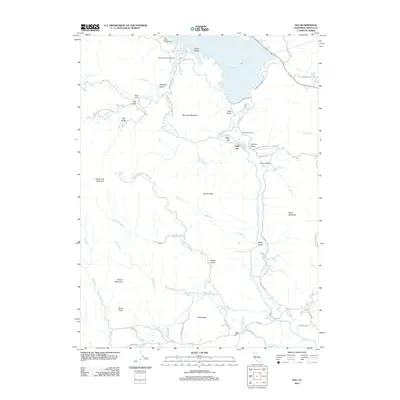 2012 Igo2012 Print · USGSShasta County’s western foothills are captured here in the early twenty-first century as the community of Igo sits below the expansive Whiskeytown Lake. Genealogists and historians can trace local landmarks like Whiskeytown Cem or follow old access routes like Zogg Mine Rd and Justice Mine Rd.
 - 2015 Map of Igo, 2015 Print
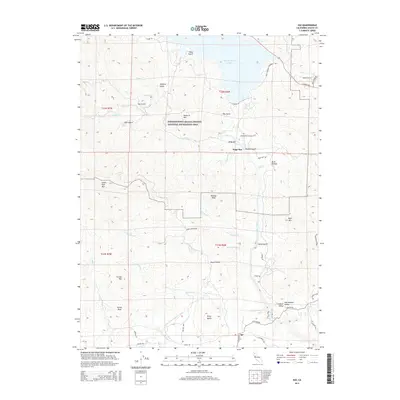 2015 Igo2015 Print · USGSShasta County's rugged foothills and the southern shores of a major reservoir are captured here during the mid-2010s. Genealogists and local historians can trace the geography of old mining claims and water infrastructure through Paige Bar, the Whiskeytown Cemetery, and Ditch Grade.
 - 2018 Map of Igo, 2018 Print
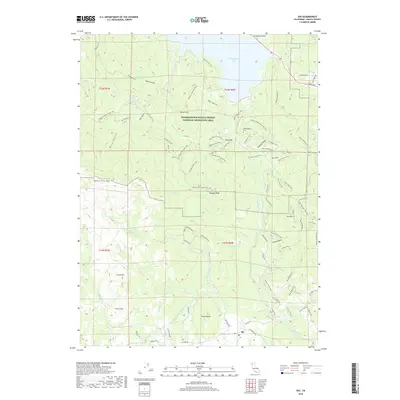 2018 Igo2018 Print · USGSIgo and the Whiskeytown backcountry are captured here in the late 2010s, showing a landscape defined by historic water engineering and rugged trails. Researchers can trace the path of the Princess Ditch or locate the Whiskeytown Cem and Paige Bar.
 - 2021 Map of Igo, 2021 Print
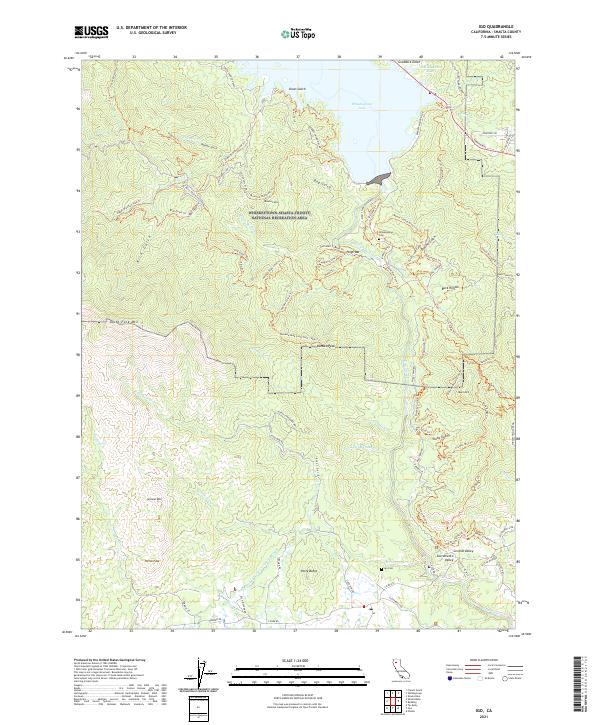 2021 Igo2021 Print · USGSShasta County in the early 2020s shows a landscape defined by massive reservoir projects and a dense network of mountain trails. Researchers can trace the legacy of mining and water management through sites like the Shasta Mine, Igo Cem, and the Happy Valley Irrigation Canal.
End of results
Showing maps 1-13 of 13
Top cities near Igo
Frequently asked questions
- What are the different types of historical maps available for Igo?
- What is the oldest map of Igo?
- Where can I purchase historical maps of Igo for my home or office?
- Where can I download high-res historical maps of Igo?
- Are there historical topographic maps available for Igo?
- Is there historical aerial imagery available for Igo?
- Where are historical maps of Igo sourced from?