1900s (20th Century) Maps of Wagon Wheel Gap, Colorado
Explore 11 historic maps of Wagon Wheel Gap from the 1900s (20th Century). These maps offer a rare glimpse into what life looked like during the 1900s — showing old roads, neighborhoods, homes, and landmarks that have changed or disappeared over time.
Whether you're researching your family's past, planning a metal detecting trip, or studying how Wagon Wheel Gap's landscape evolved across the 1900s, these high-resolution maps are a powerful tool for exploring the history of this region.
- Focus on a specific era: All maps on this page are from the 1900s, giving you a focused view of this time period.
- See what’s changed: Compare century-old streets, trails, and buildings to today's modern landscape using overlays and satellite layers.
- Research with precision: Use these maps for genealogy, historical research, land use analysis, or educational projects.
- View, download, or print: Maps are fully viewable online in high resolution, and can be downloaded or printed for your own records.
Start exploring Wagon Wheel Gap's history through authentic maps from the 1900s. This is your window into the past.
Wagon Wheel Gap, CO maps
(11)- 1914 Map of Creede
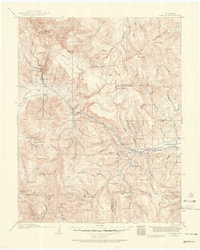 1914 Creede1914 Print · USGSMineral County mining camps and silver-era infrastructure are preserved in this pre-war survey. Genealogists and historians can trace industrial landmarks like the Nelson Tunnel alongside early settlements including Bachelor, Sunnyside, and Spar City.3 unique versions available
 - 1916 Map of Creede
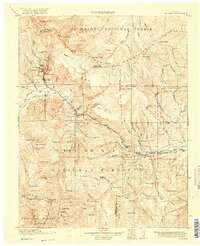 1916 Creede1916 Print · USGSThe silver boom of the San Juan Mountains is in full swing on this 1910s survey of the upper Rio Grande. Researchers can trace mining claims and tunnels at Bachelor, locate the Emma Mine, or find the old Pfeiffer School near Granger.3 unique versions available
 - 1945 Map of Durango
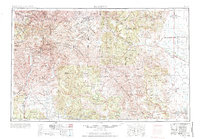 1945 Durango1945 Print · USGSSouthwest Colorado and Northern New Mexico at mid-century are defined by the high peaks of the San Juan Range and the tribal lands of the Southern Ute. Genealogists and historians can trace the paths of the D & R G W RR and locate local landmarks like Animas City and the Blanco Basin School.3 unique versions available
 - 1953 Map of Durango, 1963 Print
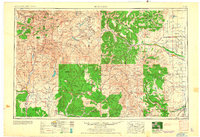 1953 Durango1963 Print · USGSThe high peaks of the San Juan Mountains and the Colorado mining country are shown here as they appeared in the early fifties. Genealogists and local historians can trace the rail lines of the D & R G W RR and locate historic mining camps like Silverton, Ouray, and Old Ophir.
 - 1954 Map of Durango
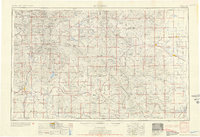 1954 Durango1954 Print · USGSSouthern Colorado in the mid-1950s was defined by high-altitude mining towns and the expansion of water storage in the San Luis Valley. Trace the narrow-gauge Denver & Rio Grande Western RR as it connects Durango to mountain outposts like Silverton and Creede.2 unique versions available
 - 1959 Map of Creede, 1961 Print
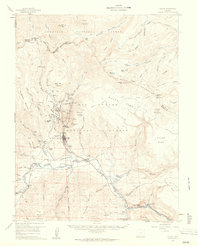 1959 Creede1961 Print · USGSMineral County mining peaks in the late fifties as the Denver and Rio Grande Western rail line reaches deep into the mountains. Genealogists and historians can trace numerous silver claims and local landmarks like the Amethyst Mine, the Historical Cem, and Fremont Sch No 1.6 unique versions available
 - 1961 Map of Durango
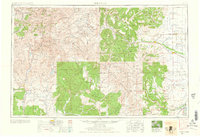 1961 Durango1961 Print · USGSThe high San Juan country in the early sixties is shown here as a network of historic mining towns and early reservoir projects. Genealogists and researchers can trace the Denver & Rio Grande Western RR as it connects Durango, Silverton, and Arboles.
 - 1963 Map of Durango
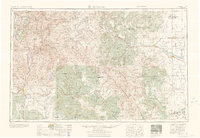 1963 Durango1963 Print · USGSThe San Juan Mountains and San Luis Valley are captured here in the early 1950s as mining, rail, and tribal lands shaped the region. Researchers can trace the Denver & Rio Grande Western RR through high-country towns like Telluride and Silverton, or locate landmarks such as the Asiatic Mine.
 - 1966 Map of Durango
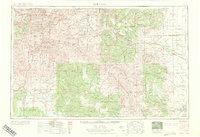 1966 Durango1966 Print · USGSSouthwestern Colorado and the New Mexico borderlands are shown here in the mid-1960s, a time when the narrow-gauge rail network still tied the high peaks to the valley floor. Researchers can trace the Denver & Rio Grande Western Railroad between settlements like Silverton, Antonito, and Pagosa Springs.2 unique versions available
 - 1982 Map of Del Norte, 1983 Print
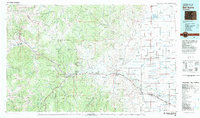 1982 Del Norte1983 Print · USGSThe Rio Grande Valley and San Juan Mountains are seen here in the early eighties, transitioning from rugged alpine peaks to the irrigated San Luis Valley plains. Researchers can trace the Denver and Rio Grande Western rail line and locate old regional hubs like Creede, Monte Vista, and Wagon Wheel Gap.
 - 1986 Map of Wagon Wheel Gap
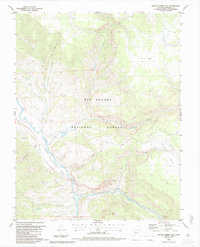 1986 Wagon Wheel Gap1986 Print · USGSMineral County's mountain corridor is captured here in the mid-1980s, centering on the historic river crossing and rail line. Local historians and railroad enthusiasts can trace the Denver and Rio Grande Western along the Rio Grande past Wagon Wheel Gap and the Palisade Campground.
End of results
Showing maps 1-11 of 11
Top cities near Wagon Wheel Gap
Frequently asked questions
- What are the different types of historical maps available for Wagon Wheel Gap?
- What is the oldest map of Wagon Wheel Gap?
- Where can I purchase historical maps of Wagon Wheel Gap for my home or office?
- Where can I download high-res historical maps of Wagon Wheel Gap?
- Are there historical topographic maps available for Wagon Wheel Gap?
- Is there historical aerial imagery available for Wagon Wheel Gap?
- Where are historical maps of Wagon Wheel Gap sourced from?