Old Maps of Putnam, Connecticut for Hiking & Exploration
Hike through history with 31 historic maps of Putnam. Explore old trails, ghost towns, and forgotten backroads — perfect for outdoor adventurers and local explorers.
- Rediscover forgotten places: Map out old mining camps, roads, and footpaths that no longer exist on modern maps.
- Layer with modern tools: Combine with LiDAR or satellite views to plan hikes through historical terrain.
- Made for exploration: Popular among hikers, overlanders, and local history lovers.
Use these maps to find adventure and explore the hidden past of Putnam.
Putnam, CT maps
(31)- 1889 Map of Putnam
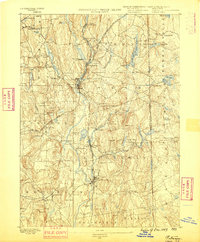 1889 Putnam1889 Print · USGSThe industrial Quinebaug Valley comes alive in the late 1880s, showcasing a landscape of riverside mill towns and critical rail junctions. Genealogists can trace family roots through specific locales like Danielsonville, Putnam Heights P.O., and Thompson Station.
 - 1893 Map of Putnam
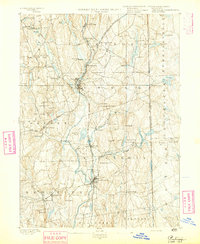 1893 Putnam1893 Print · USGSNortheastern Connecticut and the Rhode Island borderlands are documented here in the 1890s as the rail-and-river economy reached its peak. Researchers can trace historic mill villages like Ballouville, follow the New York and New England Railroad, or locate family sites near Danielsonville.8 unique versions available
 - 1919 Map of Putnam
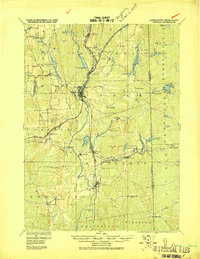 1919 Putnam1919 Print · USGSWindham County and the Rhode Island borderlands are captured here during a period of heavy rail reliance and mill town growth. Researchers can trace the New York and New England Railroad through Pomfret Station or locate local landmarks like Cooke Store and Poutis Landing.
 - 1943 Map of Putnam, 1944 Print
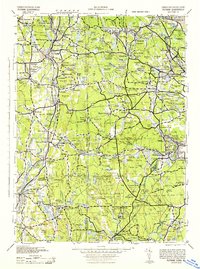 1943 Putnam1944 Print · USGSThe Connecticut and Rhode Island borderlands are captured here during the wartime era, showing a landscape defined by textile river towns and sprawling state forests. Trace the industrial rail corridor of the New York New Haven and Hartford through Putnam, Danielson, and Moosup.
 - 1945 Map of Putnam
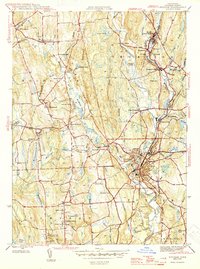 1945 Putnam1945 Print · USGSWindham County at the close of the Second World War shows a landscape of busy river towns and prominent private academies. Researchers can trace the New York New Haven and Hartford rail line past Putnam Academy and Annhurst College.2 unique versions available
 - 1946 Map of Danielson
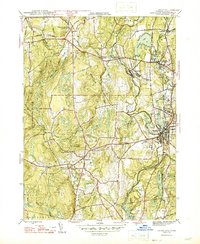 1946 Danielson1946 Print · USGSMid-century Windham County is shown here during a period of industrial transition along the Quinebaug River. Local historians can trace the rail-side developments of Goodyear and Danielson, find the State Orphanage, or locate old landmarks like the Creamery and Pomfret Sta.2 unique versions available
 - 1947 Map of Providence, 1948 Print
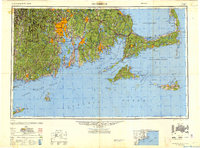 1947 Providence1948 Print · USGSSouthern New England is captured in the mid-1940s, showing a landscape defined by busy industrial ports and expanding military installations. Researchers can trace the rail lines of the N.Y. N.H. & H. RR or locate coastal defenses like Fort Adams and Quonset Point.5 unique versions available
 - 1948 Map of Providence, 1951 Print
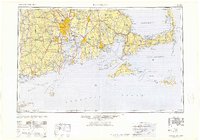 1948 Providence1951 Print · USGSSouthern New England’s coastal reaches are captured here in the late 1940s, from the industrial heart of Providence to the tip of Provincetown. Genealogists and historians can trace rail lines like the Central Vermont Railway and locate active military sites such as Otis Air Force Base and Fort Rodman.
 - 1955 Map of Danielson, 1956 Print
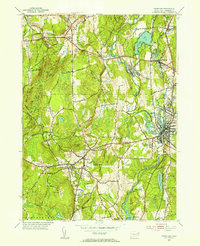 1955 Danielson1956 Print · USGSEastern Connecticut towns and industrial villages thrive along the Quinebaug River and railroad in the mid-fifties. Trace the development of Danielson and Brooklyn while locating landmarks like Putnam Wolf Den and the Sacred Heart Convent.7 unique versions available
 - 1955 Map of Putnam, 1956 Print
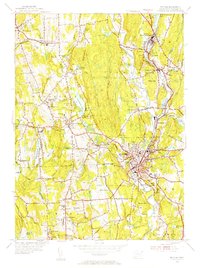 1955 Putnam1956 Print · USGSWindham County communities thrive along the Quinebaug River at mid-century as industry and education shape the landscape. Genealogists and historians can trace the legacy of local institutions like Woodstock Academy and the New York New Haven and Hartford rail corridor.6 unique versions available
 - 1955 Map of Thompson, 1957 Print
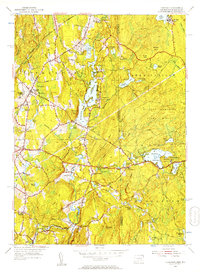 1955 Thompson1957 Print · USGSNortheastern Connecticut and the Rhode Island border are captured here in the mid-fifties, showing a landscape of scattered mill villages and expansive state forests. Genealogists and local historians can trace family roots at Dike Cem or locate old community hubs like East Putnam and Ballouville.2 unique versions available
 - 1957 Map of Providence
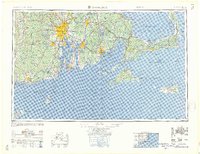 1957 Providence1957 Print · USGSCoastal New England at the height of the mid-century era shows a landscape shaped by maritime industry and Cold War defense. Genealogists and historians can trace the reach of the New York, New Haven & Hartford RR and locate legacy sites like Fort Adams and Quonset Point Naval Air Station.
 - 1958 Map of Providence
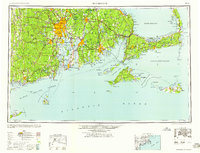 1958 Providence1958 Print · USGSThe Rhode Island and Massachusetts coastlines are shown in detail during the late 1950s, from the urban cores to the tips of the islands. Researchers can trace the mid-century footprint of Quonset Point Naval Air Station, the defense works at Fort Adams, and the rail network of the New York, New Haven and Hartford RR.
 - 1963 Map of Providence
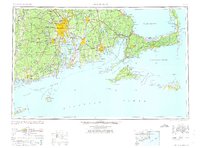 1963 Providence1963 Print · USGSSouthern New England's coastal and industrial heartland is captured here in the early sixties, from the Rhode Island mainland to the far reaches of the Cape. Researchers can trace mid-century growth in Providence or locate landmarks on Marthas Vineyard and Nantucket Island.
 - 1984 Map of Providence, 1985 Print
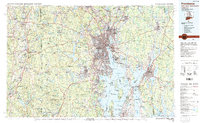 1984 Providence1985 Print · USGSThe Rhode Island coast and its industrial heartlands are captured here in the mid-eighties, showing the density of the Providence metro area. Researchers can trace historic rail lines like the Providence & Worcester RR and explore the maritime layout of Narragansett Bay and Newport.
 - 2012 Map of Thompson, 2012 Print
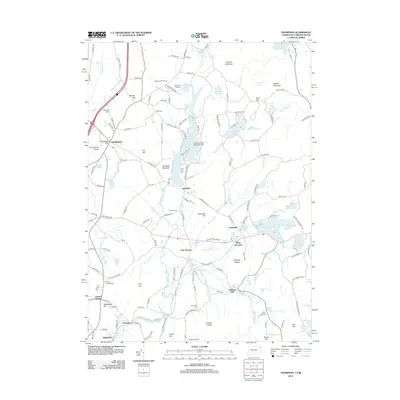 2012 Thompson2012 Print · USGSNortheastern Connecticut at the start of the 2010s reveals a landscape of wooded hills, historic cemeteries, and active recreation. Researchers can trace local heritage through Munyan Cem and Putnam Heights Cem, or locate landmarks like Marianopolis College and Thompson Raceway.
 - 2012 Map of Putnam, 2012 Print
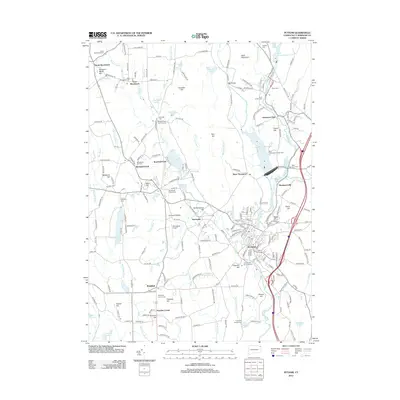 2012 Putnam2012 Print · USGSNortheastern Connecticut at the start of the 2010s reveals a cluster of mill-era villages and sprawling historic cemeteries. Genealogists and historians can trace lineages across the Old Killingly Burial Ground, the Woodstock Fairgrounds, and Saint Joseph Cem.
 - 2012 Map of Danielson, 2012 Print
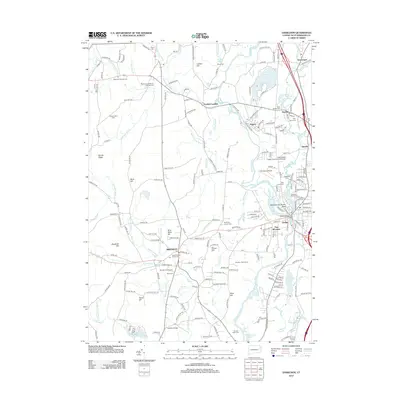 2012 Danielson2012 Print · USGSNortheastern Connecticut at the start of the 2010s shows a landscape of historic mill villages and quiet upland ridges. Genealogists and historians can trace numerous burial sites like Old Trinity Church Cem and landmarks such as the Israel Putnam Memorial or the Brooklyn Fairgrounds.
 - 2015 Map of Danielson, 2015 Print
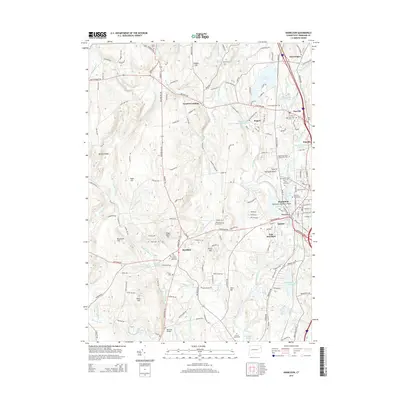 2015 Danielson2015 Print · USGSNortheastern Connecticut’s industrial river valleys and colonial heritage are preserved here in the mid-2010s. Researchers can trace family history at Old Trinity Church Cem and High Saint Cem or explore the geography of Dayville and Brooklyn.
 - 2015 Map of Thompson, 2015 Print
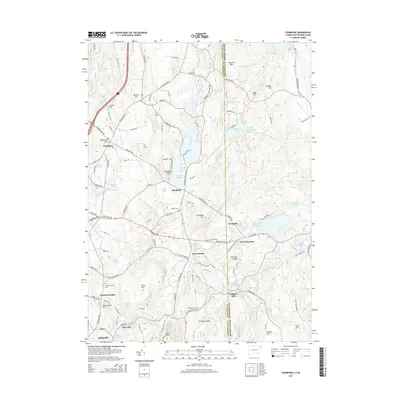 2015 Thompson2015 Print · USGSThe Connecticut and Rhode Island borderlands come to life in the mid-2010s, showing a landscape defined by water and wood. Researchers can locate family burial sites like Munyan Cemetery or trace the early industrial footprint at Williams Mill near East Putnam.
 - 2015 Map of Putnam, 2015 Print
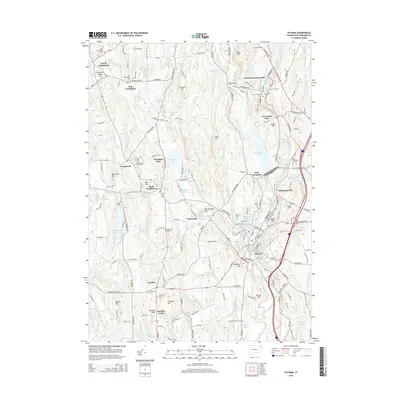 2015 Putnam2015 Print · USGSThe industrial river valleys and hilltop villages of northeastern Connecticut are captured here during the mid-2010s. Researchers can locate numerous family burial grounds like Upham Cem and Hill Cem while tracing the geography of Grosvenor Dale and Harrisville.
 - 2018 Map of Putnam, 2018 Print
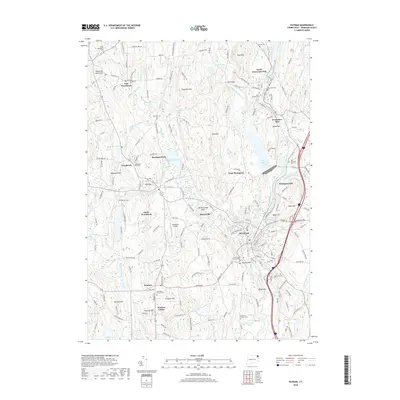 2018 Putnam2018 Print · USGSNortheastern Connecticut at the turn of the 21st century remains a landscape of river-valley settlements and upland farms. Genealogists can trace family names at the Old Killingly Burial Ground, Quasset Cem, or the Aspinwall Cem near the Quinebaug River.
 - 2018 Map of Thompson, 2018 Print
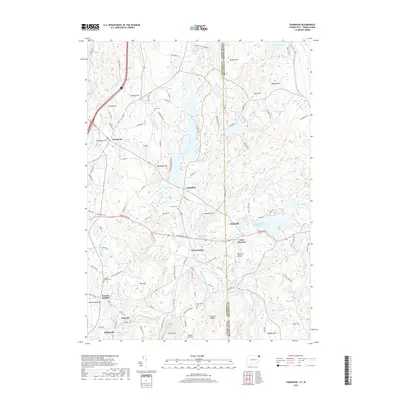 2018 Thompson2018 Print · USGSThe borderlands of Connecticut and Rhode Island are mapped here in the late 2010s, showing a landscape of historic hilltop villages and expansive reservoirs. Researchers can trace local lineage through sites like Munyan Cem and Putnam Heights Cem or locate old industrial markers like Grist Mill Pond.
 - 2018 Map of Danielson, 2018 Print
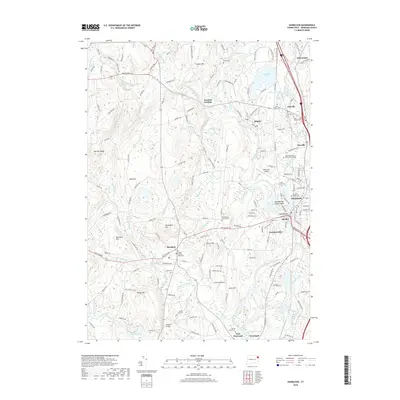 2018 Danielson2018 Print · USGSNortheastern Connecticut’s industrial river corridor is captured here in the late twenty-tens, tracing the path of the Quinebaug River through historic mill towns. Genealogists can locate numerous burial sites such as Old Trinity Church Cem and Holy Cross Cem, or trace landmarks like the Israel Putnam Memorial.
 - 2021 Map of Putnam, 2021 Print
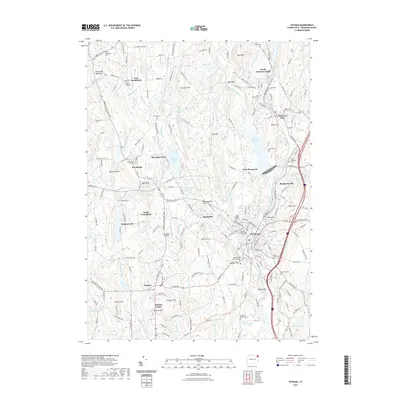 2021 Putnam2021 Print · USGSNortheastern Connecticut at the start of the 2020s shows a landscape of industrial river towns and quiet upland villages. You can trace family history through sites like the Old Killingly Burial Ground or explore local landmarks like Roseland Park and the Airline Trl.
Showing maps 1-25 of 31
Top cities near Putnam
- Coventry historical maps
- Webster historical maps
- Killingly historical maps
- Southbridge historical maps
- Northbridge historical maps
- Burrillville historical maps
See more
Top neighborhoods of Putnam
Frequently asked questions
- What are the different types of historical maps available for Putnam?
- What is the oldest map of Putnam?
- Where can I purchase historical maps of Putnam for my home or office?
- Where can I download high-res historical maps of Putnam?
- Are there historical topographic maps available for Putnam?
- Is there historical aerial imagery available for Putnam?
- Where are historical maps of Putnam sourced from?