Old Maps of Sherman, Connecticut for Metal Detecting
Plan your next treasure hunt with 47 historic maps of Sherman. Find old homesites, ghost towns, trails, and gathering spots that may be lost to time — perfect for identifying promising metal detecting locations.
- Locate forgotten sites: Uncover places like long-lost settlements, abandoned rail lines, or gathering spots.
- Plan better hunts: Use map overlays combined with LiDAR or satellite views to narrow in on historically rich areas.
- Made for detectorists: Thousands of hobbyists use these maps to discover relics, coins, and hidden history.
Use these historic maps to boost your research and find new opportunities beneath the surface of Sherman.
Sherman, CT maps
(47)- 1892 Map of New Milford
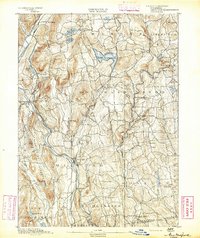 1892 New Milford1892 Print · USGSLitchfield County in the late nineteenth century is defined by the steep valleys of the Housatonic and Shepaug rivers. Genealogists and researchers can trace the rail-and-river economy through landmarks like Housatonic Railroad, Boardmans Bridge, and Washington Green.
 - 1893 Map of New Milford
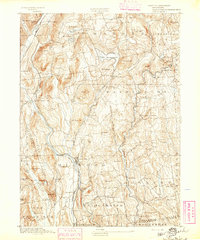 1893 New Milford1893 Print · USGSLitchfield County's river valleys and hills are captured here in the late nineteenth century, showing the region's development before modern expansion. Genealogists can trace the rail-and-river network through historic depots like Merwinsville and old village centers including Washington Green and Bridgewater.2 unique versions available
 - 1893 Map of Clove
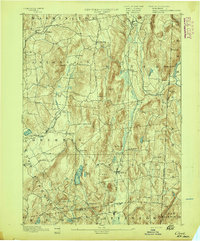 1893 Clove1893 Print · USGSDutchess County and the Connecticut border come to life in the 1890s, when iron furnaces and rural depots still defined the landscape. Trace the tracks of the Columbia and Clove R.R. and find old family landmarks like Crouse Store and Moore Mill.
 - 1894 Map of Clove
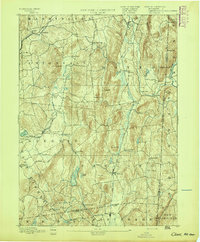 1894 Clove1894 Print · USGSDutchess County at the close of the nineteenth century was a land of steep ridges and vital rail corridors. Genealogists and local historians can trace family locations near Dover Furnace, Clove Valley, and rural landmarks like Crouse Store.
 - 1898 Map of Clove
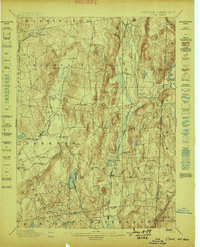 1898 Clove1898 Print · USGSDutchess County and the Connecticut borderlands are captured here in the late nineteenth century as railroads fueled the growth of valley towns. Genealogists and historians can trace family locations in Verbank Village, Stormville, and near landmarks like Bulls Bridge.
 - 1901 Map of Clove
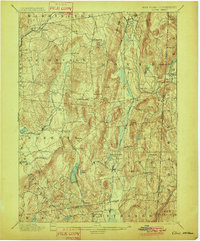 1901 Clove1901 Print · USGSDutchess County and the Connecticut borderlands are captured here at the close of the nineteenth century as the rail corridors began to shape local commerce. Genealogists can trace family holdings and old junctions from Dover Plains to Stormville and Moores Mill.11 unique versions available
 - 1904 Map of New Milford
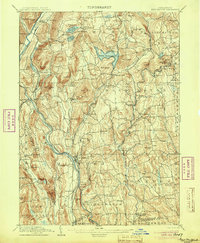 1904 New Milford1904 Print · USGSLitchfield County at the close of the nineteenth century is defined by the industrial valleys of the Housatonic River and the rural reaches of Washington. Researchers can trace the era's infrastructure through landmarks like Kent Furnace, the Berkshire Division rail line, and the village at Roxbury Station.8 unique versions available
 - 1904 Map of Litchfield
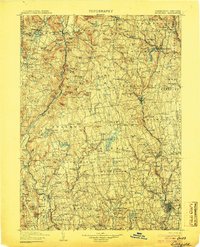 1904 Litchfield1904 Print · USGSThe Litchfield Hills at the turn of the century are shown here as a landscape of iron heritage and river-powered industry. Genealogists and historians can locate old industrial sites like Kent Furnace, ancestral homes near Sharon Valley, and early rail stops at Limerock Sta..3 unique versions available
 - 1944 Map of Dover Plains, 1956 Print
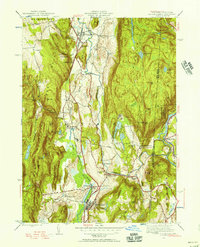 1944 Dover Plains1956 Print · USGSDutchess County at the close of the Second World War was a landscape of fertile valleys and mountain ridges. Genealogists and historians can trace rail-side life and local landmarks like Dover Plains, the Appalachian Trail, and the Schaghticoke Indian Reservation.2 unique versions available
 - 1945 Map of Pawling, 1956 Print
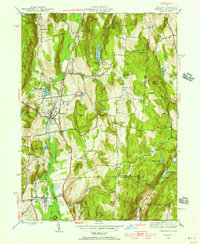 1945 Pawling1956 Print · USGSDutchess County at the close of the Second World War reveals a landscape of high ridges and significant wetlands along the New York-Connecticut border. Genealogists and local historians can trace legacy landmarks including the Quaker Hill Meeting House, the village of Pawling, and the vast expanse of The Great Swamp.2 unique versions available
 - 1947 Map of Pawling
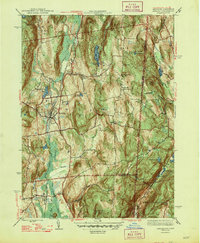 1947 Pawling1947 Print · USGSDutchess County at the edge of Connecticut was a landscape of highland ridges and river valleys in the late 1940s. Genealogists can locate family landmarks such as Hurd Sch, Akins Corners, and the historic Quaker Hill Meeting House.2 unique versions available
 - 1947 Map of Dover Plains
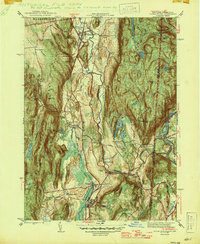 1947 Dover Plains1947 Print · USGSDutchess County at the edge of the Connecticut border reveals a landscape of state institutions, mountain ridges, and river valleys in the late 1940s. Genealogists can trace family landmarks like Valley View Cem or search for old schoolhouses including Dover Furnace Sch and Webatuck Sch.2 unique versions available
 - 1947 Map of Hartford, 1955 Print
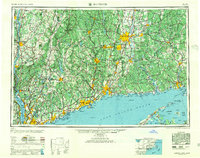 1947 Hartford1955 Print · USGSSouthern New England and the Hudson Valley are shown in detail during the post-war expansion era. Genealogists and researchers can trace local landmarks from the State Capitol and Yale University to the Stratford Lighthouse and Woodlawn Cem.2 unique versions available
 - 1948 Map of Hartford
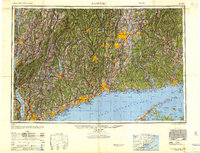 1948 Hartford1948 Print · USGSSouthern New England is captured here in the late 1940s, showcasing a landscape of thriving industrial cities and developing parkways. Genealogists and historians can trace the rail networks of the New York New Haven and Hartford RR or locate coastal defense sites like Fort Terry and Camp Shanks.2 unique versions available
 - 1950 Map of Kent
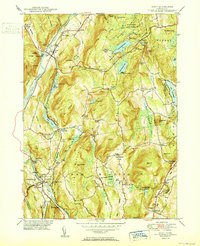 1950 Kent1950 Print · USGSWestern Connecticut's river valleys and ridgelines are captured here at mid-century, following the winding Housatonic River. Researchers can trace the New York New Haven and Hartford RR through Gaylordsville or locate Bulls Bridge and Kent Furnace.2 unique versions available
 - 1951 Map of New Milford
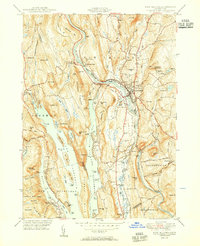 1951 New Milford1951 Print · USGSLitchfield County's river valleys and reservoirs are captured here in the early fifties, showing the area's transition into a regional recreation hub. Trace the heritage of New Milford and Sherman through landmarks like the Lime Kiln, Candlewood Cave, and the Boardman Sch.2 unique versions available
 - 1955 Map of New Milford, 1956 Print
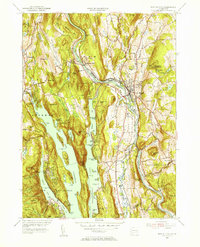 1955 New Milford1956 Print · USGSMid-century Litchfield County comes into focus as New Milford grows along the Housatonic. Genealogists and historians can trace family plots at Holy Cross Cem and Quaker Cem, or locate the Canterbury Sch and Candlewood Cave.9 unique versions available
 - 1955 Map of Kent, 1956 Print
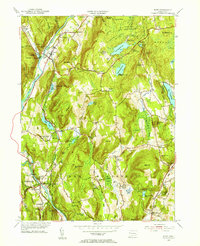 1955 Kent1956 Print · USGSLitchfield County in the mid-fifties is a landscape of river-valley towns and upland summer camps. Genealogists and historians can trace rail-era landmarks like Gaylordsville Sta and old burial grounds such as Kent Hollow Cem or Morningside Cem.4 unique versions available
 - 1958 Map of Pawling, 1960 Print
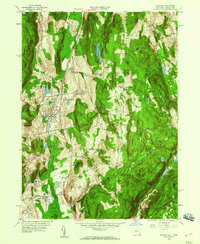 1958 Pawling1960 Print · USGSDutchess County and eastern Connecticut are mapped here in the late fifties, showing the region as the Harlem Valley railroad corridor remained central to local life. Genealogists can trace family landmarks and schools like Trinity-Pawling Sch, the Meeting House on Quaker Hill, and old junctions at Hurd Corners.4 unique versions available
 - 1958 Map of Dover Plains, 1960 Print
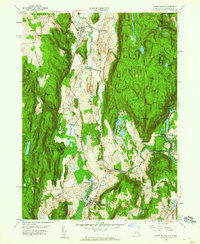 1958 Dover Plains1960 Print · USGSDutchess County enters the late fifties with its rail-and-river corridor well-established between Dover Plains and Wingdale. Genealogists and hikers can trace the Appalachian Trail past the Schaghticoke Indian Reservation and locate landmarks like Dover Furnace and the Valley View Cem.4 unique versions available
 - 1961 Map of Hartford
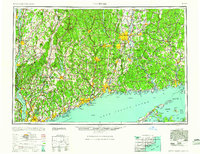 1961 Hartford1961 Print · USGSSouthern New England and the Hudson Valley are shown here in the mid-fifties, capturing a landscape of booming coastal cities and interior hill towns. Researchers can trace the legacy of the New York New Haven and Hartford rail corridor and find strategic sites like Camp Shanks and Fort Michie.
 - 1962 Map of Hartford, 1971 Print
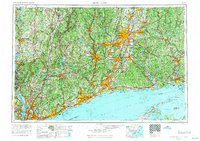 1962 Hartford1971 Print · USGSSouthern New England and the Hudson Valley are shown in the early sixties, as suburban growth reached into the foothills. Trace the path of the New York New Haven & Hartford RR and find landmarks like Camp Nathan Hale and Gillette Castle State Park.3 unique versions available
 - 1965 Map of Hartford
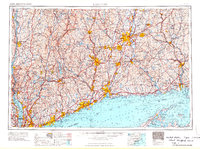 1965 Hartford1965 Print · USGSSouthern New England and the Hudson Valley are shown here during the mid-sixties expansion of the Interstate era. Trace the path of the New York New Haven & Hartford RR or locate historic landmarks like West Point Military Reservation and the Merritt Parkway.2 unique versions available
 - 1985 Map of Waterbury, 1986 Print
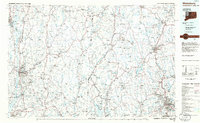 1985 Waterbury1986 Print · USGSThe Western Connecticut highlands and the Hudson Valley are captured in the mid-1980s, showing a landscape of deep forests and industrial river towns. Genealogists can trace family connections from Waterbury up through Litchfield and Torrington, while exploring the vast Barkhamsted Reservoir and Candlewood Lake basins.
 - 1993 Map of Waterbury
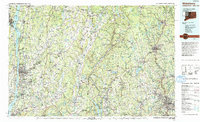 1993 Waterbury1993 Print · USGSWestern Connecticut and the Hudson Valley appear in the early nineties as a landscape of established industrial cities and deep forest preserves. Researchers can trace the rail corridors of the Metro-North Railroad or locate family sites near the Taft School and Riverside Cemetery.
Showing maps 1-25 of 47
Top cities near Sherman
- Danbury historical maps
- Carmel historical maps
- East Fishkill historical maps
- Southbury historical maps
- Monroe historical maps
- Bethel historical maps
See more
Top neighborhoods of Sherman
Frequently asked questions
- What are the different types of historical maps available for Sherman?
- What is the oldest map of Sherman?
- Where can I purchase historical maps of Sherman for my home or office?
- Where can I download high-res historical maps of Sherman?
- Are there historical topographic maps available for Sherman?
- Is there historical aerial imagery available for Sherman?
- Where are historical maps of Sherman sourced from?