Old Maps of Rio, Florida
Explore 20 old maps of Rio, spanning from 1948 to today. These high-resolution historic maps reveal how streets, neighborhoods, landmarks, and natural features evolved over time — perfect for genealogy, metal detecting, research, and local history exploration.
What you can do with these maps:
- See how Rio changed over time: Compare historical maps to modern-day views to trace roads, homesites, rail lines & more.
- View detailed metadata: Each map includes creators, publishers, year, scale, and archive source.
- Overlay maps with satellite & LiDAR: Visualize the past alongside modern tools to explore terrain & human change.
- Trusted historical sources: Maps sourced from the USGS, Library of Congress, and other archives.
- Access maps your way: View online, download high-res files, or order prints for personal or research use.
Start exploring old maps of Rio to uncover forgotten places, hidden landmarks, and the deep history beneath your feet.
Rio, FL maps
(20)- 1948 Map of Palm City, 1956 Print
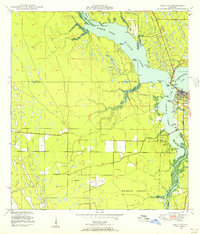 1948 Palm City1956 Print · USGSThe St. Lucie River waterfront comes alive in this post-war survey, showing the rail and river networks of the Florida coast. Researchers can trace the development of Stuart and Palm City alongside landmarks like the Roosevelt Bridge and Union Ch.5 unique versions available
 - 1948 Map of St. Lucie Inlet, 1958 Print
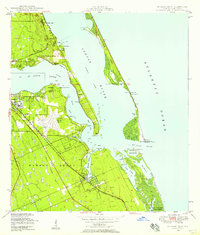 1948 St. Lucie Inlet1958 Print · USGSCoastal Martin County comes alive in this post-war survey of the riverfronts and barrier islands near the St Lucie Inlet. Researchers can trace the rail corridor of the Florida East Coast, early neighborhoods like Rio and Salerno, and the sprawling grounds of Witham Field.4 unique versions available
 - 1950 Map of St. Lucie Inlet
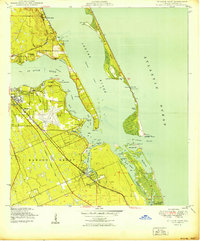 1950 St. Lucie Inlet1950 Print · USGSMid-century coastal Florida comes alive in this survey of the St. Lucie area as it appeared just after the war. Local historians can trace the foundations of Stuart and Port Sewall, the grounds of Witham Field, and the expanse of the Hanson Grant.
 - 1950 Map of Palm City
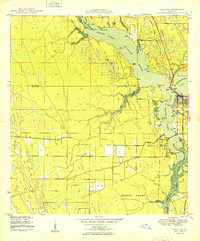 1950 Palm City1950 Print · USGSMid-century coastal Florida comes alive in this survey of the river forks and early development near the Atlantic coast. Genealogists and local historians can trace the foundations of Stuart and Palm City, locating landmarks like Union Ch and the Fern Hill Cem.
 - 1956 Map of Fort Pierce, 1965 Print
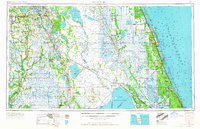 1956 Fort Pierce1965 Print · USGSCentral and coastal Florida appear here during a period of rapid post-war growth and industrial expansion. Researchers can trace the mid-century rail-to-highway transition along the Sunshine State Parkway or locate old settlements like Ankona, Walton, and Indrio.4 unique versions available
 - 1958 Map of Fort Pierce
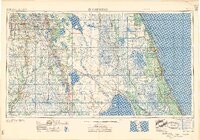 1958 Fort Pierce1958 Print · USGSCentral and South Florida are captured here in the late fifties as the citrus and ranching interior met the modern highway era. Researchers can trace the early path of the Sunshine State Parkway and locate established rail depots in Sebring, Okeechobee, and Arcadia.
 - 1959 Map of Fort Pierce
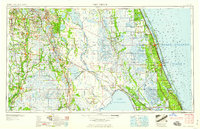 1959 Fort Pierce1959 Print · USGSCentral Florida and the Treasure Coast are shown here in the late fifties, during a period of steady citrus and coastal growth. Trace the historic routes of the Florida East Coast Ry or locate the boundaries of the Seminole Indian Reservation and Highlands Hammock State Park.3 unique versions available
 - 1981 Map of Fort Pierce, 1982 Print
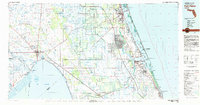 1981 Fort Pierce1982 Print · USGSFlorida's Treasure Coast and the northern rim of the Everglades are caught in a period of significant growth during the early eighties. Genealogists and historians can trace the rail-side development of White City and Eden or the water-management history of the St Lucie Canal.
 - 1986 Map of Fort Pierce
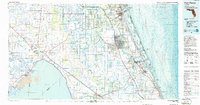 1986 Fort Pierce1986 Print · USGSSoutheast Florida’s Atlantic coast and inland waterways are captured in the mid-1980s as suburban development began to press against the agricultural interior. Trace the path of the Florida East Coast Railway through Fort Pierce or locate family sites near Evergreen Cem and White City.
 - 1988 Map of Fort Pierce
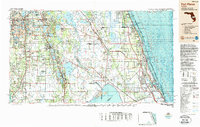 1988 Fort Pierce1988 Print · USGSThe Atlantic coast and Florida’s interior lakelands are captured in the late eighties, just as the Treasure Coast was experiencing rapid development. Genealogists and historians can trace the rail lines of the Florida East Coast and explore the bounds of the Brighton Indian Reservation.
 - 2012 Map of Palm City, 2012 Print
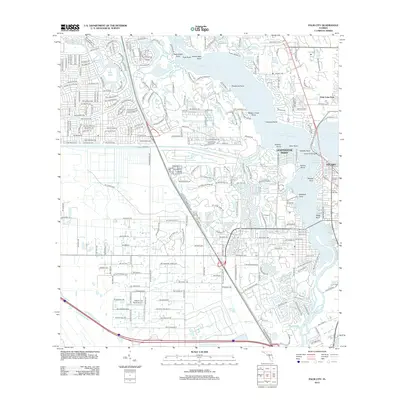 2012 Palm City2012 Print · USGSThe maritime landscape of the Treasure Coast comes to life in this early 21st-century survey of the Saint Lucie River junction. Researchers can trace the development of Stuart and find local landmarks like the Naked Lady Ranch Airport and Fern Hill Cem.
 - 2012 Map of Saint Lucie Inlet, 2012 Print
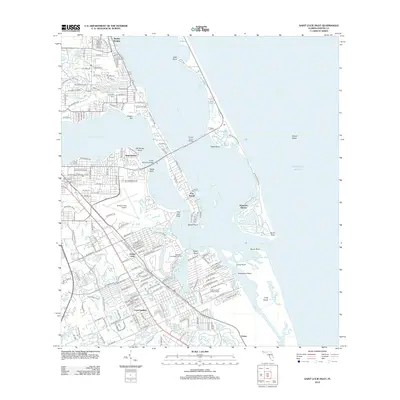 2012 Saint Lucie Inlet2012 Print · USGSCoastal Florida is captured in this survey as development spans from the mainland to the intricate peninsulas of the Atlantic coast. Local researchers can trace residential growth in Golden Gate, locate the All Saints Cem, or explore the waterfront around Port Sewall.
 - 2015 Map of Palm City, 2015 Print
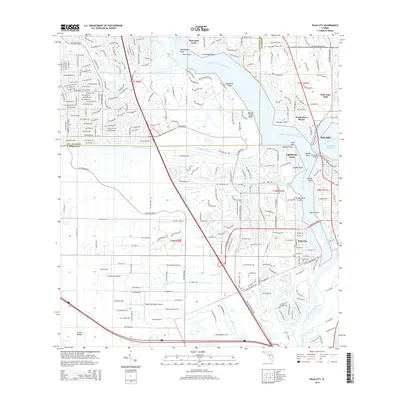 2015 Palm City2015 Print · USGSCoastal Martin and Saint Lucie Counties show a sophisticated landscape of suburban growth and waterway management in the mid-2010s. Trace the intricate canal systems and shorelines near Stuart, Palm City, and the uniquely named Naked Lady Ranch Airport.
 - 2015 Map of Saint Lucie Inlet, 2015 Print
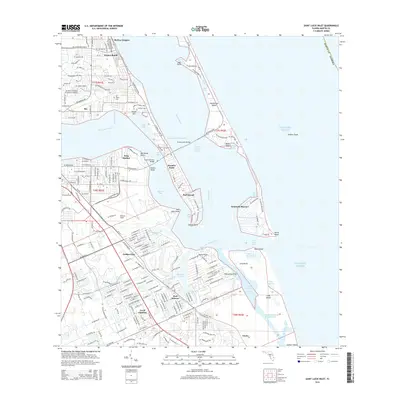 2015 Saint Lucie Inlet2015 Print · USGSThe Florida coast at the meeting of the Indian and Saint Lucie Rivers is shown here in the mid-2010s. Trace the neighborhood growth of Jensen Beach and Port Salerno, or locate specific landmarks like the All Saints Cem and Witham Field.
 - 2018 Map of Palm City, 2018 Print
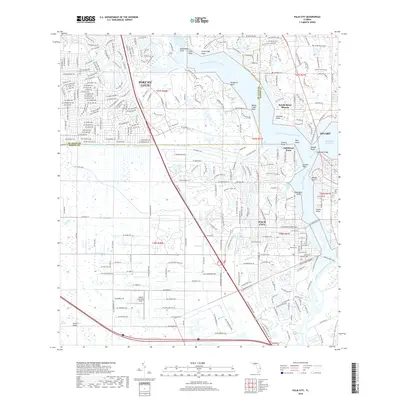 2018 Palm City2018 Print · USGSThe Florida coast near the Martin and Saint Lucie county line is shown here in its modern suburban form, where river forks and residential expansion meet. Researchers can trace the developed shorelines of Palm City, locate the Naked Lady Ranch Airport, or find family sites near Fern Hill Cem.
 - 2018 Map of Saint Lucie Inlet, 2018 Print
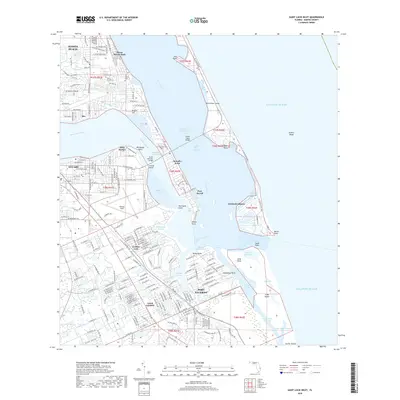 2018 Saint Lucie Inlet2018 Print · USGSCoastal Martin County at the end of the 2010s shows a landscape defined by the convergence of the Atlantic and the St. Lucie River. Trace the growth of Stuart and Port Salerno, or locate local landmarks like Witham Field and All Saints Cem.
 - 2021 Map of Saint Lucie Inlet, 2021 Print
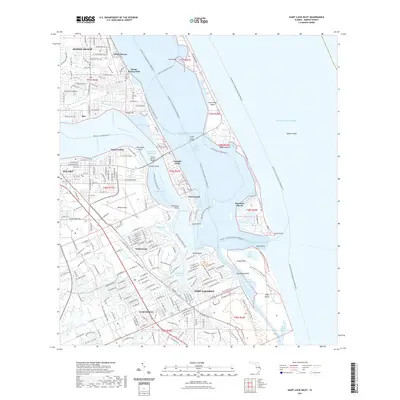 2021 Saint Lucie Inlet2021 Print · USGSThe Martin County coast is mapped here in the early 2020s, showing the intersection of the Saint Lucie River and the Atlantic. Researchers can trace local landmarks like Witham Field, the All Saints Cem, and the waterfront at Port Salerno.
 - 2021 Map of Palm City, 2021 Print
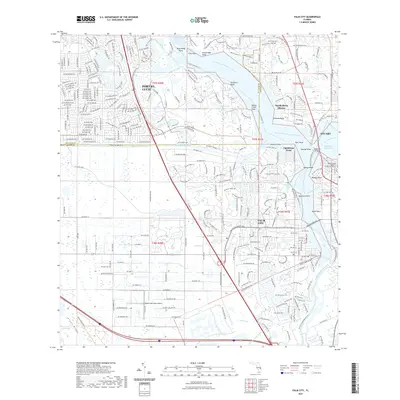 2021 Palm City2021 Print · USGSPort St. Lucie and Stuart meet along the complex, winding shores of the Saint Lucie River in this recent survey of Florida's Atlantic coast. Researchers can trace the development of Palm City, locate the Fern Hill Cem, or explore the unique Naked Lady Ranch Airport.
 - 2024 Map of Palm City, 2024 Print
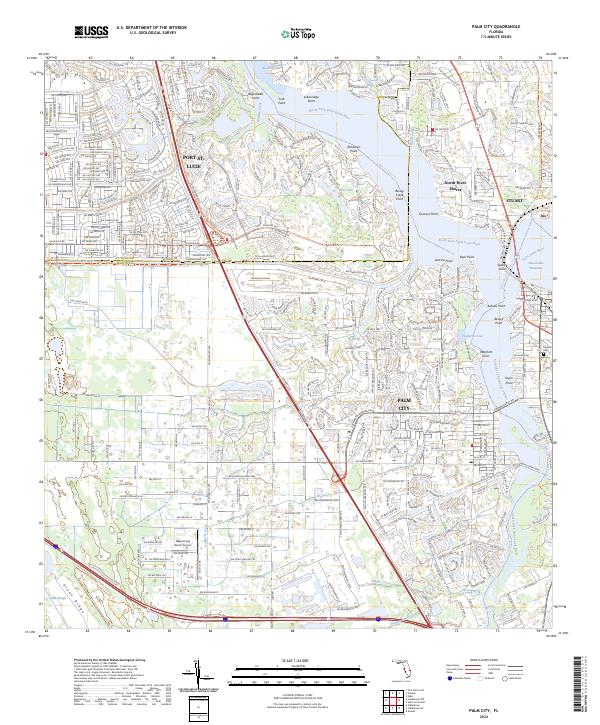 2024 Palm City2024 Print · USGSPalm City and the Saint Lucie River waterfront are documented here in the contemporary era of coastal development. Researchers can trace the path of the Florida East Coast Railway and locate local landmarks such as Fernhill Cem and the Naked Lady Ranch Airport.
 - 2024 Map of Saint Lucie Inlet, 2024 Print
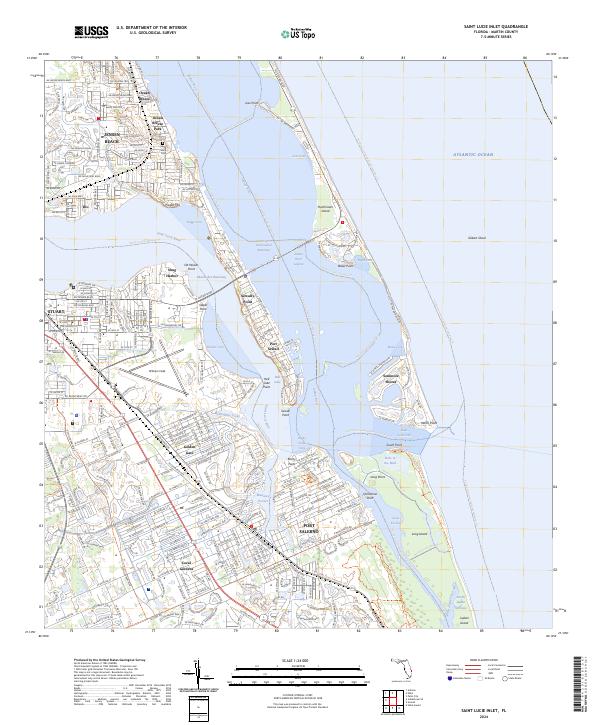 2024 Saint Lucie Inlet2024 Print · USGSCoastal Martin County comes alive in this contemporary survey of the river inlets and barrier islands during a period of sustained seaside growth. Researchers can trace local landmarks like All Saints Cem, Witham Field, and the historic waterfronts of Stuart and Port Salerno.
End of results
Showing maps 1-20 of 20
Frequently asked questions
- What are the different types of historical maps available for Rio?
- What is the oldest map of Rio?
- Where can I purchase historical maps of Rio for my home or office?
- Where can I download high-res historical maps of Rio?
- Are there historical topographic maps available for Rio?
- Is there historical aerial imagery available for Rio?
- Where are historical maps of Rio sourced from?