1900s (20th Century) Maps of Barrow County, Georgia
Explore 18 historic maps of Barrow County from the 1900s (20th Century). These maps offer a rare glimpse into what life looked like during the 1900s — showing old roads, neighborhoods, homes, and landmarks that have changed or disappeared over time.
Whether you're researching your family's past, planning a metal detecting trip, or studying how Barrow County's landscape evolved across the 1900s, these high-resolution maps are a powerful tool for exploring the history of this region.
- Focus on a specific era: All maps on this page are from the 1900s, giving you a focused view of this time period.
- See what’s changed: Compare century-old streets, trails, and buildings to today's modern landscape using overlays and satellite layers.
- Research with precision: Use these maps for genealogy, historical research, land use analysis, or educational projects.
- View, download, or print: Maps are fully viewable online in high resolution, and can be downloaded or printed for your own records.
Start exploring Barrow County's history through authentic maps from the 1900s. This is your window into the past.
Barrow County, GA maps
(18)- 1953 Map of Athens, 1966 Print
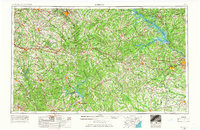 1953 Athens1966 Print · USGSGeorgia's Piedmont and Savannah River borderlands come alive in this mid-century survey of the region surrounding Athens and Augusta. Trace the rail-and-river economy through the Georgia RR and landmarks like the Fort Gordon Military Reservation.3 unique versions available
 - 1954 Map of Greenville, 1965 Print
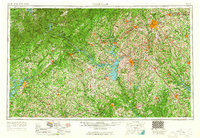 1954 Greenville1965 Print · USGSThe Upstate and Northeast Georgia are captured here during a decade of massive transformation as new reservoirs reshaped the Piedmont. Genealogists and hikers can trace the Appalachian Trail over Brasstown Bald or locate old community centers like Demorest, Westminster, and Royston.3 unique versions available
 - 1958 Map of Greenville
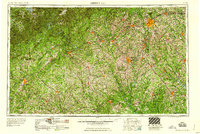 1958 Greenville1958 Print · USGSThe Piedmont and Blue Ridge foothills come alive in this mid-century survey of the Upstate and Northeast Georgia. Trace the regional rail-and-river economy through the Southern Railway corridors and early reservoir developments like Lake Sidney Lanier.
 - 1958 Map of Athens
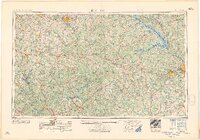 1958 Athens1958 Print · USGSNorth-central Georgia and the Savannah River valley are captured in the late fifties, showing the region as the new reservoirs were filling. Researchers can trace historic rail lines like the Georgia RR and locate rural landmarks such as Social Circle, Graves Mountain, and the Fort Gordon Military Reservation.
 - 1959 Map of Athens
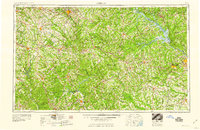 1959 Athens1959 Print · USGSNortheast Georgia and the South Carolina borderlands appear here in the mid-fifties, during a decade of infrastructure growth. Genealogists and historians can trace the rail-and-river geography of towns like Social Circle, the sprawl of Fort Gordon Military Reservation, and the newly formed Clark Hill Reservoir.
 - 1963 Map of Athens
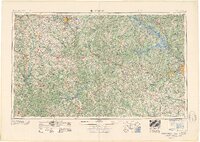 1963 Athens1963 Print · USGSGeorgia's Piedmont and the Savannah River valley are captured in the early sixties as major reservoirs and military installations reshaped the landscape. Researchers can trace the development of Clark Hill Reservoir, locate the Fort Gordon Military Reservation, and find historic towns like Social Circle and Eatonton.
 - 1964 Map of Chestnut Mountain, 1965 Print
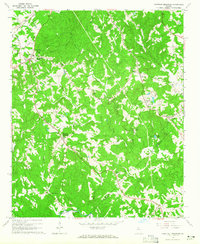 1964 Chestnut Mountain1965 Print · USGSHall County’s rural landscape is captured in the mid-1960s, showing a community defined by its creeks, ridges, and rail lines. Researchers can trace family sites like Blackshear Place or locate local landmarks including Tanner Mill and South Hall Sch.3 unique versions available
 - 1964 Map of Bold Springs, 1965 Print
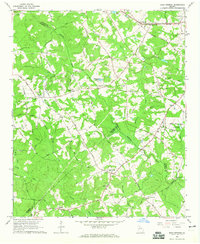 1964 Bold Springs1965 Print · USGSBarrow and Gwinnett counties appear here in the mid-sixties, a landscape of family-run farms and quiet rural crossroads. Researchers can trace historic land use through sites like Kilgore Cem, the Seaboard Air Line rail corridor, and the settlement at Bold Springs.4 unique versions available
 - 1964 Map of Winder North, 1965 Print
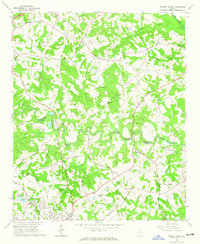 1964 Winder North1965 Print · USGSThe rural borderlands of Jackson and Barrow counties come into focus in the mid-sixties. Researchers can trace family sites like Rose Hill Cem, find the Holsenbeck Sch, and locate old landmarks like the Ebenezer Ch.4 unique versions available
 - 1964 Map of Auburn, 1965 Print
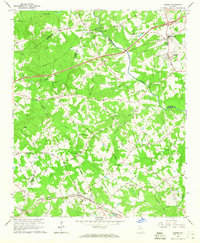 1964 Auburn1965 Print · USGSBarrow and Gwinnett counties come alive in the mid-sixties as the Seaboard Air Line connects the rural hubs of Auburn and Carl. Local researchers can trace historic church sites like Mt Moriah Ch or find the Covered Bridge near Thompsons Mill.3 unique versions available
 - 1964 Map of Jefferson, 1965 Print
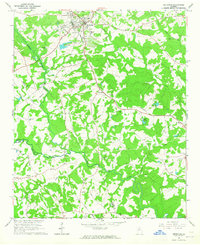 1964 Jefferson1965 Print · USGSJackson County in the mid-1960s reveals a landscape of established small-town centers and quiet rural crossroads connected by the SEABOARD AIR LINE. Researchers can trace old family landmarks and community anchors like Redstone Ch, Holiday Cem, and the Bryan Sch.
 - 1964 Map of Winder South, 1965 Print
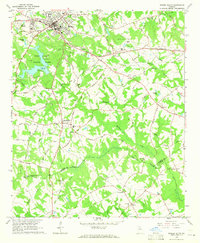 1964 Winder South1965 Print · USGSBarrow and Walton counties come to life in the mid-sixties, showing the transition from the city of Winder to rural crossroads like Bethlehem. Family historians can locate several local landmarks, including the Rose Hill Cem, the Old Fort, and a Covered Bridge on the Apalachee River.3 unique versions available
 - 1964 Map of Statham, 1965 Print
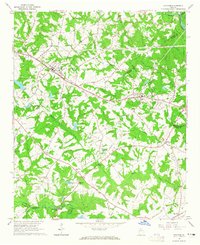 1964 Statham1965 Print · USGSThe rail-and-road corridor between Statham and Bogart is captured here in the mid-1960s, showing a rural landscape of Piedmont farms and creek-side settlements. Researchers can trace historic family landmarks such as Pleasant Hill Ch, Barber Creek Sch, and the Millsap Cem.4 unique versions available
 - 1979 Map of Commerce, 1980 Print
 1979 Commerce1980 Print · USGSThe Georgia and South Carolina Piedmont reached a period of significant regional growth in the late seventies. Genealogists and historians can trace family roots through locations like Blackberry Church, Old Pioneer Cem, and the Gillsville Sch.2 unique versions available
 - 1980 Map of Athens, 1981 Print
 1980 Athens1981 Print · USGSNorth Georgia in the early eighties exhibits a landscape of growing university towns and deep-rooted rail hubs. Genealogists can trace family lands near Social Circle or Watkinsville while following the routes of the Central of Georgia and the Appalachee River.2 unique versions available
 - 1988 Map of Athens
 1988 Athens1988 Print · USGSThe Georgia Piedmont and South Carolina borderlands appear in the late eighties as a landscape of vast reservoirs and growing towns. Researchers can trace the legacy of the Georgia RR connecting Athens and Augusta, or locate landmarks within Oconee National Forest.
 - 1992 Map of Chestnut Mountain, 1993 Print
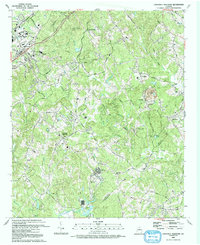 1992 Chestnut Mountain1993 Print · USGSHall County and Jackson County meet in the early nineties as educational centers and motorsports venues began to reshape this Georgia landscape. Genealogists and historians can trace family ties through Tanner Mill, Hopewell Cem, and Cross Plains Cem.
 - 1993 Map of Auburn
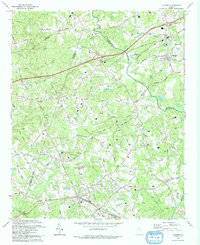 1993 Auburn1993 Print · USGSBarrow and Gwinnett counties were undergoing steady growth in the early nineties, centered on the Seaboard System rail towns. Genealogists can trace family names through numerous rural landmarks like Thompsons Mill, Hebron Cem, and Harmony Grove Ch.
End of results
Showing maps 1-18 of 18
Top cities of Barrow County
- Winder historical maps
- Auburn historical maps
- Statham historical maps
- Russell historical maps
- Bethlehem historical maps
- Carl historical maps
Frequently asked questions
- What are the different types of historical maps available for Barrow County?
- What is the oldest map of Barrow County?
- Where can I purchase historical maps of Barrow County for my home or office?
- Where can I download high-res historical maps of Barrow County?
- Are there historical topographic maps available for Barrow County?
- Is there historical aerial imagery available for Barrow County?
- Where are historical maps of Barrow County sourced from?