Old Maps of Carroll County, Georgia for Genealogy
Trace your family roots with 120 historic maps of Carroll County. These high-res maps reveal old neighborhoods, homesites, landmarks, and streets — helping you uncover where your ancestors lived and how the area evolved over time.
- Explore historic neighborhoods: Identify where your relatives may have lived in the 1800s or 1900s.
- Compare maps over time: Trace the changes in streets, buildings, and landmarks for multi-generational research.
- Perfect for genealogy & ancestry research: Used by family historians and researchers to map out lineage and migration.
These maps are an incredible resource for exploring your personal connection to Carroll County's past.
Carroll County, GA maps
(120)- 1889 Map of Tallapoosa
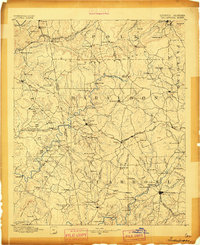 1889 Tallapoosa1889 Print · USGSAcross the Georgia and Alabama border in the late nineteenth century, iron furnaces and river mills powered the local economy. Genealogists can trace family homesteads near landmarks like Tecumseh Furnace, Pine Wood Church, and Allgood's Mill.
 - 1891 Map of Marietta
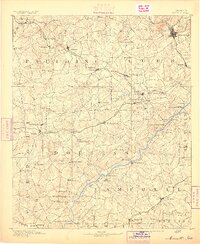 1891 Marietta1891 Print · USGSNorth Georgia at the close of the nineteenth century is captured here as the railroad began to reshape the river-dependent landscape. Genealogists can locate family-named landmarks like Allens Mills or trace historic river crossings at Campbellton Fy and Hutchinsons Ferry.
 - 1892 Map of Tallapoosa
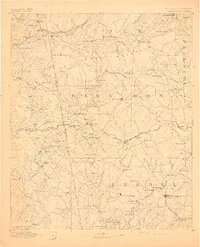 1892 Tallapoosa1892 Print · USGSThe Georgia-Alabama borderlands at the end of the nineteenth century reveal a landscape of early industry and river-powered mills. Genealogists and historians can trace family-named landmarks like Allgood Mill, Rainwater Ford, and the Tecumseh Furnace ruins.
 - 1895 Map of Marietta
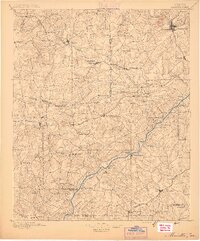 1895 Marietta1895 Print · USGSNorthwest Georgia in the 1890s appears as a landscape defined by the winding Chattahoochee River and the rapid expansion of iron rails. Genealogists can trace early family-named river crossings like Morris Ferry or explore the origins of Old Villarica and Bright Star.
 - 1897 Map of Marietta
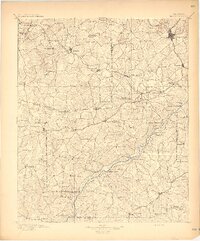 1897 Marietta1897 Print · USGSNorthwest Georgia in the late nineteenth century was a landscape defined by river crossings and expanding rail lines. Genealogists and historians can trace defunct river crossings like Pumpkintown Ferry and old industrial sites like Daniels Mills or Beatty Switch.
 - 1897 Map of Tallapoosa
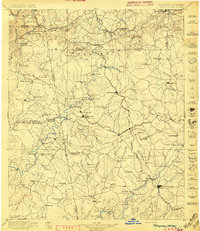 1897 Tallapoosa1897 Print · USGSThe Georgia and Alabama borderlands are captured here in the late nineteenth century as the railroad and milling industries reshaped the landscape. Researchers can trace family-named sites like Munroe Mill, early crossings at Rainwater Ford, and old depots at Rockrun Station.4 unique versions available
 - 1899 Map of Wedowee, 1958 Print
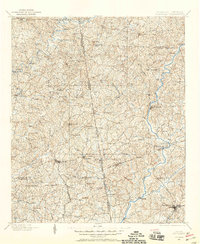 1899 Wedowee1958 Print · USGSEastern Alabama and western Georgia are mapped here at the close of the nineteenth century, documenting the rural river-and-rail landscape. Researchers can trace historic crossings like Philpots Ferry and early industrial sites such as the Copper Mine.
 - 1901 Map of Marietta
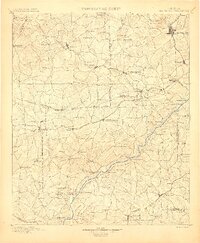 1901 Marietta1901 Print · USGSNorthwest Georgia at the turn of the century is a landscape of growing rail towns and vital river crossings. Researchers can trace early rural life through features like Old Villarica, Pumpkintown Ferry, and the Mount Zion Church.4 unique versions available
 - 1902 Map of Wedowee
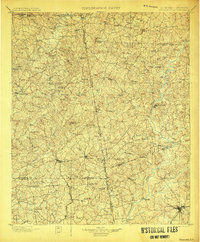 1902 Wedowee1902 Print · USGSThe Alabama and Georgia state line bisects this turn-of-the-century landscape of river crossings and hill-country settlements. Genealogists can trace early homesteads and commerce at Philpots Ferry, the Copper Mine, or the town of Wedowee.3 unique versions available
 - 1953 Map of Atlanta, 1965 Print
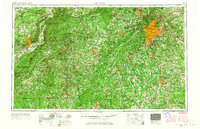 1953 Atlanta1965 Print · USGSThe growing Atlanta metro and the industrial corridors of Eastern Alabama are captured here during the mid-century transition. Researchers can trace the rail-to-road shift through hubs like Anniston and La Grange or locate sites within Fort McClellan.2 unique versions available
 - 1957 Map of Atlanta
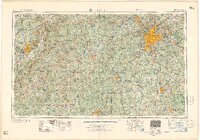 1957 Atlanta1957 Print · USGSAtlanta and the Alabama borderlands appear here in the mid-fifties, capturing the region's post-war suburban and industrial transition. Trace the development of early transport hubs and military sites like Fort McPherson, Anniston, and the Kennesaw Mountain National Battlefield Park.
 - 1958 Map of Rico
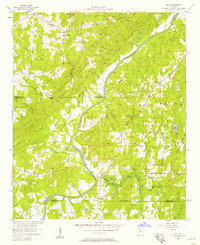 1958 Rico1958 Print · USGSThe rural borders of Fulton and Douglas counties come alive in the late fifties along the banks of the Chattahoochee River. Genealogists and historians can trace community landmarks like Providence Ch, Fairplay Sch, and the winding Yellow Ferry Road.3 unique versions available
 - 1958 Map of Atlanta
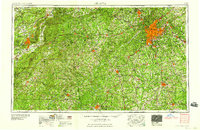 1958 Atlanta1958 Print · USGSMid-century Georgia and Alabama are shown in this regional study of the corridor between the Chattahoochee River and the Appalachian foothills. Local historians can trace the development of suburban Atlanta alongside vital landmarks like Stone Mountain, Dobbins AFB, and the Seaboard Air Line rail routes.
 - 1958 Map of Carrollton, 1959 Print
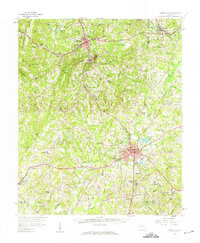 1958 Carrollton1959 Print · USGSCarroll and Haralson Counties come alive in this late 1950s survey of the Tallapoosa River basin during a period of steady growth. Researchers can trace the grounds of West Georgia College or locate vanished rural landmarks like Miller Academy and Smith Chapel.
 - 1958 Map of Buchanan, 1960 Print
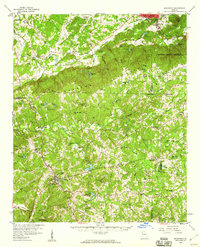 1958 Buchanan1960 Print · USGSHaralson and Polk Counties are shown in the late fifties as a landscape of ridge-top churches and valley railroads. Genealogists can trace family footprints at Lees Chapel, Abernathys Mill, and along the Central of Georgia Railroad.2 unique versions available
 - 1958 Map of Villa Rica, 1960 Print
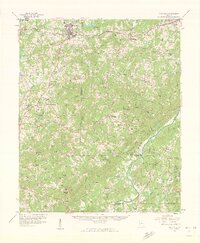 1958 Villa Rica1960 Print · USGSThe West Georgia countryside in the late fifties centered on the Chattahoochee River and the industrial activity at Banning Mills. Genealogists can trace family-named crossroads and rural landmarks like Hickory Level, Fouts Mill, and Bright Star Ch.2 unique versions available
 - 1958 Map of Dallas, 1960 Print
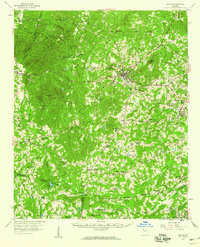 1958 Dallas1960 Print · USGSPaulding County and parts of Carroll and Douglas emerge in the late 1950s as a landscape of rail-junction towns and rural church communities. Researchers can trace family roots at Willow Springs Ch, locate the old Drive-in Theater, or follow the SEABOARD rail lines.2 unique versions available
 - 1964 Map of Roopville, 1966 Print
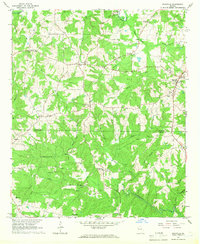 1964 Roopville1966 Print · USGSIn the mid-1960s, the borderlands between Carroll and Heard County remained a tapestry of small church-centered communities and winding creeks. Local historians can trace the foundations of Roopville and Ephesus, or locate landmarks like Unity Cem Ch and the Lookout Tower.2 unique versions available
 - 1964 Map of Lowell, 1966 Print
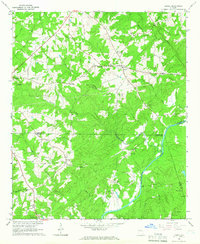 1964 Lowell1966 Print · USGSThe rural landscapes of Carroll and Heard Counties appear here in the mid-1960s, defined by tight-knit communities and winding creeks. Genealogists can trace family lines through several local burial sites like Pentecost Cem and Hollingsworth Cem.2 unique versions available
 - 1965 Map of Newnan North, 1966 Print
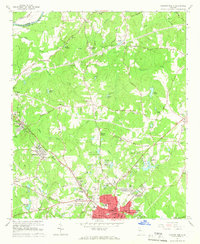 1965 Newnan North1966 Print · USGSIn the mid-sixties, the area north of Newnan was a mix of growing neighborhoods and long-standing rural outposts. Genealogists and historians can trace family roots through landmarks like Sewell Millpond, Jones Chapel Cem, and the industrial hamlet of Arneo Mills.3 unique versions available
 - 1965 Map of Whitesburg, 1966 Print
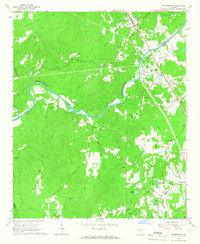 1965 Whitesburg1966 Print · USGSThe Chattahoochee River corridor in the mid-1960s reveals a rural landscape transitioning toward modern infrastructure. Genealogists can trace family roots through landmarks like Rotherwood Ch, the Springer Cem, and schools such as Western High Sch.3 unique versions available
 - 1965 Map of Tallapoosa South, 1968 Print
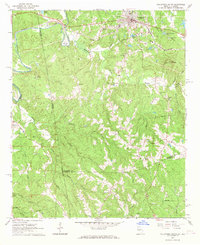 1965 Tallapoosa South1968 Print · USGSHaralson County and the Alabama borderlands are captured here in the mid-1960s, centered on the transit hub of Tallapoosa. Genealogists and local historians can trace rural family sites like Pleasant Hill School, Antioch Cemetery, and Sanders Church.2 unique versions available
 - 1966 Map of Bowdon West, 1968 Print
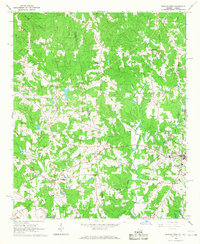 1966 Bowdon West1968 Print · USGSThe Alabama-Georgia state line cuts through this 1960s landscape between the settlements of Ranburne and Bowdon. Genealogists can trace family roots through numerous local landmarks, including Indian Creek Ch, Hudson School, and Macedonia.3 unique versions available
 - 1969 Map of Graham, 1973 Print
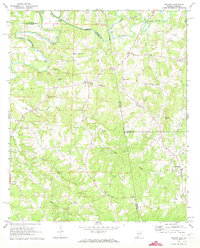 1969 Graham1973 Print · USGSRandolph and Cleburne Counties are captured here in the late sixties as traditional agricultural communities along the Georgia border. Researchers can trace family roots at numerous rural sites like Graham, the Old Shiloh Church, and Sewell.3 unique versions available
 - 1973 Map of Draketown, 1975 Print
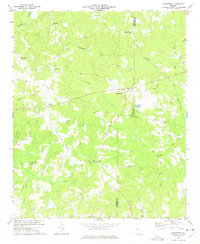 1973 Draketown1975 Print · USGSHaralson and Carroll counties are shown in the early seventies, centered on a rural network of churches and creek-side homesteads. Genealogists and historians can locate family burial sites at Haney Cem and Union Hill Cem, or trace long-standing congregations like District Line Ch.2 unique versions available
Showing maps 1-25 of 120
Top cities of Carroll County
- Carrollton historical maps
- Bowdon historical maps
- Mount Zion historical maps
- Whitesburg historical maps
- Roopville historical maps
Frequently asked questions
- What are the different types of historical maps available for Carroll County?
- What is the oldest map of Carroll County?
- Where can I purchase historical maps of Carroll County for my home or office?
- Where can I download high-res historical maps of Carroll County?
- Are there historical topographic maps available for Carroll County?
- Is there historical aerial imagery available for Carroll County?
- Where are historical maps of Carroll County sourced from?