Old Maps of Dawson County, Georgia
Explore 87 old maps of Dawson County, spanning from 1888 to today. These high-resolution historic maps reveal how streets, neighborhoods, landmarks, and natural features evolved over time — perfect for genealogy, metal detecting, research, and local history exploration.
What you can do with these maps:
- See how Dawson County changed over time: Compare historical maps to modern-day views to trace roads, homesites, rail lines & more.
- View detailed metadata: Each map includes creators, publishers, year, scale, and archive source.
- Overlay maps with satellite & LiDAR: Visualize the past alongside modern tools to explore terrain & human change.
- Trusted historical sources: Maps sourced from the USGS, Library of Congress, and other archives.
- Access maps your way: View online, download high-res files, or order prints for personal or research use.
Start exploring old maps of Dawson County to uncover forgotten places, hidden landmarks, and the deep history beneath your feet.
Dawson County, GA maps
(87)- 1888 Map of Ellijay
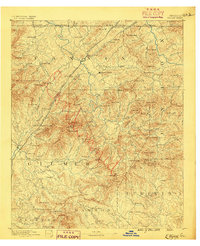 1888 Ellijay1888 Print · USGSNorth Georgia in the late 1880s was a land of high peaks and emerging rail lines as the mountains were first being methodically surveyed. You can trace the Marietta and North Georgia Railroad through Blue Ridge and locate vanished stops like Vanzants Store or the rural community of Cherry Log.
 - 1890 Map of Suwanee
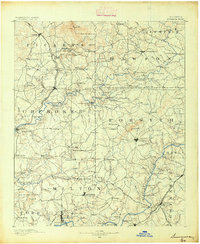 1890 Suwanee1890 Print · USGSNorth Georgia in the 1890s was a landscape of river-powered commerce and gold prospecting. Genealogists and historians can trace family-named river crossings like Jones Ferry and Pirkle's Ferry or locate the historic Kin Mori Gold Mine.
 - 1891 Map of Gainesville
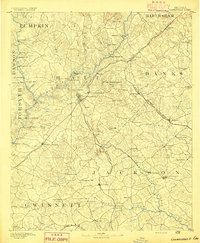 1891 Gainesville1891 Print · USGSNorth Georgia in the early 1890s appears as a landscape of rail-junction towns and river-powered industry centered on Hall and Jackson Counties. Researchers can trace historic river crossings like Browns Bridge and Keiths Fy, or locate nineteenth-century landmarks such as Oconee Mills and Flowery Branch.5 unique versions available
 - 1892 Map of Ellijay
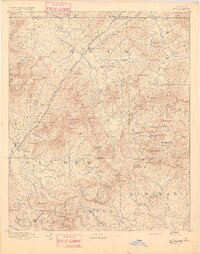 1892 Ellijay1892 Print · USGSNorth Georgia's mountain communities were primarily connected by river valleys and the winding Marietta and North Georgia Railroad in the late nineteenth century. Genealogists can trace early homesteads and centers of trade like Vanzant's Store, Mineral Bluff, and Cherry Log.
 - 1894 Map of Suwanee
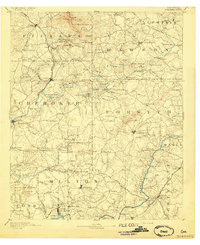 1894 Suwanee1894 Print · USGSNorth Georgia in the late nineteenth century was a landscape of river ferries and rising industry, from marble quarries to gold mines. Genealogists can trace family landmarks like Fields Cross Roads, the Kin Mori Gold Mine, and Fort Buffington.6 unique versions available
 - 1898 Map of Ellijay
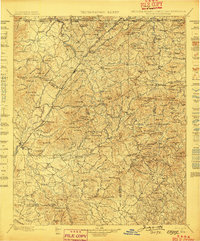 1898 Ellijay1898 Print · USGSNorth Georgia’s mountain country is captured here in the late nineteenth century, showing the early development of Gilmer and Fannin counties. Genealogists can trace family homesteads near old river crossings like Centers Ferry and settlements such as Mineral Bluff and Whitepath.2 unique versions available
 - 1911 Map of Ellijay
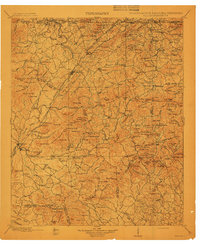 1911 Ellijay1911 Print · USGSNorth Georgia and the Tennessee border are captured here at the turn of the century, showing a mountain landscape of river ferries and early rail. Genealogists can locate family landmarks like Higdons Store, the Pisgah church, or crossings at Bakers Ferry and Shallow Ford.4 unique versions available
 - 1926 Map of Tate, 1968 Print
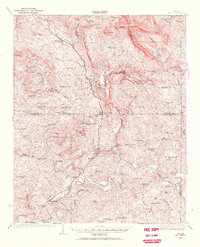 1926 Tate1968 Print · USGSNorthern Georgia's ridge-and-valley corridor is captured here in the mid-twenties, showcasing a landscape of mining and rail commerce. Trace early industrial sites like the Franklin Gold Mine and old crossroads like Ball Ground or Nelson.
 - 1928 Map of Tate
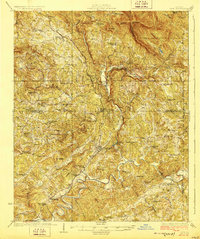 1928 Tate1928 Print · USGSNorth Georgia’s mineral and mountain heritage comes to life in the late 1920s as the rail line connects the marble and gold districts. Researchers can locate family roots at the Franklin Gold Mine, Old Damascus Church, or Burroughs Crossroads.
 - 1954 Map of Greenville, 1965 Print
 1954 Greenville1965 Print · USGSThe Upstate and Northeast Georgia are captured here during a decade of massive transformation as new reservoirs reshaped the Piedmont. Genealogists and hikers can trace the Appalachian Trail over Brasstown Bald or locate old community centers like Demorest, Westminster, and Royston.3 unique versions available
 - 1955 Map of Rome
 1955 Rome1955 Print · USGSThe tri-state borderlands of Georgia, Alabama, and Tennessee appear in the mid-fifties as a landscape of ridge-and-valley industry and river navigation. Genealogists can trace family footprints near Chattanooga, the iron works of Gadsden, and textile towns like Trion or Summerville.
 - 1958 Map of Greenville
 1958 Greenville1958 Print · USGSThe Piedmont and Blue Ridge foothills come alive in this mid-century survey of the Upstate and Northeast Georgia. Trace the regional rail-and-river economy through the Southern Railway corridors and early reservoir developments like Lake Sidney Lanier.
 - 1958 Map of Rome, 1966 Print
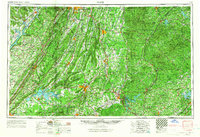 1958 Rome1966 Print · USGSNorthwest Georgia and neighboring Tennessee and Alabama are captured here in the late fifties, showcasing a landscape of high ridges and river valleys. Researchers can trace historic rail lines like the Seaboard Air Line RR and explore the bounds of Cloudland Canyon State Park or Fort Oglethorpe.3 unique versions available
 - 1961 Map of Rome
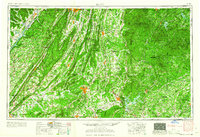 1961 Rome1961 Print · USGSNorthwest Georgia and neighboring Tennessee and Alabama are shown here at a moment of significant mid-century growth. Researchers can trace the rail networks of the Central of Georgia or locate landmarks within Chickamauga and Chattanooga Nat Military Park.
 - 1963 Map of Rome
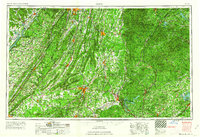 1963 Rome1963 Print · USGSThe tri-state corner of Georgia, Alabama, and Tennessee is captured here during a period of massive reservoir expansion and post-war growth. Genealogists and historians can trace the rail corridors of the Southern Ry or locate landmarks like Fort Oglethorpe and Cloudland Canyon State Park.
 - 1964 Map of Murrayville, 1965 Print
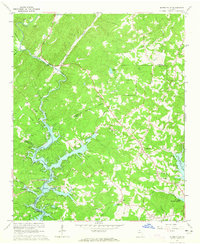 1964 Murrayville1965 Print · USGSUpper Georgia’s river valleys were undergoing a major transformation in the mid-sixties as the newly formed Lake Sidney Lanier reshaped the terrain. Genealogists and local historians can trace family-named sites like the Calhoun Gold Mine, Soules Chapel, and Yellow Creek Cem.4 unique versions available
 - 1964 Map of Juno, 1965 Print
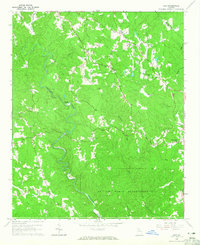 1964 Juno1965 Print · USGSDawson and Lumpkin counties in the mid-1960s were defined by the winding waters of Amicalola Creek and a network of isolated rural settlements. Researchers can trace family history through sites like McKees Chapel, the West Side Sch, and the Covered Bridge.3 unique versions available
 - 1964 Map of Coal Mountain, 1965 Print
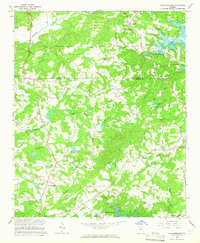 1964 Coal Mountain1965 Print · USGSForsyth and Dawson counties are captured during the mid-sixties as the landscape adjusted to the presence of Lake Sidney Lanier. Genealogists and local historians can trace family locations near Lumpkin, Silver City, and several country churches like Bethel Ch.3 unique versions available
 - 1964 Map of Chestatee, 1965 Print
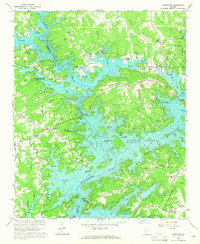 1964 Chestatee1965 Print · USGSThe Hall and Forsyth County borderland is transformed by the rising waters of Lake Sidney Lanier in the mid-sixties. Genealogists can trace family names at Bethel Tabernacle, Mayfield Ch, and Sardis Sch along the sprawling river-bay shoreline.3 unique versions available
 - 1964 Map of Matt, 1965 Print
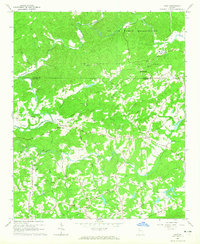 1964 Matt1965 Print · USGSNorth of Forsyth County in the mid-1960s, the rural landscape was defined by family-named roads and quiet river bends. Genealogists and local historians can trace legacy sites like Mt Tabor Cem, the community of Heardville, and the landmark Covered Bridge on Settingdown Creek.5 unique versions available
 - 1964 Map of Dawsonville, 1966 Print
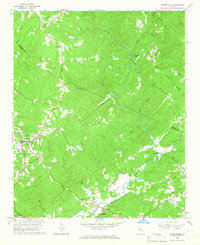 1964 Dawsonville1966 Print · USGSDawson County and the Lumpkin County border are captured here in the mid-sixties, a period when the river valleys remained dotted with small crossroads communities. Genealogists can locate family landmarks such as Palmer Cem and historic local congregations like Antioch Ch or Pleasant Hill Ch.2 unique versions available
 - 1971 Map of Amicalola, 1973 Print
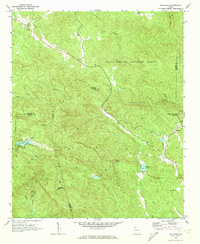 1971 Amicalola1973 Print · USGSNorth Georgia's high country is captured here in the early seventies as small mountain communities remained centered around local churches. Researchers can locate family sites near Little Ebenezer Cem, Antioch Ch, and the settlement of Amicalola.2 unique versions available
 - 1971 Map of Nimblewill, 1973 Print
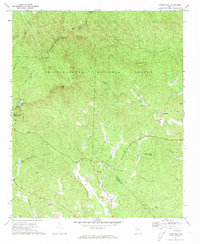 1971 Nimblewill1973 Print · USGSThe North Georgia highlands are captured here in the early seventies, centered on the community of Nimblewill and the Amicalola Mountain range. You can trace old mountain routes through Nimblewill Gap and locate historic rural gathering places like Wesley Chapel and Afton.4 unique versions available
 - 1972 Map of Nelson, 1975 Print
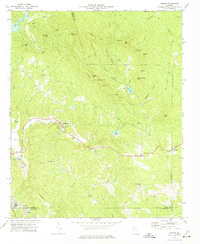 1972 Nelson1975 Print · USGSNorth Georgia in the early seventies shows a landscape defined by marble extraction and mountain ridges at the meeting of three counties. Researchers can locate the Quarries of Marblehill, the Tate Lookout Tower, and rural landmarks like Long Swamp Ch.2 unique versions available
 - 1973 Map of Ball Ground East, 1975 Print
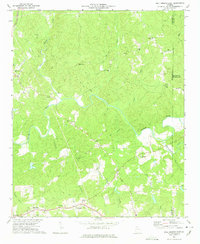 1973 Ball Ground East1975 Print · USGSCherokee County in the early seventies shows a landscape of small Piedmont communities and winding river valleys before the rapid suburban expansion of later decades. Trace old family routes and rural landmarks like Cane Creek Cem, the Ophir community, and Conn Creek Ch.2 unique versions available
Showing maps 1-25 of 87
Top cities of Dawson County
Frequently asked questions
- What are the different types of historical maps available for Dawson County?
- What is the oldest map of Dawson County?
- Where can I purchase historical maps of Dawson County for my home or office?
- Where can I download high-res historical maps of Dawson County?
- Are there historical topographic maps available for Dawson County?
- Is there historical aerial imagery available for Dawson County?
- Where are historical maps of Dawson County sourced from?