Old Maps of Pyles Marsh, Georgia for Academic Research
Study the evolution of Pyles Marsh with 16 high-resolution historic maps. Whether you're teaching, researching, or modeling changes in land use, these maps provide essential visual documentation of urban, environmental, and geographic change.
- Analyze long-term change: Track patterns in development, transportation, and natural features.
- Ideal for environmental or urban studies: Support academic projects with primary historical map data.
- Use in the classroom or lab: Educators and researchers rely on these maps to bring historical context to life.
These maps are a powerful tool for teaching, research, and visualizing how Pyles Marsh has changed over the decades.
Pyles Marsh, GA maps
(16)- 1918 Map of Bladen
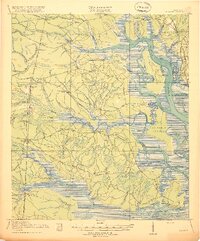 1918 Bladen1918 Print · USGSThe Georgia coast at the end of the Great War reveals a landscape of tidal marshes and vital rail junctions. Genealogists can trace family roots through sites like Brockington School, Dover Bluff, and the junction at Bladen.2 unique versions available
 - 1939 Map of Bladen
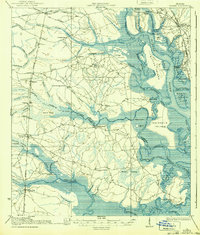 1939 Bladen1939 Print · USGSCoastal Glynn and Camden counties in the late 1930s reveal a landscape of intricate tidal marshes and emerging rail hubs. Genealogists and historians can trace the foundations of local life through the Waverly settlement, the Waverly Tramroad, and rural landmarks like the Magnolia School.2 unique versions available
 - 1946 Map of Brunswick, 1948 Print
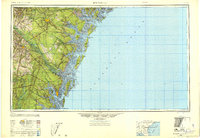 1946 Brunswick1948 Print · USGSCoastal Georgia in the mid-forties reveals a landscape defined by the Camp Stewart Military Reservation and the sprawling barrier islands. Genealogists and historians can trace the rail-and-river network through inland towns like Ludowici and Jesup, or locate coastal landmarks like the St Simon Light.
 - 1948 Map of Brunswick
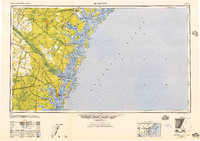 1948 Brunswick1948 Print · USGSCoastal Georgia in the late 1940s is defined here by its labyrinthine barrier islands and the massive footprint of Camp Stewart. Genealogists and historians can trace the rail-tied growth of Jesup and Hinesville or locate coastal landmarks like St Simon Light.
 - 1956 Map of Brunswick West, 1960 Print
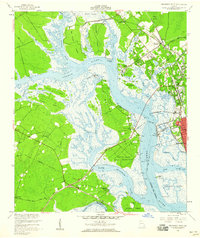 1956 Brunswick West1960 Print · USGSThe coastal marshlands and river junctions of Glynn County are captured here in the mid-1950s. Genealogists and historians can trace rail lines to Southern Junction, locate the Blythe Island Naval Reservation, and find rural landmarks like Emanuel Ch.2 unique versions available
 - 1956 Map of Brunswick, 1968 Print
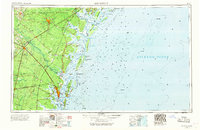 1956 Brunswick1968 Print · USGSThe Georgia coast in the mid-twentieth century is a wild expanse of barrier islands and massive river deltas. You can trace the development of the maritime economy and military presence at Brunswick, or locate historic sites like Fort Frederica National Monument and Harris Neck National Wildlife Refuge.2 unique versions available
 - 1961 Map of Brunswick
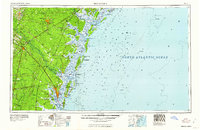 1961 Brunswick1961 Print · USGSThe Georgia coast at the start of the 1960s was a landscape of deep tidal marshes and growing military installations. Genealogists and historians can trace rail-linked towns like Limerick Station or explore coastal landmarks from Fort Frederica National Monument to Sapelo Island.
 - 1978 Map of Brunswick
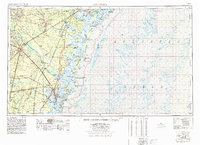 1978 Brunswick1978 Print · USGSThe Georgia coast and its barrier islands are captured in the late 1970s, as I-95 and the rail lines shaped the growth of coastal towns. Genealogists and historians can trace family locations across the islands or locate sites near Fort Stewart, Darien, and Ludowici.2 unique versions available
 - 1979 Map of Brunswick West, 1980 Print
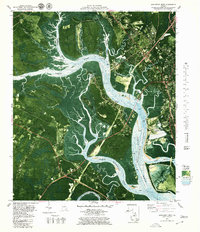 1979 Brunswick West1980 Print · USGSCoastal Glynn County in the late seventies is defined by the heavy industry of the Brunswick waterfront and the winding tidal creeks of the western marshes. Genealogists and researchers can trace local congregations like Galilee Ch or follow the rails from Southern Junction across the Seaboard Coast Line.2 unique versions available
 - 1981 Map of Brunswick, 1982 Print
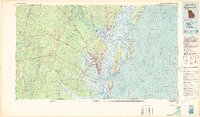 1981 Brunswick1982 Print · USGSThe Georgia coast at the start of the eighties reveals a complex landscape of tidal estuaries, deep-water sounds, and growing island communities. Trace local history through the protected grounds of Fort Frederica National Monument and the old rail stops at Thalmann and Nahunta.3 unique versions available
 - 1993 Map of Brunswick West, 1995 Print
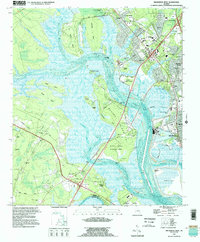 1993 Brunswick West1995 Print · USGSThe coastal marshes west of Brunswick are revealed in the early nineties, documenting the shifting intersection of industry and the Atlantic shoreline. Genealogists can trace local roots through landmarks like Lipthratt Cem, Southern Junction, and Emanuel Ch.
 - 2011 Map of Brunswick West, 2011 Print
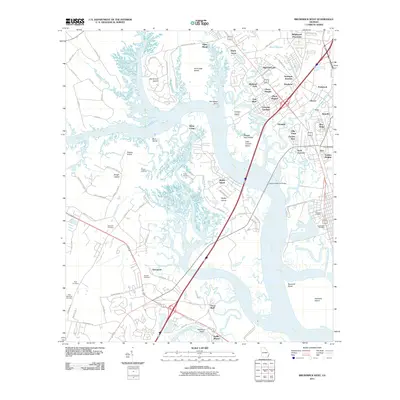 2011 Brunswick West2011 Print · USGSCoastal Georgia at the turn of the decade reveals a complex web of tidal rivers and residential growth north of the Satilla. Genealogists can trace family names through several burial grounds like Maxwells Cemetery and Scarlett Cemetery or explore the development of Blythe Island.
 - 2014 Map of Brunswick West, 2014 Print
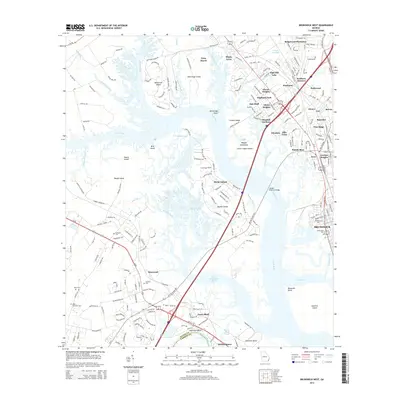 2014 Brunswick West2014 Print · USGSCoastal Georgia's intricate river systems and suburban growth are on display here in the early twenty-first century. Genealogists can trace family names at Maxwells Cemetery and Scarlett Cemetery or explore the marsh-fringed edges of Blythe Island and Satilla Shores.
 - 2017 Map of Brunswick West, 2017 Print
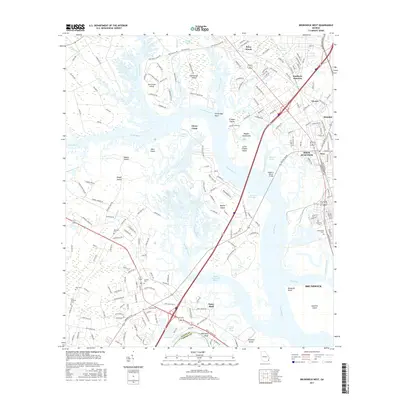 2017 Brunswick West2017 Print · USGSCoastal Georgia's intricate river systems and transport nodes are fully detailed in this modern survey of the Brunswick area. Genealogists and historians can trace family locations near Palmetto Cem, Dock Junction, and the historic Halfmoon Bluff shoreline.
 - 2020 Map of Brunswick West, 2020 Print
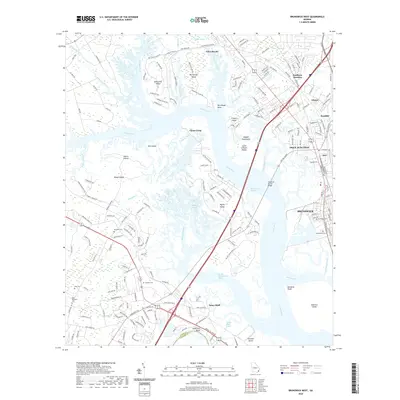 2020 Brunswick West2020 Print · USGSCoastal Georgia's intricate waterways and residential clusters are documented in detail during the 2020s. Researchers can trace local history through sites like Greenwood Cemetery and Palmetto Cemetery or the junctions at Glynco and Dock Junction.
 - 2024 Map of Brunswick West, 2024 Print
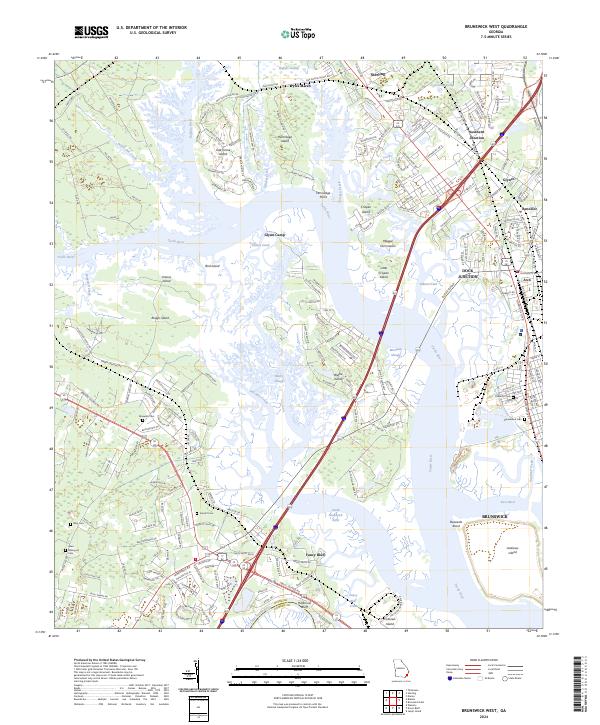 2024 Brunswick West2024 Print · USGSThe marshlands and river junctions west of Brunswick come to life in this contemporary survey of the Georgia coast. Local researchers can trace family sites like Maxwells Cem or explore the rail hubs at Southern Junction and Dock Junction.
End of results
Showing maps 1-16 of 16
Top cities near Pyles Marsh
- Brunswick historical maps
- Saint Simons historical maps
- Country Club Estates historical maps
- Dock Junction historical maps
- Darien historical maps
Frequently asked questions
- What are the different types of historical maps available for Pyles Marsh?
- What is the oldest map of Pyles Marsh?
- Where can I purchase historical maps of Pyles Marsh for my home or office?
- Where can I download high-res historical maps of Pyles Marsh?
- Are there historical topographic maps available for Pyles Marsh?
- Is there historical aerial imagery available for Pyles Marsh?
- Where are historical maps of Pyles Marsh sourced from?