1900s (20th Century) Maps of Five Forks Manor, Lawrenceville
Explore 16 historic maps of Five Forks Manor from the 1900s (20th Century). These maps offer a rare glimpse into what life looked like during the 1900s — showing old roads, neighborhoods, homes, and landmarks that have changed or disappeared over time.
Whether you're researching your family's past, planning a metal detecting trip, or studying how Five Forks Manor's landscape evolved across the 1900s, these high-resolution maps are a powerful tool for exploring the history of this region.
- Focus on a specific era: All maps on this page are from the 1900s, giving you a focused view of this time period.
- See what’s changed: Compare century-old streets, trails, and buildings to today's modern landscape using overlays and satellite layers.
- Research with precision: Use these maps for genealogy, historical research, land use analysis, or educational projects.
- View, download, or print: Maps are fully viewable online in high resolution, and can be downloaded or printed for your own records.
Start exploring Five Forks Manor's history through authentic maps from the 1900s. This is your window into the past.
Five Forks Manor, Lawrenceville maps
(16)- 1953 Map of Atlanta, 1965 Print
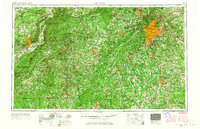 1953 Atlanta1965 Print · USGSThe growing Atlanta metro and the industrial corridors of Eastern Alabama are captured here during the mid-century transition. Researchers can trace the rail-to-road shift through hubs like Anniston and La Grange or locate sites within Fort McClellan.2 unique versions available
 - 1953 Map of Athens, 1966 Print
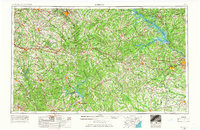 1953 Athens1966 Print · USGSGeorgia's Piedmont and Savannah River borderlands come alive in this mid-century survey of the region surrounding Athens and Augusta. Trace the rail-and-river economy through the Georgia RR and landmarks like the Fort Gordon Military Reservation.3 unique versions available
 - 1957 Map of Atlanta
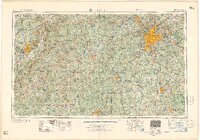 1957 Atlanta1957 Print · USGSAtlanta and the Alabama borderlands appear here in the mid-fifties, capturing the region's post-war suburban and industrial transition. Trace the development of early transport hubs and military sites like Fort McPherson, Anniston, and the Kennesaw Mountain National Battlefield Park.
 - 1958 Map of Athens
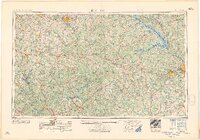 1958 Athens1958 Print · USGSNorth-central Georgia and the Savannah River valley are captured in the late fifties, showing the region as the new reservoirs were filling. Researchers can trace historic rail lines like the Georgia RR and locate rural landmarks such as Social Circle, Graves Mountain, and the Fort Gordon Military Reservation.
 - 1958 Map of Atlanta
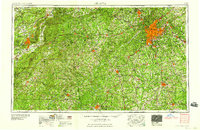 1958 Atlanta1958 Print · USGSMid-century Georgia and Alabama are shown in this regional study of the corridor between the Chattahoochee River and the Appalachian foothills. Local historians can trace the development of suburban Atlanta alongside vital landmarks like Stone Mountain, Dobbins AFB, and the Seaboard Air Line rail routes.
 - 1959 Map of Athens
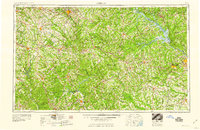 1959 Athens1959 Print · USGSNortheast Georgia and the South Carolina borderlands appear here in the mid-fifties, during a decade of infrastructure growth. Genealogists and historians can trace the rail-and-river geography of towns like Social Circle, the sprawl of Fort Gordon Military Reservation, and the newly formed Clark Hill Reservoir.
 - 1963 Map of Athens
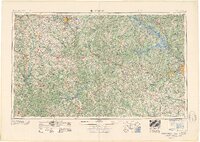 1963 Athens1963 Print · USGSGeorgia's Piedmont and the Savannah River valley are captured in the early sixties as major reservoirs and military installations reshaped the landscape. Researchers can trace the development of Clark Hill Reservoir, locate the Fort Gordon Military Reservation, and find historic towns like Social Circle and Eatonton.
 - 1963 Map of Luxomni, 1965 Print
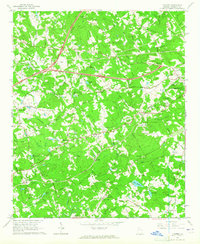 1963 Luxomni1965 Print · USGSGwinnett County during the early sixties shows a landscape of established rail towns and early interstate development. Genealogists and historians can trace the foundations of Luxomni, Gloster, and Bethesda, alongside rural landmarks like Lebanon Ch and Fairview Cem.4 unique versions available
 - 1964 Map of Lawrenceville, 1965 Print
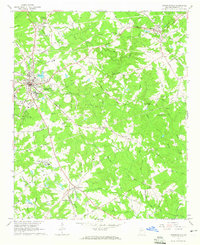 1964 Lawrenceville1965 Print · USGSGwinnett County is captured in the mid-1960s as the town of Lawrenceville grows outward into a landscape of family farms and country churches. Genealogists and historians can locate Shadowlawn Cemetery, Tribble Mill, and the Lawrenceville Campground.2 unique versions available
 - 1980 Map of Athens, 1981 Print
 1980 Athens1981 Print · USGSNorth Georgia in the early eighties exhibits a landscape of growing university towns and deep-rooted rail hubs. Genealogists can trace family lands near Social Circle or Watkinsville while following the routes of the Central of Georgia and the Appalachee River.2 unique versions available
 - 1981 Map of Atlanta, 1982 Print
 1981 Atlanta1982 Print · USGSThe Atlanta metro area is shown during its late-century boom, following the completion of the beltway and the rise of its major international airport. Trace the growth of suburbs from Mableton to Tucker and the footprints of Fort McPherson and Stone Mtn.
 - 1988 Map of Athens
 1988 Athens1988 Print · USGSThe Georgia Piedmont and South Carolina borderlands appear in the late eighties as a landscape of vast reservoirs and growing towns. Researchers can trace the legacy of the Georgia RR connecting Athens and Augusta, or locate landmarks within Oconee National Forest.
 - 1992 Map of Lawrenceville
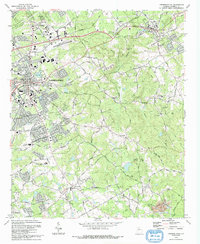 1992 Lawrenceville1992 Print · USGSGwinnett County's rapid growth during the early nineties is documented here, showing the expansion of Lawrenceville and Dacula. Local historians can trace long-standing landmarks like the Lawrenceville Camp Ground and McMillan Cem alongside the modern Tribble Mill County Park.
 - 1992 Map of Luxomni, 1993 Print
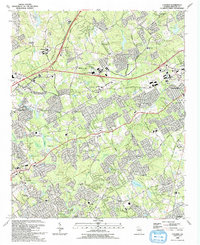 1992 Luxomni1993 Print · USGSGwinnett County's rapid suburbanization is documented here in the early nineties, showing how older crossroads communities adapted to new infrastructure. Genealogists and locals can trace family-named sites like McKendree Cem and Pharr School alongside the Seaboard System rail line.
 - 1998 Map of Lawrenceville, 1999 Print
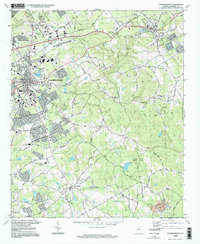 1998 Lawrenceville1999 Print · USGSGwinnett County during the late nineties shows a landscape of growing suburban centers and preserved local history. Genealogists can trace family roots at Shadowlawn Cemetery and Ewings Cem, or explore older community hubs like New Hope and Grayson.
 - 1999 Map of Luxomni, 2003 Print
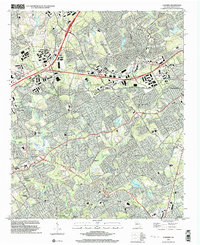 1999 Luxomni2003 Print · USGSGwinnett County's suburban landscape emerges at the turn of the millennium as residential growth surrounds established community hubs. Researchers can trace family history through local sites like Ford Cemetery, Luxomni Church, and Pharr School.
End of results
Showing maps 1-16 of 16
Frequently asked questions
- What are the different types of historical maps available for Five Forks Manor?
- What is the oldest map of Five Forks Manor?
- Where can I purchase historical maps of Five Forks Manor for my home or office?
- Where can I download high-res historical maps of Five Forks Manor?
- Are there historical topographic maps available for Five Forks Manor?
- Is there historical aerial imagery available for Five Forks Manor?
- Where are historical maps of Five Forks Manor sourced from?