Old Maps of Lee County, Georgia for Hiking & Exploration
Hike through history with 96 historic maps of Lee County. Explore old trails, ghost towns, and forgotten backroads — perfect for outdoor adventurers and local explorers.
- Rediscover forgotten places: Map out old mining camps, roads, and footpaths that no longer exist on modern maps.
- Layer with modern tools: Combine with LiDAR or satellite views to plan hikes through historical terrain.
- Made for exploration: Popular among hikers, overlanders, and local history lovers.
Use these maps to find adventure and explore the hidden past of Lee County.
Lee County, GA maps
(96)- 1953 Map of Dothan, 1966 Print
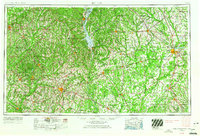 1953 Dothan1966 Print · USGSSoutheast Alabama and Southwest Georgia are captured during a period of massive hydraulic and military expansion in the mid-fifties. Genealogists and historians can trace rural landmarks like Antioch Church and School, the Andrew Jackson Monument, and the early footprint of Fort Rucker Military Reservation.3 unique versions available
 - 1953 Map of Waycross, 1967 Print
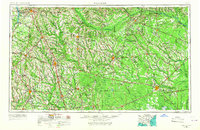 1953 Waycross1967 Print · USGSSouth Georgia's agricultural and rail heartland is captured here in the mid-1950s, showing a vast network of timber and farming towns. Researchers can trace the rail lines connecting Waycross and Tifton or locate landmarks like Jefferson Davis State Park and Lake Blackshear.2 unique versions available
 - 1954 Map of Dothan
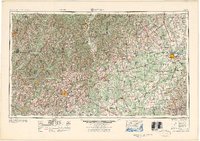 1954 Dothan1954 Print · USGSSoutheast Alabama and Southwest Georgia are seen here in the mid-fifties, during a decade of military expansion and rural transition. Genealogists can trace the location of country schools like Little Zion School or the grounds of Kolomoki Mounds State Park.
 - 1955 Map of Dothan
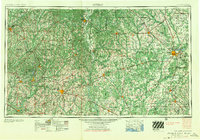 1955 Dothan1955 Print · USGSSoutheast Alabama and Southwest Georgia are captured here in the mid-fifties, showing a landscape of river-port history and growing military bases. Researchers can trace rural life via the Andrew Jackson Monument, Bauxite mines, and the Central of Georgia RR.
 - 1956 Map of Albany East, 1957 Print
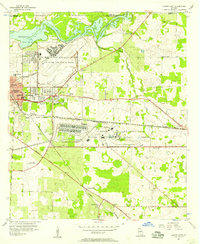 1956 Albany East1957 Print · USGSDougherty County was undergoing a major military expansion in the mid-fifties, seen here through the sprawling grounds of Turner Air Force Base. Researchers can trace old family-named churches like Mercer Grove Ch and the crossroads at Pecan City.4 unique versions available
 - 1956 Map of Albany West, 1957 Print
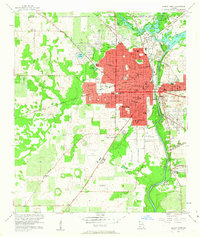 1956 Albany West1957 Print · USGSMid-century Dougherty County centers on the thriving rail and river hub of Albany as it expanded westward toward the state nursery and municipal airport. Genealogists and local historians can trace the footprints of Crown Hill Cemetery, Radium Springs, and the Albany Speedway (Abandoned).4 unique versions available
 - 1956 Map of Sasser, 1958 Print
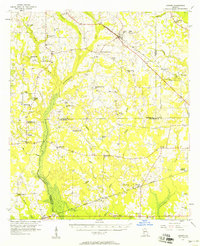 1956 Sasser1958 Print · USGSTerrell and Dougherty counties are mapped here during the mid-fifties, revealing a rural Georgia landscape of swampy creeks and rail-side hamlets. Researchers can locate specific family landmarks like Clarks Mill, the Andrew Jackson Historical Monument, and Mt Mary Cem & Ch.2 unique versions available
 - 1956 Map of Albany, 1958 Print
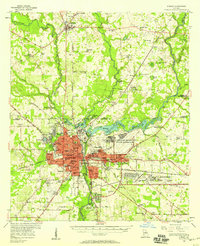 1956 Albany1958 Print · USGSMid-century Albany and the Flint River valley are captured here just as the Cold War military footprint was expanding. Genealogists can trace family landmarks like Radium Springs, the Turner Air Force Base, and Pecan City.2 unique versions available
 - 1956 Map of Leslie, 1958 Print
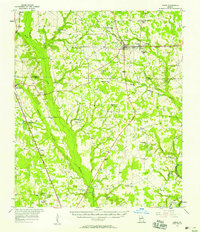 1956 Leslie1958 Print · USGSSumter and Lee Counties are shown here during the mid-fifties, when small rail towns and rural school districts shaped the local geography. Genealogists can trace family landmarks like Jordan Place, the Nunn Industrial Sch, and the riverside site of Starksville.2 unique versions available
 - 1958 Map of Waycross
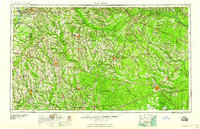 1958 Waycross1958 Print · USGSSoutheast Georgia in the late fifties remains a landscape of deep river basins and vital rail junctions. Genealogists and historians can trace family-named landmarks and rural hubs like Union Church, South Georgia College, and the sprawling Okefenokee Swamp.2 unique versions available
 - 1973 Map of Sasser, 1974 Print
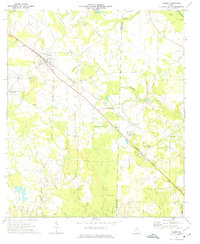 1973 Sasser1974 Print · USGSTerrell and Lee Counties appear in the early 1970s as a landscape of rural settlements and rail-line hubs. Genealogists and historians can trace family roots through sites like Macedonia Ch, Huckby Cem, and the old rail stop at Sasser.2 unique versions available
 - 1973 Map of Pretoria, 1974 Print
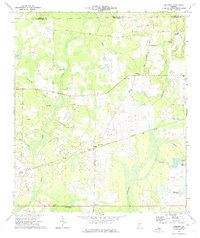 1973 Pretoria1974 Print · USGSDougherty County in the early seventies shows a landscape of rail-connected settlements and winding creek bottoms. Genealogists and local historians can trace family locations near Pretoria, Lockett Crossing, and rural landmarks like Mossy Grove Ch.2 unique versions available
 - 1973 Map of Bronwood, 1975 Print
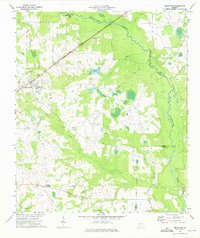 1973 Bronwood1975 Print · USGSBronwood and the Terrell County countryside are shown here in the early seventies, a landscape of family farms and rural churches. Genealogists can trace local landmarks like Bridges Crossroad, Greater Macedonia Ch, and the Old Church Cem.
 - 1973 Map of Albany NE, 1975 Print
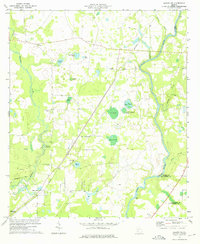 1973 Albany NE1975 Print · USGSLee and Worth counties are captured in the early 1970s, showing a landscape defined by the winding Flint River and a dense network of namesake ponds. You can trace family history at Thundering Springs Cem and Old Mt Horeb Cem, or locate landmarks like Old Piney Grove Ch.2 unique versions available
 - 1973 Map of Neyami, 1975 Print
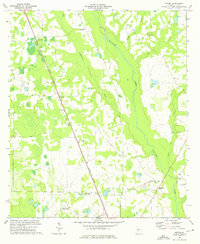 1973 Neyami1975 Print · USGSLee County, Georgia, is captured here in the early 1970s as an agricultural landscape shaped by the Central of Georgia railroad and the Muckalee Creek drainage. Researchers can trace rural settlement patterns through named locales like Starksville and Neyami, or locate family landmarks such as McAfee Ch and the Jordan Place.
 - 1973 Map of Leslie, 1975 Print
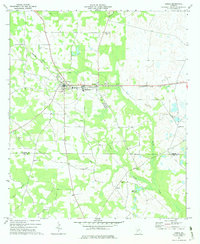 1973 Leslie1975 Print · USGSSumter and Lee Counties come into focus in the early 1970s, showcasing a community built on agriculture and rail transport. Genealogists can trace family roots through numerous local landmarks like Union High School, Jackson Grove Church, and Mt Zion Cemetery.
 - 1973 Map of Leslie SE, 1976 Print
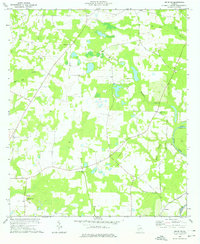 1973 Leslie SE1976 Print · USGSLee and Worth counties meet along the river in the early 1970s, showing a landscape of small rural settlements and agricultural ties. Researchers can trace local heritage through sites like St Mathews Ch, Mossy Dell, and the community of Tarpley.2 unique versions available
 - 1973 Map of Smithville West, 1976 Print
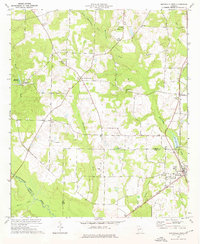 1973 Smithville West1976 Print · USGSThe agricultural plains of Sumter and Lee Counties are captured here in the early seventies, centered on the rail-side community of Smithville. Researchers can find numerous rural landmarks, from the Smithville Academy and Green Grove Sch to historic congregations at Hebron Ch and St Pauls Ch.
 - 1973 Map of Leesburg, 1976 Print
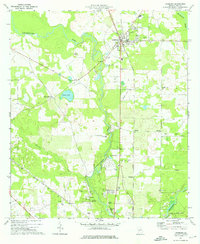 1973 Leesburg1976 Print · USGSIn the early seventies, this Lee County area centered on the railroad crossing at Leesburg and the winding banks of Kinchafoonee Creek. Genealogists can trace rural landmarks from Byne Crossroads to historic sites like Palmyra Cem and Alpha Ch.2 unique versions available
 - 1973 Map of Smithville East, 1976 Print
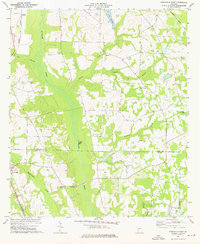 1973 Smithville East1976 Print · USGSSumter and Lee Counties in the early seventies reveal a landscape of deep creek bottoms and railroad corridors. Genealogists and historians can trace family roots through the Anthony Cem, Deldrich Cem, and Mt Pleasant Ch.2 unique versions available
 - 1977 Map of Cobb
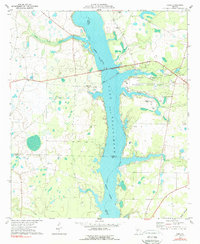 1977 Cobb1977 Print · USGSLake Blackshear and the Flint River shoreline define this South Georgia landscape during the 1970s. Researchers can trace rural church history at New Zion Ch and Springhill Ch or locate the old Seaboard Coast Line rail corridor.2 unique versions available
 - 1977 Map of Warwick
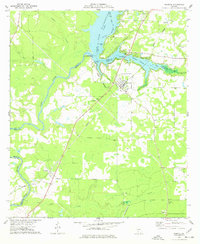 1977 Warwick1977 Print · USGSIn the late 1970s, the area around Warwick was defined by the waters of the Flint River and Lake Blackshear. Genealogists and historians can trace local landmarks like Bethlehem Ch, Davis Mill, and the Georgia Northern rail line.
 - 1981 Map of Albany, 1982 Print
 1981 Albany1982 Print · USGSSouthwest Georgia in the early eighties was a region defined by its rail hubs and winding river systems. Here you can trace the agricultural landscape from Albany to Dawson, locating sites like Radium Springs, the U S Naval Reservation, and the historic junction at Shellman.
 - 1981 Map of Cordele, 1982 Print
 1981 Cordele1982 Print · USGSSouth Georgia’s agricultural heartland is documented here in the early eighties, showing the convergence of the Seaboard Coast Line Railroad and the Georgia Southern and Florida lines. Genealogists and researchers can trace local landmarks like Bowens Mill Pond, the University of Georgia Research Center, and the shores of Lake Blackshear.
 - 1988 Map of Waycross
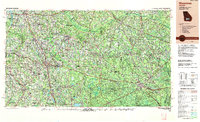 1988 Waycross1988 Print · USGSSouth Georgia's wiregrass and timber country is documented here in the late eighties, centered on the vital rail junction of Waycross. Genealogists and historians can trace the rural landscape from Okefenokee up to the Ocmulgee, finding sites like Lumber City and Jefferson Davis Memorial State Park.
Showing maps 1-25 of 96
Top cities of Lee County
Frequently asked questions
- What are the different types of historical maps available for Lee County?
- What is the oldest map of Lee County?
- Where can I purchase historical maps of Lee County for my home or office?
- Where can I download high-res historical maps of Lee County?
- Are there historical topographic maps available for Lee County?
- Is there historical aerial imagery available for Lee County?
- Where are historical maps of Lee County sourced from?