Old Maps of Pickens County, Georgia for Hiking & Exploration
Hike through history with 84 historic maps of Pickens County. Explore old trails, ghost towns, and forgotten backroads — perfect for outdoor adventurers and local explorers.
- Rediscover forgotten places: Map out old mining camps, roads, and footpaths that no longer exist on modern maps.
- Layer with modern tools: Combine with LiDAR or satellite views to plan hikes through historical terrain.
- Made for exploration: Popular among hikers, overlanders, and local history lovers.
Use these maps to find adventure and explore the hidden past of Pickens County.
Pickens County, GA maps
(84)- 1886 Map of Dalton
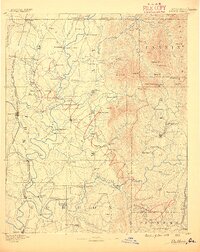 1886 Dalton1886 Print · USGSNorthwest Georgia in the 1880s is a landscape of mountain gaps and vital river ferries. Trace family roots and vanished infrastructure from Dalton to Spring Place, including named landmarks like Shackelfords Ferry and Fort Mountain.
 - 1888 Map of Ellijay
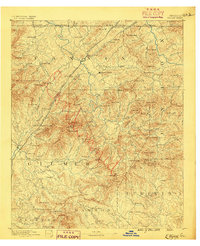 1888 Ellijay1888 Print · USGSNorth Georgia in the late 1880s was a land of high peaks and emerging rail lines as the mountains were first being methodically surveyed. You can trace the Marietta and North Georgia Railroad through Blue Ridge and locate vanished stops like Vanzants Store or the rural community of Cherry Log.
 - 1890 Map of Suwanee
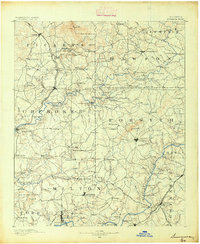 1890 Suwanee1890 Print · USGSNorth Georgia in the 1890s was a landscape of river-powered commerce and gold prospecting. Genealogists and historians can trace family-named river crossings like Jones Ferry and Pirkle's Ferry or locate the historic Kin Mori Gold Mine.
 - 1890 Map of Cartersville
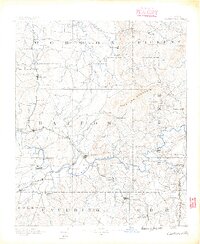 1890 Cartersville1890 Print · USGSNorthwest Georgia in the late nineteenth century was a landscape of burgeoning rail junctions and river-powered industry. Researchers can trace the roots of families and commerce at McDaniel's Station, Warford's Roads, and the many industrial sites along the Etowah River.
 - 1891 Map of Cartersville
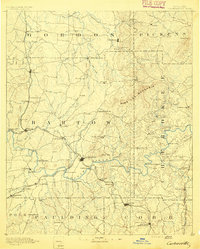 1891 Cartersville1891 Print · USGSNorth Georgia in the late nineteenth century was defined by its winding river crossings and the arrival of the iron horse. Trace the paths of early travel through Wooley's Ferry, identify old family operations like Hall's Mill, and locate rail stops at McDaniel's Station.
 - 1892 Map of Ellijay
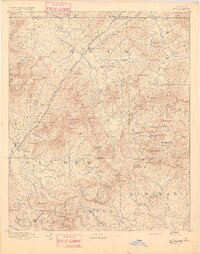 1892 Ellijay1892 Print · USGSNorth Georgia's mountain communities were primarily connected by river valleys and the winding Marietta and North Georgia Railroad in the late nineteenth century. Genealogists can trace early homesteads and centers of trade like Vanzant's Store, Mineral Bluff, and Cherry Log.
 - 1892 Map of Dalton
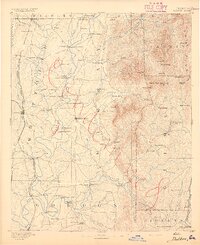 1892 Dalton1892 Print · USGSNorthwest Georgia in the late nineteenth century was defined by its river crossings and the emerging rail lines through Dalton. Researchers can trace the Federal Road and locate family landmarks like Newtown Ferry or Talking Rock Mills.
 - 1894 Map of Suwanee
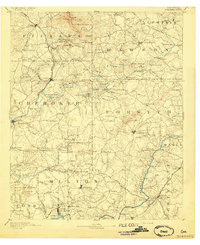 1894 Suwanee1894 Print · USGSNorth Georgia in the late nineteenth century was a landscape of river ferries and rising industry, from marble quarries to gold mines. Genealogists can trace family landmarks like Fields Cross Roads, the Kin Mori Gold Mine, and Fort Buffington.6 unique versions available
 - 1896 Map of Cartersville
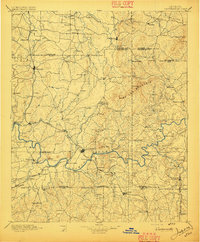 1896 Cartersville1896 Print · USGSNorth Georgia in the late nineteenth century was a rugged landscape of river crossings and mountain ridges. Trace the old ferry routes like Akeman Ferry or locate vanished industrial sites such as Marine Mill and the early works at Cement.4 unique versions available
 - 1897 Map of Dalton
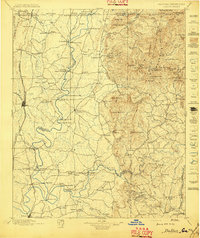 1897 Dalton1897 Print · USGSNorthwest Georgia in the late nineteenth century was a rugged landscape of river crossings and mountain gaps. Genealogists can trace early homesteads and commerce at Praters Mill, Spring Place, and historic river crossings like Montgomery Ferry.4 unique versions available
 - 1898 Map of Ellijay
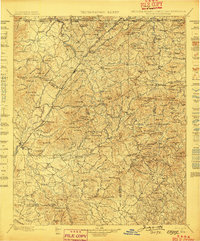 1898 Ellijay1898 Print · USGSNorth Georgia’s mountain country is captured here in the late nineteenth century, showing the early development of Gilmer and Fannin counties. Genealogists can trace family homesteads near old river crossings like Centers Ferry and settlements such as Mineral Bluff and Whitepath.2 unique versions available
 - 1911 Map of Ellijay
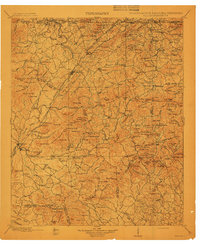 1911 Ellijay1911 Print · USGSNorth Georgia and the Tennessee border are captured here at the turn of the century, showing a mountain landscape of river ferries and early rail. Genealogists can locate family landmarks like Higdons Store, the Pisgah church, or crossings at Bakers Ferry and Shallow Ford.4 unique versions available
 - 1914 Map of Talking Rock, 1960 Print
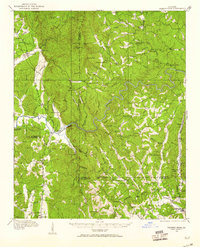 1914 Talking Rock1960 Print · USGSThe foothills of North Georgia are captured here before the mid-century, showing the early communities of Talking Rock and Whitestone along the Louisville and Nashville rail line. Researchers can trace family sites at Ball Creek School, locate river crossings like McClouds Ford, and follow the historic FEDERAL ROAD.2 unique versions available
 - 1916 Map of Talking Rock
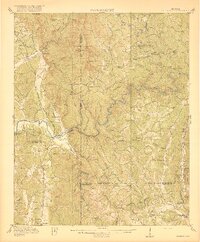 1916 Talking Rock1916 Print · USGSNorth Georgia in the years before the Great War is defined by the winding Coosawattee River and the historic Federal Road. Genealogists can trace family landmarks like Cairns Mill, Clouds Ford, and the old Ball Creek School.2 unique versions available
 - 1926 Map of Tate, 1968 Print
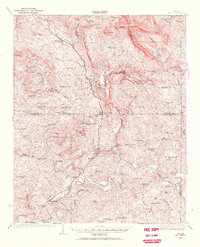 1926 Tate1968 Print · USGSNorthern Georgia's ridge-and-valley corridor is captured here in the mid-twenties, showcasing a landscape of mining and rail commerce. Trace early industrial sites like the Franklin Gold Mine and old crossroads like Ball Ground or Nelson.
 - 1928 Map of Tate
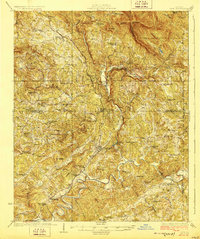 1928 Tate1928 Print · USGSNorth Georgia’s mineral and mountain heritage comes to life in the late 1920s as the rail line connects the marble and gold districts. Researchers can locate family roots at the Franklin Gold Mine, Old Damascus Church, or Burroughs Crossroads.
 - 1947 Map of Waleska, 1964 Print
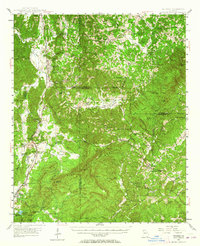 1947 Waleska1964 Print · USGSNorthwestern Georgia’s rural landscape is captured here in the late 1940s as mountain communities and small mill towns were linked by the Louisville and Nashville rail line. Researchers can trace the heritage of Waleska and Fairmount through local landmarks like Erwin Mill, Oak Hill Sch, and the Hutchinson Cem.
 - 1950 Map of Waleska
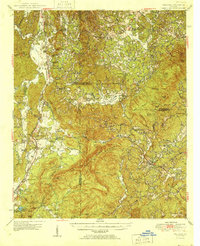 1950 Waleska1950 Print · USGSMid-century Northwest Georgia reveals a network of mountain ridges and creek-bottom farms connected by the Louisville and Nashville rail line. Genealogists can trace early landmarks like the County Home, Richardson Cemetery, and rural schools like Oak Hill School.2 unique versions available
 - 1955 Map of Rome
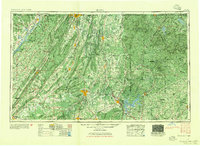 1955 Rome1955 Print · USGSThe tri-state borderlands of Georgia, Alabama, and Tennessee appear in the mid-fifties as a landscape of ridge-and-valley industry and river navigation. Genealogists can trace family footprints near Chattanooga, the iron works of Gadsden, and textile towns like Trion or Summerville.
 - 1958 Map of Rome, 1966 Print
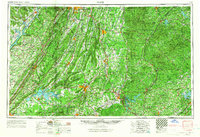 1958 Rome1966 Print · USGSNorthwest Georgia and neighboring Tennessee and Alabama are captured here in the late fifties, showcasing a landscape of high ridges and river valleys. Researchers can trace historic rail lines like the Seaboard Air Line RR and explore the bounds of Cloudland Canyon State Park or Fort Oglethorpe.3 unique versions available
 - 1961 Map of Rome
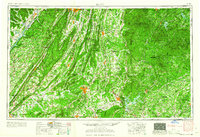 1961 Rome1961 Print · USGSNorthwest Georgia and neighboring Tennessee and Alabama are shown here at a moment of significant mid-century growth. Researchers can trace the rail networks of the Central of Georgia or locate landmarks within Chickamauga and Chattanooga Nat Military Park.
 - 1963 Map of Rome
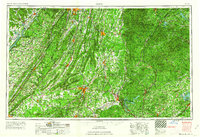 1963 Rome1963 Print · USGSThe tri-state corner of Georgia, Alabama, and Tennessee is captured here during a period of massive reservoir expansion and post-war growth. Genealogists and historians can trace the rail corridors of the Southern Ry or locate landmarks like Fort Oglethorpe and Cloudland Canyon State Park.
 - 1971 Map of Amicalola, 1973 Print
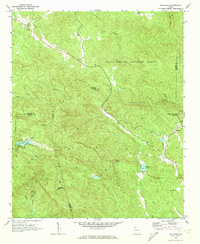 1971 Amicalola1973 Print · USGSNorth Georgia's high country is captured here in the early seventies as small mountain communities remained centered around local churches. Researchers can locate family sites near Little Ebenezer Cem, Antioch Ch, and the settlement of Amicalola.2 unique versions available
 - 1971 Map of Oakman, 1973 Print
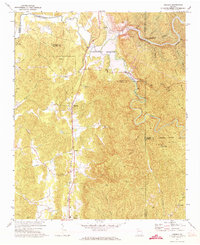 1971 Oakman1973 Print · USGSNorth Georgia’s mountain landscape is captured here during the 1970s as new reservoirs began to reshape the river valleys. Researchers can locate several rural churches and rail-side communities like Oakman, Hopewell Ch, and Sweden near the Louisville and Nashville line.2 unique versions available
 - 1971 Map of Dyke, 1973 Print
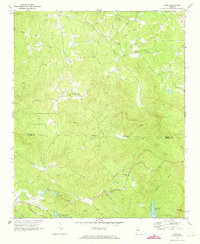 1971 Dyke1973 Print · USGSThe Gilmer and Pickens county line was a landscape of remote mountain valleys and dispersed homesteads in the early seventies. Researchers can trace family roots through sites like Clear Creek Ch, the Louisville and Nashville rail corridor, and Pleasant Valley.3 unique versions available
Showing maps 1-25 of 84
Top cities of Pickens County
Frequently asked questions
- What are the different types of historical maps available for Pickens County?
- What is the oldest map of Pickens County?
- Where can I purchase historical maps of Pickens County for my home or office?
- Where can I download high-res historical maps of Pickens County?
- Are there historical topographic maps available for Pickens County?
- Is there historical aerial imagery available for Pickens County?
- Where are historical maps of Pickens County sourced from?