1900s (20th Century) Maps of Skullhead, Georgia
Explore 6 historic maps of Skullhead from the 1900s (20th Century). These maps offer a rare glimpse into what life looked like during the 1900s — showing old roads, neighborhoods, homes, and landmarks that have changed or disappeared over time.
Whether you're researching your family's past, planning a metal detecting trip, or studying how Skullhead's landscape evolved across the 1900s, these high-resolution maps are a powerful tool for exploring the history of this region.
- Focus on a specific era: All maps on this page are from the 1900s, giving you a focused view of this time period.
- See what’s changed: Compare century-old streets, trails, and buildings to today's modern landscape using overlays and satellite layers.
- Research with precision: Use these maps for genealogy, historical research, land use analysis, or educational projects.
- View, download, or print: Maps are fully viewable online in high resolution, and can be downloaded or printed for your own records.
Start exploring Skullhead's history through authentic maps from the 1900s. This is your window into the past.
Skullhead, GA maps
(6)- 1953 Map of Waycross, 1967 Print
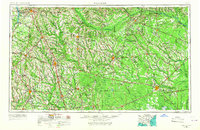 1953 Waycross1967 Print · USGSSouth Georgia's agricultural and rail heartland is captured here in the mid-1950s, showing a vast network of timber and farming towns. Researchers can trace the rail lines connecting Waycross and Tifton or locate landmarks like Jefferson Davis State Park and Lake Blackshear.2 unique versions available
 - 1958 Map of Waycross
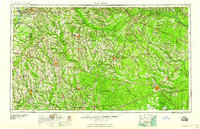 1958 Waycross1958 Print · USGSSoutheast Georgia in the late fifties remains a landscape of deep river basins and vital rail junctions. Genealogists and historians can trace family-named landmarks and rural hubs like Union Church, South Georgia College, and the sprawling Okefenokee Swamp.2 unique versions available
 - 1967 Map of Waycross SE, 1968 Print
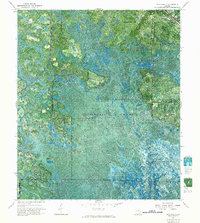 1967 Waycross SE1968 Print · USGSThe northern reaches of the Okefenokee are captured here in the late sixties, showcasing a labyrinth of named islands and aquatic prairies. Researchers can trace the legacy of the regional timber industry via the Dismantled Logging Tram and the small settlement at Braganza.
 - 1978 Map of Waycross, 1982 Print
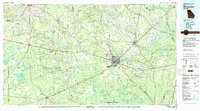 1978 Waycross1982 Print · USGSSoutheast Georgia in the late seventies is a landscape of vast wetlands and busy rail junctions. Genealogists and local historians can trace the Seaboard Coast Line through rural stops like Millwood and Pearson or locate family sites near the Okefenokee Swamp.
 - 1988 Map of Waycross
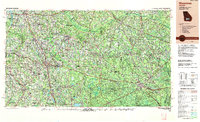 1988 Waycross1988 Print · USGSSouth Georgia's wiregrass and timber country is documented here in the late eighties, centered on the vital rail junction of Waycross. Genealogists and historians can trace the rural landscape from Okefenokee up to the Ocmulgee, finding sites like Lumber City and Jefferson Davis Memorial State Park.
 - 1994 Map of Waycross SE
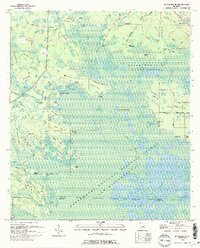 1994 Waycross SE1994 Print · USGSSoutheastern Georgia at the edge of the great swamp in the mid-1990s reveals a complex landscape of named hammocks and water-bound landings. Local historians can trace the paths of an Old Railroad Grade and locate remote features like Negro Camp Island, Braganza, and Taylors Landing.
End of results
Showing maps 1-6 of 6
Top cities near Skullhead
Frequently asked questions
- What are the different types of historical maps available for Skullhead?
- What is the oldest map of Skullhead?
- Where can I purchase historical maps of Skullhead for my home or office?
- Where can I download high-res historical maps of Skullhead?
- Are there historical topographic maps available for Skullhead?
- Is there historical aerial imagery available for Skullhead?
- Where are historical maps of Skullhead sourced from?