Old Maps of Massac County, Illinois
Explore 114 old maps of Massac County, spanning from 1917 to today. These high-resolution historic maps reveal how streets, neighborhoods, landmarks, and natural features evolved over time — perfect for genealogy, metal detecting, research, and local history exploration.
What you can do with these maps:
- See how Massac County changed over time: Compare historical maps to modern-day views to trace roads, homesites, rail lines & more.
- View detailed metadata: Each map includes creators, publishers, year, scale, and archive source.
- Overlay maps with satellite & LiDAR: Visualize the past alongside modern tools to explore terrain & human change.
- Trusted historical sources: Maps sourced from the USGS, Library of Congress, and other archives.
- Access maps your way: View online, download high-res files, or order prints for personal or research use.
Start exploring old maps of Massac County to uncover forgotten places, hidden landmarks, and the deep history beneath your feet.
Massac County, IL maps
(114)- 1917 Map of Brownfield
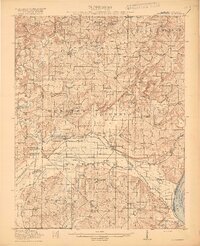 1917 Brownfield1917 Print · USGSSouthern Illinois in the years before the Great War is captured here through its dense network of rural schoolhouses and rail sidings. Researchers can locate family landmarks like Lackey Bridge, Allard College School, and Dixon Springs Sta (Renshaw P.O.).4 unique versions available
 - 1918 Map of Vienna, 1943 Print
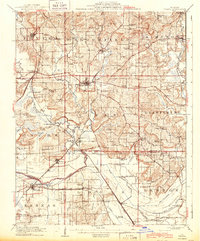 1918 Vienna1943 Print · USGSJohnson and Massac Counties appear here during the height of the steam rail era, centered on the crossroads of VIENNA. Local historians can trace old rural schoolhouses like Taylor School, family sites at Oliver Cemetery, and early settlements such as Ganntown and Samoth.
 - 1919 Map of Vienna
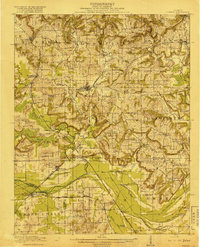 1919 Vienna1919 Print · USGSSouthern Illinois during the late teens reveals a landscape defined by extensive drainage engineering and a high density of rural schools. Genealogists can trace family roots at Oliver Cemetery or locate early rural schoolhouses like Peach School and Whiteside School.
 - 1926 Map of Paducah, 1967 Print
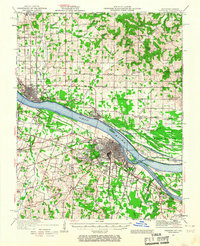 1926 Paducah1967 Print · USGSThe riverfront cities of Paducah and Metropolis are shown at the height of the steam-and-rail era before the major mid-century dam projects. Genealogists can trace family names through dozens of rural landmarks like Weyer Cemetery, Hamilton Chapel, and the Little Union Sch.
 - 1928 Map of La Center, 1964 Print
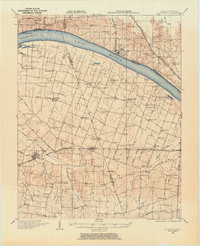 1928 La Center1964 Print · USGSWestern Kentucky and Southern Illinois meet along the Ohio River in the late twenties, showing a landscape of small farming hamlets and river landings. Researchers can locate dozens of family-named schools and churches like Gum Corners Sch, Monkeys Eyebrow, and Ohio Chapel.
 - 1929 Map of Smithland
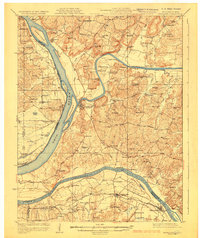 1929 Smithland1929 Print · USGSThe convergence of the Ohio, Tennessee, and Cumberland Rivers defines this late 1920s survey of the Kentucky-Illinois border. Genealogists and researchers can trace riverside life through Haddox Ferry, Smithland, and vanished schoolhouses like Yellowbird Sch.3 unique versions available
 - 1929 Map of Paducah
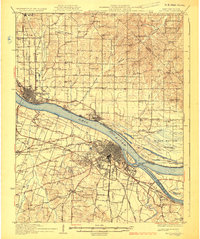 1929 Paducah1929 Print · USGSThe confluence of the Ohio and Tennessee Rivers comes alive in the late twenties as a bustling hub of river and rail transport. Genealogists and historians can trace family roots through numerous local landmarks like West Paducah PO, Veyer Cemetery, and the County Sanitarium.4 unique versions available
 - 1932 Map of La Center
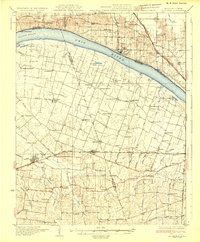 1932 La Center1932 Print · USGSWestern Kentucky and southern Illinois meet along the Ohio River in the early 1930s, showing a landscape of river landings and rail-side towns. Genealogists can trace family roots through numerous rural landmarks like Monkeys Eyebrow, Hinkleville, and Gum Corners Sch.
 - 1936 Map of Paducah
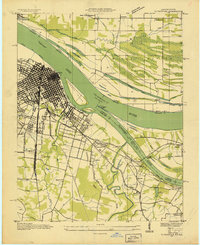 1936 Paducah1936 Print · USGSPaducah thrived as a vital river and rail hub during the mid-thirties, situated at the confluence of the Ohio and Tennessee. Genealogists and historians can trace neighborhood growth through local schools like Hamilton Sch and family-named landmarks such as Nortons Bluff and Stiles Crossing.
 - 1936 Map of Smithland
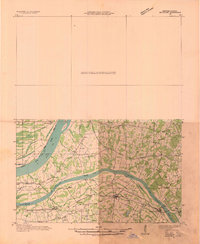 1936 Smithland1936 Print · USGSThe confluence of the Ohio and Tennessee Rivers is captured here in the mid-1930s, documenting a landscape of river-dependent towns and rural school districts. Genealogists can locate family sites like Sleeper Cemetery or Thompson Chapel and trace the original path of the Illinois Central Railroad.
 - 1936 Map of Little Cypress
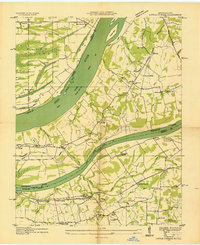 1936 Little Cypress1936 Print · USGSThe Ohio and Tennessee Rivers meet amidst a network of rural settlements in the mid-1930s. Researchers can trace family sites like Little Cypress or locate Kincaid Mounds and early churches like Chestnut Hill Ch.
 - 1940 Map of Paducah, 1958 Print
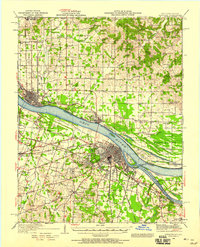 1940 Paducah1958 Print · USGSAcross the river from Illinois at the start of the 1940s, this area captures Paducah and Metropolis at a peak of rail and river activity. Researchers can trace the Illinois Central RR lines, locate family markers at Veyer Cemetery, and find rural landmarks like Klondike Sch and Palestine Ch.
 - 1942 Map of Smithland, 1957 Print
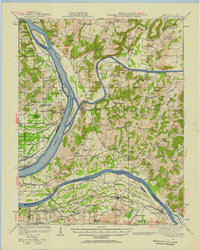 1942 Smithland1957 Print · USGSWestern Kentucky's river-driven economy is on full display during the early 1940s as the Ohio, Cumberland, and Tennessee rivers converge. Researchers can trace historic river crossings like Haddox Ferry and find family landmarks at Kincaid Mounds or the Klondike Mine.
 - 1942 Map of Vienna, 1958 Print
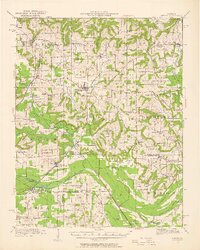 1942 Vienna1958 Print · USGSSouthern Illinois hill country and the Cache River lowlands are shown here during the early 1940s, highlighting a landscape of rail-connected towns and rural school districts. Researchers can trace family roots through numerous sites like Oliver Cemetery, Tall Tree School, and the Crossroads Store.2 unique versions available
 - 1949 Map of Paducah
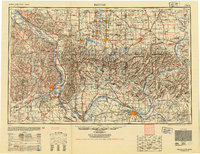 1949 Paducah1949 Print · USGSThe confluence of the Ohio, Mississippi, Tennessee, and Cumberland rivers at the close of the 1940s reveals a region bound by water and rail. Researchers can trace historic river landings, timberlands in the Shawnee National Forest, and the coal-mining infrastructure around West Frankfort and Herrin.2 unique versions available
 - 1950 Map of Paducah
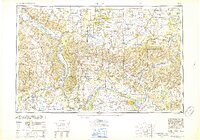 1950 Paducah1950 Print · USGSThe confluence of the great midwestern rivers defines this mid-century landscape at the intersection of Illinois, Kentucky, and Missouri. Genealogists and historians can trace the rail-and-river economy through the hubs of Paducah, Cairo, and Metropolis or locate family roots near the Wildcat Hills.
 - 1953 Map of Paducah East, 1956 Print
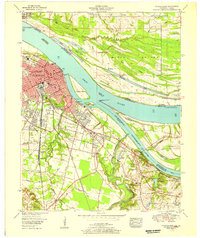 1953 Paducah East1956 Print · USGSPaducah thrived at the strategic meeting of the Ohio and Tennessee Rivers during the early fifties, serving as a bustling railway and maritime center. Researchers can trace the mid-century city grid and outlying landmarks like Augusta Tilghman High School, Owens Island, and the sprawling Illinois Central Railroad yards.
 - 1954 Map of Paducah
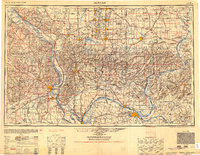 1954 Paducah1954 Print · USGSSouthern Illinois and Western Kentucky intersect at the great river confluences during this mid-century era of rail and river industry. Genealogists and historians can trace family roots and commerce through river towns like Cairo, Metropolis, and Golconda, or along the tracks of the Illinois Central Railroad.2 unique versions available
 - 1954 Map of Metropolis, 1955 Print
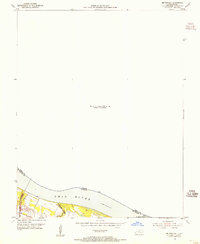 1954 Metropolis1955 Print · USGSThe Ohio River borderland comes into focus in the mid-1950s, highlighting the essential river-and-rail infrastructure of the era. Researchers can trace the path of the Illinois Central Railroad and locate the historic Lock and Dam No 52 near Massac Creek.
 - 1954 Map of Paducah West, 1955 Print
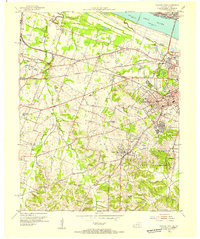 1954 Paducah West1955 Print · USGSWestern McCracken County during the mid-fifties shows the city of Paducah expanding into the surrounding countryside. Genealogists can locate family sites at the Mount Kenton Cemetery, Massac Cem, and the Palestine Ch.
 - 1954 Map of Bandana, 1955 Print
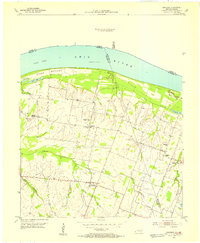 1954 Bandana1955 Print · USGSThe riverfront and farming communities of Ballard County are captured here in the mid-fifties, just south of the Ohio River. Genealogists and historians can trace family locations near Bandana, the uniquely named Monkeys Eyebrow, and Herrin Cem.
 - 1954 Map of Joppa, 1955 Print
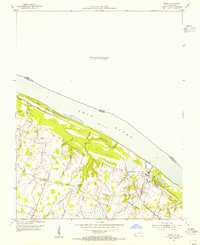 1954 Joppa1955 Print · USGSThe Ohio River borderlands in the mid-1950s show a mix of industrial growth and rural tradition. Trace local genealogy and history through landmarks like Rossington, the Shawnee Steam Plant (TVA), and family sites like Brewer Cem and New Liberty Ch.2 unique versions available
 - 1954 Map of Smithland, 1955 Print
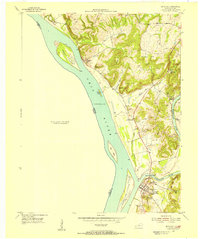 1954 Smithland1955 Print · USGSThe river confluence at Smithland in the mid-1950s remains a landscape rich in Civil War history and family heritage. Researchers can trace the Historical Hospital (Civil War), find the Silver Mine, and locate ancestral burials at Cowper Cem.
 - 1954 Map of Little Cypress, 1956 Print
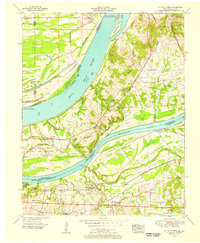 1954 Little Cypress1956 Print · USGSThe confluence of the great rivers in Western Kentucky and Southern Illinois is captured here in the mid-1950s. Trace family roots and local industry at Kincaid Mounds, the community of Possum Trot, and along the tracks of the ILLINOIS CENTRAL.
 - 1958 Map of Paducah West, 1959 Print
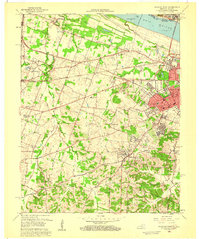 1958 Paducah West1959 Print · USGSWestern Kentucky’s riverfront and growing suburbs are documented here in the late fifties as the regional economy transitioned. Researchers can trace the development of Lone Oak and Rowlandtown or locate rural sites like Massac Cem and Palestine Ch.2 unique versions available
Showing maps 1-25 of 114
Top cities of Massac County
Frequently asked questions
- What are the different types of historical maps available for Massac County?
- What is the oldest map of Massac County?
- Where can I purchase historical maps of Massac County for my home or office?
- Where can I download high-res historical maps of Massac County?
- Are there historical topographic maps available for Massac County?
- Is there historical aerial imagery available for Massac County?
- Where are historical maps of Massac County sourced from?