Old Maps of East Clinton, Illinois
Explore 15 old maps of East Clinton, spanning from 1891 to today. These high-resolution historic maps reveal how streets, neighborhoods, landmarks, and natural features evolved over time — perfect for genealogy, metal detecting, research, and local history exploration.
What you can do with these maps:
- See how East Clinton changed over time: Compare historical maps to modern-day views to trace roads, homesites, rail lines & more.
- View detailed metadata: Each map includes creators, publishers, year, scale, and archive source.
- Overlay maps with satellite & LiDAR: Visualize the past alongside modern tools to explore terrain & human change.
- Trusted historical sources: Maps sourced from the USGS, Library of Congress, and other archives.
- Access maps your way: View online, download high-res files, or order prints for personal or research use.
Start exploring old maps of East Clinton to uncover forgotten places, hidden landmarks, and the deep history beneath your feet.
East Clinton, IL maps
(15)- 1891 Map of Clinton
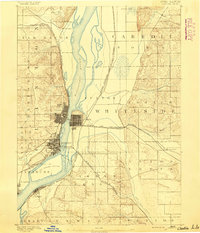 1891 Clinton1891 Print · USGSThe Mississippi River corridor thrived as a dual-state rail hub in the 1890s, anchored by the riverfront centers of Clinton and Fulton. Researchers can trace the early tracks of the Chicago and Northwestern RR and locate vanished stops like Almont and Argo.
 - 1894 Map of Clinton
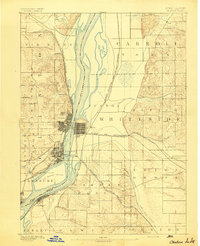 1894 Clinton1894 Print · USGSThe riverfront communities of eastern Iowa and western Illinois are captured here in the late nineteenth century as rail expansion reached its peak. Researchers can trace early street grids in Clinton and Lyons or locate old rail junctions near Garden Plain and Almont.3 unique versions available
 - 1899 Map of Clinton
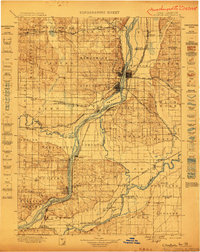 1899 Clinton1899 Print · USGSThe Mississippi River valley comes alive in the late 1890s, capturing the river-and-rail economy of Iowa and Illinois before modern channelization. Genealogists and historians can trace early townships and river landings, finding precise locations for Low Moor, Folletts, and Pink Prairie.5 unique versions available
 - 1952 Map of Clinton, 1953 Print
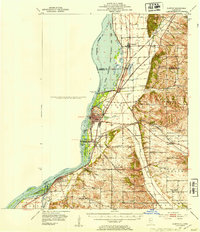 1952 Clinton1953 Print · USGSThe Illinois-Iowa border along the Mississippi River is captured here in the early fifties, showing a landscape defined by industrial rail lines and wildlife refuges. Trace family roots through specific rural landmarks like York Ch, Cottonwood Sch, and Calvary Cem.2 unique versions available
 - 1953 Map of Clinton, 1977 Print
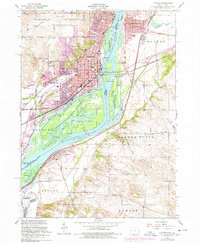 1953 Clinton1977 Print · USGSClinton and the Mississippi River islands are captured here in the 1950s during a period of industrial riverfront activity. Researchers can trace historic schools and cemeteries such as Cedar Creek School, Jane Lamb Memorial Hospital, and St Marys Cemetery across the tri-county area.
 - 1958 Map of Davenport, 1968 Print
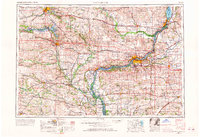 1958 Davenport1968 Print · USGSEastern Iowa and western Illinois thrive along the river during the late fifties, defined by the industrial Quad Cities and a robust rail network. Genealogists can trace family roots through settlements like Oasis and Stanwood or along the Cedar River.2 unique versions available
 - 1961 Map of Davenport
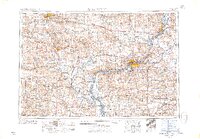 1961 Davenport1961 Print · USGSThe Quad Cities and the eastern Iowa riverlands are captured here in the early sixties, showing the region's transition into a modern industrial and transit hub. Genealogists and historians can trace the paths of major railroads and find river landmarks like Rock Island Arsenal, Huron Island, and the Coralville Reservoir.
 - 1962 Map of Davenport
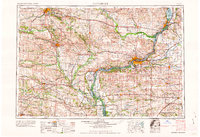 1962 Davenport1962 Print · USGSThe Quad Cities and the Mississippi River corridor are shown at their industrial peak just before the interstate era fully transformed the region. Researchers can trace the sprawling rail networks of the Chicago Rock Island and Pacific and find landmarks like the Rock Island Arsenal and Wild Cat Den State Park.
 - 1984 Map of Davenport, 1985 Print
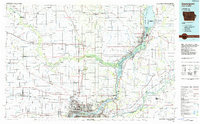 1984 Davenport1985 Print · USGSThe Quad Cities and the eastern Iowa riverlands are captured in the mid-eighties as industry and conservation converged along the Mississippi. Genealogists and local historians can trace rural roots through Stender Church, Oxford Mills, and the Elmwood Cem burial grounds.2 unique versions available
 - 1991 Map of Clinton, 1992 Print
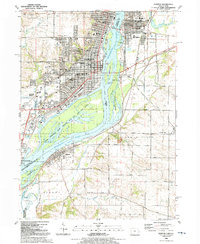 1991 Clinton1992 Print · USGSThe Mississippi River corridor comes alive in the early nineties, showcasing the riverfront growth of Iowa and Illinois. Genealogists can trace local roots through Clinton Mem Cem, St Patrick Ch, and school sites like Unity Christian High Sch.
 - 2010 Map of Clinton, 2010 Print
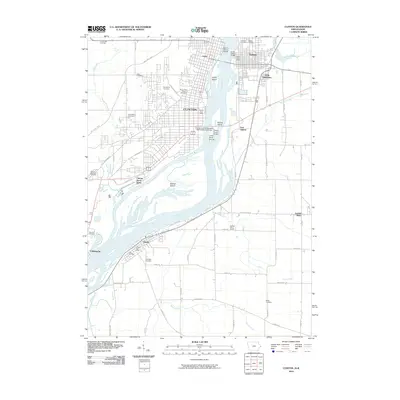 2010 Clinton2010 Print · USGSThe Mississippi River corridor thrives in the early 21st century as a bustling rail and water transit hub between Iowa and Illinois. Genealogists can trace family sites at Springdale Cemetery or the Clinton Stock Yards and see the spans of the Lyons-Fulton Bridge.
 - 2013 Map of Clinton, 2013 Print
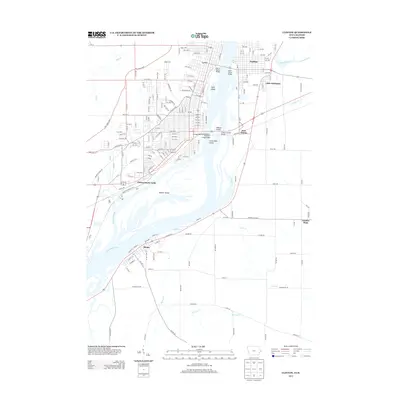 2013 Clinton2013 Print · USGSThe Mississippi River valley serves as a bustling industrial and rail corridor between Iowa and Illinois in the early twenty-first century. Genealogists and historians can trace the local infrastructure of Lyons, Fulton, and the Clinton Stock Yards near the Chicago and Northwestern Railroad.
 - 2015 Map of Clinton, 2015 Print
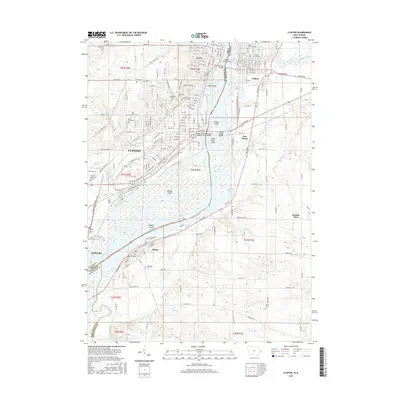 2015 Clinton2015 Print · USGSClinton and Fulton thrive along the Mississippi River banks in the mid-2010s, showing a landscape defined by heavy rail and river crossings. Genealogists can trace family plots at Springdale Cem or Saint Marys Cem, while historians can locate the Chicago and Northwestern Railroad Swing Bridge.
 - 2018 Map of Clinton, 2018 Print
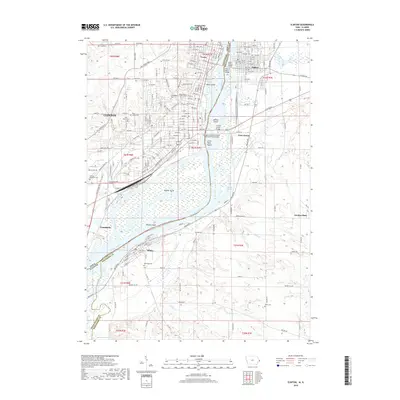 2018 Clinton2018 Print · USGSThe riverfront communities of Clinton, Iowa, and Fulton, Illinois, appear in this contemporary 2018 survey as key hubs of Mississippi River commerce and history. Genealogists and local researchers can locate numerous burial grounds like Springdale Cem and Oakridge Cem or trace the industrial lines of the Chicago and Northwestern Railroad Swing Bridge.
 - 2022 Map of Clinton, 2022 Print
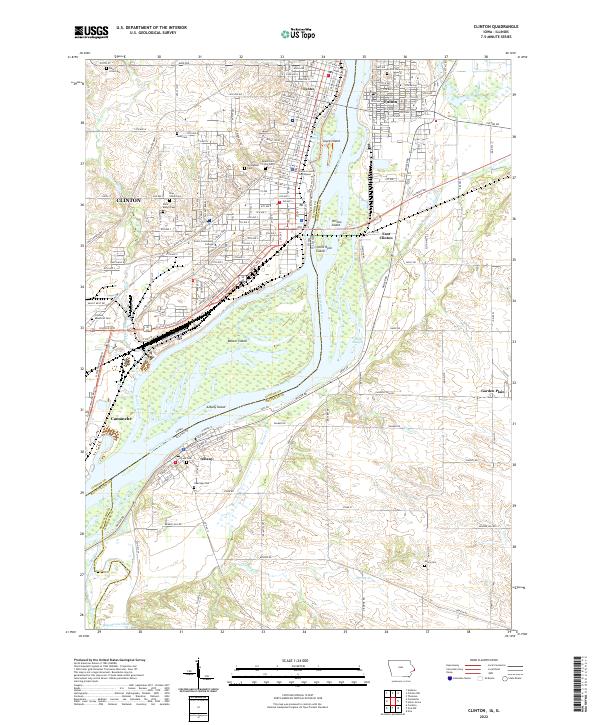 2022 Clinton2022 Print · USGSThe riverfront communities of Clinton and Fulton come alive in this contemporary survey of the Mississippi River corridor. Researchers can trace family history through sites like Springdale Cem and Oakridge Cem or explore the transit networks of the Union Pacific Railroad.
End of results
Showing maps 1-15 of 15
Top cities near East Clinton
- Clinton historical maps
- Le Claire historical maps
- Camanche historical maps
- Morrison historical maps
- Fulton historical maps
- Prophetstown historical maps
See more
Frequently asked questions
- What are the different types of historical maps available for East Clinton?
- What is the oldest map of East Clinton?
- Where can I purchase historical maps of East Clinton for my home or office?
- Where can I download high-res historical maps of East Clinton?
- Are there historical topographic maps available for East Clinton?
- Is there historical aerial imagery available for East Clinton?
- Where are historical maps of East Clinton sourced from?