1900s (20th Century) Maps of Cosperville, Indiana
Explore 6 historic maps of Cosperville from the 1900s (20th Century). These maps offer a rare glimpse into what life looked like during the 1900s — showing old roads, neighborhoods, homes, and landmarks that have changed or disappeared over time.
Whether you're researching your family's past, planning a metal detecting trip, or studying how Cosperville's landscape evolved across the 1900s, these high-resolution maps are a powerful tool for exploring the history of this region.
- Focus on a specific era: All maps on this page are from the 1900s, giving you a focused view of this time period.
- See what’s changed: Compare century-old streets, trails, and buildings to today's modern landscape using overlays and satellite layers.
- Research with precision: Use these maps for genealogy, historical research, land use analysis, or educational projects.
- View, download, or print: Maps are fully viewable online in high resolution, and can be downloaded or printed for your own records.
Start exploring Cosperville's history through authentic maps from the 1900s. This is your window into the past.
Cosperville, IN maps
(6)- 1953 Map of Fort Wayne, 1963 Print
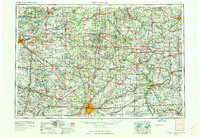 1953 Fort Wayne1963 Print · USGSNortheast Indiana and its neighboring borderlands in Michigan and Ohio appear here during a peak era of rail and road expansion. Researchers can trace the massive rail networks of the Nickel Plate Road and Wabash or locate lakeside landmarks like Lake Wawasee and Clear Lake.4 unique versions available
 - 1956 Map of Fort Wayne
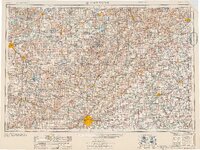 1956 Fort Wayne1956 Print · USGSThe tri-state borderlands of Indiana, Michigan, and Ohio are captured here in the mid-fifties, centered on the growing industrial hub of Fort Wayne. Researchers can trace the heavy rail lines of the New York Central and Pennsylvania alongside prominent water features like Lake Wawasee and the Maumee River.2 unique versions available
 - 1956 Map of Albion, 1958 Print
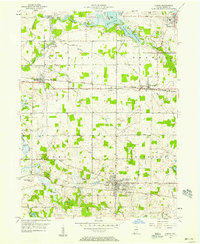 1956 Albion1958 Print · USGSNoble County in the mid-fifties is a landscape of glacial lakes and bustling rail lines connecting small rural townships. Genealogists can locate family sites at Rose Hill Cemetery and Orange Cemetery, or trace the old New York Central System through Wawaka and Brimfield.2 unique versions available
 - 1973 Map of Albion, 1974 Print
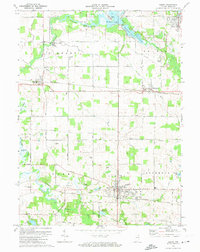 1973 Albion1974 Print · USGSNoble County's glacial lake country and rail towns are captured here in the mid-seventies as the region's agricultural and industrial identity remained firmly rooted. Genealogists can locate family sites at Rose Hill Cem or Wright Cem, while rail historians can trace the paths of the Penn Central and Baltimore and Ohio.
 - 1984 Map of Fort Wayne, 1985 Print
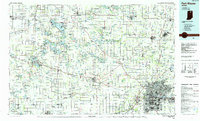 1984 Fort Wayne1985 Print · USGSNortheast Indiana in the mid-1980s reveals a complex landscape of glacial lakes, thriving college towns, and heavy rail infrastructure. Researchers can trace the development of Winona Lake, locate Manchester College in North Manchester, and find rural landmarks like Oakwood Cem or the Tri-County State Fish and Game Area.
 - 1994 Map of Fort Wayne
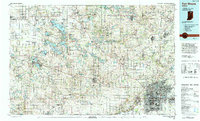 1994 Fort Wayne1994 Print · USGSNortheast Indiana in the mid-nineties shows a landscape deeply tied to its glacial lakes and early rail networks. Genealogists and historians can trace old transit lines like the Old Ind RR and explore lakeside settlements such as Enchanted Hills and Syracuse.
End of results
Showing maps 1-6 of 6
Top cities near Cosperville
- Kendallville historical maps
- Ligonier historical maps
- Middlebury historical maps
- LaGrange historical maps
- Lagrange historical maps
- Avilla historical maps
See more
Frequently asked questions
- What are the different types of historical maps available for Cosperville?
- What is the oldest map of Cosperville?
- Where can I purchase historical maps of Cosperville for my home or office?
- Where can I download high-res historical maps of Cosperville?
- Are there historical topographic maps available for Cosperville?
- Is there historical aerial imagery available for Cosperville?
- Where are historical maps of Cosperville sourced from?