Old Maps of Farley, Iowa for Academic Research
Study the evolution of Farley with 20 high-resolution historic maps. Whether you're teaching, researching, or modeling changes in land use, these maps provide essential visual documentation of urban, environmental, and geographic change.
- Analyze long-term change: Track patterns in development, transportation, and natural features.
- Ideal for environmental or urban studies: Support academic projects with primary historical map data.
- Use in the classroom or lab: Educators and researchers rely on these maps to bring historical context to life.
These maps are a powerful tool for teaching, research, and visualizing how Farley has changed over the decades.
Farley, IA maps
(20)- 1900 Map of Anamosa
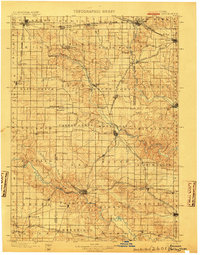 1900 Anamosa1900 Print · USGSEastern Iowa is shown here during the peak of its rail-driven development at the end of the century. Genealogists and historians can trace the early layouts of Anamosa and Monticello or locate smaller settlements like Sand Spring and Rockville.4 unique versions available
 - 1901 Map of Peosta
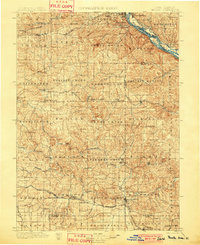 1901 Peosta1901 Print · USGSDubuque and Jackson counties were a hub of river commerce and early rail expansion at the turn of the century. Genealogists and historians can trace the foundations of communities like Peosta, St.Donatus, and the mill sites at Washington Mills.4 unique versions available
 - 1959 Map of Dubuque, 1982 Print
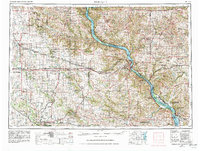 1959 Dubuque1982 Print · USGSThe Tri-State region comes alive in the mid-twentieth century as a hub of river commerce and rail transit. Genealogists and historians can trace the paths of the Illinois Central Gulf through Dubuque or locate the Savanna Ordnance Depot and Lock and Dam No 11.
 - 1961 Map of Dubuque
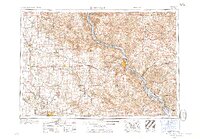 1961 Dubuque1961 Print · USGSThe Tri-State region's river-and-rail landscape is captured here during the early sixties, showing the convergence of Iowa, Illinois, and Wisconsin. Trace mid-century rail lines like the Chicago Great Western Ry and explore sites like the Savanna Ordnance Depot and Backbone State Park.
 - 1962 Map of Dubuque
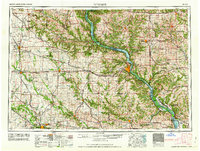 1962 Dubuque1962 Print · USGSThe Tri-State region's river-and-rail economy is captured here in the early sixties, centered on the Mississippi River bluffs. Genealogists and historians can locate Numerous lead and zinc mines, the New Melleray Abbey Monastery, and rural hubs like Saint Olaf.2 unique versions available
 - 1965 Map of Dyersville East, 1967 Print
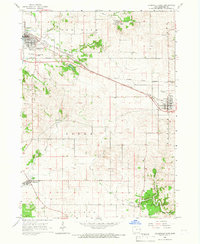 1965 Dyersville East1967 Print · USGSDubuque County’s agricultural and industrial landscape is captured here in the mid-1960s, featuring the critical rail junctions at Dyersville and Farley. Genealogists can trace local roots through numerous landmarks like Mt Hope Cem, McGee Cem, and the Johny Creek Cem.
 - 1966 Map of Epworth, 1968 Print
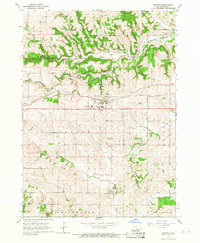 1966 Epworth1968 Print · USGSDubuque County's agrarian and institutional heartland is captured here in the mid-1960s, centered on the railroad town of Epworth. Genealogists and historians can trace local family roots at St Josephs Cem and Highview Cem or locate the historic Divine Word Seminary.
 - 1976 Map of Dubuque
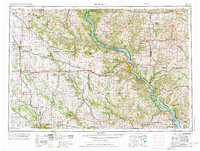 1976 Dubuque1976 Print · USGSThe tri-state borderlands of Iowa, Wisconsin, and Illinois come alive during the mid-seventies, showing a region built on river commerce and mining. Genealogists and historians can trace the paths of the Illinois Central railroad or locate heritage sites like the New Melleray Abbey Monastery and Backbone State Park.
 - 1984 Map of Dubuque South, 1985 Print
 1984 Dubuque South1985 Print · USGSEastern Iowa and Northwest Illinois meet along the Mississippi in the mid-eighties, a landscape defined by river industry and limestone bluffs. Trace the rail lines of the Illinois Central Gulf or explore notable sites like the Savanna Army Depot and Maquoketa Caves State Park.4 unique versions available
 - 1984 Map of Anamosa, 1985 Print
 1984 Anamosa1985 Print · USGSEastern Iowa's river valleys and farming communities are captured here in the mid-eighties, showing a landscape defined by the Wapsipinicon River and Maquoketa River. Genealogists and historians can locate legacy landmarks like the Independence State Hospital, Ebys Mill, and the State Penal Farm.2 unique versions available
 - 2010 Map of Epworth, 2010 Print
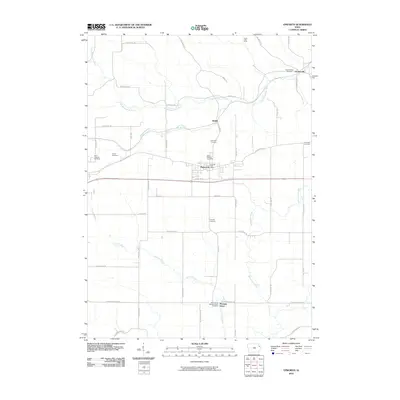 2010 Epworth2010 Print · USGSEpworth and its surrounding Dubuque County townships are shown here as they appeared in the early 2000s, featuring a detailed network of rural settlements and cemeteries. Researchers can trace family sites from Lattnerville to Kidder, or locate historic parish grounds like Saint Johns Catholic Placid Cemetery.
 - 2010 Map of Dyersville East, 2010 Print
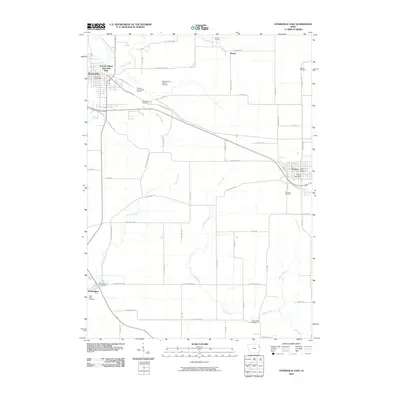 2010 Dyersville East2010 Print · USGSDyersville and the surrounding farm country are shown at a point of modern maturity in the early twenty-first century. Researchers can trace family history through numerous rural burial grounds like McGee Cemetery and find iconic local landmarks including the Field of Dreams.
 - 2013 Map of Dyersville East, 2013 Print
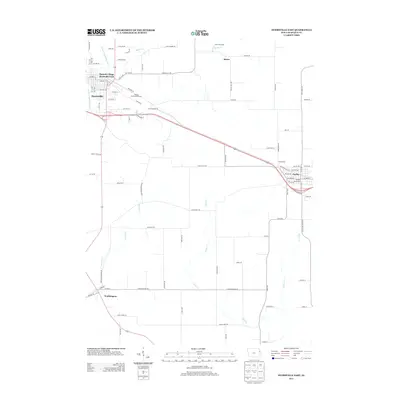 2013 Dyersville East2013 Print · USGSDyersville and the surrounding Dubuque County countryside are captured here in the early twenty-first century. Researchers can trace local landmarks like the Field of Dreams, the Farley Racetrack, and the historic street grids of Farley and Worthington.
 - 2013 Map of Epworth, 2013 Print
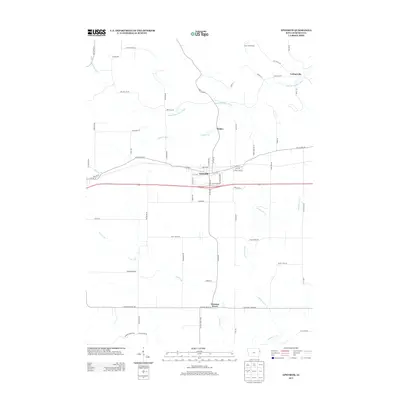 2013 Epworth2013 Print · USGSDubuque County at the start of the 2010s shows a landscape of established towns and rural corridors shaped by the Little Maquoketa River. Genealogists and historians can trace local landmarks like Lattnerville, Pleasant Grove, and the naming of Olde School Ln.
 - 2015 Map of Epworth, 2015 Print
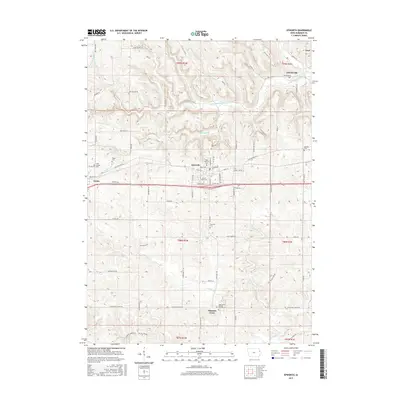 2015 Epworth2015 Print · USGSThe rural uplands of Dubuque County are mapped here in the mid-2010s, showing a landscape defined by parish centers and long-standing family farmsteads. Genealogists can trace local roots through numerous sites like Annunciation Cem, Divine Word Coll, and the small settlement of Lattnerville.
 - 2015 Map of Dyersville East, 2015 Print
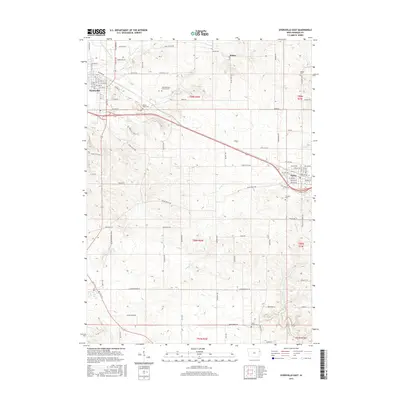 2015 Dyersville East2015 Print · USGSDyersville and Farley appear in the mid-2010s at a point of steady expansion along the corridor between Dubuque and the interior. Genealogists can trace family heritage through numerous rural burial sites including Saint Boniface Catholic Cem, McGee Cem, and Johns Creek Cem.
 - 2018 Map of Dyersville East, 2018 Print
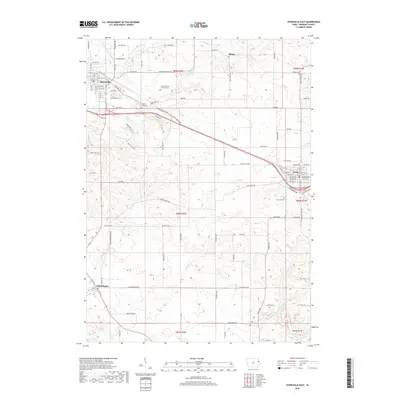 2018 Dyersville East2018 Print · USGSThe eastern edges of Dyersville and Farley are documented in this late 2010s survey of eastern Iowa’s rolling farmland. Genealogists can trace family footprints across several historic sites, including Saint Boniface Catholic Cem, Fairview Cem, and the quiet crossing at Mekee.
 - 2018 Map of Epworth, 2018 Print
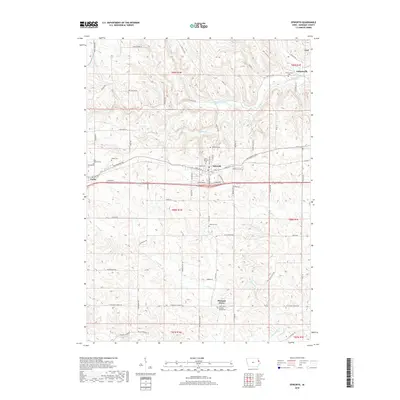 2018 Epworth2018 Print · USGSWestern Dubuque County is shown here in the late 2010s, defined by its small farming towns and the winding Little Maquoketa River. Genealogists can trace family footprints through numerous local landmarks like Saint Josephs Cem, Lattnerville, and Placid Cem.
 - 2022 Map of Epworth, 2022 Print
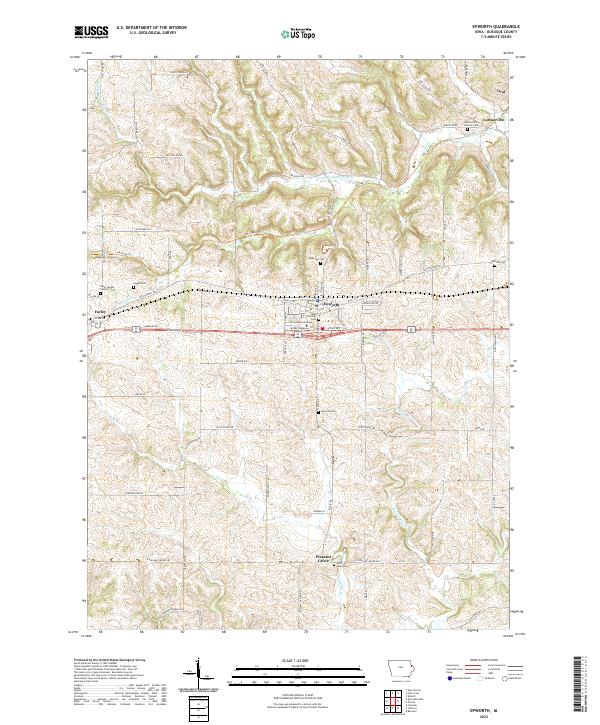 2022 Epworth2022 Print · USGSDubuque County’s rolling farmland and river valleys are captured here in the early twenty-first century. Genealogists can trace family roots through numerous burial sites like Hogan Cem, Highview Cem, and the historic Divine Word College.
 - 2022 Map of Dyersville East, 2022 Print
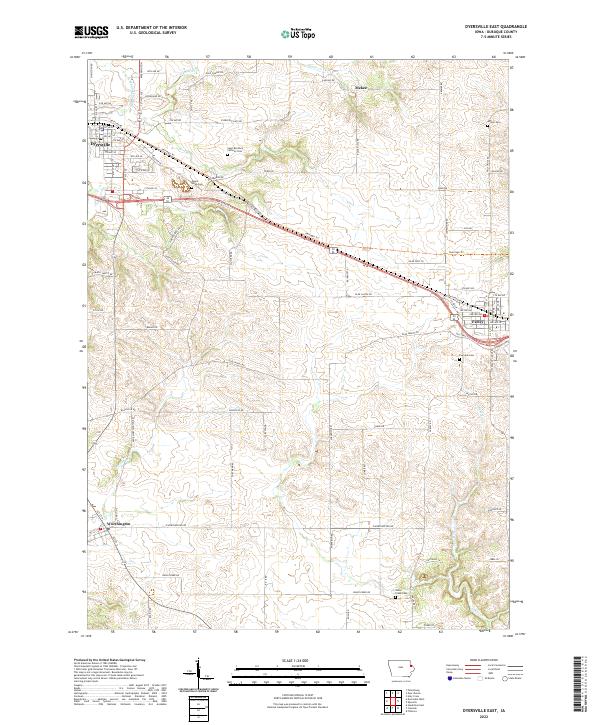 2022 Dyersville East2022 Print · USGSDubuque County in the early 2020s shows a landscape of established towns and rural corridors connected by the Heritage Trl. Researchers can pinpoint local family history at Saint Boniface Catholic Cem, Fairview Cem, and the quiet crossroads of Mekee.
End of results
Showing maps 1-20 of 20
Top cities near Farley
- Dubuque historical maps
- Asbury historical maps
- Dyersville historical maps
- Monticello historical maps
- Cascade historical maps
- Epworth historical maps
See more
Frequently asked questions
- What are the different types of historical maps available for Farley?
- What is the oldest map of Farley?
- Where can I purchase historical maps of Farley for my home or office?
- Where can I download high-res historical maps of Farley?
- Are there historical topographic maps available for Farley?
- Is there historical aerial imagery available for Farley?
- Where are historical maps of Farley sourced from?