1900s (20th Century) Maps of Polk County, Iowa
Explore 33 historic maps of Polk County from the 1900s (20th Century). These maps offer a rare glimpse into what life looked like during the 1900s — showing old roads, neighborhoods, homes, and landmarks that have changed or disappeared over time.
Whether you're researching your family's past, planning a metal detecting trip, or studying how Polk County's landscape evolved across the 1900s, these high-resolution maps are a powerful tool for exploring the history of this region.
- Focus on a specific era: All maps on this page are from the 1900s, giving you a focused view of this time period.
- See what’s changed: Compare century-old streets, trails, and buildings to today's modern landscape using overlays and satellite layers.
- Research with precision: Use these maps for genealogy, historical research, land use analysis, or educational projects.
- View, download, or print: Maps are fully viewable online in high resolution, and can be downloaded or printed for your own records.
Start exploring Polk County's history through authentic maps from the 1900s. This is your window into the past.
Polk County, IA maps
(33)- 1905 Map of Des Moines, 1954 Print
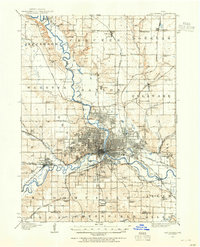 1905 Des Moines1954 Print · USGSAt the dawn of the twentieth century, the state capital was a thriving rail hub where the Des Moines River met a complex network of iron rails. Genealogists and historians can trace early neighborhood development near the State Fairgrounds or locate family roots near rural landmarks like Red Brick School and Valley Junction.
 - 1907 Map of Des Moines
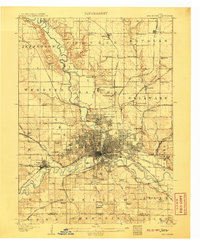 1907 Des Moines1907 Print · USGSThe capital city and its surrounding coal-and-rail towns are shown in detail at the start of the twentieth century. Genealogists can locate family homesteads near Fort Des Moines or trace ancestors in vanished settlements like Oralabor, Saylorville, and Valley Junction.3 unique versions available
 - 1908 Map of Waukee
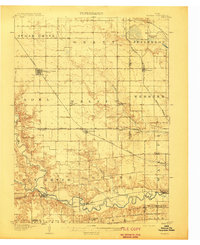 1908 Waukee1908 Print · USGSDallas County at the turn of the century shows a landscape shaped by competing railroads and the winding Raccoon River. Genealogists and local historians can trace early schoolhouse locations like Valley Grove School and the original rail footprints of Waukee and Van Meter.2 unique versions available
 - 1910 Map of Milo
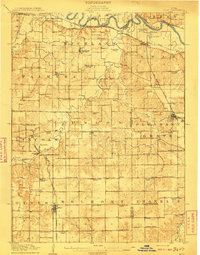 1910 Milo1910 Print · USGSWarren and Marion counties are captured here at the height of their early 20th-century rural development, before the modernization of the road network. Genealogists can trace family footprints through numerous country schools like Prairie Creek School and the river-crossing at Hammondsburg Bridge.2 unique versions available
 - 1911 Map of Madrid, 1958 Print
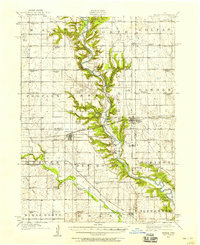 1911 Madrid1958 Print · USGSBoone and Dallas counties appear here in the early twentieth century as a busy corridor of river-valley agriculture and rail transit. Researchers can trace dozens of early rural school sites like Hull School and Gildea School alongside the path of the Inter-Urban Railway.
 - 1911 Map of Slater, 1960 Print
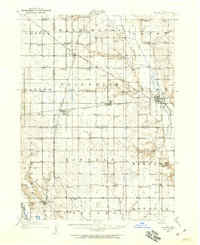 1911 Slater1960 Print · USGSCentral Iowa at the dawn of the twentieth century was a landscape of rail-driven prairie towns and a schoolhouse at nearly every mile. Genealogists can trace the rural roots of local families through specific sites like Nip-and-tuck School, Polk City Junction, and Huxley.
 - 1913 Map of Slater
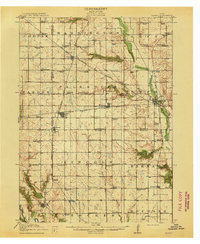 1913 Slater1913 Print · USGSCentral Iowa's farm country and rail corridors are captured here just before the First World War, showing a landscape tightly knit by steam and electric lines. Genealogists can locate dozens of neighborhood landmarks like Nip-and-tuck School, the Sydnes School, and the early plats of Slater and Huxley.2 unique versions available
 - 1914 Map of Madrid
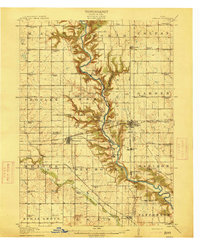 1914 Madrid1914 Print · USGSCentral Iowa's river valleys and prairie townships come alive in the decade before the Great War, showing a landscape defined by rail lines and rural schoolhouses. Genealogists and historians can trace family roots through specific landmarks like Madrid, Woodward, and the Marcy Center School.3 unique versions available
 - 1930 Map of Mitchellville
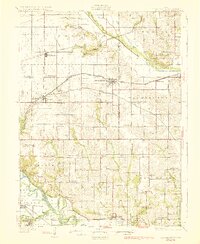 1930 Mitchellville1930 Print · USGSCentral Iowa's fertile prairie and river valleys come alive in this late 1920s survey of the settlements between the Skunk and Des Moines rivers. Researchers can locate dozens of country schools like Nebo Sch and Peacock Sch or trace family roots near Camp Center Ch.3 unique versions available
 - 1954 Map of Des Moines, 1973 Print
 1954 Des Moines1973 Print · USGSCentral Iowa's evolving landscape is captured here in the early seventies, just as major reservoirs were reshaping the river valleys. Genealogists and historians can trace the rail corridors of the Burlington Northern or locate family roots near Pella, Indianola, and Knoxville.2 unique versions available
 - 1956 Map of Des Moines
 1956 Des Moines1956 Print · USGSCentral Iowa in the mid-fifties shows a landscape defined by bustling rail hubs and deep-rooted agricultural research. Genealogists and researchers can trace the growth of Des Moines and Ames, locate the Sac and Fox Indian Reservation, or study the paths of the Skunk River and South Skunk River.
 - 1956 Map of Des Moines NW, 1958 Print
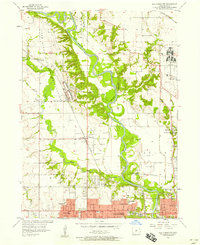 1956 Des Moines NW1958 Print · USGSNorthwest of Des Moines in the mid-fifties, the landscape was a mix of military training grounds and rapidly growing suburbs. Genealogists and historians can trace the footprint of Camp Dodge, find lost family plots like Kinsey Cem, and locate the early sites of Dodge Airport and Olmstead Sch.5 unique versions available
 - 1956 Map of Des Moines SW, 1958 Print
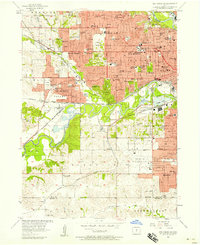 1956 Des Moines SW1958 Print · USGSMid-century expansion across Polk County shows the growth of the state capital as suburban neighborhoods reached toward West Des Moines. Researchers can trace historic rail lines, old schools like Plainview Sch, and the layout of Drake University or Glendale Cemetery.4 unique versions available
 - 1956 Map of Des Moines SE, 1958 Print
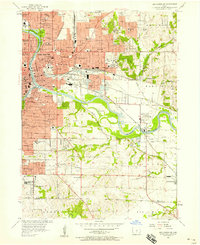 1956 Des Moines SE1958 Print · USGSMid-century Des Moines and its southeastern suburbs are captured here during a time of significant growth and transit expansion. Genealogists and historians can trace neighborhood landmarks like Fort Des Moines, the State Fairground, and numerous family-named cemeteries such as Oakwood Cem.4 unique versions available
 - 1956 Map of Des Moines NE, 1958 Print
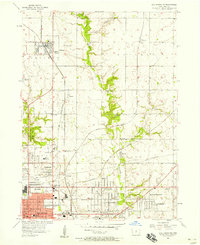 1956 Des Moines NE1958 Print · USGSThe northern Des Moines suburbs and the rail hubs of Polk County are captured here in the mid-fifties. Researchers can trace the original footprints of Ankeny and Oralabor, or locate rural landmarks like Greenwood Ch and Highland Memory Gardens.4 unique versions available
 - 1956 Map of Des Moines, 1959 Print
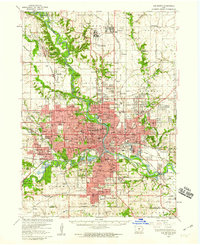 1956 Des Moines1959 Print · USGSThe Des Moines metro area is captured in the mid-1950s, showing a landscape defined by rapid suburban growth and deep-rooted military and rail history. Trace the development of Urbandale and Windsor Heights alongside landmarks like Camp Dodge and the State Fairgrounds.
 - 1957 Map of Des Moines
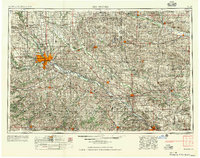 1957 Des Moines1957 Print · USGSCentral Iowa's post-war landscape is defined here by the converging rail lines and river valleys that shaped its earliest settlements. Genealogists and historians can trace the paths of the Rock Island Railroad and locate community landmarks in Des Moines, Ames, and Newton.
 - 1965 Map of Pleasantville, 1966 Print
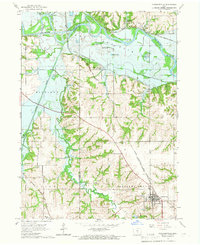 1965 Pleasantville1966 Print · USGSIn the mid-1960s, this portion of Marion County was undergoing significant hydrological change as the reservoir system began to shape the river valleys. Researchers can trace the paths of three major rail lines and locate local landmarks like Swan Cem, the Scatling Mine, and the village of Beech.
 - 1965 Map of Granger, 1966 Print
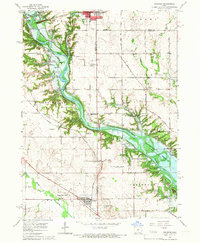 1965 Granger1966 Print · USGSThe Des Moines River valley in the mid-sixties reveals a landscape undergoing transformation as the Saylorville Reservoir takes shape. Genealogists can locate family sites like Granger Homesteads or rural landmarks such as Hopkins Grove Cem and the Chestnut Ford Bridge.2 unique versions available
 - 1965 Map of Hartford, 1966 Print
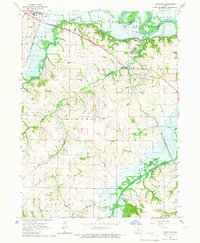 1965 Hartford1966 Print · USGSThe mid-1960s landscape of Warren County is defined by the valley of the Des Moines River and the emerging Lake Red Rock. Genealogists and researchers can trace the rail lines of the Chicago Rock Island and Pacific or locate burial sites like Black Cem and Carlisle Cem.
 - 1965 Map of Grimes, 1966 Print
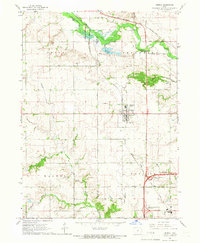 1965 Grimes1966 Print · USGSGrimes and northern Urbandale are captured in the mid-sixties during a period of steady suburban expansion and rail-supported growth. Researchers can trace the heritage of local families at Sunny Hill Hill Cem or follow the historic routes of the Chicago and North Western railroad.2 unique versions available
 - 1965 Map of Commerce, 1966 Print
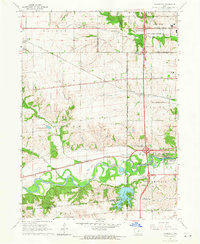 1965 Commerce1966 Print · USGSSuburban development meets Iowa farmland in the mid-1960s as the Raccoon River valley undergoes rapid change. Trace old rail lines like the Chicago Rock Island and Pacific or locate local landmarks like Valley High Sch and Sugar Creek Lake.2 unique versions available
 - 1969 Map of Des Moines
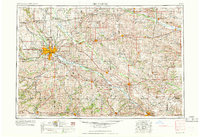 1969 Des Moines1969 Print · USGSCentral Iowa's fertile plains and growing capital are captured here during the late sixties, a time of major highway expansion and reservoir construction. Genealogists and researchers can trace rural township boundaries, local cemeteries, and rail lines serving towns like Pella, Grinnell, and Oskaloosa.
 - 1972 Map of Runnells, 1974 Print
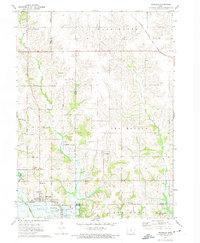 1972 Runnells1974 Print · USGSRunnells and the southern Polk County borderlands are shown here in the early seventies, just as the regional landscape was adjusting to the presence of Lake Red Rock. Researchers can trace old family sites and rural infrastructure through the Vandalia Cem, the Runnells Sch, and the Norfolk and Western rail line.
 - 1972 Map of Altoona, 1974 Print
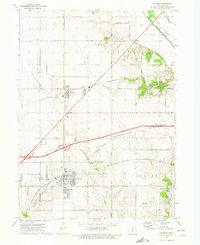 1972 Altoona1974 Print · USGSPolk County enters a decade of modern growth and infrastructure expansion in the early seventies. Genealogists and local researchers can trace the rail lines of the Chicago and North Western or locate family plots at Altoona Cem and Franklin Cem.2 unique versions available
Showing maps 1-25 of 33
Top cities of Polk County
- Des Moines historical maps
- Ankeny historical maps
- Johnston historical maps
- Altoona historical maps
- Pleasant Hill historical maps
- Bondurant historical maps
See more
Frequently asked questions
- What are the different types of historical maps available for Polk County?
- What is the oldest map of Polk County?
- Where can I purchase historical maps of Polk County for my home or office?
- Where can I download high-res historical maps of Polk County?
- Are there historical topographic maps available for Polk County?
- Is there historical aerial imagery available for Polk County?
- Where are historical maps of Polk County sourced from?