1900s (20th Century) Maps of Watrous South, Des Moines
Explore 9 historic maps of Watrous South from the 1900s (20th Century). These maps offer a rare glimpse into what life looked like during the 1900s — showing old roads, neighborhoods, homes, and landmarks that have changed or disappeared over time.
Whether you're researching your family's past, planning a metal detecting trip, or studying how Watrous South's landscape evolved across the 1900s, these high-resolution maps are a powerful tool for exploring the history of this region.
- Focus on a specific era: All maps on this page are from the 1900s, giving you a focused view of this time period.
- See what’s changed: Compare century-old streets, trails, and buildings to today's modern landscape using overlays and satellite layers.
- Research with precision: Use these maps for genealogy, historical research, land use analysis, or educational projects.
- View, download, or print: Maps are fully viewable online in high resolution, and can be downloaded or printed for your own records.
Start exploring Watrous South's history through authentic maps from the 1900s. This is your window into the past.
Watrous South, Des Moines maps
(9)- 1905 Map of Des Moines, 1954 Print
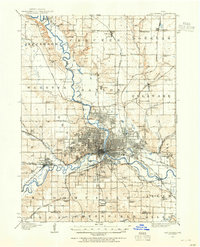 1905 Des Moines1954 Print · USGSAt the dawn of the twentieth century, the state capital was a thriving rail hub where the Des Moines River met a complex network of iron rails. Genealogists and historians can trace early neighborhood development near the State Fairgrounds or locate family roots near rural landmarks like Red Brick School and Valley Junction.
 - 1907 Map of Des Moines
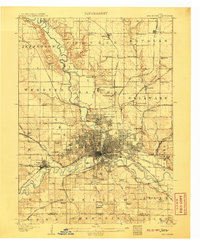 1907 Des Moines1907 Print · USGSThe capital city and its surrounding coal-and-rail towns are shown in detail at the start of the twentieth century. Genealogists can locate family homesteads near Fort Des Moines or trace ancestors in vanished settlements like Oralabor, Saylorville, and Valley Junction.3 unique versions available
 - 1954 Map of Des Moines, 1973 Print
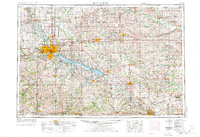 1954 Des Moines1973 Print · USGSCentral Iowa's evolving landscape is captured here in the early seventies, just as major reservoirs were reshaping the river valleys. Genealogists and historians can trace the rail corridors of the Burlington Northern or locate family roots near Pella, Indianola, and Knoxville.2 unique versions available
 - 1956 Map of Des Moines
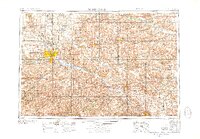 1956 Des Moines1956 Print · USGSCentral Iowa in the mid-fifties shows a landscape defined by bustling rail hubs and deep-rooted agricultural research. Genealogists and researchers can trace the growth of Des Moines and Ames, locate the Sac and Fox Indian Reservation, or study the paths of the Skunk River and South Skunk River.
 - 1956 Map of Des Moines SW, 1958 Print
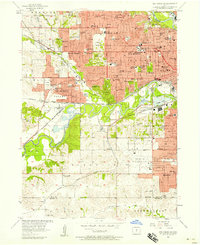 1956 Des Moines SW1958 Print · USGSMid-century expansion across Polk County shows the growth of the state capital as suburban neighborhoods reached toward West Des Moines. Researchers can trace historic rail lines, old schools like Plainview Sch, and the layout of Drake University or Glendale Cemetery.4 unique versions available
 - 1956 Map of Des Moines, 1959 Print
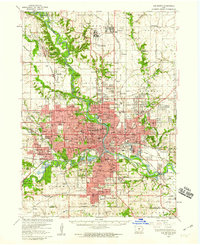 1956 Des Moines1959 Print · USGSThe Des Moines metro area is captured in the mid-1950s, showing a landscape defined by rapid suburban growth and deep-rooted military and rail history. Trace the development of Urbandale and Windsor Heights alongside landmarks like Camp Dodge and the State Fairgrounds.
 - 1957 Map of Des Moines
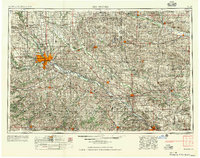 1957 Des Moines1957 Print · USGSCentral Iowa's post-war landscape is defined here by the converging rail lines and river valleys that shaped its earliest settlements. Genealogists and historians can trace the paths of the Rock Island Railroad and locate community landmarks in Des Moines, Ames, and Newton.
 - 1969 Map of Des Moines
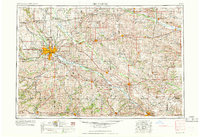 1969 Des Moines1969 Print · USGSCentral Iowa's fertile plains and growing capital are captured here during the late sixties, a time of major highway expansion and reservoir construction. Genealogists and researchers can trace rural township boundaries, local cemeteries, and rail lines serving towns like Pella, Grinnell, and Oskaloosa.
 - 1984 Map of Des Moines, 1985 Print
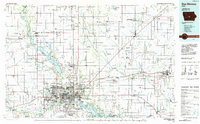 1984 Des Moines1985 Print · USGSCentral Iowa's heartland is captured in the mid-1980s as suburban growth met long-standing farm and rail infrastructure. Genealogists and researchers can trace the reaches of the Chicago and North Western through Maxwell or locate Laurel Hill Cem and Camp Dodge Military Reservation.2 unique versions available
End of results
Showing maps 1-9 of 9
Frequently asked questions
- What are the different types of historical maps available for Watrous South?
- What is the oldest map of Watrous South?
- Where can I purchase historical maps of Watrous South for my home or office?
- Where can I download high-res historical maps of Watrous South?
- Are there historical topographic maps available for Watrous South?
- Is there historical aerial imagery available for Watrous South?
- Where are historical maps of Watrous South sourced from?