Old Maps of Scott County, Iowa for Metal Detecting
Plan your next treasure hunt with 179 historic maps of Scott County. Find old homesites, ghost towns, trails, and gathering spots that may be lost to time — perfect for identifying promising metal detecting locations.
- Locate forgotten sites: Uncover places like long-lost settlements, abandoned rail lines, or gathering spots.
- Plan better hunts: Use map overlays combined with LiDAR or satellite views to narrow in on historically rich areas.
- Made for detectorists: Thousands of hobbyists use these maps to discover relics, coins, and hidden history.
Use these historic maps to boost your research and find new opportunities beneath the surface of Scott County.
Scott County, IA maps
(179)- 1890 Map of Durant
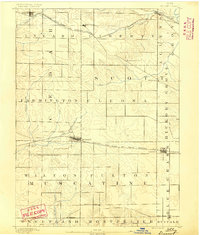 1890 Durant1890 Print · USGSEastern Iowa's rail-dependent farming communities are documented in the late nineteenth century as the grid of townships began to mature. Genealogists and historians can trace the early footprints of Durant, Walcott, and the remote Round Grove P.O. along established rail lines.
 - 1891 Map of DeWitt
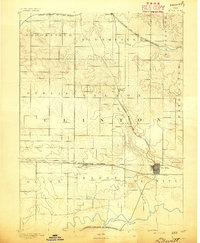 1891 DeWitt1891 Print · USGSClinton County is shown here during the peak of its railroad expansion in the late nineteenth century. Researchers can trace the development of De Witt and find early platted details for Delmar, Elwood, and the junction at Grand Mound.3 unique versions available
 - 1891 Map of Davenport
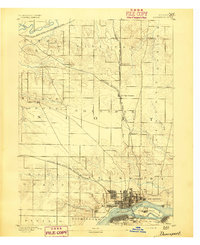 1891 Davenport1891 Print · USGSIowa's riverfront and rolling prairie townships are captured here during a period of rapid railroad expansion in the late nineteenth century. Trace early land tracts and rail junctions like Eldridge Junction or locate landmarks such as Green Tree Tavern and Maysville.
 - 1892 Map of Wheatland
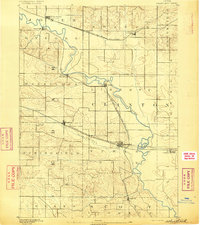 1892 Wheatland1892 Print · USGSEastern Iowa in the late nineteenth century was a landscape of burgeoning rail towns and river settlements. Genealogists and historians can trace early property boundaries and rail corridors through Wheatland, the winding Wapsipinicon River, and the curiously named Lost Nation.
 - 1892 Map of Goose Lake
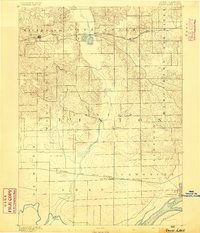 1892 Goose Lake1892 Print · USGSClinton County thrived at the end of the nineteenth century as a hub of river commerce and expanding rail lines. Genealogists and local historians can trace the early development of Camanche on the Mississippi River or the inland rail stops of Charlotte and Low Moor.
 - 1892 Map of Leclaire
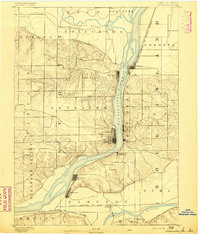 1892 Leclaire1892 Print · USGSThe Mississippi River border between Iowa and Illinois comes alive in the 1890s, before modern locks reshaped the shoreline. Genealogists and historians can trace riverside settlements like Leclaire, Port Byron, and the railroad junction at Watertown.
 - 1893 Map of Leclaire
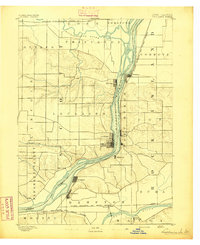 1893 Leclaire1893 Print · USGSThe riverfronts of Scott County and Rock Island County thrived in the late nineteenth century as vital hubs for steamboats and steam rail. Researchers can trace the early grids of Leclaire, Port Byron, and Valley City alongside the sprawling banks of the Mississippi River.4 unique versions available
 - 1894 Map of Wheatland
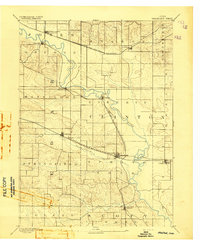 1894 Wheatland1894 Print · USGSClinton and Jones counties thrived along the river and rail corridors of the 1890s. Genealogists can trace the early development of Oxford Junction and Wheatland, or locate old mill sites near Oxford Mills and Massillon.2 unique versions available
 - 1894 Map of Durant
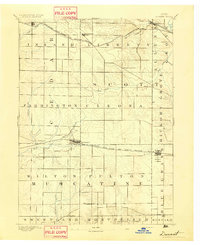 1894 Durant1894 Print · USGSAgricultural towns and pioneering rail lines define this Iowa landscape in the 1890s. Family historians can trace early settlements and transit hubs from Durant and Walcott to the rural Round Grove P.O. and Pleasant Prairie.2 unique versions available
 - 1894 Map of Goose Lake
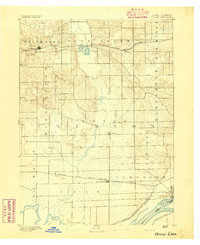 1894 Goose Lake1894 Print · USGSClinton County and the banks of the Mississippi are shown here in the 1890s as the railroad and river trade defined local growth. Researchers can trace the original footprints of settlements like Charlotte, Low Moor, and the river landing at Camanche.3 unique versions available
 - 1894 Map of Davenport
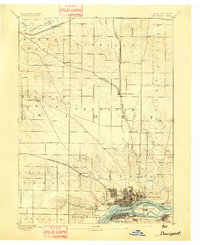 1894 Davenport1894 Print · USGSDavenport and the surrounding Scott County prairies come alive in this late nineteenth-century survey of the Mississippi River front. Researchers can trace the early rail networks through Eldridge Junction and locate vanished landmarks like Green Tree Tavern and Gilbertown.4 unique versions available
 - 1899 Map of Clinton
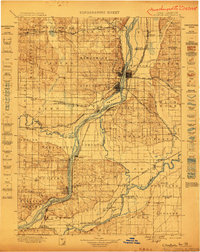 1899 Clinton1899 Print · USGSThe Mississippi River valley comes alive in the late 1890s, capturing the river-and-rail economy of Iowa and Illinois before modern channelization. Genealogists and historians can trace early townships and river landings, finding precise locations for Low Moor, Folletts, and Pink Prairie.5 unique versions available
 - 1901 Map of Rock Island
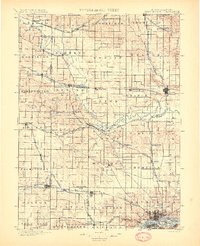 1901 Rock Island1901 Print · USGSThe eastern Iowa borderlands and the Mississippi River confluence thrive during the rail boom of the late nineteenth century. Genealogists and historians can trace family roots through numerous small settlements like Lost Nation, Grand Mound, and the vital U. S. Arsenal grounds.2 unique versions available
 - 1910 Map of Rock Island, 1949 Print
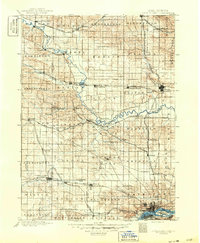 1910 Rock Island1949 Print · USGSEastern Iowa and the Illinois borderlands come alive in this late nineteenth-century survey of the river valleys and rail hubs. Genealogists and historians can trace old homesteads near Lost Nation, the early streets of Dewitt, and the sprawling U.S. Arsenal.
 - 1912 Map of Milan
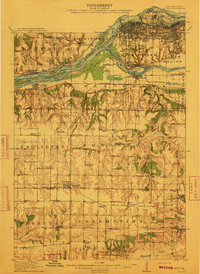 1912 Milan1912 Print · USGSThe river confluence and burgeoning rail networks of Rock Island County are captured here just before the First World War. Researchers can trace the legacy of early industry and education through sites like the Coal Valley Mine, Blackhawk Watchtower, and Excelsior School.7 unique versions available
 - 1916 Map of Edgington
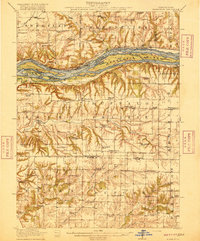 1916 Edgington1916 Print · USGSThe river-and-rail corridor along the Mississippi border emerges in high detail during the early twentieth century. Genealogists and local historians can trace the rural landscape through a dense network of country schools like Whiteoak School and New Era, alongside river features like Geneva Island.3 unique versions available
 - 1938 Map of Edgington, 1955 Print
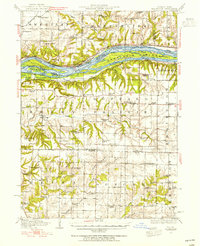 1938 Edgington1955 Print · USGSThe Mississippi River corridor in the late thirties shows a landscape of active rail lines and riverfront industry. Genealogists can trace rural family roots through numerous local landmarks like Jimtown, White Eagle School, and Buffalo Center School.
 - 1944 Map of Milan, 1958 Print
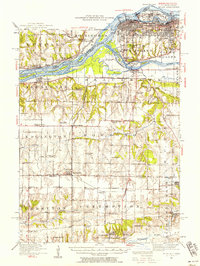 1944 Milan1958 Print · USGSThe Illinois-Iowa border comes alive in the 1940s, highlighting the industrial riverfronts and the rural interior of Rock Island and Mercer Counties. Trace family roots and local industry at the Coal Valley Mine, the US Arsenal, or the vanished schoolhouses like Doxie School.
 - 1948 Map of Milan, 1955 Print
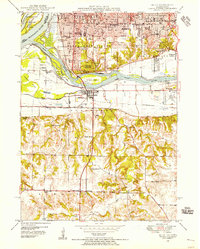 1948 Milan1955 Print · USGSThe Quad Cities area in the late 1940s reveals a landscape defined by the convergence of the Rock River and Mississippi River. Genealogists and local historians can trace legacy sites like Chippiannock Cem, the County Sanitarium, and numerous country schools such as Tindall Sch.
 - 1949 Map of Silvis
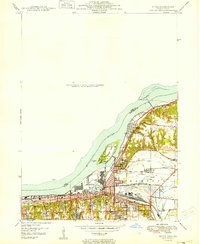 1949 Silvis1949 Print · USGSThe Illinois riverfront along the Mississippi at the close of the 1940s reveals a powerful hub of rail and industry. Genealogists and historians can trace institutional grounds like the East Moline State Hospital or find the early Miller Landing Field.
 - 1949 Map of Davenport
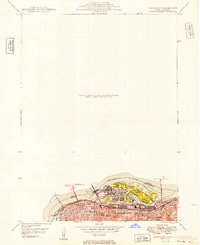 1949 Davenport1949 Print · USGSThe Quad Cities area emerged from the war years as a vital rail and river hub along the Mississippi River. Researchers can trace the complex industrial layout of Rock Island, find local landmarks like Augustana College, and locate the National Cem on the arsenal island.
 - 1949 Map of Port Byron, 1954 Print
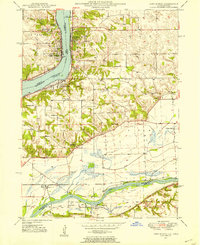 1949 Port Byron1954 Print · USGSThe confluence of the Mississippi and Rock Rivers defined the mid-century economy of these Illinois and Iowa river towns. Genealogists and local historians can trace rural school districts and family burial grounds including Leafy Bower Sch, Edwards Cem, and Zion Ch.2 unique versions available
 - 1950 Map of Milan
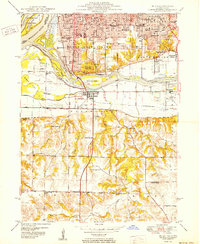 1950 Milan1950 Print · USGSThe Tri-Cities area comes alive in the mid-century as industrial centers like Rock Island and Moline expand across the river islands. Researchers can locate dozens of local landmarks, from Chippiannock Cem to rural outposts like Tindall School No 1.2 unique versions available
 - 1950 Map of Port Byron
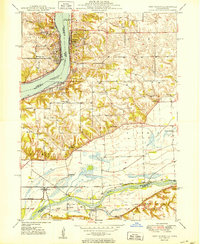 1950 Port Byron1950 Print · USGSThe Illinois-Iowa border along the Mississippi River thrives as a rail and river hub at the middle of the twentieth century. Local historians can trace family roots through numerous rural landmarks like Shake-Rag Sch, St Johns Cem, and Rapids City.
 - 1952 Map of Cordova, 1953 Print
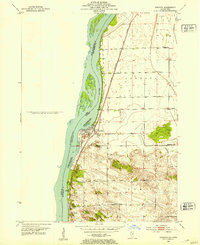 1952 Cordova1953 Print · USGSRock Island County shoreline life is captured here in the early fifties, following the river as it winds past developing river towns. Genealogists can locate family landmarks like Williams Sch, Fairfield Ch, and the Baker Cem.
Showing maps 1-25 of 179
Top cities of Scott County
- Davenport historical maps
- Park View historical maps
- Blue Grass historical maps
- Walcott historical maps
- Princeton historical maps
- Long Grove historical maps
See more
Frequently asked questions
- What are the different types of historical maps available for Scott County?
- What is the oldest map of Scott County?
- Where can I purchase historical maps of Scott County for my home or office?
- Where can I download high-res historical maps of Scott County?
- Are there historical topographic maps available for Scott County?
- Is there historical aerial imagery available for Scott County?
- Where are historical maps of Scott County sourced from?