Old Maps of Harvey County, Kansas for Hiking & Exploration
Hike through history with 112 historic maps of Harvey County. Explore old trails, ghost towns, and forgotten backroads — perfect for outdoor adventurers and local explorers.
- Rediscover forgotten places: Map out old mining camps, roads, and footpaths that no longer exist on modern maps.
- Layer with modern tools: Combine with LiDAR or satellite views to plan hikes through historical terrain.
- Made for exploration: Popular among hikers, overlanders, and local history lovers.
Use these maps to find adventure and explore the hidden past of Harvey County.
Harvey County, KS maps
(112)- 1889 Map of Newton
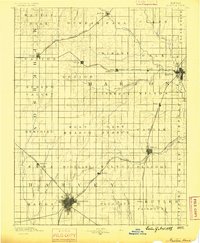 1889 Newton1889 Print · USGSRailroad expansion defines this Kansas landscape in the late 1880s, centered on the growing hubs of Newton and Marion. Genealogists and historians can trace the early grids of towns like Peabody, Hillsboro, and Lehigh as they appeared at their founding.
 - 1889 Map of Cheney
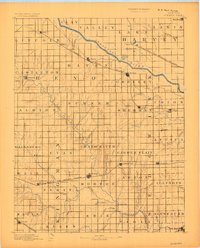 1889 Cheney1889 Print · USGSSouthern Kansas in the late nineteenth century was a landscape of emerging rail towns and river crossings. Genealogists and historians can trace early post offices like Waterloo P.O. and Ost P.O. alongside established hubs like Cheney and Mt. Hope.2 unique versions available
 - 1889 Map of Wichita
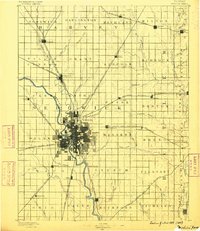 1889 Wichita1889 Print · USGSWichita and its surrounding townships thrived as a rail-driven boomtown in the late nineteenth century. Genealogists can trace family footprints through early settlements like Oatville, Valley Center, and Douglass along the Arkansas River.
 - 1891 Map of Hutchinson
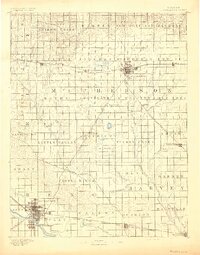 1891 Hutchinson1891 Print · USGSCentral Kansas at the close of the frontier era was a landscape of burgeoning rail towns and organized townships. Genealogists and local historians can trace the early footprints of Hutchinson and Mc Pherson alongside vanished locales like King City and Aiken.
 - 1891 Map of Cheney
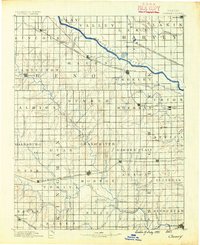 1891 Cheney1891 Print · USGSKansas prairie life in the 1890s centered on the arrival of the rails and the flow of the rivers. Genealogists and historians can trace early post offices like Stella P.O. and Mona P.O. or follow the path of the Wichita and Western Railroad through Cheney.2 unique versions available
 - 1893 Map of Hutchinson
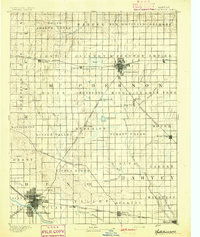 1893 Hutchinson1893 Print · USGSCentral Kansas at the close of the nineteenth century reveals a landscape undergoing a total transformation through railroad expansion and township settlement. Genealogists can trace early homestead patterns and family-named districts like Lone Tree and Garden while locating vanished stops along the Missouri Pacific Railway.5 unique versions available
 - 1894 Map of Wichita
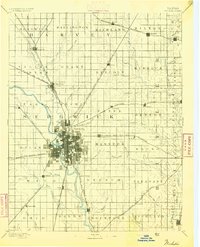 1894 Wichita1894 Print · USGSWichita and the surrounding prairie are captured here during the height of the Victorian era's railroad boom. Genealogists and historians can trace the early development of Wichita and find vanished stations and rural townships like Indianola, Oatville, and Green Station.5 unique versions available
 - 1894 Map of Newton
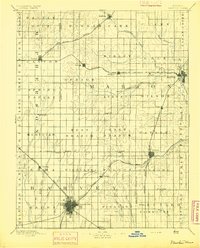 1894 Newton1894 Print · USGSCentral Kansas was undergoing a rapid transformation into a rail-driven agricultural hub during the 1890s. Genealogists and historians can trace the early growth of Newton, Marion, and Peabody alongside branching rail lines and the winding COTTONWOOD RIVER.5 unique versions available
 - 1901 Map of Cheney, 1910 Print
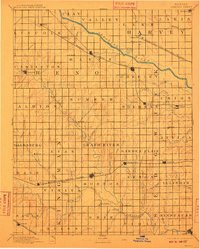 1901 Cheney1910 Print · USGSSouth Central Kansas was a landscape of budding rail towns and rural post offices at the turn of the century. Genealogists can trace family roots through now-vanished locales like Stella P.O. and Mona P.O. or early hubs like Cheney and Mt. Hope.2 unique versions available
 - 1955 Map of Wichita, 1959 Print
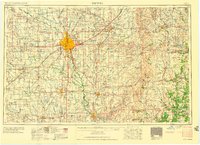 1955 Wichita1959 Print · USGSSouth-central Kansas comes alive in the mid-1950s as Wichita grows into its role as a regional industrial and military powerhouse. Trace the rail-and-river network connecting El Dorado and Arkansas City through the Atchison Topeka and Santa Fe lines.3 unique versions available
 - 1955 Map of Hutchinson, 1967 Print
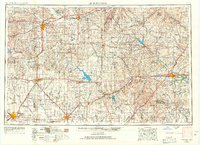 1955 Hutchinson1967 Print · USGSCentral Kansas in the mid-sixties reveals a landscape of growing reservoirs and evolving transportation corridors. Trace the development of towns like Hutchinson and Abilene alongside the Union Pacific Railroad and the expanding Interstate 70.3 unique versions available
 - 1957 Map of Newton, 1958 Print
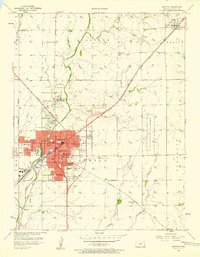 1957 Newton1958 Print · USGSNewton emerges as a bustling rail and educational hub in the late 1950s, defined by its historic college and intersecting rail lines. Researchers can locate family landmarks such as Greenwood Cemetery, Bethel College, and rural schools like Kellas Sch.2 unique versions available
 - 1957 Map of Peabody NW, 1958 Print
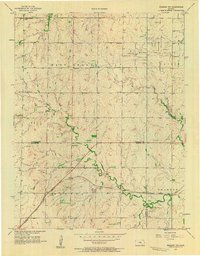 1957 Peabody NW1958 Print · USGSMarion and Harvey County lands in the late fifties show a hardworking prairie landscape of grain and petroleum. Genealogists can trace family footprints at Doyle Valley Cem, Center Sch, and the Southwest Unger Oil Field near the Santa Fe rail line.2 unique versions available
 - 1957 Map of Elbing, 1958 Print
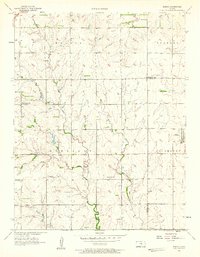 1957 Elbing1958 Print · USGSButler and Harvey Counties are documented here in the late 1950s, showing the agricultural rhythm of the Whitewater Creek basin. Genealogists and local historians can trace the foundations of the community through sites like Mission Cem, Grace Hill Ch, and the Sugar Grove Sch (Abandoned).2 unique versions available
 - 1958 Map of Wichita
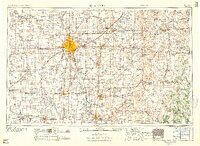 1958 Wichita1958 Print · USGSSouth Central Kansas in the late fifties was a landscape of aviation industry, oil exploration, and expanding turnpikes. Researchers can trace mid-century growth through McConnell Air Force Base, major facilities for Cessna Aircraft Company, and the active El Dorado Oil Field.
 - 1958 Map of Patterson, 1959 Print
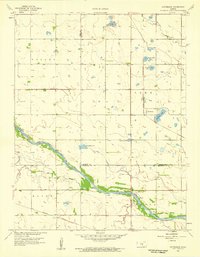 1958 Patterson1959 Print · USGSIn the late fifties, this Harvey County landscape centered on the rail junction at Patterson and the flood-controlled banks of the Arkansas River. Genealogists can locate several local burial grounds including Township Cem, Hunt Cem, and Star Cem.2 unique versions available
 - 1958 Map of Bentley, 1959 Print
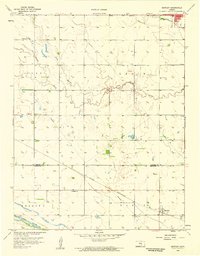 1958 Bentley1959 Print · USGSIn the late 1950s, the plains around Bentley and Halstead were a patchwork of section-line roads and creek meanders. Genealogists and researchers can trace rural landmarks like Enterprise Sch, Bethany Ch, and the diagonal route of the St Louis San Francisco railroad.2 unique versions available
 - 1959 Map of Hutchinson
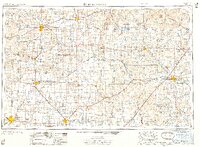 1959 Hutchinson1959 Print · USGSCentral Kansas thrives at the intersection of rail and river in the mid-1950s, as post-war aviation infrastructure reshapes the prairie. Genealogists and historians can trace the paths of the AT&SF RR through Newton and Hutchinson, or locate military sites like Smoky Hill Air Force Base.2 unique versions available
 - 1959 Map of Sedgwick, 1960 Print
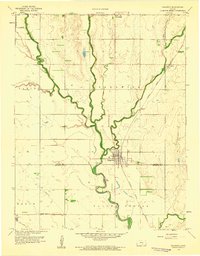 1959 Sedgwick1960 Print · USGSThe Kansas plains meet the meandering Little Arkansas River in the late fifties as the town of Sedgwick continues its rail-and-river growth. Genealogists and local historians can trace legacy sites like Hillside Cemetery, the remote Putnam siding, and Pleasant Valley Church.2 unique versions available
 - 1959 Map of Sedgwick NE, 1960 Print
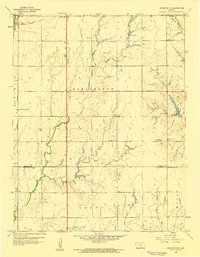 1959 Sedgwick NE1960 Print · USGSHarvey and Sedgwick counties appear here at the close of the 1950s, when small rural school districts and oil extraction shaped the Kansas prairie. Genealogists can locate family-named landmarks like Dewey Sch, Norris Sch, and the Goodrich Oil Field.2 unique versions available
 - 1959 Map of Zimmerdale, 1960 Print
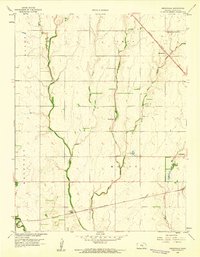 1959 Zimmerdale1960 Print · USGSHarvey County agricultural lands are captured here in the late fifties, showing the rural grid between Newton and Halstead. Researchers can locate the Pennsylvania Mennonite Ch, the Prouty School, and rail lines including the Missouri Pacific.4 unique versions available
 - 1959 Map of Halstead, 1960 Print
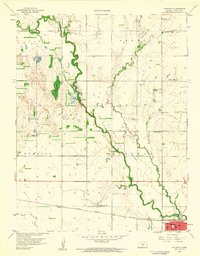 1959 Halstead1960 Print · USGSHarvey County’s agricultural heartland is documented here in the late fifties, showing the interplay of rail and river near the Little Arkansas River. Local historians can trace several rural school districts including Garden Valley and Fairview Sch, or the small settlement at Alta Mills.2 unique versions available
 - 1959 Map of Burrton, 1960 Print
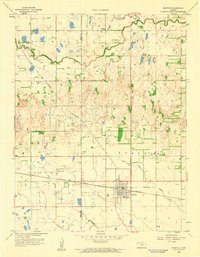 1959 Burrton1960 Print · USGSMid-century Burrton serves as a central hub for Kansas rail and energy development during the late fifties. Genealogists and local historians can locate early rural schools such as Lily Dale Sch and Willis Sch, or trace the path of the Atchison Topeka and Santa Fe railroad.
 - 1962 Map of Whitewater, 1963 Print
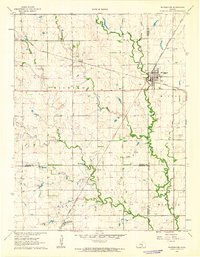 1962 Whitewater1963 Print · USGSButler and Harvey Counties thrive as a rail and agricultural crossroads in the early sixties, centered on the junction at Whitewater. Researchers can trace old property lines, local cemeteries like Swiss Cem, and the path of the Missouri Pacific railroad.2 unique versions available
 - 1965 Map of Goessel, 1966 Print
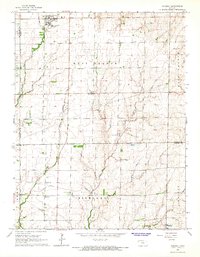 1965 Goessel1966 Print · USGSMarion and Harvey counties appear in the mid-1960s as a structured agricultural landscape centered on the town of Goessel. Genealogists and local historians can trace rural roots through landmarks like Highland Ch, Grange Hall, and Greenfield Cem.
Showing maps 1-25 of 112
Top cities of Harvey County
- Newton historical maps
- Hesston historical maps
- Halstead historical maps
- Sedgwick historical maps
- North Newton historical maps
- Burrton historical maps
See more
Frequently asked questions
- What are the different types of historical maps available for Harvey County?
- What is the oldest map of Harvey County?
- Where can I purchase historical maps of Harvey County for my home or office?
- Where can I download high-res historical maps of Harvey County?
- Are there historical topographic maps available for Harvey County?
- Is there historical aerial imagery available for Harvey County?
- Where are historical maps of Harvey County sourced from?