Old Maps of Anderson County, Kentucky for Academic Research
Study the evolution of Anderson County with 88 high-resolution historic maps. Whether you're teaching, researching, or modeling changes in land use, these maps provide essential visual documentation of urban, environmental, and geographic change.
- Analyze long-term change: Track patterns in development, transportation, and natural features.
- Ideal for environmental or urban studies: Support academic projects with primary historical map data.
- Use in the classroom or lab: Educators and researchers rely on these maps to bring historical context to life.
These maps are a powerful tool for teaching, research, and visualizing how Anderson County has changed over the decades.
Anderson County, KY maps
(88)- 1905 Map of Harrodsburg
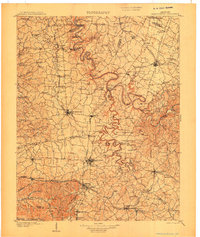 1905 Harrodsburg1905 Print · USGSCentral Kentucky's Bluegrass region is captured here in the early twentieth century, showing a landscape defined by the deep gorges of the Kentucky River. Researchers can trace the era's vital rail networks and river commerce through features like Lock No 7 and the Louisville and Nashville RR.3 unique versions available
 - 1922 Map of Frankfort
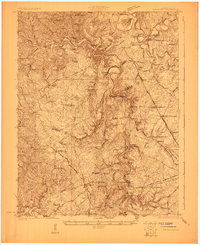 1922 Frankfort1922 Print · USGSCentral Kentucky's river valleys and rolling uplands are captured here in the early twenties, showing a landscape defined by water and rail. Trace family history at Lanes Mill Fox Gap School or follow the river to Youngs High Bridge and Shryocks Ferry.
 - 1923 Map of Waddy
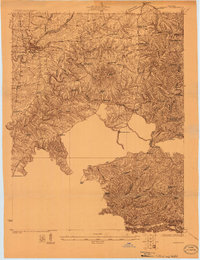 1923 Waddy1923 Print · USGSShelby County and Anderson County are captured here in the early 1920s, showing a rural landscape organized around the Midland Trail and regional rail lines. Genealogists can trace family connections to numerous landmarks like Buffalo Lick Church, Jeptha Knob, and small settlements including Waddy and Glensboro.
 - 1924 Map of Frankfort
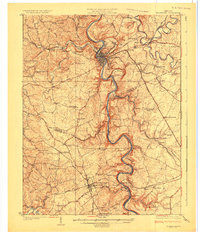 1924 Frankfort1924 Print · USGSThe Kentucky River valley and surrounding Bluegrass uplands are documented here during the mid-1920s. Genealogists and researchers can trace rural life through dozens of named district schools and river landmarks like Youngs High Bridge, Lanes Mill, and Shryocks Ferry.2 unique versions available
 - 1925 Map of Mount Eden
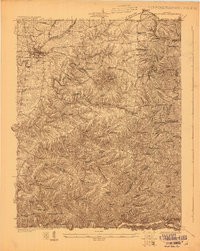 1925 Mount Eden1925 Print · USGSThe rolling hills between Shelbyville and the Salt River are captured here in the mid-twenties, showing a landscape tied to the rails and old turnpikes. Researchers can find dozens of rural landmarks, from Jeptha Knob to family-named sites like Martin School and Browns Store.
 - 1927 Map of Mount Eden
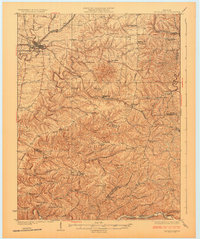 1927 Mount Eden1927 Print · USGSShelby County and its neighbors at the height of the 1920s reveal a landscape of ridge-top schools and bustling rail towns. Genealogists and local historians can trace family locations near landmarks like Jeptha Knob, the Buffalo Lick Church, or the community of Mount Eden.
 - 1951 Map of Lawrenceburg, 1961 Print
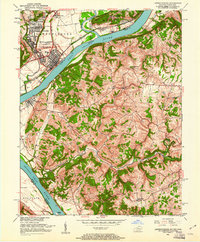 1951 Lawrenceburg1961 Print · USGSLawrenceburg and the Ohio River valley are captured here at mid-century as industrial growth met the rural hills of Kentucky. Genealogists can trace family names through small burial sites like Harrisons Old Home Cem and Graves Cem or locate the historic Bullittsburg Ch.
 - 1952 Map of Ashbrook, 1953 Print
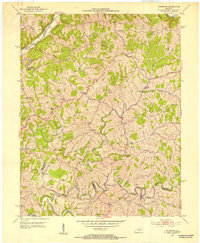 1952 Ashbrook1953 Print · USGSAnderson County's rural heart is captured here in the early fifties, showing a landscape of high ridges and winding creek bottoms. Genealogists can trace family footprints at Ashbrook, Henrys Chapel, or Western Sch among the hills of Baxter Ridge.
 - 1952 Map of Chaplin, 1953 Print
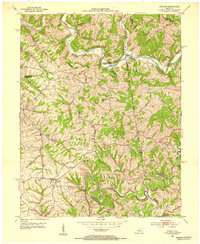 1952 Chaplin1953 Print · USGSNorth of the Chaplin River in the early 1950s, this area shows a rural Kentucky landscape shaped by winding waterways and county borders. Genealogists can trace family footprints at Highview Cemetery, Independent School, and the river crossing at Gordon Ford.2 unique versions available
 - 1952 Map of Salvisa, 1953 Print
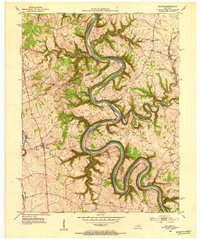 1952 Salvisa1953 Print · USGSCentral Kentucky's river-cut uplands are mapped here in the early fifties, showing the deeply entrenched meanders of the Kentucky River. Local historians can trace family sites like Morris Cem and rural centers such as Salvisa, Mortonsville, and Hillsborough Ch.
 - 1952 Map of Mc Brayer, 1953 Print
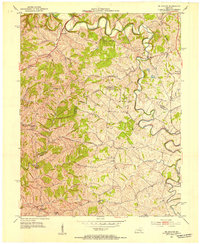 1952 Mc Brayer1953 Print · USGSThe Salt River valley in Mercer and Anderson counties comes into focus during the early fifties, showing a rural landscape of ridges and winding creeks. Genealogists can trace family sites like Bond-McCoy Cem or locate the community hubs of Mc Brayer and Goshen Ch.
 - 1953 Map of Frankfort West, 1955 Print
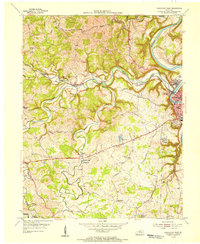 1953 Frankfort West1955 Print · USGSThe Kentucky state capital and its western hills are captured in the early 1950s, showing the intersection of river transport and rail development. Genealogists and historians can trace family roots through landmarks like Mt Zion Ch, the Stewart Home, and the village of Bridgeport.
 - 1954 Map of Lawrenceburg, 1955 Print
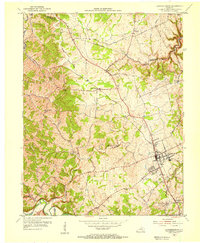 1954 Lawrenceburg1955 Print · USGSMid-century Anderson and Franklin counties center on the railroad hub of Lawrenceburg and the winding Salt River. Genealogists can trace rural life through landmarks like Alton Station, Lanes Mill, and Salt River Ch.2 unique versions available
 - 1954 Map of Glensboro, 1955 Print
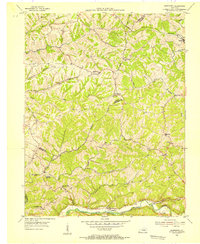 1954 Glensboro1955 Print · USGSThe Salt River valley and the ridges of Anderson County are captured here in the mid-fifties. Genealogists can locate family landmarks like Petty Cem, Marlowe Sch, and several rural churches including Pleasant Hill Ch.
 - 1954 Map of Waddy, 1955 Print
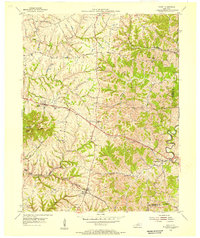 1954 Waddy1955 Print · USGSShelby and Franklin counties are shown here in the mid-fifties, dominated by the high ground of Jeptha Knob. Genealogists and historians can trace the rural communities of Clay Village, Peytona, and Waddy, as well as the Buffalo Lick Ch.
 - 1954 Map of Mount Eden, 1955 Print
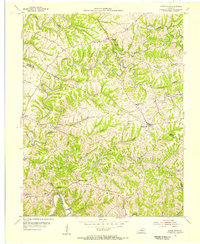 1954 Mount Eden1955 Print · USGSSpencer and Shelby counties are captured in the mid-fifties, showing a rural landscape defined by ridge-top farming and winding river valleys. Genealogists can locate family homesteads near Mount Eden, Salem Ch, and the Upper Brier Ridge Ch.4 unique versions available
 - 1954 Map of Tyrone, 1955 Print
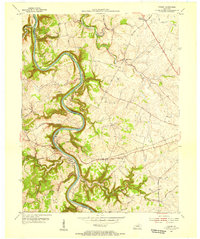 1954 Tyrone1955 Print · USGSThe Kentucky River meanders through Woodford and Anderson counties in the mid-1950s, showing a landscape shaped by water and rail. Trace the historic river crossings and small communities like Tyrone, Milner, and the church at Glenns Creek Ch.
 - 1956 Map of Louisville, 1971 Print
 1956 Louisville1971 Print · USGSThe Ohio River valley and the Kentucky Bluegrass are captured here during a period of rapid mid-century growth and industrial activity. Genealogists and historians can trace rail-centered towns and military land use at Fort Knox and the Jefferson Proving Ground.2 unique versions available
 - 1957 Map of Winchester, 1968 Print
 1957 Winchester1968 Print · USGSCentral Kentucky's landscape in the mid-twentieth century features the sprawling Fort Knox and the early parkway system. Genealogists and historians can trace rail lines like the Southern Railway and find landmarks from Bernheim Forest to Pilot Knob.3 unique versions available
 - 1959 Map of Frankfort West, 1960 Print
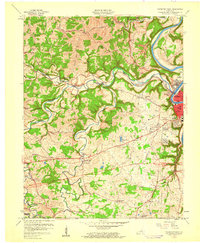 1959 Frankfort West1960 Print · USGSFrankfort and the Kentucky River valley are shown here just as the capital's postwar suburbs were expanding into the surrounding hills. Researchers can trace historic family routes along Old Harrodsburg Road and identify local landmarks like Bridgeport, the Stewart Home, and Mt Zion Ch.2 unique versions available
 - 1960 Map of Winchester
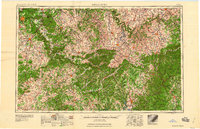 1960 Winchester1960 Print · USGSCentral Kentucky's diverse landscape is shown here at mid-century, from the bluegrass plains to the rugged Pottsville Escarpment. Genealogists and historians can trace the rail-and-river network connecting towns like Bardstown and Stanford alongside landmarks like Lake Cumberland.
 - 1961 Map of Lawrenceburg, 1971 Print
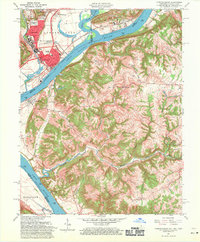 1961 Lawrenceburg1971 Print · USGSThe tri-state river junction comes alive in the early sixties as railroads and river commerce meet at the great bend of the Ohio. Genealogists and historians can trace family land at Dinsmore Cem, the activity at Commissary Corner, or the rail yards at Greendale.
 - 1964 Map of Louisville
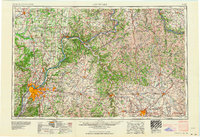 1964 Louisville1964 Print · USGSThe Ohio River valley and Kentucky Bluegrass are captured in the mid-1960s, showing a region balanced between industrial growth and its agrarian roots. Genealogists and historians can trace the development of county seats like Shelbyville and Paris, or locate established institutions such as Georgetown College and Bernheim Forest.
 - 1965 Map of Waddy, 1967 Print
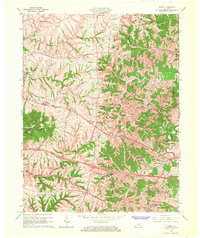 1965 Waddy1967 Print · USGSShelby County in the mid-1960s is captured here during a period of rural transition along the Southern railroad. Researchers can trace the layout of historic settlements like Waddy and Clay Village or locate family landmarks near Jeptha Knob.4 unique versions available
 - 1967 Map of Mc Brayer, 1969 Print
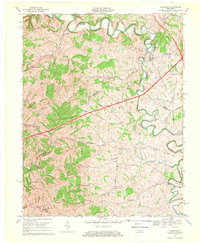 1967 Mc Brayer1969 Print · USGSAnderson and Mercer counties in the late sixties show a landscape in transition as modern parkways meet traditional river life. Genealogists and historians can trace family roots through rural landmarks like Dugansville, McBrayer, and several country churches like Kirkwood Ch.
Showing maps 1-25 of 88
Top cities of Anderson County
Frequently asked questions
- What are the different types of historical maps available for Anderson County?
- What is the oldest map of Anderson County?
- Where can I purchase historical maps of Anderson County for my home or office?
- Where can I download high-res historical maps of Anderson County?
- Are there historical topographic maps available for Anderson County?
- Is there historical aerial imagery available for Anderson County?
- Where are historical maps of Anderson County sourced from?