1950s Maps of Greenbrier, Lexington
Explore 5 historic maps of Greenbrier from the 1950s. These maps offer a rare glimpse into what life looked like during the 1950s — showing old roads, neighborhoods, homes, and landmarks that have changed or disappeared over time.
Whether you're researching your family's past, planning a metal detecting trip, or studying how Greenbrier's landscape evolved across the 1950s, these high-resolution maps are a powerful tool for exploring the history of this region.
- Focus on a specific era: All maps on this page are from the 1950s, giving you a focused view of this time period.
- See what’s changed: Compare century-old streets, trails, and buildings to today's modern landscape using overlays and satellite layers.
- Research with precision: Use these maps for genealogy, historical research, land use analysis, or educational projects.
- View, download, or print: Maps are fully viewable online in high resolution, and can be downloaded or printed for your own records.
Start exploring Greenbrier's history through authentic maps from the 1950s. This is your window into the past.
Greenbrier, Lexington maps
(5)- 1950 Map of Lexington East, 1952 Print
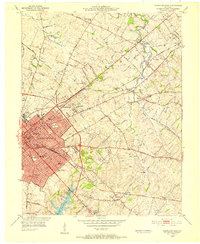 1950 Lexington East1952 Print · USGSLexington and the surrounding Bluegrass estates are captured at mid-century as the city expanded along the historic pikes and rail lines. Genealogists and historians can locate family landmarks like the Home of Henry Clay, the Horse Cem, and the settlement of Cadentown.
 - 1952 Map of Clintonville, 1953 Print
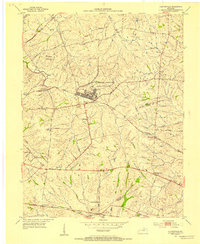 1952 Clintonville1953 Print · USGSFayette County in the early 1950s is a landscape of established rail lines and significant military activity at the Lexington Signal Depot. Researchers can trace the layout of rural communities like Uttingertown and Old Pine Grove, along with historic sites like Little Zion Ch and Briar Hill Sch.
 - 1954 Map of Lexington East, 1955 Print
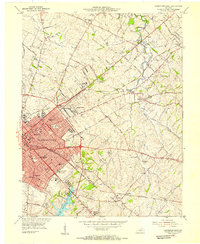 1954 Lexington East1955 Print · USGSMid-century Fayette County comes to life during a period of urban expansion and traditional horse country life. Genealogists and historians can trace institutional roots at Transylvania University or locate family markers at Horse Cem and Howards Grove Cem.
 - 1956 Map of Louisville, 1971 Print
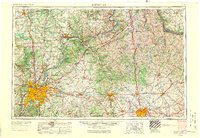 1956 Louisville1971 Print · USGSThe Ohio River valley and the Kentucky Bluegrass are captured here during a period of rapid mid-century growth and industrial activity. Genealogists and historians can trace rail-centered towns and military land use at Fort Knox and the Jefferson Proving Ground.2 unique versions available
 - 1959 Map of Lexington East, 1960 Print
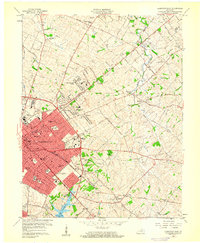 1959 Lexington East1960 Print · USGSThe Bluegrass heartland around Lexington is shown here just as post-war suburban growth began reshaping the old estate lands. Genealogists and historians can locate family landmarks like the Home of Henry Clay, the Horse Cem at Elmendorf, and the historic Bryan Sta Ch.
End of results
Showing maps 1-5 of 5
Frequently asked questions
- What are the different types of historical maps available for Greenbrier?
- What is the oldest map of Greenbrier?
- Where can I purchase historical maps of Greenbrier for my home or office?
- Where can I download high-res historical maps of Greenbrier?
- Are there historical topographic maps available for Greenbrier?
- Is there historical aerial imagery available for Greenbrier?
- Where are historical maps of Greenbrier sourced from?