Old Maps of Jessamine County, Kentucky for Academic Research
Study the evolution of Jessamine County with 65 high-resolution historic maps. Whether you're teaching, researching, or modeling changes in land use, these maps provide essential visual documentation of urban, environmental, and geographic change.
- Analyze long-term change: Track patterns in development, transportation, and natural features.
- Ideal for environmental or urban studies: Support academic projects with primary historical map data.
- Use in the classroom or lab: Educators and researchers rely on these maps to bring historical context to life.
These maps are a powerful tool for teaching, research, and visualizing how Jessamine County has changed over the decades.
Jessamine County, KY maps
(65)- 1892 Map of Richmond
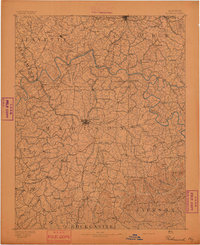 1892 Richmond1892 Print · USGSMadison and Clark counties are mapped here in the late nineteenth century, centered on the growing railroad hub of Richmond. Genealogists can trace family land and travel routes through historic crossings like Boonesboro, river towns like Ford, and high points such as Combs Mtn.
 - 1897 Map of Richmond
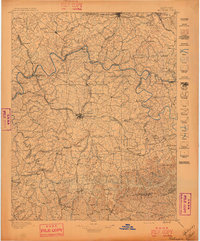 1897 Richmond1897 Print · USGSMadison and Clark counties are mapped here during a decade of rapid railroad expansion and river-based commerce. Genealogists can trace family names and extinct locales from Boonesboro to the industrial Stone Quarry and the hub at Winchester.5 unique versions available
 - 1905 Map of Harrodsburg
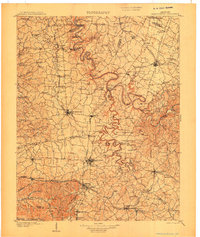 1905 Harrodsburg1905 Print · USGSCentral Kentucky's Bluegrass region is captured here in the early twentieth century, showing a landscape defined by the deep gorges of the Kentucky River. Researchers can trace the era's vital rail networks and river commerce through features like Lock No 7 and the Louisville and Nashville RR.3 unique versions available
 - 1906 Map of Georgetown, 1954 Print
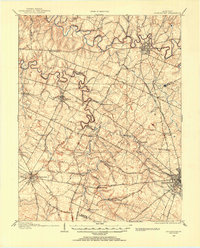 1906 Georgetown1954 Print · USGSCentral Kentucky at the opening of the twentieth century was a landscape shaped by winding creeks and a dense web of steam rail lines. Local researchers can trace the historic rail corridors of the Southern R R and find early settlements like Paynes Depot and Great Crossing.
 - 1908 Map of Georgetown
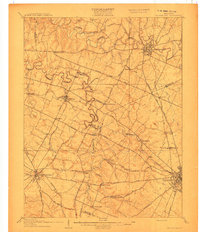 1908 Georgetown1908 Print · USGSCentral Kentucky at the turn of the century reveals a landscape of thriving rail depots and historic turnpikes connecting major county seats. Genealogists and historians can trace the early footprints of Midway, Donerail, and Great Crossing along the winding North Elkhorn Creek.2 unique versions available
 - 1952 Map of Keene, 1953 Print
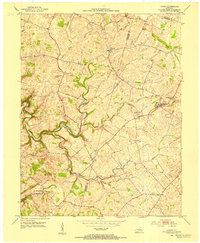 1952 Keene1953 Print · USGSThe rolling Bluegrass region near the Jessamine and Woodford county lines is captured here in the early fifties. Genealogists and historians can trace the rural communities of Keene and Dixon Town, or locate landmarks like Ebenezer Cem and Clover Bottom Ch.3 unique versions available
 - 1952 Map of Valley View, 1953 Print
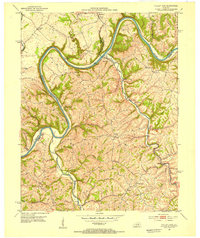 1952 Valley View1953 Print · USGSThe Kentucky River meanders through the Madison and Jessamine county lines in the early fifties, anchored by the river landing at Valley View. Genealogists and local historians can trace rural schoolhouses like Newby Sch and several country churches, including Taylors Chapel and Antioch Ch.3 unique versions available
 - 1952 Map of Little Hickman, 1953 Print
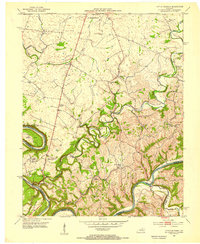 1952 Little Hickman1953 Print · USGSJessamine County and the winding Kentucky River are captured here in the early fifties, documenting a landscape of tight-knit rural communities. Genealogists and historians can locate family landmarks like Roberts Chapel, Daniel Boones Cave, and the Camp Nelson National Cem.6 unique versions available
 - 1952 Map of Nicholasville, 1953 Print
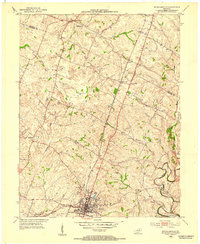 1952 Nicholasville1953 Print · USGSThe Bluegrass heartland of Jessamine County comes alive in the early fifties, documenting a landscape of rural schools and rail-side settlements. Researchers can trace family roots through landmarks like Providence Ch, Lyons Sch, and the winding path of Hickman Creek.
 - 1952 Map of Buckeye, 1953 Print
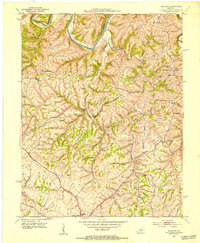 1952 Buckeye1953 Print · USGSGarrard County's high ridges and river bends are captured here in the early fifties, showing a rural landscape of crossroads hamlets and family farmsteads. Researchers can locate community centers like Teatersville and Bourne or trace rural churches such as Mt Hebron Ch.
 - 1952 Map of Coletown, 1953 Print
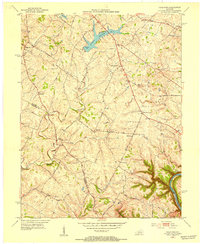 1952 Coletown1953 Print · USGSFayette and Jessamine counties are captured here in the early fifties, showing a rural landscape defined by historic pikes and the winding Kentucky River. Researchers can trace old family sites and crossroads communities like Coletown, Jonestown, and the Eldridge Cem.
 - 1952 Map of Wilmore, 1953 Print
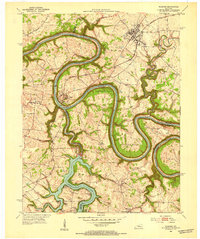 1952 Wilmore1953 Print · USGSThe Jessamine County landscape near the Kentucky River is captured in the early fifties, showing the area's transition into the mid-century era. Genealogists and historians can locate established property patterns near Wilmore and the historic grounds of Shakertown.3 unique versions available
 - 1954 Map of Versailles, 1955 Print
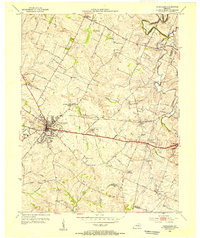 1954 Versailles1955 Print · USGSMid-century Versailles and Woodford County are captured here during a period of steady growth and local industrial activity. Researchers can trace family-named sites and vanished institutions like Hunter Town, Simmons High Sch, and the Phosphate Strip Mine.
 - 1956 Map of Louisville, 1971 Print
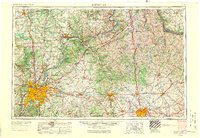 1956 Louisville1971 Print · USGSThe Ohio River valley and the Kentucky Bluegrass are captured here during a period of rapid mid-century growth and industrial activity. Genealogists and historians can trace rail-centered towns and military land use at Fort Knox and the Jefferson Proving Ground.2 unique versions available
 - 1957 Map of Winchester, 1968 Print
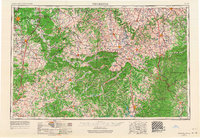 1957 Winchester1968 Print · USGSCentral Kentucky's landscape in the mid-twentieth century features the sprawling Fort Knox and the early parkway system. Genealogists and historians can trace rail lines like the Southern Railway and find landmarks from Bernheim Forest to Pilot Knob.3 unique versions available
 - 1959 Map of Coletown, 1960 Print
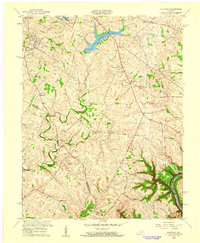 1959 Coletown1960 Print · USGSFayette County at the close of the 1950s shows the growing city of Lexington expanding south toward the Kentucky River. Genealogists and local historians can locate several family landmarks and community centers including Walnut Hill Ch, Shelby Sch, and the Eldridge Cem.
 - 1959 Map of Nicholasville, 1960 Print
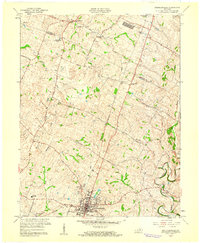 1959 Nicholasville1960 Print · USGSJessamine County's rolling farmland and the growing town of Nicholasville are captured here during the late fifties. Genealogists and local historians can trace the paths of Hickman Creek, locate the County High Sch, or find family sites near Union Mills.
 - 1960 Map of Winchester
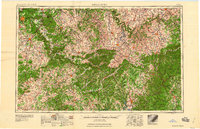 1960 Winchester1960 Print · USGSCentral Kentucky's diverse landscape is shown here at mid-century, from the bluegrass plains to the rugged Pottsville Escarpment. Genealogists and historians can trace the rail-and-river network connecting towns like Bardstown and Stanford alongside landmarks like Lake Cumberland.
 - 1964 Map of Louisville
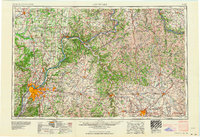 1964 Louisville1964 Print · USGSThe Ohio River valley and Kentucky Bluegrass are captured in the mid-1960s, showing a region balanced between industrial growth and its agrarian roots. Genealogists and historians can trace the development of county seats like Shelbyville and Paris, or locate established institutions such as Georgetown College and Bernheim Forest.
 - 1965 Map of Versailles, 1966 Print
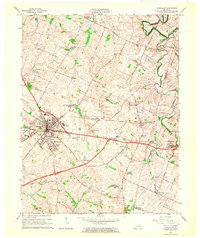 1965 Versailles1966 Print · USGSWoodford County at the mid-century mark shows a landscape of established rail towns and developing parkways. Genealogists and local historians can trace the footprint of family-named landmarks like Steele Cem and early settlements such as Hunter Town and Little Texas.3 unique versions available
 - 1965 Map of Coletown, 1966 Print
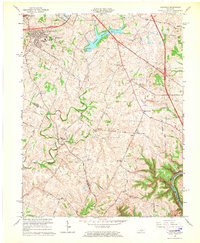 1965 Coletown1966 Print · USGSSoutheast of Lexington during the mid-sixties, this area shows the transition from suburban growth to traditional Bluegrass farm country. Genealogists can locate family sites near Walnut Hill Ch, Coletown, and the Todds Cem.5 unique versions available
 - 1965 Map of Nicholasville, 1967 Print
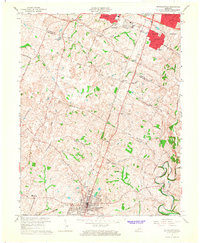 1965 Nicholasville1967 Print · USGSMid-century Fayette and Jessamine counties are captured here during a period of suburban growth south of Lexington. Genealogists and historians can trace the development of Stonewall Estates, locate the Blue Grass Raceway, or find the Waveland Museum.4 unique versions available
 - 1986 Map of Harrodsburg
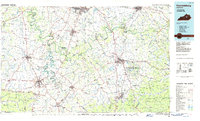 1986 Harrodsburg1986 Print · USGSCentral Kentucky in the mid-eighties reveals a landscape defined by the winding Kentucky River and the bustling county seats of the Bluegrass. Genealogists and historians can trace the evolution of Harrodsburg, Danville, and Nicholasville alongside the Lexington Blue Grass Army Depot.
 - 1986 Map of Lexington
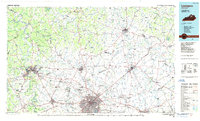 1986 Lexington1986 Print · USGSCentral Kentucky’s Bluegrass region is captured in the mid-eighties as urban centers like Lexington and Frankfort expand alongside deep-rooted rural hubs. Researchers can trace historic rail lines like the Southern Railway and find landmarks such as the Lexington Blue Grass Army Depot and Tacketts Mill.
 - 1991 Map of Harrodsburg
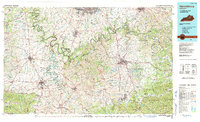 1991 Harrodsburg1991 Print · USGSThe heart of the Bluegrass region comes alive in the late twentieth century, showing the deep river gorges and limestone uplands of central Kentucky. Genealogists and local historians can locate Shakertown, the sprawling Lexington Blue Grass Army Depot, and Berea College.
Showing maps 1-25 of 65
Top cities of Jessamine County
Frequently asked questions
- What are the different types of historical maps available for Jessamine County?
- What is the oldest map of Jessamine County?
- Where can I purchase historical maps of Jessamine County for my home or office?
- Where can I download high-res historical maps of Jessamine County?
- Are there historical topographic maps available for Jessamine County?
- Is there historical aerial imagery available for Jessamine County?
- Where are historical maps of Jessamine County sourced from?