1950s Maps of Letcher County, Kentucky
Explore 18 historic maps of Letcher County from the 1950s. These maps offer a rare glimpse into what life looked like during the 1950s — showing old roads, neighborhoods, homes, and landmarks that have changed or disappeared over time.
Whether you're researching your family's past, planning a metal detecting trip, or studying how Letcher County's landscape evolved across the 1950s, these high-resolution maps are a powerful tool for exploring the history of this region.
- Focus on a specific era: All maps on this page are from the 1950s, giving you a focused view of this time period.
- See what’s changed: Compare century-old streets, trails, and buildings to today's modern landscape using overlays and satellite layers.
- Research with precision: Use these maps for genealogy, historical research, land use analysis, or educational projects.
- View, download, or print: Maps are fully viewable online in high resolution, and can be downloaded or printed for your own records.
Start exploring Letcher County's history through authentic maps from the 1950s. This is your window into the past.
Letcher County, KY maps
(18)- 1954 Map of Jenkins East, 1955 Print
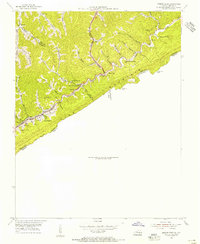 1954 Jenkins East1955 Print · USGSThe Kentucky and Virginia coalfields hummed with industry in the 1950s as the rail lines reached deep into the mountain hollows. Researchers can trace the layout of mining towns like Burdine and East Jenkins or locate rural landmarks like Marshall Branch Ch.
 - 1954 Map of Kite, 1956 Print
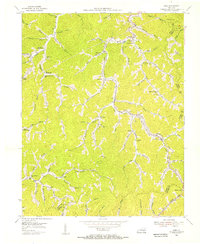 1954 Kite1956 Print · USGSEastern Kentucky's narrow valleys and coal-country settlements are meticulously detailed here during the mid-1950s. Genealogists and historians can trace numerous remote mountain schools and family cemeteries, including Kite Sch, Hollybush Ch, and Hall Cem.3 unique versions available
 - 1954 Map of Benham, 1956 Print
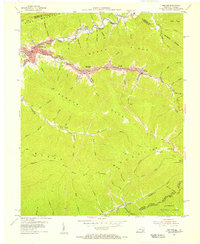 1954 Benham1956 Print · USGSCentral Harlan County coal towns thrive in the mid-fifties along the steep ridges of Black Mountain. Researchers can trace the Louisville and Nashville rail lines serving Benham and Lynch, or locate family sites like Creech Cem.4 unique versions available
 - 1954 Map of Tilford, 1956 Print
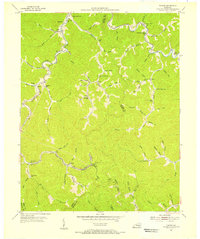 1954 Tilford1956 Print · USGSEastern Kentucky's coal-country hollows are shown in detail during the mid-1950s, as small rail-side communities thrived along the ridges. Genealogists can trace family landmarks and rural institutions like Mt Olivet Ch, Slemp, and Turkey Creek Sch.3 unique versions available
 - 1954 Map of Vicco, 1956 Print
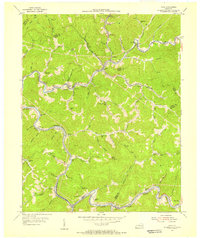 1954 Vicco1956 Print · USGSThe coal and rail corridors of Perry and Knott counties are captured here in the mid-1950s. Researchers can trace family sites at the Open Door Childrens Home or locate early rural schools and churches like Logwood Sch and Little Dove Ch.4 unique versions available
 - 1954 Map of Mayking, 1956 Print
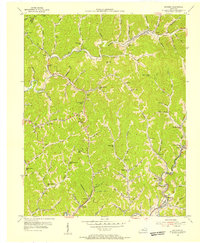 1954 Mayking1956 Print · USGSThe mountain hollows of Letcher County are captured here in the mid-1950s, a period when coal company data helped map these steep-walled valleys. Genealogists can trace family names through landmarks like Camp Branch Chapel, Upper Colly Sch, and Sergent.3 unique versions available
 - 1954 Map of Wheelwright, 1956 Print
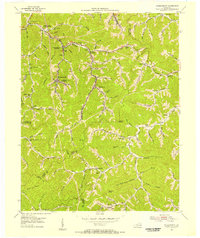 1954 Wheelwright1956 Print · USGSEastern Kentucky's coal country comes into sharp focus during the mid-fifties, centered on the company towns and rail lines of the Wheelwright district. Researchers can trace the heritage of local schools and churches like Dunbar High School and Pilgrim Ch.4 unique versions available
 - 1954 Map of Nolansburg, 1956 Print
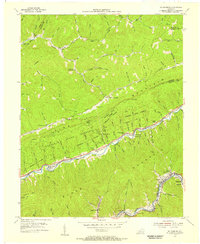 1954 Nolansburg1956 Print · USGSHarlan and Letcher counties are captured in the mid-fifties, showing the industrial pulse of the Poor Fork valley. Researchers can trace family sites like Nolan Cem and Creech Chapel or locate the old Nolansburg Sch and Harlan Airport.4 unique versions available
 - 1954 Map of Louellen, 1956 Print
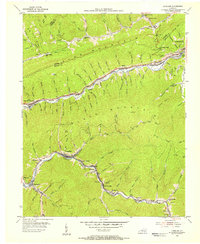 1954 Louellen1956 Print · USGSEastern Kentucky coal country is captured here during the mid-fifties, dominated by the L & N railroad. Researchers can trace coal camp life through Louellen, Highsplint, and remote sites like Bear Branch Sch or Hurricane Gap Ch.4 unique versions available
 - 1954 Map of Blackey, 1956 Print
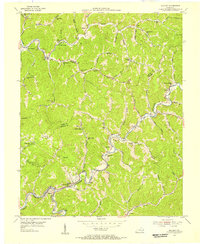 1954 Blackey1956 Print · USGSCumberland Plateau coal towns and hollows are captured here in the mid-1950s as the railroad and creeks still dictated the rhythm of daily life. Researchers can trace family roots through numerous country schools and landmarks like Carbon Glow, Hot Spot, and Indian Bottom Ch.4 unique versions available
 - 1954 Map of Roxana, 1956 Print
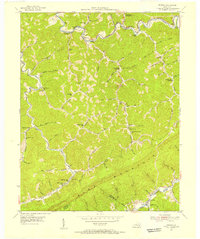 1954 Roxana1956 Print · USGSThe Kentucky mountains in the early fifties reveal a landscape of isolated hollows and ridge-line borders before modern development. Traced by the Louisville and Nashville rail, you can locate family landmarks like the Hot Spot Premium PO, Tolson Branch Ch, and numerous neighborhood schools.3 unique versions available
 - 1954 Map of Whitesburg, 1956 Print
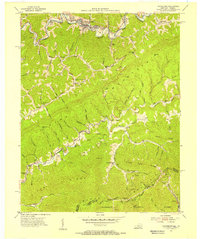 1954 Whitesburg1956 Print · USGSLetcher County at the mid-century mark shows a landscape of deep valleys and mountain ridges shaped by the coal and rail industries. Genealogists can trace family landmarks and rural institutions like Big Cowan Ch, Boggs Cem, and the Parsons Sch near the Virginia line.4 unique versions available
 - 1954 Map of Jenkins West, 1956 Print
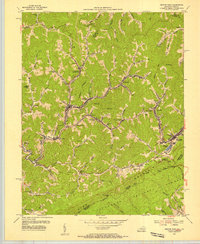 1954 Jenkins West1956 Print · USGSThe coal-country branch lines and mountain hollows of Letcher County are shown here in the mid-1950s. Researchers can trace family sites from Tolliver Town to Cromona, alongside early industrial landmarks like the Drive-in Theater and Fishpond Lake.3 unique versions available
 - 1955 Map of Johnson City
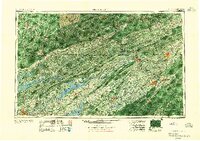 1955 Johnson City1955 Print · USGSEast Tennessee and the bordering highlands of Virginia and Kentucky appear here during the post-war industrial boom. You can trace the complex network of mountain ridges and new TVA lakes, from Johnson City to the coalfields near Middlesboro and Lynch.
 - 1955 Map of Appalachia, 1956 Print
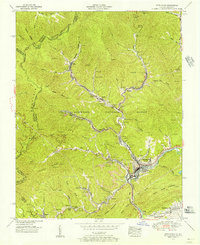 1955 Appalachia1956 Print · USGSThe coal country of the Kentucky and Virginia border comes into focus in the mid-1950s, showing a landscape defined by mountain mines and rail hubs. Researchers can trace the industrial layout of Stonega and Appalachia, alongside local landmarks like Osaka Sch and Kilbourn Cem.6 unique versions available
 - 1955 Map of Flat Gap, 1956 Print
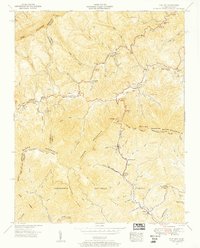 1955 Flat Gap1956 Print · USGSThe Kentucky and Virginia borderlands are captured here in the mid-fifties, showing the high ridge of Pine Mountain and the headwaters of the Cumberland River. Genealogists can trace local roots through numerous landmarks like Bolling Cem, Cane Patch Church, and Hunsucker Sch.5 unique versions available
 - 1957 Map of Johnson City, 1966 Print
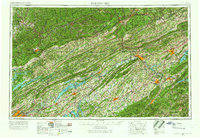 1957 Johnson City1966 Print · USGSUpper East Tennessee and Southwest Virginia are shown here during the mid-sixties transition of the Appalachians. Researchers can trace the industrial rail hubs of Kingsport, the sprawling waters of Cherokee Lake, and the historic Cumberland Gap.
 - 1957 Map of Jenkins, 1974 Print
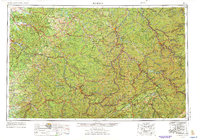 1957 Jenkins1974 Print · USGSThe Cumberland Plateau in the mid-twentieth century reveals a complex landscape of winding river valleys and deep-seated industry. Genealogists and historians can trace the development of Hazard, Jenkins, and Pikeville alongside extensive Numerous Oil and Gas Fields and the routes of the Chesapeake & Ohio Railway.
End of results
Showing maps 1-18 of 18
Top cities of Letcher County
- Jenkins historical maps
- Whitesburg historical maps
- Fleming-Neon historical maps
- Blackey historical maps
Frequently asked questions
- What are the different types of historical maps available for Letcher County?
- What is the oldest map of Letcher County?
- Where can I purchase historical maps of Letcher County for my home or office?
- Where can I download high-res historical maps of Letcher County?
- Are there historical topographic maps available for Letcher County?
- Is there historical aerial imagery available for Letcher County?
- Where are historical maps of Letcher County sourced from?