Old Maps of Corinth, Maine
Explore 54 old maps of Corinth, spanning from 1902 to today. These high-resolution historic maps reveal how streets, neighborhoods, landmarks, and natural features evolved over time — perfect for genealogy, metal detecting, research, and local history exploration.
What you can do with these maps:
- See how Corinth changed over time: Compare historical maps to modern-day views to trace roads, homesites, rail lines & more.
- View detailed metadata: Each map includes creators, publishers, year, scale, and archive source.
- Overlay maps with satellite & LiDAR: Visualize the past alongside modern tools to explore terrain & human change.
- Trusted historical sources: Maps sourced from the USGS, Library of Congress, and other archives.
- Access maps your way: View online, download high-res files, or order prints for personal or research use.
Start exploring old maps of Corinth to uncover forgotten places, hidden landmarks, and the deep history beneath your feet.
Corinth, ME maps
(54)- 1902 Map of Bangor
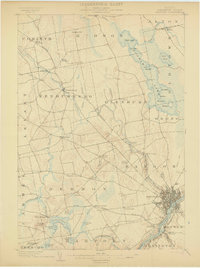 1902 Bangor1902 Print · USGSThe Penobscot River valley at the turn of the century shows a bustling hub of rail and river commerce connecting Bangor and Brewer. Genealogists and historians can trace old homesteads and transit routes through Kenduskeag, Leather Corner, and along the Maine Central R. R.6 unique versions available
 - 1931 Map of Stetson
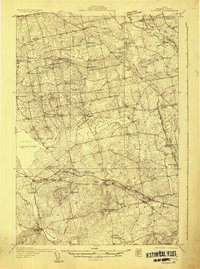 1931 Stetson1931 Print · USGSPenobscot County townships like Stetson and Exeter were thriving rural communities in the early thirties before modern school consolidation. Genealogists can locate family homesteads near numerous local landmarks like the Holy Rollers Sch, Exeter Fairgrounds, and Damascus Sta.
 - 1932 Map of Dover-Foxcroft
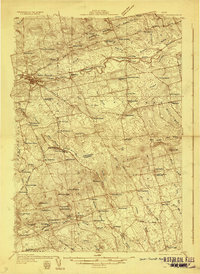 1932 Dover-Foxcroft1932 Print · USGSPiscataquis and Penobscot counties are shown here in the early 1930s, a landscape defined by the Piscataquis River and rail-fed mill towns. Genealogists can trace family names through dozens of rural landmarks like Hurd Corner, Gould Cemetery, and the Higgins Classical Institute.4 unique versions available
 - 1933 Map of Boyd Lake
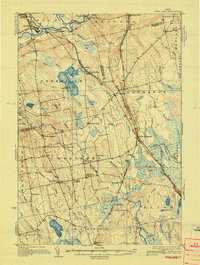 1933 Boyd Lake1933 Print · USGSPenobscot County communities and the Piscataquis River valley are captured here in the early thirties as the railroad remained the lifeblood of rural Maine. Local historians can trace numerous family-named landmarks and district schoolhouses like Knowles Sch, Ridge Sch, and the Huntington Mill works.
 - 1935 Map of Dover-Foxcroft
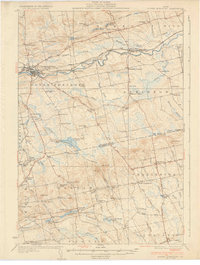 1935 Dover-Foxcroft1935 Print · USGSThe Piscataquis River valley of central Maine is shown here in the 1930s, centered on the mill town of Dover-Foxcroft. Genealogists can trace family names at Rollins Mill, Foss Cem, and dozens of rural schoolhouses like Morrison Sch.2 unique versions available
 - 1935 Map of Stetson
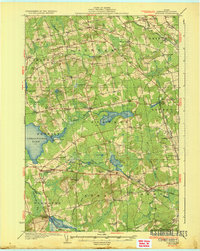 1935 Stetson1935 Print · USGSPenobscot County townships show their early twentieth-century character in this 1930s survey of central Maine. Genealogists and local historians can trace schoolhouse locations like Partridge Sch and rail-line settlements such as Etna and Carmel.3 unique versions available
 - 1942 Map of Bangor
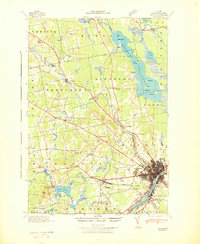 1942 Bangor1942 Print · USGSThe Penobscot River valley thrives in this early-forties survey of the region's industrial and rural heart. Trace the historic street plans of Bangor and Brewer or locate family homesteads near Leather Corner and Snow Corner.
 - 1946 Map of Bangor
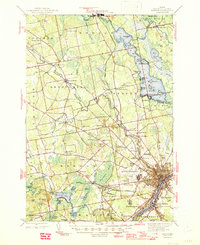 1946 Bangor1946 Print · USGSBangor and the Penobscot River are captured here in the mid-1940s, showing a critical hub of rail transport and military aviation. Local historians can trace the development of Dow Field, find local schools like Tennyson Sch, or locate family plots in Lakeview Cem.3 unique versions available
 - 1948 Map of Bangor
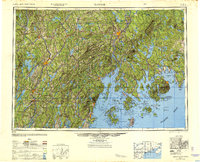 1948 Bangor1948 Print · USGSThe Maine coast and its industrial river valleys are captured here shortly after the war, showing the vital shipping and rail hubs of the late 1940s. Genealogists and historians can trace the tracks of the Maine Central RR connecting Bangor, Augusta, and Old Town.
 - 1951 Map of Boyd Lake
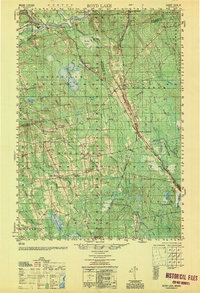 1951 Boyd Lake1951 Print · USGSPenobscot and Piscataquis Counties are captured here in the early 1950s, showing a landscape of timber-rail economies and scattered rural schoolhouses. Genealogists can trace family footprints at Bradford Center, the Hoxie Sch, or along the Bangor and Aroostook rail line.
 - 1954 Map of Millinocket, 1968 Print
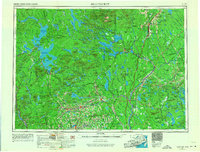 1954 Millinocket1968 Print · USGSMaine's North Woods and the Penobscot Valley are captured here during the mid-century era of logging and rail dominance. You can trace the path of the Bangor and Aroostook Railroad through timber towns like Millinocket, Mattawamkeag, and Silver Ridge.3 unique versions available
 - 1955 Map of Boyd Lake, 1956 Print
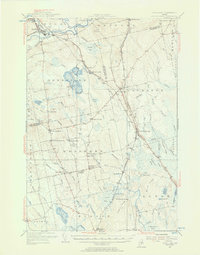 1955 Boyd Lake1956 Print · USGSPenobscot and Piscataquis counties are captured here in the mid-fifties as the rail-and-river economy supported towns like Milo and Derby. Genealogists can locate family landmarks such as the Orneville Sch, Williams Cem, and the Bradford High Sch.4 unique versions available
 - 1955 Map of Bangor, 1957 Print
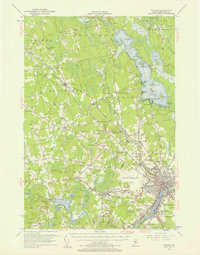 1955 Bangor1957 Print · USGSBangor and the surrounding Penobscot Valley are captured here in the mid-fifties, showing a landscape defined by riverside industry and lakefront life. Researchers can trace historic rail connections at Northern Maine Junction and locate family landmarks like Lakeside Ldg or Evergreen Cem.3 unique versions available
 - 1955 Map of Stetson, 1957 Print
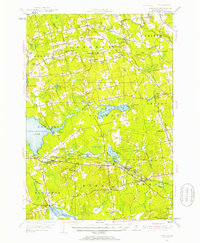 1955 Stetson1957 Print · USGSPenobscot County in the mid-1950s is shown as a thriving landscape of rural corner settlements and lakeside communities. Genealogists and historians can trace family lines through numerous rural burying grounds like Corinthian Cem or locate the site of the Longfellow Sch and Durham Bridge.3 unique versions available
 - 1956 Map of Bangor, 1966 Print
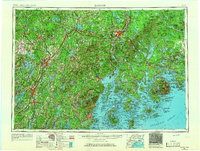 1956 Bangor1966 Print · USGSMid-century Maine comes alive in this survey of the rugged coast and river valleys during the 1950s. Genealogists and historians can trace the vital rail corridors of the Maine Central RR connecting timber towns like Old Town to the coast at Bar Harbor.3 unique versions available
 - 1958 Map of Millinocket
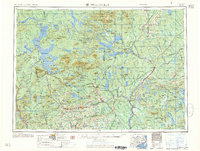 1958 Millinocket1958 Print · USGSMaine's North Woods and the Penobscot river valley are captured here in the mid-1950s, showing a landscape of timber, rail, and wild waters. Researchers can trace the legacy of the Canadian Pacific railroad and find historic settlements like Millinocket, Sherman Station, and Mattawamkeag.
 - 1960 Map of Bangor
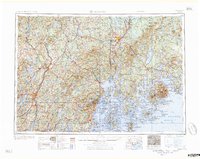 1960 Bangor1960 Print · USGSCentral Maine in the sixties reveals a landscape of river-powered industry and sprawling coastal island chains. Researchers can trace the rail corridors of the Maine Central or locate mid-century aviation landmarks like Dow Air Force Base.
 - 1960 Map of Millinocket
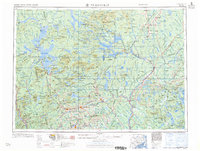 1960 Millinocket1960 Print · USGSThe Maine North Woods and Penobscot River valley are captured at mid-century during the height of the paper milling era. Researchers can trace the Appalachian Trail near Mount Katardin or locate family roots in towns like Dover-Foxcroft and Milo.3 unique versions available
 - 1961 Map of Bangor
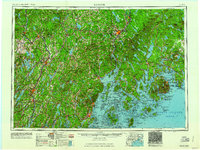 1961 Bangor1961 Print · USGSMid-century Maine comes alive through its busy river ports and rocky archipelagoes during a period of steady maritime and rail commerce. Researchers can trace the path of the Maine Central railroad and locate coastal landmarks from Acadia National Park to Vinalhaven Island.
 - 1975 Map of Dover-Foxcroft SE, 1980 Print
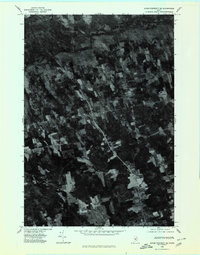 1975 Dover-Foxcroft SE1980 Print · USGSCentral Maine agriculture and woodland are captured in the mid-seventies via aerial imagery. Researchers can trace rural property lines and historic crossroads like Hicks Corner, Rollins Mill, and West Charleston.
 - 1975 Map of Stetson NE, 1980 Print
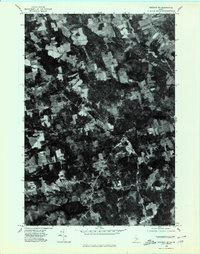 1975 Stetson NE1980 Print · USGSPenobscot County woodlands and rural townships are shown in detail during the mid-seventies through this aerial orthophoto. Genealogists and local historians can trace property lines and old roads near Exeter Mills, East Corinth, and Pleasant Lake.
 - 1975 Map of Bradford, 1981 Print
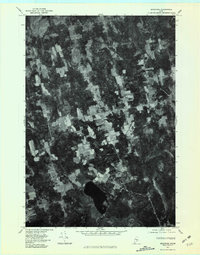 1975 Bradford1981 Print · USGSPenobscot County agriculture and woodlands are shown in detail during the mid-seventies in this aerial-based survey. Researchers can trace rural property lines and homestead footprints near Bradford, Bradford Center, and the banks of Little Pushaw Pond.
 - 1977 Map of Kenduskeag
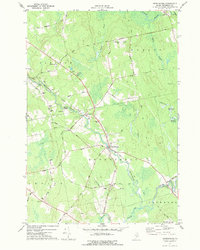 1977 Kenduskeag1977 Print · USGSPenobscot County in the late seventies is captured here at the meeting of Kenduskeag Stream and Black Stream. Researchers can trace old family burial grounds at Evergreen Cem, visit the Covered Bridge near Robyville, or locate the airstrip at Robbins Field.2 unique versions available
 - 1981 Map of West Corinth, 1982 Print
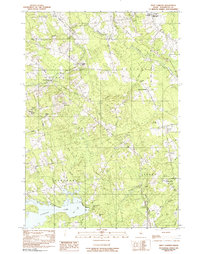 1981 West Corinth1982 Print · USGSPenobscot County agriculture and small-town life are preserved in this early 1980s survey of the Corinth and Exeter area. Researchers can trace family history through local landmarks like Exeter Mills, the Morrison Sch, and the Corinthian Cem near East Corinth.
 - 1982 Map of West Corinth, 1983 Print
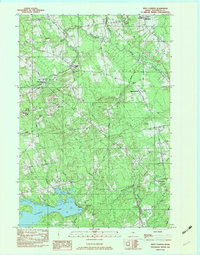 1982 West Corinth1983 Print · USGSPenobscot County at the dawn of the eighties remains a landscape of quiet rural townships and family cemeteries. Genealogists can trace property roots near Exeter Mills, locate the Morrison Sch, or find ancestral plots at Corinthian Cem and Osgood Cem.2 unique versions available
Showing maps 1-25 of 54
Top cities near Corinth
- Bangor historical maps
- Orono historical maps
- Brewer historical maps
- Hampden historical maps
- Old Town historical maps
- Hermon historical maps
See more
Top neighborhoods of Corinth
- Robyville historical maps
- South Corinth historical maps
- McGregor Mill historical maps
- West Corinth historical maps
- East Corinth historical maps
Frequently asked questions
- What are the different types of historical maps available for Corinth?
- What is the oldest map of Corinth?
- Where can I purchase historical maps of Corinth for my home or office?
- Where can I download high-res historical maps of Corinth?
- Are there historical topographic maps available for Corinth?
- Is there historical aerial imagery available for Corinth?
- Where are historical maps of Corinth sourced from?