Old Maps of Concord Township, Maine for Academic Research
Study the evolution of Concord Township with 61 high-resolution historic maps. Whether you're teaching, researching, or modeling changes in land use, these maps provide essential visual documentation of urban, environmental, and geographic change.
- Analyze long-term change: Track patterns in development, transportation, and natural features.
- Ideal for environmental or urban studies: Support academic projects with primary historical map data.
- Use in the classroom or lab: Educators and researchers rely on these maps to bring historical context to life.
These maps are a powerful tool for teaching, research, and visualizing how Concord Township has changed over the decades.
Concord Township, ME maps
(61)- 1903 Map of Bingham, 1957 Print
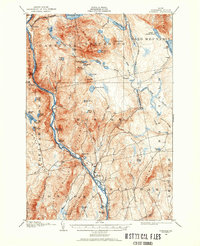 1903 Bingham1957 Print · USGSSomerset County’s river valleys and timberlands are captured here at the turn of the century, centered on the growing village of Bingham. Genealogists and historians can trace early settlements and wilderness landmarks from Caratunk to the shores of Pleasant Pond and Austin Stream.
 - 1904 Map of Anson
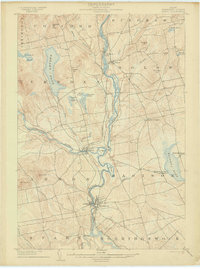 1904 Anson1904 Print · USGSSomerset County is shown in the early 1900s as a thriving corridor of river industry and rail transport. Genealogists can trace family landmarks like Savage Hill or locate early centers such as Twelve Corners, North Anson, and the island-studded Kennebec River.4 unique versions available
 - 1905 Map of Bingham
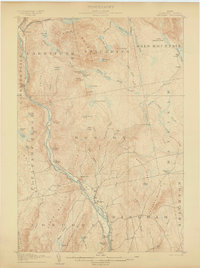 1905 Bingham1905 Print · USGSSomerset County's river-driven economy and rugged highlands are captured here in the early 1900s. Researchers can trace the Carrying Place portage route and locate early homesteads near Bingham, Merrill Pond, and Pierce Hill.5 unique versions available
 - 1928 Map of Dead River
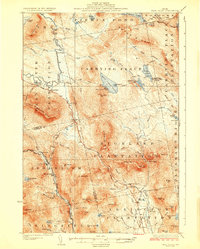 1928 Dead River1928 Print · USGSThe Somerset County wilderness in the mid-twenties is captured here as a landscape of isolated plantations and mountain trails. Genealogists and historians can trace the remote Dead River School and family sites like Joe Farm or the East Carry (Carry Pond P O).6 unique versions available
 - 1931 Map of Dead River
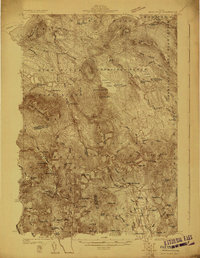 1931 Dead River1931 Print · USGSSomerset and Franklin counties in the mid-1920s show a landscape of remote plantations and traditional woodsman outposts. Genealogists and historians can trace localized landmarks like the Dead River School, the East Carry (Carry Pond PO) Pond, and Joe Farm.
 - 1944 Map of Dead River
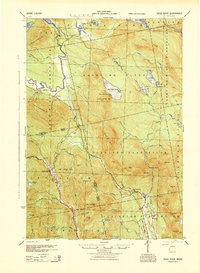 1944 Dead River1944 Print · USGSSomerset County plantations and the high timberlands are captured here in the mid-1940s before modern development altered the valley. Genealogists can locate isolated homesteads and rural schools like Joe Farm, the Dead River Sch, and the historic Arnolds Trail.
 - 1948 Map of Bangor
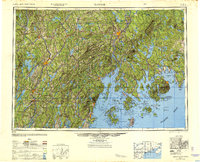 1948 Bangor1948 Print · USGSThe Maine coast and its industrial river valleys are captured here shortly after the war, showing the vital shipping and rail hubs of the late 1940s. Genealogists and historians can trace the tracks of the Maine Central RR connecting Bangor, Augusta, and Old Town.
 - 1949 Map of Jackman
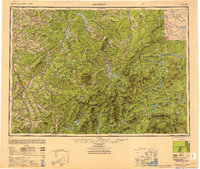 1949 Jackman1949 Print · USGSThe Quebec and Maine borderlands are shown in great detail during the late 1940s, highlighting the industrial and natural geography of the region. Trace old rail lines like the Canadian Pacific and locate settlements from Sherbrooke to Scotstown.2 unique versions available
 - 1950 Map of Dead River
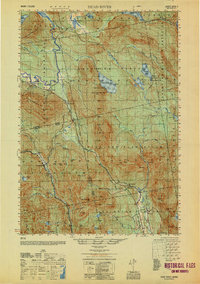 1950 Dead River1950 Print · USGSSomerset and Franklin Counties are shown during a time of isolated farms and remote plantations in the mid-twentieth century. Researchers can locate early schoolhouses like Dead River Sch and trace the old postal route at Carry Pond PO.
 - 1954 Map of Millinocket, 1968 Print
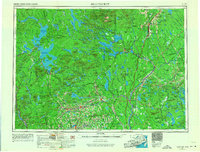 1954 Millinocket1968 Print · USGSMaine's North Woods and the Penobscot Valley are captured here during the mid-century era of logging and rail dominance. You can trace the path of the Bangor and Aroostook Railroad through timber towns like Millinocket, Mattawamkeag, and Silver Ridge.3 unique versions available
 - 1955 Map of Anson, 1957 Print
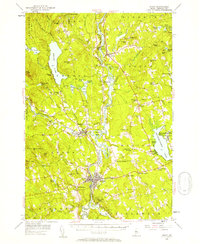 1955 Anson1957 Print · USGSThe Kennebec River valley in the mid-1950s shows a landscape of busy riverside towns and quiet rural crossroads. Researchers can trace the Maine Central Railroad and find local landmarks like the Union Ch, Purington Sch, and the uniquely named Land of Rest Cem.4 unique versions available
 - 1956 Map of Little Bigelow Mtn, 1959 Print
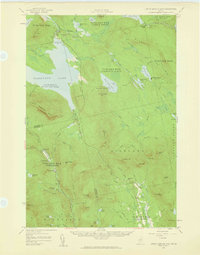 1956 Little Bigelow Mtn1959 Print · USGSSomerset and Franklin counties are shown here in the mid-fifties, just after the waters of the Dead River were impounded. Researchers can locate remote seasonal outposts like West Carry Camps, the Highland Sch, and the winding path of the Appalachian Trail.4 unique versions available
 - 1956 Map of Bingham, 1962 Print
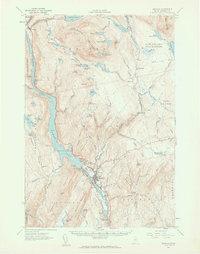 1956 Bingham1962 Print · USGSThe Kennebec River valley in the mid-1950s shows a landscape of hydropower and high-elevation ponds before significant modern development. Genealogists and historians can trace the footprint of Bingham and Moscow, locate the Longfellow Sch, and follow the Appalachian Trail past Pleasant Ridge.2 unique versions available
 - 1956 Map of Bangor, 1966 Print
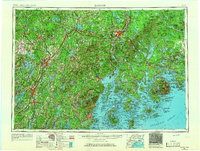 1956 Bangor1966 Print · USGSMid-century Maine comes alive in this survey of the rugged coast and river valleys during the 1950s. Genealogists and historians can trace the vital rail corridors of the Maine Central RR connecting timber towns like Old Town to the coast at Bar Harbor.3 unique versions available
 - 1958 Map of Millinocket
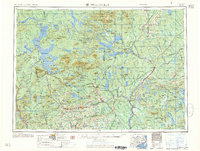 1958 Millinocket1958 Print · USGSMaine's North Woods and the Penobscot river valley are captured here in the mid-1950s, showing a landscape of timber, rail, and wild waters. Researchers can trace the legacy of the Canadian Pacific railroad and find historic settlements like Millinocket, Sherman Station, and Mattawamkeag.
 - 1960 Map of Bangor
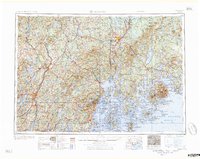 1960 Bangor1960 Print · USGSCentral Maine in the sixties reveals a landscape of river-powered industry and sprawling coastal island chains. Researchers can trace the rail corridors of the Maine Central or locate mid-century aviation landmarks like Dow Air Force Base.
 - 1960 Map of Millinocket
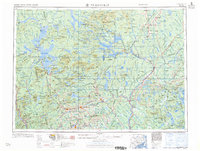 1960 Millinocket1960 Print · USGSThe Maine North Woods and Penobscot River valley are captured at mid-century during the height of the paper milling era. Researchers can trace the Appalachian Trail near Mount Katardin or locate family roots in towns like Dover-Foxcroft and Milo.3 unique versions available
 - 1961 Map of Bangor
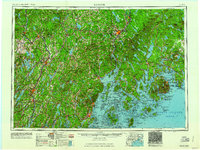 1961 Bangor1961 Print · USGSMid-century Maine comes alive through its busy river ports and rocky archipelagoes during a period of steady maritime and rail commerce. Researchers can trace the path of the Maine Central railroad and locate coastal landmarks from Acadia National Park to Vinalhaven Island.
 - 1963 Map of Jackman
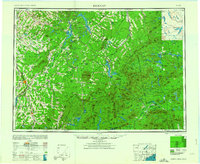 1963 Jackman1963 Print · USGSThe international borderlands of Maine and Quebec come alive in the mid-twentieth century, showing a landscape of timber towns and rail connections. Genealogists and historians can trace the paths of the Canadian Pacific Railway through Jackman or locate families in Sherbrooke and Megantic.
 - 1966 Map of Sherbrooke
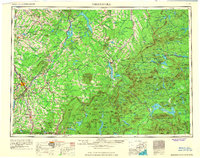 1966 Sherbrooke1966 Print · USGSThe borderlands of Quebec and Maine come alive in the mid-1960s, documenting the industrial towns and deep woods of the Northeast. Genealogists can trace family lines through Sherbrooke and Coaticook, or locate remote logging outposts along the Moose River and Flagstaff Lake.
 - 1975 Map of Bingham SE, 1980 Print
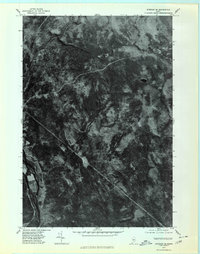 1975 Bingham SE1980 Print · USGSIn the mid-1970s, this Somerset County landscape was a mosaic of timberland and winding waterways. Researchers can trace the path of the Kennebec River and locate isolated features like Withee Pond or the heights of Johnson Mountain.
 - 1975 Map of Bingham SW, 1980 Print
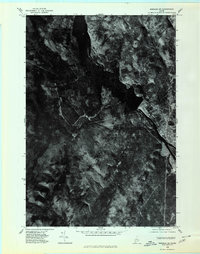 1975 Bingham SW1980 Print · USGSThe upper Kennebec River valley is captured here in the mid-1970s through high-resolution aerial imagery. Genealogists and researchers can trace the exact footprint of settlements in Bingham and Moscow or locate terrain features like Old Bluff Mountain.
 - 1975 Map of Anson NW, 1980 Print
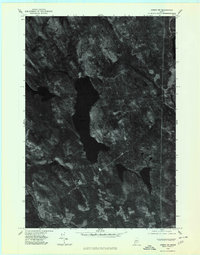 1975 Anson NW1980 Print · USGSCentral Somerset County is captured in the mid-1970s through this detailed orthophotograph of the northern Maine woods. Researchers can trace the timbered shorelines of Embden Pond and follow the paths of the Kennebec River and Carrabassett River.
 - 1975 Map of Anson NE, 1980 Print
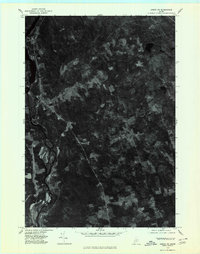 1975 Anson NE1980 Print · USGSMaine's Kennebec valley remains deeply rural in the mid-seventies, showing the enduring structure of its riverfront towns and upland crossroads. Genealogists and local historians can trace the settlement footprints of Solon, Embden, and the rural junction at Twelve Corners.
 - 1976 Map of Sherbrooke
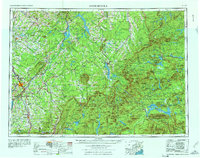 1976 Sherbrooke1976 Print · USGSThe northern Maine woods and Quebec’s Eastern Townships meet in this mid-century survey of the rugged international borderlands. Genealogists and historians can trace rail-and-river connections through Thetford Mines, follow the Dead River to Flagstaff Lake, or locate small border crossings at Stanhope and Beecher Falls.2 unique versions available
Showing maps 1-25 of 61
Top cities near Concord Township
- Skowhegan historical maps
- Madison historical maps
- Anson historical maps
- Cornville historical maps
- Strong historical maps
- Solon historical maps
See more
Frequently asked questions
- What are the different types of historical maps available for Concord Township?
- What is the oldest map of Concord Township?
- Where can I purchase historical maps of Concord Township for my home or office?
- Where can I download high-res historical maps of Concord Township?
- Are there historical topographic maps available for Concord Township?
- Is there historical aerial imagery available for Concord Township?
- Where are historical maps of Concord Township sourced from?