Old Maps of Nottingham, Maryland for Metal Detecting
Plan your next treasure hunt with 22 historic maps of Nottingham. Find old homesites, ghost towns, trails, and gathering spots that may be lost to time — perfect for identifying promising metal detecting locations.
- Locate forgotten sites: Uncover places like long-lost settlements, abandoned rail lines, or gathering spots.
- Plan better hunts: Use map overlays combined with LiDAR or satellite views to narrow in on historically rich areas.
- Made for detectorists: Thousands of hobbyists use these maps to discover relics, coins, and hidden history.
Use these historic maps to boost your research and find new opportunities beneath the surface of Nottingham.
Nottingham, MD maps
(22)- 1893 Map of Gunpowder
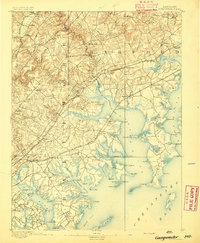 1893 Gunpowder1893 Print · USGSMaryland's tidewater and interior rail corridors are captured here in the late nineteenth century as industry and agriculture intersected. Genealogists and historians can trace the development of Jerusalem Mills, the historic village of Joppa, and numerous stops along the Maryland Central Railroad.3 unique versions available
 - 1898 Map of Tolchester
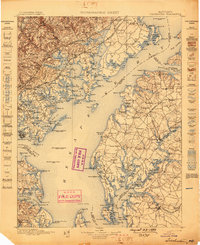 1898 Tolchester1898 Print · USGSThe upper Chesapeake Bay and its tidal tributaries are shown in the late 1890s, when steamships and railroads still dominated regional commerce. Trace the landings and rail stops that fueled the bay economy, from Buck Neck Landing to Stillpond Sta. and the historic Harford Furnace.
 - 1901 Map of Gunpowder
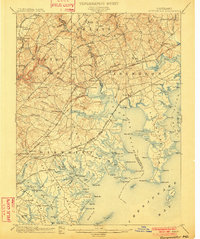 1901 Gunpowder1901 Print · USGSCoastal Baltimore and Harford Counties are captured here at the turn of the century as the Chesapeake shoreline met a growing rail network. Genealogists and historians can trace old homesteads and landings near Abingdon, Joppa, and the Battle Monument.7 unique versions available
 - 1903 Map of Tolchester
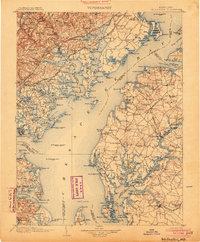 1903 Tolchester1903 Print · USGSThe upper Chesapeake Bay at the turn of the century shows a bustling maritime landscape where steamship wharves and major rail lines met. Researchers can trace defunct stops like Baldwin Sta. and Clayton Sta. or locate historic landings such as Rockhall Landing and Quaker Wharf.
 - 1908 Map of Tolchester
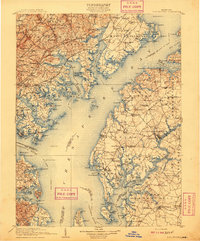 1908 Tolchester1908 Print · USGSChesapeake Bay life at the turn of the century centered on a complex network of tidewater landings and strategic railroad lines. Researchers can trace historic family settlements and maritime landmarks like Fort Howard, Harford Furnace, and the Sevenfoot Knoll LH.4 unique versions available
 - 1941 Map of Gunpowder
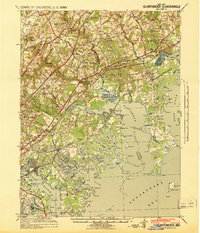 1941 Gunpowder1941 Print · USGSThe Chesapeake tidewater and the Gunpowder River valley are caught in their pre-war rural state in this early 1940s survey. Researchers can trace the paths of the P.R.R. System and locate historic sites like Harford Furnace and Osbornes Ruins.
 - 1948 Map of Baltimore
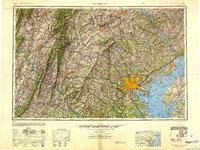 1948 Baltimore1948 Print · USGSMaryland and Pennsylvania crossroads are captured in the late 1940s, showing a landscape defined by historic rail lines and major military installations. Genealogists can trace family connections in Gettysburg, Westminster, and near the U.S. Naval Academy in Annapolis.2 unique versions available
 - 1949 Map of Gunpowder, 1955 Print
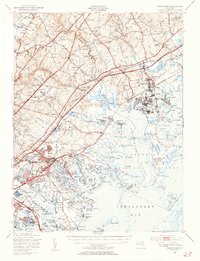 1949 Gunpowder1955 Print · USGSThe upper Chesapeake Bay shorelines of Baltimore and Harford counties are seen here in the late 1940s, marked by heavy rail and growing military installations. Researchers can find coastal landmarks like Stansbury Manor, the historic McComas Institute, and the sprawling Army Chemical Center.2 unique versions available
 - 1951 Map of Middle River
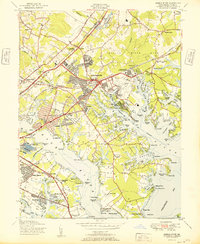 1951 Middle River1951 Print · USGSCoastal Baltimore County comes alive in the early fifties, showing a landscape shaped by military aviation and suburban growth. Trace the history of Middle River and Essex through landmarks like the Essex Seaplane Base, Diffendalls Airfield, and the North Point Battlefield Monument.
 - 1954 Map of Baltimore
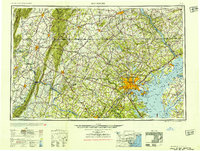 1954 Baltimore1954 Print · USGSThe Mid-Atlantic region in the early fifties shows a landscape of growing suburban centers and heavy rail corridors. Trace mid-century transit networks and military landmarks from the Aberdeen Proving Ground to the Gettysburg National Military Park.
 - 1956 Map of Baltimore
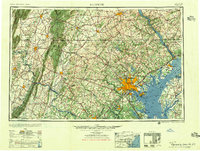 1956 Baltimore1956 Print · USGSMid-century Maryland and Pennsylvania are captured here during a period of massive suburban and military growth across the Chesapeake region. Genealogists and historians can trace the rail corridors of the Baltimore & Ohio RR and locate landmarks like Fort McHenry or the Aberdeen Proving Ground.
 - 1957 Map of Baltimore, 1964 Print
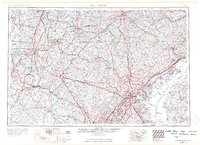 1957 Baltimore1964 Print · USGSMaryland and Southern Pennsylvania are shown during the mid-century expansion of the Baltimore-Washington corridor. Researchers can trace the extensive rail lines of the Baltimore & Ohio RR and locate sites like Fort Detrick and Gettysburg National Military Park.5 unique versions available
 - 1961 Map of Baltimore
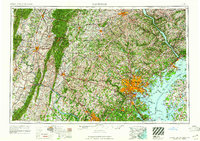 1961 Baltimore1961 Print · USGSMaryland and Pennsylvania are captured at a mid-century peak of industrial and military expansion. Genealogists and historians can trace rail corridors like the Western Maryland Ry or locate regional landmarks such as Camp Detrick and Kent Island.
 - 1969 Map of Middle River, 1971 Print
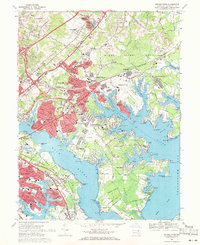 1969 Middle River1971 Print · USGSCoastal Baltimore County is captured in a moment of rapid postwar growth, centered on the aviation and rail hubs of the Middle River area. Researchers can trace the layout of early suburbs like Victory Villa and Essex or locate landmarks such as the Battle Monument and Martin Airport.4 unique versions available
 - 1984 Map of Baltimore
 1984 Baltimore1984 Print · USGSThe Baltimore and Annapolis corridor in the mid-eighties shows a landscape of rapid suburban growth and deep-seated maritime history. Researchers can trace the massive footprints of the U S Naval Academy, Fort George G Meade, and Goddard Space Flight Ctr.
 - 1989 Map of Baltimore
 1989 Baltimore1989 Print · USGSThe Mid-Atlantic corridor in the late eighties is captured here, from the Baltimore harbor to the Blue Ridge foothills. Researchers can trace the sprawling footprints of Aberdeen Proving Ground, the historic grounds of Gettysburg National Military Park, and the winding Susquehanna River.
 - 1998 Map of Middle River, 2000 Print
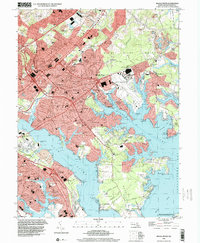 1998 Middle River2000 Print · USGSThe Middle River shoreline and Baltimore's eastern suburbs are captured here in the late 1990s, showcasing a landscape defined by aviation and coastal development. Genealogists and historians can trace neighborhood growth through Aero Acres or locate landmarks like the Battle Monument and Martin State Airport.
 - 2011 Map of Middle River, 2011 Print
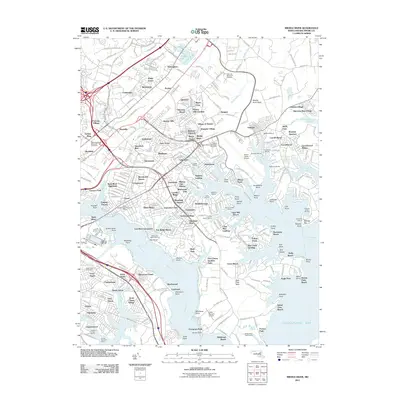 2011 Middle River2011 Print · USGSCoastal Baltimore County is shown in detail during the early twenty-first century as suburban communities and maritime industry line the Middle River. Researchers can trace local landmarks like Bengies Drive-In, Martin State Airport, and the Adath Israel Cemetery.
 - 2014 Map of Middle River, 2014 Print
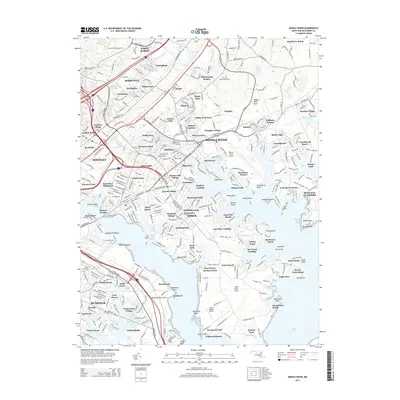 2014 Middle River2014 Print · USGSThe maritime and aviation corridors of Baltimore County are on full display in the mid-2010s, showing the dense suburban development of ESSEX and MIDDLE RIVER. Researchers can trace local landmarks like Martin State Airport, family-named neighborhoods such as Wampler Village, and the Adath Israel Cem.
 - 2016 Map of Middle River, 2016 Print
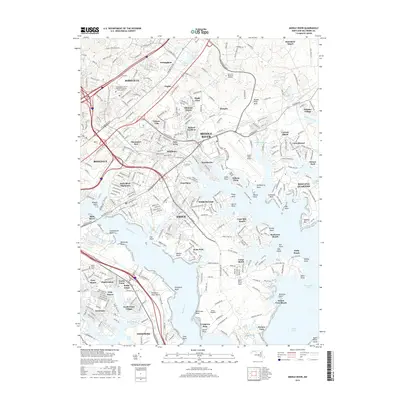 2016 Middle River2016 Print · USGSThe tidal necks and suburban corridors of eastern Baltimore County are captured here in the mid-2010s. Researchers can trace the layout of aviation hubs like Martin State Airport and historic communities such as Aero Acres and Victory Villa.
 - 2019 Map of Middle River, 2019 Print
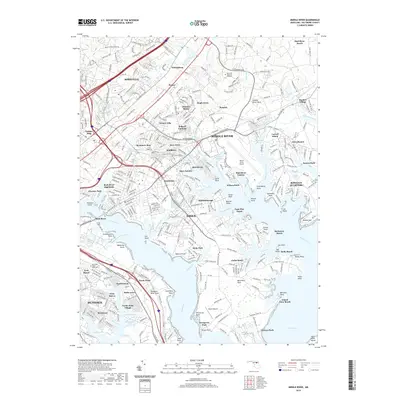 2019 Middle River2019 Print · USGSThe Baltimore County shoreline at the end of the 2010s reveals a complex landscape of aviation heritage and waterfront suburbs. Trace family history through established neighborhoods like Essex and Rossville, or locate burial sites at Adath Israel Cem and Holly Hill Memorial Gardens.
 - 2023 Map of Middle River, 2023 Print
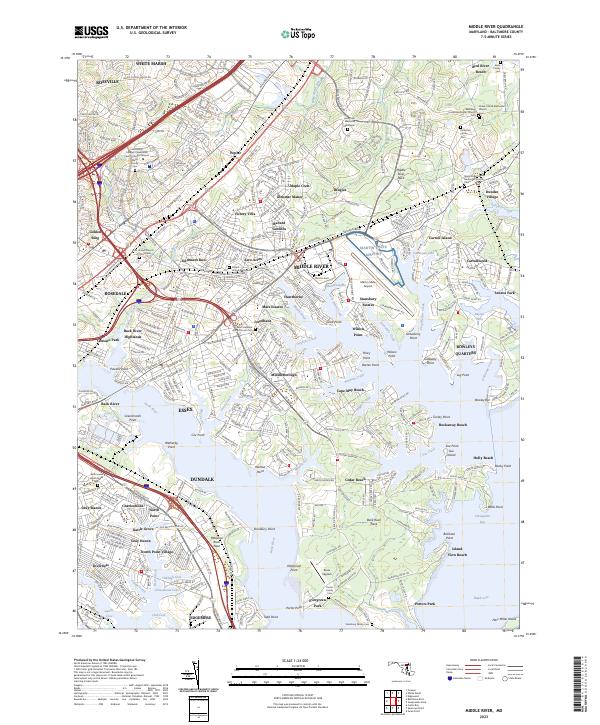 2023 Middle River2023 Print · USGSEastern Baltimore County is shown in detail as it appears today, from the residential heart of Essex to the tidal inlets of the Chesapeake. Genealogists can trace family burial sites like Mace Family Cem and Eccleston Family Cem or locate historic aviation hubs like Martin State Airport.
End of results
Showing maps 1-22 of 22
Top cities near Nottingham
- Baltimore historical maps
- Glen Burnie historical maps
- Dundalk historical maps
- Towson historical maps
- Towson historical maps
- Essex historical maps
See more
Frequently asked questions
- What are the different types of historical maps available for Nottingham?
- What is the oldest map of Nottingham?
- Where can I purchase historical maps of Nottingham for my home or office?
- Where can I download high-res historical maps of Nottingham?
- Are there historical topographic maps available for Nottingham?
- Is there historical aerial imagery available for Nottingham?
- Where are historical maps of Nottingham sourced from?