1900s (20th Century) Maps of New Salem, Massachusetts
Explore 38 historic maps of New Salem from the 1900s (20th Century). These maps offer a rare glimpse into what life looked like during the 1900s — showing old roads, neighborhoods, homes, and landmarks that have changed or disappeared over time.
Whether you're researching your family's past, planning a metal detecting trip, or studying how New Salem's landscape evolved across the 1900s, these high-resolution maps are a powerful tool for exploring the history of this region.
- Focus on a specific era: All maps on this page are from the 1900s, giving you a focused view of this time period.
- See what’s changed: Compare century-old streets, trails, and buildings to today's modern landscape using overlays and satellite layers.
- Research with precision: Use these maps for genealogy, historical research, land use analysis, or educational projects.
- View, download, or print: Maps are fully viewable online in high resolution, and can be downloaded or printed for your own records.
Start exploring New Salem's history through authentic maps from the 1900s. This is your window into the past.
New Salem, MA maps
(38)- 1908 Map of Ware
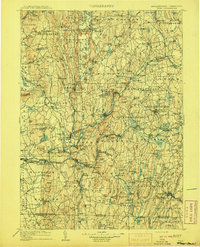 1908 Ware1908 Print · USGSCentral Massachusetts at the turn of the century reveals the Swift River Valley decades before the Quabbin Reservoir changed the landscape forever. Trace the lost footprints of Enfield and Dana, or follow the Central Vermont RR through Greenwich Village and Ware.2 unique versions available
 - 1935 Map of Warwick
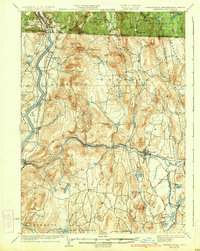 1935 Warwick1935 Print · USGSUpper Massachusetts and the Tri-State borderlands thrive during the mid-thirties as rail corridors and river valleys connect mountain villages. Researchers can trace the Central Vermont Ry through Northfield or locate family landmarks like Barrows Cem and Barber Sch.2 unique versions available
 - 1935 Map of Winchendon
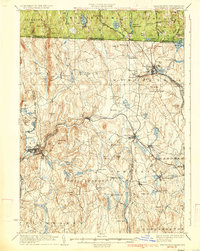 1935 Winchendon1935 Print · USGSIn the mid-1930s, the border between Massachusetts and New Hampshire was defined by busy rail corridors and small mill towns. Researchers can trace family-named sites and industrial infrastructure from Athol Center to Pequoig Station and the rural School No 1.4 unique versions available
 - 1937 Map of Orange
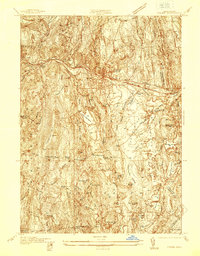 1937 Orange1937 Print · USGSThe Millers River valley and the Franklin-Worcester county line are captured here in the late thirties. Researchers can trace the Boston and Maine Railroad through Orange or locate family sites like Wilbur Cem and Morse Village Sch.
 - 1941 Map of Orange
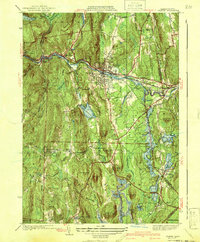 1941 Orange1941 Print · USGSFranklin County in the early 1940s reveals a transition from the industrial Millers River valley to the rural highlands above the Quabbin Reservoir. Local researchers can trace family landmarks like the Morse Village Sch, Jones Cem, and the old rail siding at Wendell Depot.3 unique versions available
 - 1942 Map of Keene
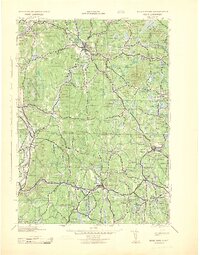 1942 Keene1942 Print · USGSCheshire County at the start of the war shows a landscape of busy river valleys and upland farms. You can trace the path of the Boston & Maine RR through towns like Westmoreland and find old district landmarks like Sch No 10 or the Rand Cem.
 - 1942 Map of Ware
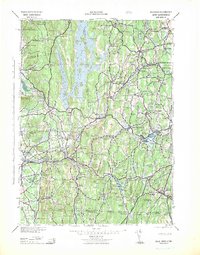 1942 Ware1942 Print · USGSCentral Massachusetts and the Connecticut border are captured here during the early years of the war, just as the landscape was being reshaped by the Quabbin Reservoir. Researchers can trace rail-era industry and local landmarks like the Lead Mine and the Bald Peak Hospital.
 - 1942 Map of Shutesbury
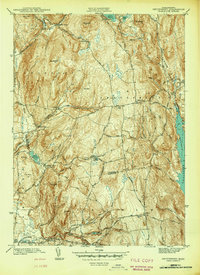 1942 Shutesbury1942 Print · USGSThe western edge of the newly formed Quabbin Reservoir meets the wooded uplands of Franklin County in the early 1940s. Local researchers can trace family homesteads and rural crossroads near Shutesbury, East Leverett, and the Rhodes Sch at a time when mountain agriculture still shaped the land.
 - 1943 Map of Shutesbury
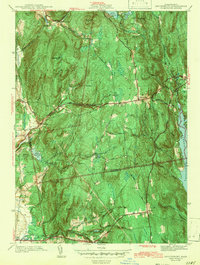 1943 Shutesbury1943 Print · USGSFranklin and Hampshire counties appear here during the early 1940s as the eastern landscape adjusted to the presence of the Quabbin Reservoir. Local historians can trace family locations near Shutesbury and Pelham, locating landmarks like Rhodes Sch and West Cem.4 unique versions available
 - 1944 Map of Winsor Dam
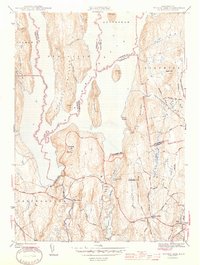 1944 Winsor Dam1944 Print · USGSIn the early 1940s, the Swift River Valley was recently transformed into a critical water resource for Massachusetts. Local historians can trace the new shoreline and legacy sites like the Quabbin Park Cem, Winsor Dam, and the hilltop Lookout on Quabbin Hill.3 unique versions available
 - 1944 Map of Quabbin Reservoir
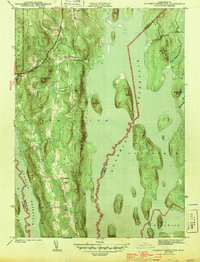 1944 Quabbin Reservoir1944 Print · USGSCentral Massachusetts undergoes a total transformation in the early forties as the valley fills to create a massive water system. Trace former upland settlements like North Prescott and prominent landmarks like Soapstone Hill and the Baffle Dam.3 unique versions available
 - 1946 Map of Athol
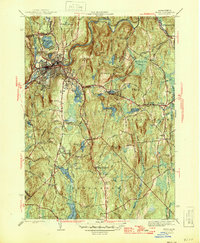 1946 Athol1946 Print · USGSPost-war Worcester County comes into focus as a landscape of river-driven industry and upland forestry. Researchers can trace historic family burial sites at Silver Lake Cem or explore the academic legacy of the Administration Bldg Harvard Forest.2 unique versions available
 - 1948 Map of Albany, 1951 Print
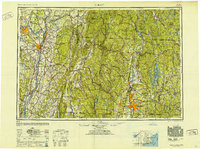 1948 Albany1951 Print · USGSThe Hudson and Connecticut River valleys are captured here in the late 1940s, showing the vital rail and water corridors of the Northeast. You can trace the Boston and Maine tracks past Mt Greylock or locate early settlements like Great Barrington and Bennington.
 - 1948 Map of Orange, 1958 Print
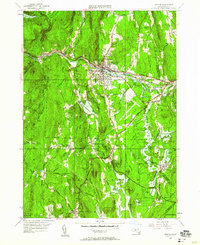 1948 Orange1958 Print · USGSThe Millers River valley and the emerging shoreline of the Quabbin Reservoir define this central Massachusetts landscape in the late nineteen-forties. Researchers can trace the Boston and Maine rail line through Orange or locate family sites near North New Salem and South Athol.2 unique versions available
 - 1950 Map of Shutesbury, 1958 Print
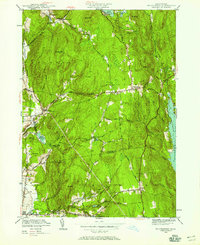 1950 Shutesbury1958 Print · USGSThe hill towns of Franklin and Hampshire Counties are captured here at mid-century, just as the Quabbin Reservoir reached its full extent. Genealogists and researchers can trace old family roads and locate landmarks like the Rhodes Sch, West Cem, and the small settlement of Cooleyville.2 unique versions available
 - 1952 Map of Quabbin Reservoir, 1953 Print
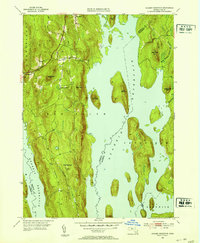 1952 Quabbin Reservoir1953 Print · USGSCentral Massachusetts in the early fifties reveals the massive transformation of the Swift River Valley following the reservoir's creation. Genealogists and historians can trace the surviving portions of North Prescott and Cooleyville or locate the site of the Baffle Dam.3 unique versions available
 - 1952 Map of Winsor Dam, 1953 Print
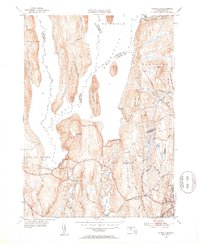 1952 Winsor Dam1953 Print · USGSHampshire and Worcester Counties are seen here in the early fifties following the transformative creation of the reservoir. Genealogists and researchers can trace the new shoreline and legacy landmarks like Winsor Dam, Quabbin Park, and West Ware.4 unique versions available
 - 1954 Map of Athol, 1956 Print
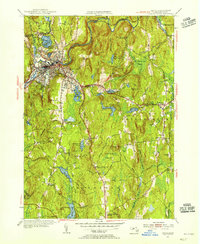 1954 Athol1956 Print · USGSAthol and Phillipston are captured during the mid-fifties, showing a landscape defined by the Millers River industry and the extensive Harvard Forest. Researchers can locate numerous burial sites like Doe Valley Cem and industrial markers such as the Phillipston Mill.3 unique versions available
 - 1956 Map of Albany, 1968 Print
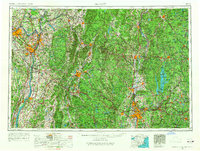 1956 Albany1968 Print · USGSThe industrial heart of the Northeast is revealed in the mid-1950s, from the Hudson Valley to the Connecticut River. Researchers can trace the legacy of the Quabbin Reservoir, locate Westover Air Force Base, or follow the Rutland RR through the Green Mountains.2 unique versions available
 - 1957 Map of Albany
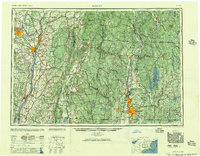 1957 Albany1957 Print · USGSThe Tri-State region and Connecticut River Valley are captured here during a period of significant postwar growth and infrastructure expansion. Genealogists and historians can trace the rail-and-river economy through landmarks like the Boston and Maine railroad, Quabbin Reservoir, and Westover Air Force Base.
 - 1959 Map of Albany
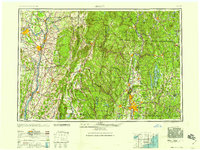 1959 Albany1959 Print · USGSThe Hudson and Connecticut River valleys are captured here during the late fifties, showing the region's dense rail networks and massive water projects. Researchers can trace the New York State Thruway or locate local landmarks like Mt Greylock and the Quabbin Reservoir.
 - 1961 Map of Orange, 1963 Print
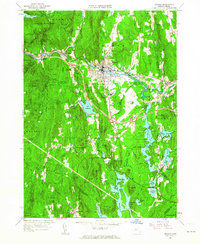 1961 Orange1963 Print · USGSOrange and the Millers River valley are captured here in the early sixties as industrial rail hubs transitioned into a landscape of sprawling state forests. Trace historic village sites like Morse Village and Wendell Depot, or locate family landmarks near Lake Mattawa.2 unique versions available
 - 1962 Map of Albany
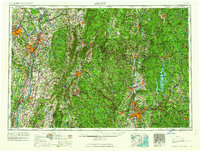 1962 Albany1962 Print · USGSThe Hudson and Connecticut River valleys meet the Green Mountains and Berkshires in this mid-century overview of the Northeast. Genealogists and historians can trace the industrial hearts of Albany and Springfield or locate features like Quabbin Reservoir and Westover Air Force Base.
 - 1964 Map of Shutesbury, 1966 Print
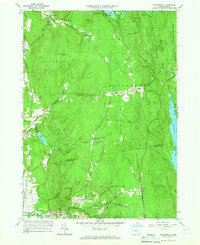 1964 Shutesbury1966 Print · USGSThe wooded uplands and reservoir shores of central Massachusetts are captured here in the mid-sixties. Genealogists and hikers can trace the foundations of the region through landmarks like Plainview Cem, Locks Village, and the site of the old Coke Ovens.4 unique versions available
 - 1967 Map of Quabbin Reservoir, 1969 Print
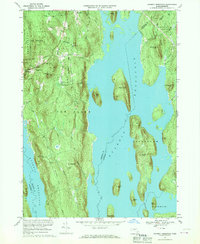 1967 Quabbin Reservoir1969 Print · USGSThe Quabbin Reservoir region is shown here in the late sixties, following the mid-century transformation of the Swift River Valley into a massive watershed. Genealogists and hikers can trace the remains of North Prescott, find the Mtn View Cem, and explore islands like Mount Zion.2 unique versions available
Showing maps 1-25 of 38
Top cities near New Salem
- Chicopee historical maps
- Amherst historical maps
- Ludlow historical maps
- South Hadley historical maps
- Belchertown historical maps
- Palmer historical maps
See more
Top neighborhoods of New Salem
- North Prescott historical maps
- Cooleyville historical maps
- Morse Village historical maps
- North New Salem historical maps
- Prescott Center historical maps
Frequently asked questions
- What are the different types of historical maps available for New Salem?
- What is the oldest map of New Salem?
- Where can I purchase historical maps of New Salem for my home or office?
- Where can I download high-res historical maps of New Salem?
- Are there historical topographic maps available for New Salem?
- Is there historical aerial imagery available for New Salem?
- Where are historical maps of New Salem sourced from?