Old Maps of Palmer, Massachusetts for Hiking & Exploration
Hike through history with 50 historic maps of Palmer. Explore old trails, ghost towns, and forgotten backroads — perfect for outdoor adventurers and local explorers.
- Rediscover forgotten places: Map out old mining camps, roads, and footpaths that no longer exist on modern maps.
- Layer with modern tools: Combine with LiDAR or satellite views to plan hikes through historical terrain.
- Made for exploration: Popular among hikers, overlanders, and local history lovers.
Use these maps to find adventure and explore the hidden past of Palmer.
Palmer, MA maps
(50)- 1887 Map of Brookfield
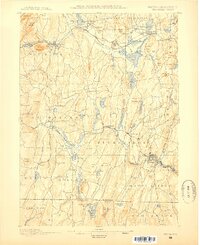 1887 Brookfield1887 Print · USGSWorcester County is shown in the late nineteenth century as a hub of manufacturing villages and developing rail lines. Genealogists can trace family roots through settlements like Fiskdale, Leadmine, and Sandersdale, or locate landmarks such as Steerage Rock.
 - 1887 Map of Palmer
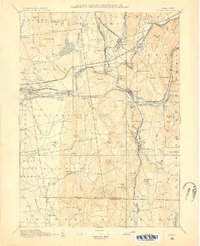 1887 Palmer1887 Print · USGSHampden County's industrial river valleys thrive in the late nineteenth century as rail and water power converge. Genealogists and historians can trace the growth of Three Rivers, locate the Alms House near Palmer, and identify old mill sites like Ellis Mills.
 - 1889 Map of Palmer
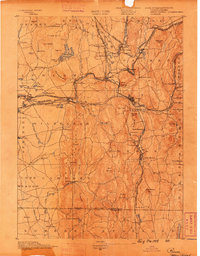 1889 Palmer1889 Print · USGSHampden County and the surrounding valley are shown here in the 1880s as a thriving hub of rail and water-powered industry. Genealogists and historians can trace the foundations of local commerce through landmarks like Ellis Mills, the State Alms House, and the Granite Quarry.
 - 1890 Map of Brookfield
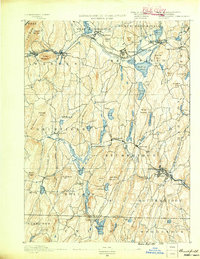 1890 Brookfield1890 Print · USGSCentral Massachusetts and the Connecticut border lands are captured here in the late nineteenth century, showing a landscape defined by water power and rail. You can trace the Boston and Albany Railroad corridor and explore industrial pockets like Globe Village and the historic Leadmine site.
 - 1893 Map of Palmer
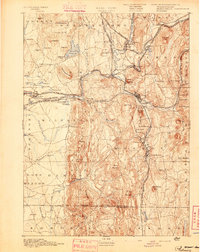 1893 Palmer1893 Print · USGSHampden County and its surrounding borders are captured here during a peak era of rail expansion and water-powered industry. Researchers can trace the junction of major lines at Barretts Junction or locate vanished industrial hamlets like Duckville and Ellis Mills.9 unique versions available
 - 1893 Map of Brookfield
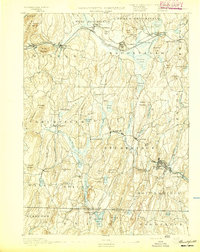 1893 Brookfield1893 Print · USGSCentral Massachusetts in the late 1800s was a landscape defined by bustling mill towns and the critical Boston and Albany Railroad corridor. Genealogists can trace family roots in early industrial centers like Fiskdale and Westville or locate the old Lead Mine near Holland.7 unique versions available
 - 1908 Map of Ware
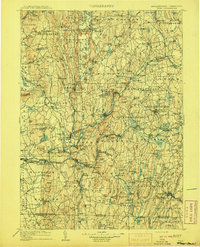 1908 Ware1908 Print · USGSCentral Massachusetts at the turn of the century reveals the Swift River Valley decades before the Quabbin Reservoir changed the landscape forever. Trace the lost footprints of Enfield and Dana, or follow the Central Vermont RR through Greenwich Village and Ware.2 unique versions available
 - 1915 Map of Brookfield
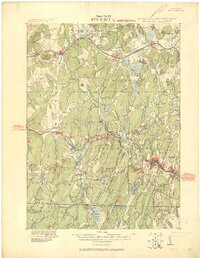 1915 Brookfield1915 Print · USGSCentral Massachusetts and the Connecticut border are captured in the final months of the pre-war era, showing a dense network of textile villages and rail lines. Genealogists and local historians can trace the growth of Southbridge or locate landmarks like the Electric Power Relay Station and Lead Mine Mountain.
 - 1919 Map of Palmer
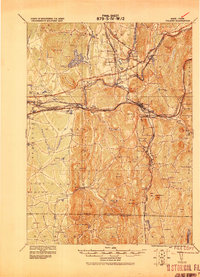 1919 Palmer1919 Print · USGSHampden County and the Connecticut borderlands are captured here during the height of the steam-rail era. Genealogists and historians can trace the foundations of local industry at Fosketts Mill, the Granite Quarry, and the sprawling Monson State Hospital.
 - 1921 Map of Brookfield
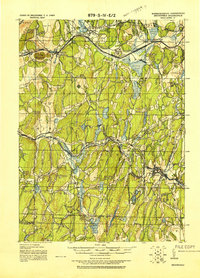 1921 Brookfield1921 Print · USGSMassachusetts and Connecticut borderlands appear here in the early twentieth century as a complex landscape of hill farms, industrial villages, and rail corridors. Genealogists can locate family landmarks like Foster Hill or trace the early industrial footprint of Leadmine and the Boston and Albany Railroad.
 - 1939 Map of Ludlow
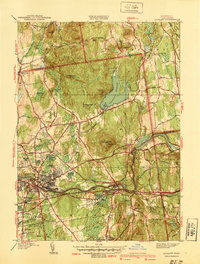 1939 Ludlow1939 Print · USGSThe industrial Chicopee River valley meets the rolling Facing Hills in this late 1930s survey of Hampden County. Local researchers can trace the rail-side growth of Ludlow, locate old burial grounds like Maplewood Cem, or find the campus of the Wilbraham Academy.
 - 1942 Map of Ludlow
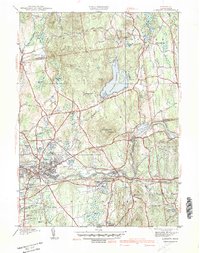 1942 Ludlow1942 Print · USGSHampden County landscapes in the late thirties reveal a mix of industrial river towns and upland reservoirs. Genealogists can trace family footprints through the Wilbraham Academy, East Wilbraham Cem, and the neighborhoods around Indian Orchard.
 - 1942 Map of Ware
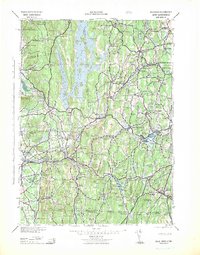 1942 Ware1942 Print · USGSCentral Massachusetts and the Connecticut border are captured here during the early years of the war, just as the landscape was being reshaped by the Quabbin Reservoir. Researchers can trace rail-era industry and local landmarks like the Lead Mine and the Bald Peak Hospital.
 - 1943 Map of Brookfield
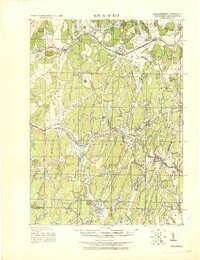 1943 Brookfield1943 Print · USGSCentral Massachusetts at the height of the war era shows a landscape of busy rail towns and upland ponds. Genealogists and historians can trace family-named peaks like Coys Hill and old industry along the Boston and Albany RR or near Southbridge.
 - 1944 Map of Ludlow
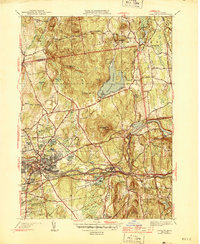 1944 Ludlow1944 Print · USGSHampden County’s industrial river valley and rolling hills are captured here just after the war. Researchers can trace historic family connections through Wilbraham Academy, Hillcrest Park Cem, and the rail lines serving North Wilbraham.3 unique versions available
 - 1946 Map of Palmer
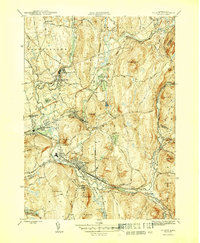 1946 Palmer1946 Print · USGSHampden County in the mid-1940s is defined by a dense network of river-driven industrial villages and major rail junctions. Researchers can trace the busy corridors of the Boston and Albany RR through the village of Three Rivers or locate the State Fish Hatchery and Landing Field.4 unique versions available
 - 1946 Map of Warren
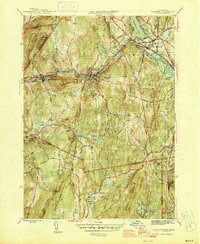 1946 Warren1946 Print · USGSMid-century Worcester County comes to life along the Quaboag River valley just after the war. Local historians can trace the industrial corridor of the Boston and Albany RR through West Warren and locate landmarks like St Marys Cem or Schoolhouse No 4.3 unique versions available
 - 1947 Map of Ludlow
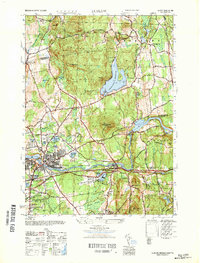 1947 Ludlow1947 Print · USGSHampden County's river-and-rail corridor is captured here in the late 1940s as manufacturing and recreation began to reshape the valley. Genealogists can trace early landmarks like Wilbraham Academy, the Hillcrest Park Cem, and the busy junction at Indian Orchard.
 - 1947 Map of Palmer
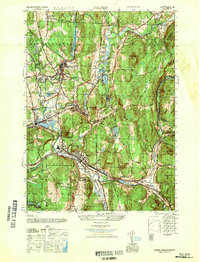 1947 Palmer1947 Print · USGSHampden County's industrial heartland is captured here just after the war, showing the vital confluence of four rivers. Researchers can trace the complex rail networks of the Boston and Maine RR and locate legacy sites like the State Hospital and Thorndike.
 - 1948 Map of Albany, 1951 Print
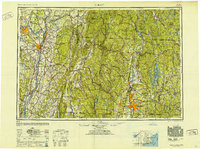 1948 Albany1951 Print · USGSThe Hudson and Connecticut River valleys are captured here in the late 1940s, showing the vital rail and water corridors of the Northeast. You can trace the Boston and Maine tracks past Mt Greylock or locate early settlements like Great Barrington and Bennington.
 - 1954 Map of Warren, 1955 Print
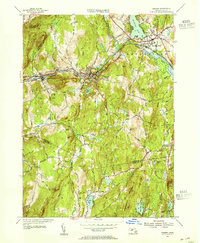 1954 Warren1955 Print · USGSThe Quaboag Valley hums with industry and rail traffic in the mid-1950s as the river winds through these historic hill towns. Genealogists and historians can trace the neighborhoods of West Warren, find family plots in Pine Grove Cem, and locate landmarks like Steerage Rock.3 unique versions available
 - 1954 Map of Palmer, 1955 Print
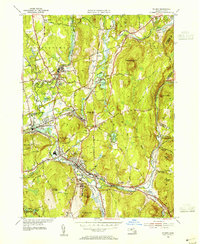 1954 Palmer1955 Print · USGSThe confluence of three major rivers in the mid-1950s defined the industrial and transport hub of Palmer. Local historians can trace the paths of the Central Vermont Railway through Bondsville or locate family sites at Oak Knoll Cem and the State Hospital.3 unique versions available
 - 1954 Map of Ludlow, 1956 Print
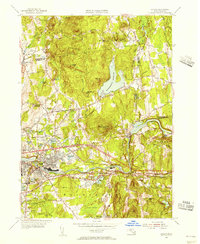 1954 Ludlow1956 Print · USGSHampden County's industrial and reservoir landscapes are intricately detailed in the mid-fifties, capturing the expansion of Ludlow and North Wilbraham. Genealogists and historians can locate Wilbraham Academy, the East Wilbraham Cem, and the intersection of three major rail lines including the Central Vermont Railway.3 unique versions available
 - 1956 Map of Albany, 1968 Print
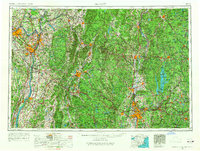 1956 Albany1968 Print · USGSThe industrial heart of the Northeast is revealed in the mid-1950s, from the Hudson Valley to the Connecticut River. Researchers can trace the legacy of the Quabbin Reservoir, locate Westover Air Force Base, or follow the Rutland RR through the Green Mountains.2 unique versions available
 - 1957 Map of Albany
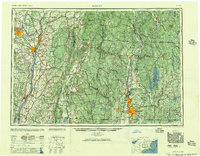 1957 Albany1957 Print · USGSThe Tri-State region and Connecticut River Valley are captured here during a period of significant postwar growth and infrastructure expansion. Genealogists and historians can trace the rail-and-river economy through landmarks like the Boston and Maine railroad, Quabbin Reservoir, and Westover Air Force Base.
Showing maps 1-25 of 50
Top cities near Palmer
- Springfield historical maps
- Chicopee historical maps
- Enfield historical maps
- Amherst historical maps
- Ludlow historical maps
- South Hadley historical maps
See more
Top neighborhoods of Palmer
- Bondsville historical maps
- Duckville historical maps
- Four Corners historical maps
- Meadowbrook Green historical maps
- Palmer Center historical maps
- Thorndike historical maps
See more
Frequently asked questions
- What are the different types of historical maps available for Palmer?
- What is the oldest map of Palmer?
- Where can I purchase historical maps of Palmer for my home or office?
- Where can I download high-res historical maps of Palmer?
- Are there historical topographic maps available for Palmer?
- Is there historical aerial imagery available for Palmer?
- Where are historical maps of Palmer sourced from?