Old Maps of Westhampton, Massachusetts for Academic Research
Study the evolution of Westhampton with 41 high-resolution historic maps. Whether you're teaching, researching, or modeling changes in land use, these maps provide essential visual documentation of urban, environmental, and geographic change.
- Analyze long-term change: Track patterns in development, transportation, and natural features.
- Ideal for environmental or urban studies: Support academic projects with primary historical map data.
- Use in the classroom or lab: Educators and researchers rely on these maps to bring historical context to life.
These maps are a powerful tool for teaching, research, and visualizing how Westhampton has changed over the decades.
Westhampton, MA maps
(41)- 1885 Map of Northampton
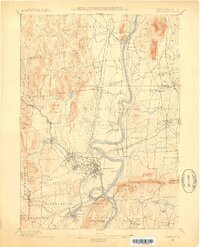 1885 Northampton1885 Print · USGSThe Pioneer Valley in the late 1800s was a hub of academic and industrial energy centered on the Connecticut River. Genealogists can trace family roots through hamlets like Hockanum and Loudville or locate early campus sites like the Agricultural College.
 - 1886 Map of Chesterfield
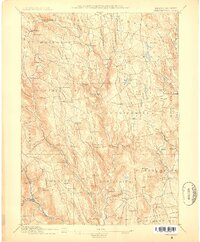 1886 Chesterfield1886 Print · USGSThe Hampshire Hills are captured here in the late nineteenth century, showing a network of upland hamlets and river-powered industry. Researchers can trace historic family locations along Ireland Street or locate the old Bisbee Mill and the Boston and Albany rail line.
 - 1886 Map of Northampton
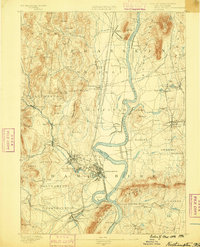 1886 Northampton1886 Print · USGSThe Pioneer Valley in the mid-1880s is captured here at a peak of rail expansion and educational growth. Researchers can trace the early footprints of the Agricultural College, the industrial works at Haydenville, and the landmark Insane Asylum.
 - 1888 Map of Chesterfield
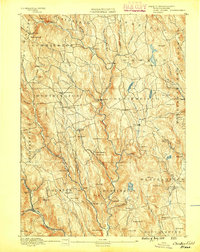 1888 Chesterfield1888 Print · USGSHampshire County in the late 1880s is shown here as a landscape of river-driven hamlets and upland farms. Genealogists can trace family holdings near rural crossroads like Ireland Street, Shack Street, and the riverside Bisbee Mill.
 - 1891 Map of Northampton
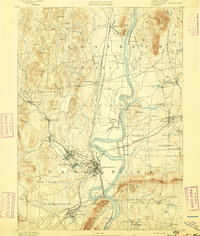 1891 Northampton1891 Print · USGSThe Pioneer Valley in the early nineties shows a landscape of river-driven industry and rising academic centers. Genealogists can trace family roots through old settlements like Bay State Village and Hockanum, or locate early campus sites at the Agricultural College.
 - 1893 Map of Northampton
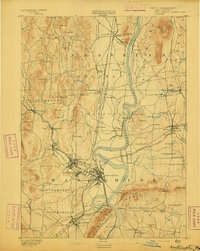 1893 Northampton1893 Print · USGSHampshire County in the late nineteenth century is a landscape of thriving mill towns and emerging college campuses. Trace the industrial operations at Factory Hollow or locate old crossings like the Smith Ferry and the Ferry at Hatfield.
 - 1893 Map of Chesterfield
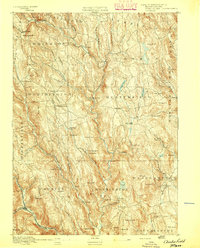 1893 Chesterfield1893 Print · USGSThe Hampshire County highlands are captured here in the late nineteenth century as a network of river-powered mill towns and mountain farmsteads. Local historians can trace early neighborhood clusters like Ireland Street and Shack Street or locate industrial sites like Risbee Mill.
 - 1895 Map of Northampton
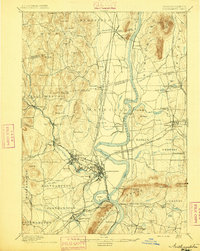 1895 Northampton1895 Print · USGSThe Pioneer Valley is captured here in the late nineteenth century, showing a landscape of burgeoning industrial villages and prestigious colleges. Researchers can trace the early rail networks like the Williamsburg Br. or locate historic sites like the Insane Asylum and Hockanum.10 unique versions available
 - 1895 Map of Chesterfield
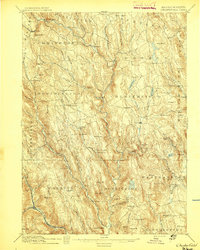 1895 Chesterfield1895 Print · USGSThe Hampshire County uplands in the late nineteenth century show a landscape of steep river valleys and small mill towns. Researchers can trace the early industrial footprint at Risbees Mill or locate family homesteads in hamlets like Ireland Street and Jordansville.8 unique versions available
 - 1896 Map of Holyoke
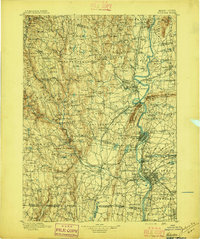 1896 Holyoke1896 Print · USGSThe Pioneer Valley and the eastern Berkshire foothills thrive in the 1890s as a complex network of industrial towns and upland farming communities. Historians can trace early infrastructure through the Bisbee Mill, the Agricultural College, and the prominent Ox Bow on the Connecticut River.
 - 1897 Map of Holyoke
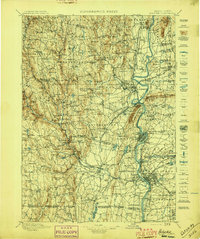 1897 Holyoke1897 Print · USGSThe Pioneer Valley and surrounding highlands thrive in the 1890s, caught here at the height of the region's industrial and agricultural development. Genealogists and historians can trace family roots through dozens of hill towns and river settlements, from Agricultural College in Amherst to the mills of Holyoke and the remote tracks of the Athol Br. R. R..
 - 1901 Map of Holyoke
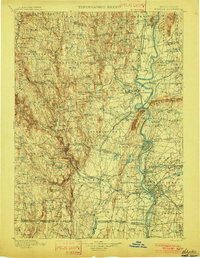 1901 Holyoke1901 Print · USGSThe Pioneer Valley and surrounding highlands thrive at the turn of the century, showing a landscape defined by mill towns and early rail networks. Genealogists and historians can trace old homesteads and local landmarks like Bisbee Mill, South Ferry, and the Agricultural College.4 unique versions available
 - 1935 Map of Easthampton
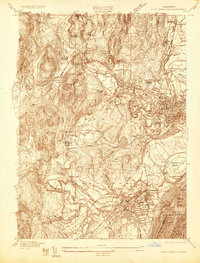 1935 Easthampton1935 Print · USGSHampshire County thrives in the mid-thirties as a center of industry and institutional care along the Connecticut River. Genealogists can trace family names at the West Farms Cem or locate historic campus grounds like Williston Academy and Laurel Park.
 - 1939 Map of Easthampton
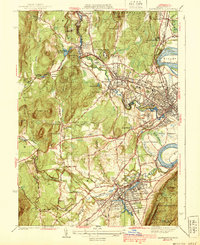 1939 Easthampton1939 Print · USGSHampshire County at the close of the 1930s shows a complex network of industrial mill towns and upland farms connected by major rail lines. Researchers can trace family roots through sites like Spring Grove Cemetery or locate old schoolhouses like Smith Sch and West Farms Sch.5 unique versions available
 - 1943 Map of Holyoke
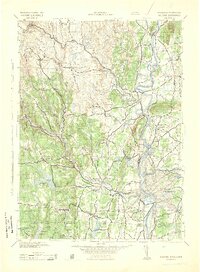 1943 Holyoke1943 Print · USGSThe Pioneer Valley and the eastern Berkshires are captured here in the early 1940s, showing a robust network of river-side industry and hill-country forests. Researchers can locate vanished landmarks and institutional grounds like Northampton State Hospital, Barnes Airport, and the Nat Gd Rifle Range.
 - 1946 Map of Westhampton
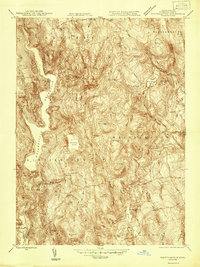 1946 Westhampton1946 Print · USGSHampshire County at the dawn of the post-war era shows a landscape transitioning between traditional milling and modern water management. Researchers can trace historic family cemeteries like Torrey Cem and early industrial sites such as Bisbee Mill near the Knightville Reservoir.
 - 1947 Map of Westhampton
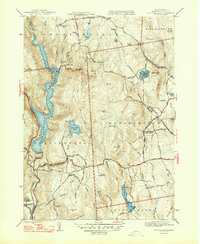 1947 Westhampton1947 Print · USGSHampshire County's hill country is frozen in time during the late 1940s, showing the rural character of Westhampton and Norwich. Researchers can find small family burial grounds like Damon Cem, old industrial sites like Bisbee Mill, and landmarks like Pine Island Lake.2 unique versions available
 - 1948 Map of Easthampton
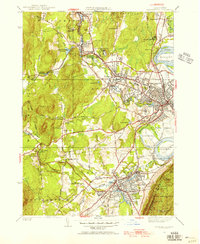 1948 Easthampton1948 Print · USGSNorthampton and Easthampton thrive in the late 1940s as hubs of industry and education along the Connecticut River. Genealogists can trace family plots at Spring Grove Cemetery or explore landmarks like Smith College and Williston Academy.3 unique versions available
 - 1948 Map of Albany, 1951 Print
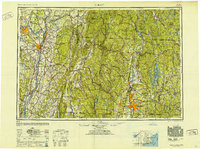 1948 Albany1951 Print · USGSThe Hudson and Connecticut River valleys are captured here in the late 1940s, showing the vital rail and water corridors of the Northeast. You can trace the Boston and Maine tracks past Mt Greylock or locate early settlements like Great Barrington and Bennington.
 - 1955 Map of Westhampton, 1957 Print
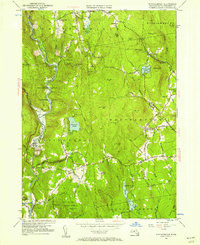 1955 Westhampton1957 Print · USGSHampshire County hill towns were entering a new era of conservation and forest regrowth in the mid-fifties. Researchers can trace old family burial grounds like Damon Cem, locate the Bisbee Mill site, and study the evolving boundary of the Huntington State Forest.2 unique versions available
 - 1956 Map of Albany, 1968 Print
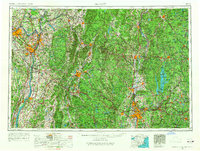 1956 Albany1968 Print · USGSThe industrial heart of the Northeast is revealed in the mid-1950s, from the Hudson Valley to the Connecticut River. Researchers can trace the legacy of the Quabbin Reservoir, locate Westover Air Force Base, or follow the Rutland RR through the Green Mountains.2 unique versions available
 - 1957 Map of Albany
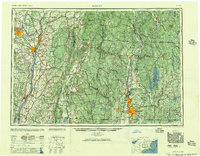 1957 Albany1957 Print · USGSThe Tri-State region and Connecticut River Valley are captured here during a period of significant postwar growth and infrastructure expansion. Genealogists and historians can trace the rail-and-river economy through landmarks like the Boston and Maine railroad, Quabbin Reservoir, and Westover Air Force Base.
 - 1959 Map of Albany
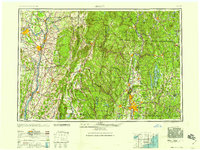 1959 Albany1959 Print · USGSThe Hudson and Connecticut River valleys are captured here during the late fifties, showing the region's dense rail networks and massive water projects. Researchers can trace the New York State Thruway or locate local landmarks like Mt Greylock and the Quabbin Reservoir.
 - 1962 Map of Albany
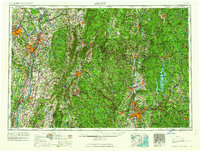 1962 Albany1962 Print · USGSThe Hudson and Connecticut River valleys meet the Green Mountains and Berkshires in this mid-century overview of the Northeast. Genealogists and historians can trace the industrial hearts of Albany and Springfield or locate features like Quabbin Reservoir and Westover Air Force Base.
 - 1964 Map of Easthampton, 1967 Print
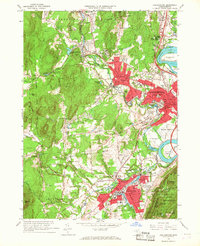 1964 Easthampton1967 Print · USGSNorthampton and Easthampton are shown at a peak of mid-century development, framed by the Connecticut River and the Sawmill Hills. Genealogists and historians can trace institutional landmarks like Smith College, Williston Academy, and St Marys Cem.3 unique versions available
Showing maps 1-25 of 41
Top cities near Westhampton
- Springfield historical maps
- Chicopee historical maps
- Westfield historical maps
- Holyoke historical maps
- Northampton historical maps
- Agawam historical maps
See more
Top neighborhoods of Westhampton
Frequently asked questions
- What are the different types of historical maps available for Westhampton?
- What is the oldest map of Westhampton?
- Where can I purchase historical maps of Westhampton for my home or office?
- Where can I download high-res historical maps of Westhampton?
- Are there historical topographic maps available for Westhampton?
- Is there historical aerial imagery available for Westhampton?
- Where are historical maps of Westhampton sourced from?