Old Maps of Westwood, Massachusetts for Metal Detecting
Plan your next treasure hunt with 54 historic maps of Westwood. Find old homesites, ghost towns, trails, and gathering spots that may be lost to time — perfect for identifying promising metal detecting locations.
- Locate forgotten sites: Uncover places like long-lost settlements, abandoned rail lines, or gathering spots.
- Plan better hunts: Use map overlays combined with LiDAR or satellite views to narrow in on historically rich areas.
- Made for detectorists: Thousands of hobbyists use these maps to discover relics, coins, and hidden history.
Use these historic maps to boost your research and find new opportunities beneath the surface of Westwood.
Westwood, MA maps
(54)- 1886 Map of Dedham
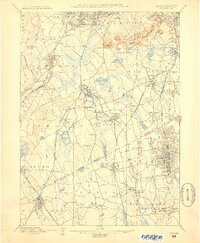 1886 Dedham1886 Print · USGSNorfolk County and its neighbors are captured here in the late nineteenth century as the rail networks expanded across eastern Massachusetts. Local historians can trace the routes of the Old Colony Railroad and find early village sites like Furnace Village and Sharon Heights.
 - 1887 Map of Franklin
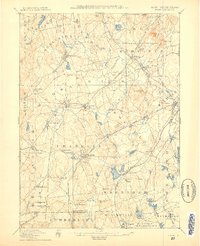 1887 Franklin1887 Print · USGSNorfolk County at the peak of the industrial rail era shows a complex landscape of mill villages and expanding transit lines. Trace the development of City Mills, follow the Old Colony R. R. Wrentham Branch, or locate old landmarks like Burnt Swamp Corner.
 - 1889 Map of Franklin
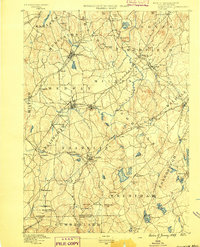 1889 Franklin1889 Print · USGSThe industrial and rail hubs of Norfolk County are detailed in the late 1880s, documenting a time of rapid growth for mill towns and village centers. Researchers can trace historic station stops and hamlets like City Mills, Unionville, and Whitney Sta.
 - 1893 Map of Franklin
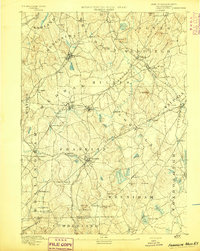 1893 Franklin1893 Print · USGSEastern Massachusetts at the close of the nineteenth century was a landscape of busy rail junctions and riverside mill towns. Researchers can trace the era's industrial footprint through sites like City Mills, Medfield Junc., and the isolated Burnt Swamp Corner.8 unique versions available
 - 1893 Map of Boston
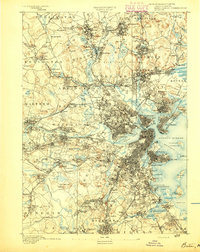 1893 Boston1893 Print · USGSGreater Boston and the Massachusetts coast are captured here in the late nineteenth century as streetcar suburbs and rail lines redefined the region. Trace family roots and local history across old neighborhoods like Washington Village, coastal landmarks like Fort Independence, and the sprawling Middlesex Fells.4 unique versions available
 - 1894 Map of Dedham
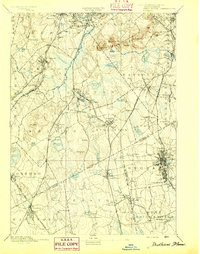 1894 Dedham1894 Print · USGSGreater Boston's southern suburbs emerge during the late nineteenth century as a dense network of railroad lines and water-powered industrial centers. Genealogists and historians can trace old neighborhoods from Readville and Endicott to the heights of Great Blue Hill.10 unique versions available
 - 1903 Map of Boston
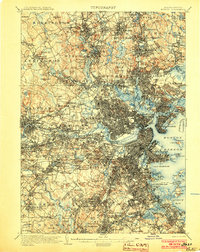 1903 Boston1903 Print · USGSThe Greater Boston area and its sprawling rail-and-river network are captured here at the turn of the century. Genealogists and historians can trace neighborhood blocks, the grounds of Tufts College, and military landmarks like Ft. Winthrop and Ft. Independence.13 unique versions available
 - 1919 Map of Dedham
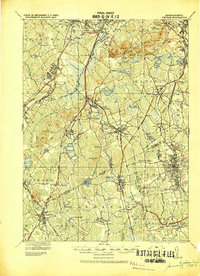 1919 Dedham1919 Print · USGSNorfolk County at the close of the Great War reveals a landscape defined by the Blue Hills Reservation and a dense network of industrial rail lines. Genealogists and historians can trace old neighborhood boundaries in Readville and Islington or locate lost trackside stops along the Old Colony RR.
 - 1919 Map of Franklin
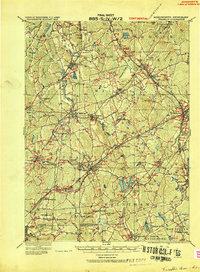 1919 Franklin1919 Print · USGSEastern Massachusetts at the end of the Great War was a landscape defined by its river-powered mill towns and expanding rail corridors. Genealogists and local historians can trace family roots through industrial hamlets like City Mills, Unionville, and Sheldonville.2 unique versions available
 - 1921 Map of Franklin, 1942 Print
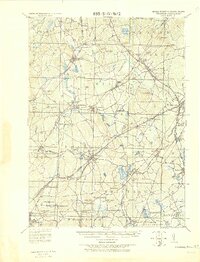 1921 Franklin1942 Print · USGSThe Charles River valley was a network of bustling rail junctions and mill villages in the years following the Great War. You can trace the development of towns like Franklin and Medway or locate smaller centers such as City Mills and Unionville.
 - 1936 Map of Norwood
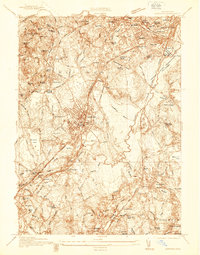 1936 Norwood1936 Print · USGSNorfolk County in the mid-1930s shows a landscape of busy rail corridors and river-powered industry centered on the Neponset River. Genealogists and historians can trace neighborhood growth through local landmarks like Plumptonville, the Colburn Sch, and the Norwood Central Sta.
 - 1940 Map of Medfield
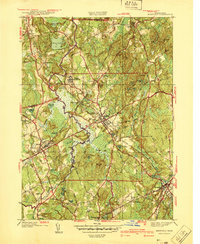 1940 Medfield1940 Print · USGSMedfield and the surrounding Charles River valley appear here just before the Second World War, showing a landscape of small villages and large institutional grounds. Researchers can trace the old rail beds of the New York New Haven and Hartford and find local landmarks like Schoolhouse No 14 and the Medfield State Hospital.2 unique versions available
 - 1941 Map of Norwood
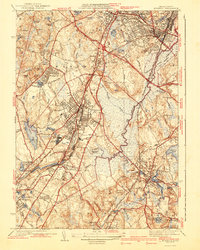 1941 Norwood1941 Print · USGSNorfolk County during the mid-1930s shows a landscape of growing town centers and industrial rail corridors along the Neponset River. Researchers can trace local landmarks like the Sharon Sanitorium, Highland Cem, and the specialized Norfolk County Agricultural Sch.3 unique versions available
 - 1943 Map of Boston
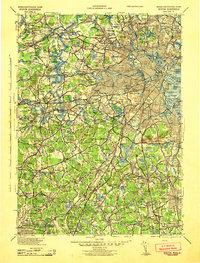 1943 Boston1943 Print · USGSGreater Boston and its southern suburbs appear here during the mobilization of the early 1940s. Genealogists and historians can trace the early footprints of Commonwealth Airport, military sites like Fort Winthrop, and local institutions such as Pondville State Hospital.
 - 1944 Map of Newton
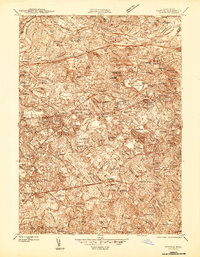 1944 Newton1944 Print · USGSThe western suburbs of Boston thrive in the mid-1940s, defined by the winding Charles River and a dense network of rail lines. Genealogists and local historians can trace family plots and parish boundaries at Newton Cem, St Gabriels Monastery, and the Christian Science Sanatorium.
 - 1945 Map of Medfield, 1954 Print
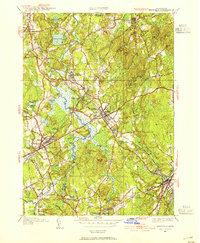 1945 Medfield1954 Print · USGSThe Charles River valley and its rail-connected towns appear here during the mid-forties. Genealogists and historians can trace family locations near Medfield State Hospital, Farm St Sta, and Vine Lake Cem.3 unique versions available
 - 1946 Map of Medfield
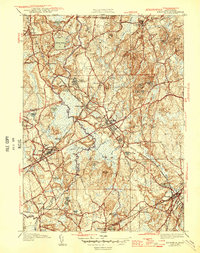 1946 Medfield1946 Print · USGSPost-war Norfolk County is captured here just as local rail service and institutional life centered on the Medfield State Hospital remained vital. Trace family lands near Pine Hill Cem or follow the New Haven and Hartford RR through Medfield Junction.2 unique versions available
 - 1946 Map of Newton
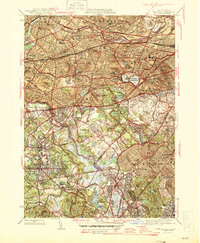 1946 Newton1946 Print · USGSNewton and the western Boston suburbs are captured in the mid-1940s, showcasing a landscape of established estates, institutions, and rail lines. You can trace early 20th-century neighborhoods and landmarks like the Chestnut Hill Reservoir, Boston College, and Needham Junction.3 unique versions available
 - 1946 Map of Norwood, 1958 Print
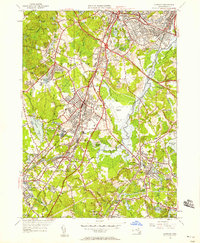 1946 Norwood1958 Print · USGSNorfolk County during the postwar expansion era reveals a landscape shaped by the Neponset River and thriving rail corridors. Researchers can trace the development of local centers like Islington and East Walpole or locate landmarks such as the Norwood Airfield and Colburn Sch.
 - 1947 Map of Norwood
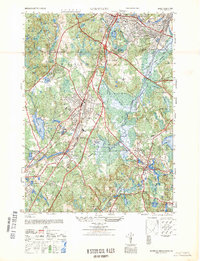 1947 Norwood1947 Print · USGSPost-war Norfolk County centers on the busy rail-and-river corridor of the late forties. Researchers can trace the neighborhood growth of Islington and East Walpole or locate family markers at Fairview Cemetery and Highland Cem.
 - 1948 Map of Boston
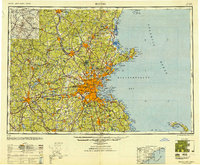 1948 Boston1948 Print · USGSEastern Massachusetts and southern New Hampshire appear at an industrial peak in the late 1940s, just as suburban growth began to accelerate. Genealogists and historians can trace rail lines like the Boston and Albany RR or locate coastal landmarks like Graves Lighthouse and Fort Devens.2 unique versions available
 - 1954 Map of Newton
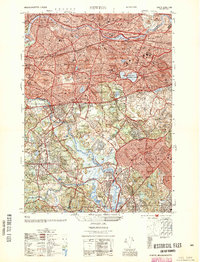 1954 Newton1954 Print · USGSGreater Boston was undergoing rapid postwar transition during the early fifties as highways began to reshape the suburbs. Genealogists and historians can trace family plots and local landmarks like Newton Cem, the Perkins Institution for Blind, and the Boston and Albany RR corridor.
 - 1956 Map of Newton
 1956 Newton1956 Print · USGSThe Charles River corridor in the mid-fifties shows a mature landscape of commuter rail suburbs and prestigious institutions. Researchers can trace family history through local landmarks like Newton Cemetery, neighborhood hubs like Waban Sta, and Hancock Village.3 unique versions available
 - 1956 Map of Boston, 1967 Print
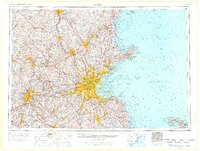 1956 Boston1967 Print · USGSThe Massachusetts coastline and industrial interior are seen here during the mid-century peak of suburban and highway expansion. Researchers can trace historic harbor defenses like Fort Revere, local landmarks such as Faneuil Hall, and the vast Parker River National Wildlife Refuge.6 unique versions available
 - 1957 Map of Medfield, 1960 Print
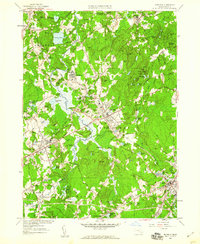 1957 Medfield1960 Print · USGSMid-century Norfolk County is captured here during a period of suburban expansion along the Charles River. Researchers can trace the rail infrastructure of the New Haven Railroad and locate local landmarks like the Medfield State Hospital and St Stephens Priory.2 unique versions available
Showing maps 1-25 of 54
Top cities near Westwood
- Boston historical maps
- Cambridge historical maps
- Brockton historical maps
- Quincy historical maps
- Lynn historical maps
- Newton historical maps
See more
Top neighborhoods of Westwood
Frequently asked questions
- What are the different types of historical maps available for Westwood?
- What is the oldest map of Westwood?
- Where can I purchase historical maps of Westwood for my home or office?
- Where can I download high-res historical maps of Westwood?
- Are there historical topographic maps available for Westwood?
- Is there historical aerial imagery available for Westwood?
- Where are historical maps of Westwood sourced from?