Old Maps of Carver, Massachusetts for Genealogy
Trace your family roots with 59 historic maps of Carver. These high-res maps reveal old neighborhoods, homesites, landmarks, and streets — helping you uncover where your ancestors lived and how the area evolved over time.
- Explore historic neighborhoods: Identify where your relatives may have lived in the 1800s or 1900s.
- Compare maps over time: Trace the changes in streets, buildings, and landmarks for multi-generational research.
- Perfect for genealogy & ancestry research: Used by family historians and researchers to map out lineage and migration.
These maps are an incredible resource for exploring your personal connection to Carver's past.
Carver, MA maps
(59)- 1885 Map of Middleboro
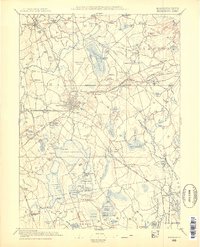 1885 Middleboro1885 Print · USGSPlymouth County at the height of its nineteenth-century rail expansion is anchored by the hub at Middleboro. Genealogists and historians can trace defunct stops like Haskins Station and Rock Station or locate families in The Green and Paper Mill Village.
 - 1886 Map of Plymouth
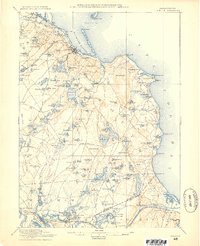 1886 Plymouth1886 Print · USGSThe South Shore and Cape Cod gateway appear here at a moment of transition during the late nineteenth century. Trace family roots and old rail lines through Chiltonville and Manomet, or follow the early footprint of the Cape Cod Canal.
 - 1888 Map of Middleboro
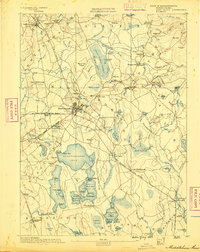 1888 Middleboro1888 Print · USGSPlymouth County in the late nineteenth century is a bustling intersection of iron and water, where the Old Colony Railroad branches reach across the landscape. Genealogists and historians can trace the early footprints of Paper Mill Village, The Green, and Haskins Station before modern development changed these local centers.
 - 1889 Map of Plymouth
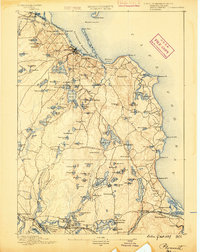 1889 Plymouth1889 Print · USGSCoastal Massachusetts at the close of the nineteenth century reveals a landscape of maritime trade and emerging rail corridors. Trace the historic routes of the Old Colony Railroad South Shore Branch and identify early settlement patterns in Plymouth, Chiltonville, and Wareham Centre.
 - 1893 Map of Middleboro
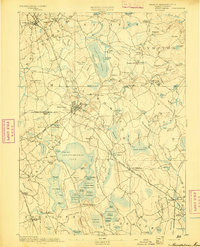 1893 Middleboro1893 Print · USGSThe Plymouth County landscape in the 1890s is captured here as a major rail hub. Genealogists can trace family footprints near Rock Station, the mills of Paper Mill Village, and along the shores of Assawompsett Pond.8 unique versions available
 - 1894 Map of Plymouth
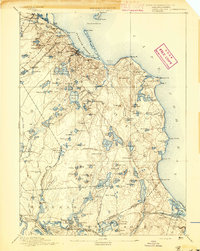 1894 Plymouth1894 Print · USGSCoastal Massachusetts at the end of the nineteenth century reveals a landscape of maritime commerce and kettle ponds. Trace the rail lines of the Old Colony Railroad and find early village sites like Wellingsly, Chiltonville, and Bournedale.9 unique versions available
 - 1916 Map of Middleboro
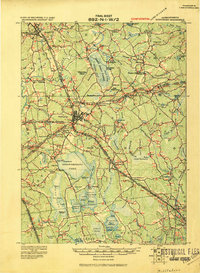 1916 Middleboro1916 Print · USGSSoutheastern Massachusetts at the height of its rail-and-mill era shows a dense network of stations and wetlands. Trace the Old Colony Railroad lines to sites like Haskins Station, Paper Mill Village, and the Lakeville State Sanatarium.
 - 1918 Map of Middleboro, 1921 Print
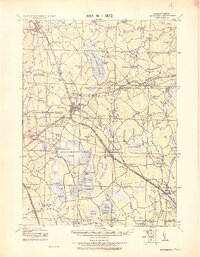 1918 Middleboro1921 Print · USGSSoutheastern Massachusetts at the end of the Great War reveals a landscape defined by cranberry bogs, cedar swamps, and a dense network of Old Colony Railroad lines. Genealogists and historians can trace rail stops like Haskins Station, the grounds of the Lakeville State Sanatarium, and old villages like The Green.
 - 1921 Map of Plymouth
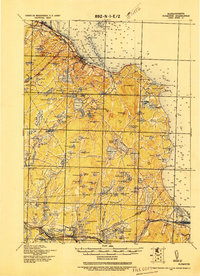 1921 Plymouth1921 Print · USGSThe Plymouth coast and its pond-strewn interior are shown in the early 1920s, featuring a dense network of maritime landmarks and rail lines. Genealogists can trace family names and locations near Chiltonville, White Horse Beach, and the Old Colony R.R. Plymouth Branch.
 - 1934 Map of Plymouth
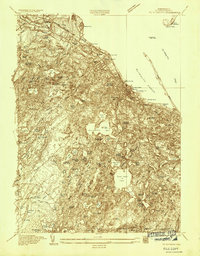 1934 Plymouth1934 Print · USGSThe Massachusetts coast near the height of its cranberry-growing era is captured in this mid-1930s survey of the shoreline and its glacial interior. Genealogists and historians can trace the legacy of the region through landmarks like Plymouth Rock, the Plymouth Cem, and numerous family-named sites such as Bernard Shaw Bog.
 - 1935 Map of Wareham
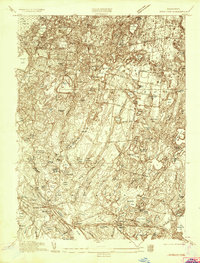 1935 Wareham1935 Print · USGSThe cranberry bogs and rail corridors of Plymouth County are captured here in the mid-1930s before modern development altered the hydraulic landscape. Genealogists and historians can trace family-named sites and industrial markers such as Tihonet, the Center Cem, and the path of the New York New Haven and Hartford railroad.
 - 1937 Map of Plympton
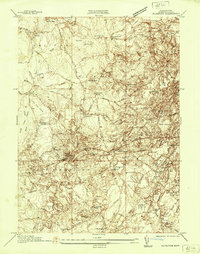 1937 Plympton1937 Print · USGSPlymouth County in the late 1930s is revealed here as a landscape of cranberry bogs and rural school districts. Genealogists can trace family connections through the Lakenham Cem or locate the old Soule Sch and Thomastown Sch.
 - 1938 Map of Snipatuit Pond
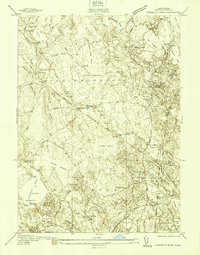 1938 Snipatuit Pond1938 Print · USGSCoastal Massachusetts at the edge of the 1940s reveals a landscape of cranberry bogs and rail-side hamlets. Genealogists can trace family footprints near Rock Station, the Union Meeting House, and local schools like Stewart Sch.
 - 1939 Map of Plymouth
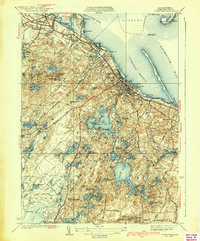 1939 Plymouth1939 Print · USGSThe Plymouth coast and its pond-studded interior are captured here in the late 1930s. Researchers can trace the waterfront around Plymouth Rock or locate regional sites like Fort Standish, Jabez Corner, and Chiltonville.4 unique versions available
 - 1939 Map of Wareham
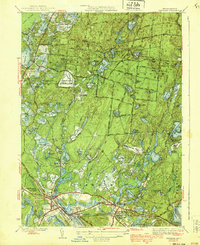 1939 Wareham1939 Print · USGSPlymouth County cranberry country and coastal industry are well-established in this late 1930s survey. Researchers can trace the New Haven RR through South Wareham or locate family plots near Parker Mills and the Cemetery.5 unique versions available
 - 1941 Map of Plympton
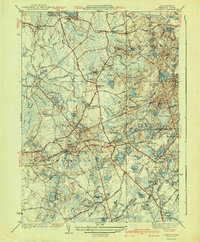 1941 Plympton1941 Print · USGSIn the early 1940s, this area of Plymouth County was a landscape of cranberry cultivation and shifting rail lines. Genealogists can locate old family landmarks like Cobb Mill, Lakenham Cem, and the defunct corridor of the New York New Haven and Hartford RR.4 unique versions available
 - 1942 Map of Snipatuit Pond
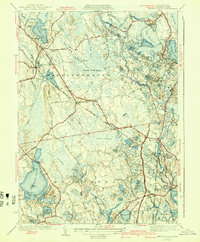 1942 Snipatuit Pond1942 Print · USGSPlymouth County’s landscape of cranberry bogs and rail corridors comes alive in this early 1940s survey. Genealogists and historians can trace family-named locales like Bisbee Corner, locate Union Ch, and follow the New York New Haven and Hartford line through South Wareham.3 unique versions available
 - 1942 Map of New Bedford
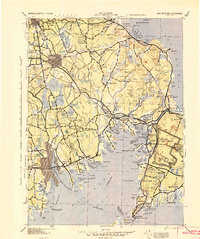 1942 New Bedford1942 Print · USGSSoutheastern Massachusetts at the start of the 1940s shows a region defined by maritime defense and industrial rail corridors. Genealogists and historians can trace the massive Camp Edwards boundary, old rail stops like Rock Station, and vanished local industry at Paper Mill Village.2 unique versions available
 - 1943 Map of Plymouth
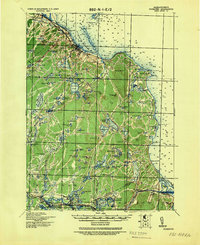 1943 Plymouth1943 Print · USGSThe coastal stretch from Plymouth to the Cape Cod Canal shows its wartime character here, when rail travel still connected these maritime towns. Genealogists can trace early homesteads and landmarks near Billington Sea, Manomet, and the Old Colony Railroad corridor.
 - 1946 Map of Wareham, 1957 Print
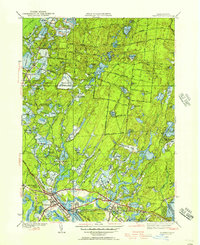 1946 Wareham1957 Print · USGSCranberry cultivation and state forest lands define this part of Plymouth County shortly after the war. You can trace the New Haven and Hartford RR as it passes through East Wareham, or locate traditional agricultural sites like Wankinco Cranberry Bog.
 - 1947 Map of Providence, 1948 Print
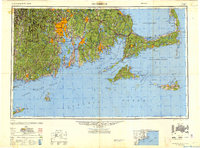 1947 Providence1948 Print · USGSSouthern New England is captured in the mid-1940s, showing a landscape defined by busy industrial ports and expanding military installations. Researchers can trace the rail lines of the N.Y. N.H. & H. RR or locate coastal defenses like Fort Adams and Quonset Point.5 unique versions available
 - 1948 Map of Providence, 1951 Print
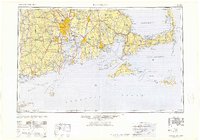 1948 Providence1951 Print · USGSSouthern New England’s coastal reaches are captured here in the late 1940s, from the industrial heart of Providence to the tip of Provincetown. Genealogists and historians can trace rail lines like the Central Vermont Railway and locate active military sites such as Otis Air Force Base and Fort Rodman.
 - 1949 Map of Snipatuit Pond, 1958 Print
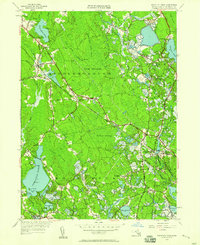 1949 Snipatuit Pond1958 Print · USGSSoutheastern Massachusetts at mid-century reveals a landscape of cranberry bogs and rural villages along the rail lines. Genealogists and historians can trace the foundations of South Middleboro, Tremont, and the Pierceville Sch amidst the swamps and ponds.2 unique versions available
 - 1949 Map of Plympton, 1958 Print
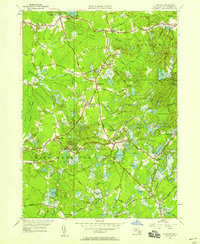 1949 Plympton1958 Print · USGSMid-century Plymouth County was a landscape of cranberry bogs and small villages connected by the rail line. Trace local heritage at Lakenham Cem, the Soule Sch, and the industrial site at Cole Mill.
 - 1950 Map of Plymouth, 1956 Print
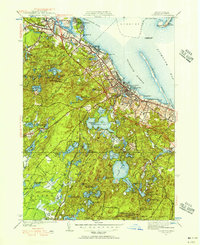 1950 Plymouth1956 Print · USGSCoastal Massachusetts at mid-century reveals a landscape of maritime tradition and growing rail-side industry. Genealogists and historians can trace the neighborhoods of Rocky Nook and Chiltonville or locate landmarks like Russell Mill and Fort Standish.2 unique versions available
Showing maps 1-25 of 59
Top cities near Carver
- Brockton historical maps
- New Bedford historical maps
- Plymouth historical maps
- Taunton historical maps
- Dartmouth historical maps
- Falmouth historical maps
See more
Top neighborhoods of Carver
- Cranberry Village historical maps
- South Carver historical maps
- South Meadow Village historical maps
- Wenham historical maps
- Cole Mill historical maps
- Shutleff Corner historical maps
See more
Frequently asked questions
- What are the different types of historical maps available for Carver?
- What is the oldest map of Carver?
- Where can I purchase historical maps of Carver for my home or office?
- Where can I download high-res historical maps of Carver?
- Are there historical topographic maps available for Carver?
- Is there historical aerial imagery available for Carver?
- Where are historical maps of Carver sourced from?