Old Maps of East Boston, Boston
Explore 66 old maps of East Boston, spanning from 1892 to today. These high-resolution historic maps reveal how streets, neighborhoods, landmarks, and natural features evolved over time — perfect for genealogy, metal detecting, research, and local history exploration.
What you can do with these maps:
- See how East Boston changed over time: Compare historical maps to modern-day views to trace roads, homesites, rail lines & more.
- View detailed metadata: Each map includes creators, publishers, year, scale, and archive source.
- Overlay maps with satellite & LiDAR: Visualize the past alongside modern tools to explore terrain & human change.
- Trusted historical sources: Maps sourced from the USGS, Library of Congress, and other archives.
- Access maps your way: View online, download high-res files, or order prints for personal or research use.
Start exploring old maps of East Boston to uncover forgotten places, hidden landmarks, and the deep history beneath your feet.
East Boston, Boston maps
(66)- 1892 Map of Boston Bay
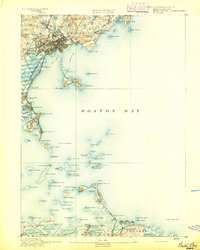 1892 Boston Bay1892 Print · USGSThe outer harbor and North Shore coastline are captured in the late Victorian era, before modern development reshaped the beaches and islands. Genealogists and maritime historians can trace the early rail lines to Revere Beach or locate historic defenses like Fort Warren and the iconic Boston Light.4 unique versions available
 - 1893 Map of Boston
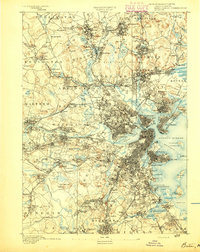 1893 Boston1893 Print · USGSGreater Boston and the Massachusetts coast are captured here in the late nineteenth century as streetcar suburbs and rail lines redefined the region. Trace family roots and local history across old neighborhoods like Washington Village, coastal landmarks like Fort Independence, and the sprawling Middlesex Fells.4 unique versions available
 - 1903 Map of Boston
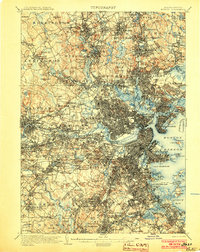 1903 Boston1903 Print · USGSThe Greater Boston area and its sprawling rail-and-river network are captured here at the turn of the century. Genealogists and historians can trace neighborhood blocks, the grounds of Tufts College, and military landmarks like Ft. Winthrop and Ft. Independence.13 unique versions available
 - 1903 Map of Boston Bay
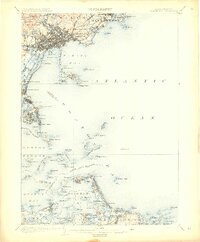 1903 Boston Bay1903 Print · USGSThe Massachusetts North and South Shores are seen here at the turn of the century as a hub of rail-connected maritime life. You can trace the path of old rail divisions to historic coastal landings at Point of Pines, Marblehead, and the naval defenses at Ft. Warren.9 unique versions available
 - 1943 Map of Boston
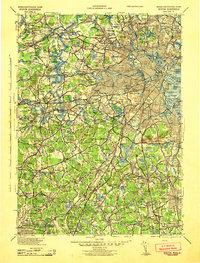 1943 Boston1943 Print · USGSGreater Boston and its southern suburbs appear here during the mobilization of the early 1940s. Genealogists and historians can trace the early footprints of Commonwealth Airport, military sites like Fort Winthrop, and local institutions such as Pondville State Hospital.
 - 1943 Map of Boston North
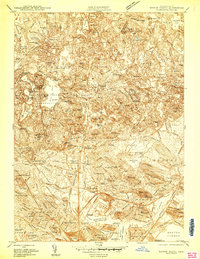 1943 Boston North1943 Print · USGSGreater Boston's northern suburbs and industrial waterfronts appear in high detail during the early 1940s. Genealogists and historians can trace the limits of neighborhoods like Orient Heights and find landmarks like Tufts College and the Mass Soldiers Home.
 - 1943 Map of Lynn
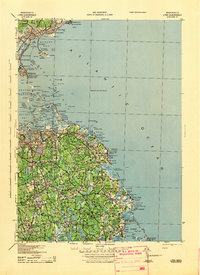 1943 Lynn1943 Print · USGSThe Massachusetts coastline near the height of the Second World War reveals a landscape heavily shaped by maritime defense and established seaside communities. Researchers can trace the layout of historic harbor defenses like Fort Duvall or locate family landmarks in older settlements such as Beach Bluff, East Saugus, and Germantown.
 - 1944 Map of Lynn
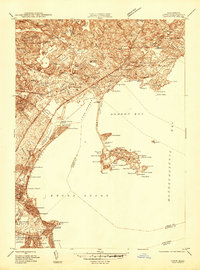 1944 Lynn1944 Print · USGSCoastal Massachusetts during the mid-forties reveals a world of busy rail lines and seaside neighborhoods from Lynn to Winthrop. Genealogists and historians can trace defunct landmarks like the City Farm, the Black Mine on Nahant, and the sprawling Suffolk Downs Race Track.
 - 1944 Map of Hull
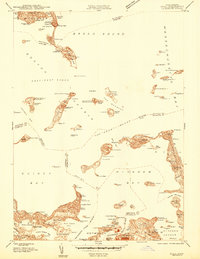 1944 Hull1944 Print · USGSCoastal Massachusetts at the height of the Second World War is captured here through the harbor's intricate islands and shorelines. Genealogists and maritime historians can trace residential roots in Houghs Neck or study military sites like Ft Andrews and Ft Duvall.
 - 1944 Map of Boston South
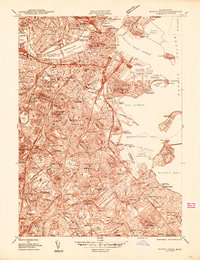 1944 Boston South1944 Print · USGSBoston and its southern neighbors show a dense mid-century network of colleges and coastlines during the 1940s. Trace local roots at Forest Hills Cem, find early campus layouts for Harvard University, or explore the maritime bustle at South Boston and the US Naval Reservation.
 - 1946 Map of Lynn
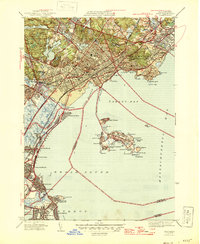 1946 Lynn1946 Print · USGSThe Massachusetts North Shore thrives at the end of the war, showcasing the dense neighborhoods of Lynn and the coastal recreation of Revere Beach. Genealogists and historians can locate old landmarks like the Pine Grove Cemetery and the military grounds of Ft Heath.3 unique versions available
 - 1946 Map of Hull
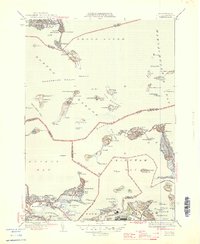 1946 Hull1946 Print · USGSBoston Harbor and the Hull peninsula appear here in the 1940s, revealing a landscape defined by coastal fortifications and seaside neighborhoods. Researchers can trace the military history of Ft Warren and Ft Dawes or find local landmarks like the Long Island Hospital and Boston Light.4 unique versions available
 - 1946 Map of Boston South
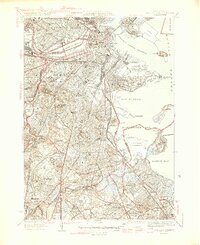 1946 Boston South1946 Print · USGSGreater Boston at the end of the Second World War shows a dense urban landscape of world-class universities and bustling coastal defense. Researchers can trace family sites near Forest Hills Cem or explore institutional history at Fenway Park and Ft Winthrop.3 unique versions available
 - 1946 Map of Boston North
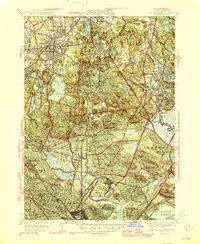 1946 Boston North1946 Print · USGSGreater Boston's northern suburbs emerge in the mid-1940s as a hub of industry and academic life. Genealogists and researchers can trace family plots in Woodlawn Cem or locate historic campuses like Tufts College and Radcliffe College.2 unique versions available
 - 1947 Map of Lynn
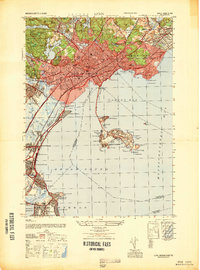 1947 Lynn1947 Print · USGSThe North Shore of Massachusetts thrives in the late 1940s, from the industrial heart of Lynn to the rocky heights of Nahant. Genealogists and historians can trace neighborhood developments near Pine Grove Cemetery, explore the grounds of the City Farm, or locate the historic Black Mine.
 - 1948 Map of Boston
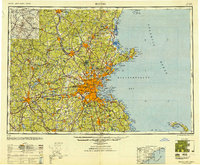 1948 Boston1948 Print · USGSEastern Massachusetts and southern New Hampshire appear at an industrial peak in the late 1940s, just as suburban growth began to accelerate. Genealogists and historians can trace rail lines like the Boston and Albany RR or locate coastal landmarks like Graves Lighthouse and Fort Devens.2 unique versions available
 - 1948 Map of Hull
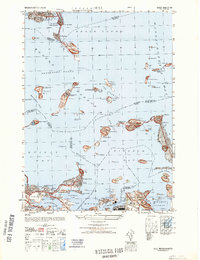 1948 Hull1948 Print · USGSCoastal life and military defenses along the Massachusetts shoreline come into focus in the late 1940s. Genealogists and local historians can locate specific landmarks from the House of Correction to Ft Warren and the residential streets of Houghs Neck.
 - 1949 Map of Lynn, 1955 Print
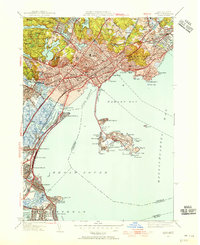 1949 Lynn1955 Print · USGSThe North Shore coastline comes alive in the late 1940s, showing the dense rail-and-road network connecting Lynn and Swampscott. Researchers can trace old neighborhood boundaries, family cemeteries like Pine Grove Cemetery, and early airport development at Logan International Airport.
 - 1949 Map of Boston North, 1957 Print
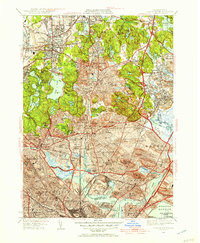 1949 Boston North1957 Print · USGSThe northern Boston suburbs and Middlesex Fells are documented here during the late 1940s as post-war development filled the landscape. Researchers can trace the legacy of local institutions and neighborhoods from the Stoneham Zoological Park to the Naval Hospital and Wyoming Cem.
 - 1949 Map of Hull, 1958 Print
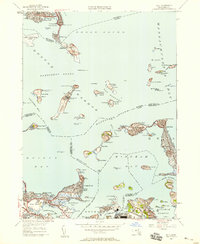 1949 Hull1958 Print · USGSThe islands and peninsulas of Boston Harbor are captured here at mid-century, just as the region transitioned toward modern aviation and utility infrastructure. Genealogists and historians can trace the foundations of Logan International Airport and coastal defenses like Ft Warren and Ft Duvall.
 - 1954 Map of Boston South
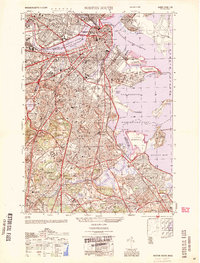 1954 Boston South1954 Print · USGSGreater Boston's mid-century urban core and harbor are captured here just as the modern airport and highway systems were transforming the shoreline. Genealogists and historians can trace family locations through dense neighborhoods like Roxbury Crossing or locate ancestral plots in the Cedar Grove Cem and Mount Hope Cem.
 - 1956 Map of Lynn, 1957 Print
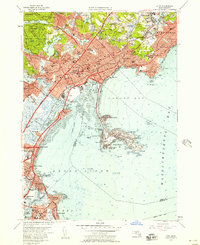 1956 Lynn1957 Print · USGSThe North Shore coastline comes alive in the mid-fifties, from the rocky points of Nahant to the industrial corridors of Lynn. Genealogists and historians can trace family plots in Pine Grove Cemetery or locate military heritage at Fort Ruckman.4 unique versions available
 - 1956 Map of Boston South, 1958 Print
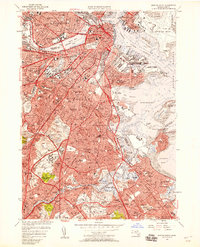 1956 Boston South1958 Print · USGSPost-war Boston and its southern neighborhoods are shown in detail, from the university banks of the Charles to the shores of Quincy Bay. Trace family roots and old neighborhoods in Roxbury, Jamaica Plain, or Dorchester at a time of significant urban change.3 unique versions available
 - 1956 Map of Boston North, 1958 Print
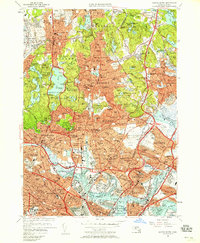 1956 Boston North1958 Print · USGSThe industrial and residential landscape north of Boston comes alive in the mid-fifties, from the shipyards to the suburban fells. Local historians can trace the extensive rail lines of the B & M Yards and landmark sites like the Bunker Hill Monument and Saugus Race Track.3 unique versions available
 - 1956 Map of Boston, 1967 Print
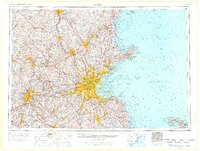 1956 Boston1967 Print · USGSThe Massachusetts coastline and industrial interior are seen here during the mid-century peak of suburban and highway expansion. Researchers can trace historic harbor defenses like Fort Revere, local landmarks such as Faneuil Hall, and the vast Parker River National Wildlife Refuge.6 unique versions available
Showing maps 1-25 of 66
Frequently asked questions
- What are the different types of historical maps available for East Boston?
- What is the oldest map of East Boston?
- Where can I purchase historical maps of East Boston for my home or office?
- Where can I download high-res historical maps of East Boston?
- Are there historical topographic maps available for East Boston?
- Is there historical aerial imagery available for East Boston?
- Where are historical maps of East Boston sourced from?