Old Maps of Ionia County, Michigan for Hiking & Exploration
Hike through history with 108 historic maps of Ionia County. Explore old trails, ghost towns, and forgotten backroads — perfect for outdoor adventurers and local explorers.
- Rediscover forgotten places: Map out old mining camps, roads, and footpaths that no longer exist on modern maps.
- Layer with modern tools: Combine with LiDAR or satellite views to plan hikes through historical terrain.
- Made for exploration: Popular among hikers, overlanders, and local history lovers.
Use these maps to find adventure and explore the hidden past of Ionia County.
Ionia County, MI maps
(108)- 1916 Map of Ionia, 1958 Print
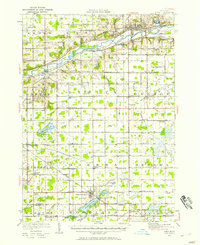 1916 Ionia1958 Print · USGSIonia and the surrounding rural townships are shown during a period of transition in the early twentieth century. Genealogists can locate numerous rural schoolhouses like Welch School and Limerick School, or trace the tracks of the Pere Marquette railroad through Saranac.2 unique versions available
 - 1918 Map of Ionia
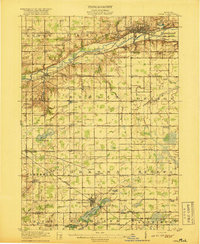 1918 Ionia1918 Print · USGSIonia County and northern Barry County appear here at the end of the Great War, as the river-and-rail economy peaked. Genealogists can trace family footprints across dozens of country school sites like Bushnell School and named corners such as Tremaine Corners.2 unique versions available
 - 1918 Map of Lowell
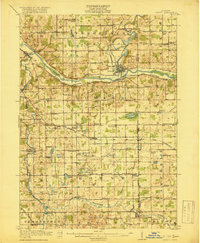 1918 Lowell1918 Print · USGSThe Kent and Ionia county borderlands come into focus during the Great War era as a landscape of interconnected river valleys and rural school districts. Genealogists and historians can trace old homesteads near Fallassburg, the rail junctions at Elmdale, and dozens of local landmarks like the Little Brick School.4 unique versions available
 - 1943 Map of Ionia, 1944 Print
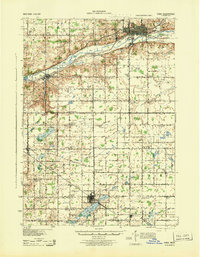 1943 Ionia1944 Print · USGSCentral Michigan’s rural landscape during the wartime era shows a dense network of country schoolhouses and river-valley institutions. Genealogists and local historians can trace family-named landmarks like Henderleider Sch and Saranac along the Pere Marquette rail line.
 - 1943 Map of Lowell, 1944 Print
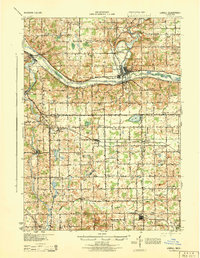 1943 Lowell1944 Print · USGSCentral Michigan river valleys and rural townships are captured here during the early 1940s. Genealogists can locate numerous namesake schoolhouses like Yerkes Sch and Cooke Sch, or trace the rail lines through Alto and Fallassburg.
 - 1945 Map of Portland, 1946 Print
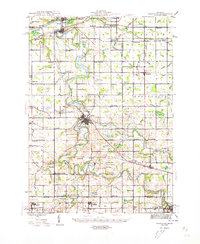 1945 Portland1946 Print · USGSCentral Michigan river valleys thrive in the 1940s as agricultural and transit hubs. Genealogists can locate dozens of family-named schoolhouses and cemeteries like Eagle Cem, while tracing the Pere Marquette rail line and Wagar Dam.3 unique versions available
 - 1954 Map of Midland, 1967 Print
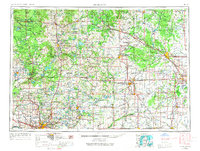 1954 Midland1967 Print · USGSMid-Michigan at the peak of the post-war era shows a landscape balancing industrial growth in Midland with the deep timberlands of the Manistee National Forest. Researchers can trace the legacy of the timber and rail era along the Pennsylvania RR or find family roots in river towns like Chesaning and Big Rapids.4 unique versions available
 - 1958 Map of Midland
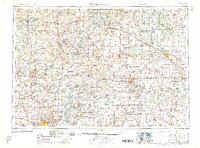 1958 Midland1958 Print · USGSCentral Michigan in the late fifties is captured here during a period of transition for its university towns and industrial hubs. Genealogists and researchers can trace family lines through old rail-stop towns like Breckenridge and Chesaning or locate property near the Muskegon River and Prairie Farm.
 - 1958 Map of Grand Rapids, 1973 Print
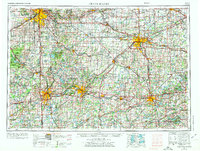 1958 Grand Rapids1973 Print · USGSSouthern Michigan at the peak of the postwar era shows a landscape of burgeoning cities and new interstate highways. Trace family roots and regional growth in Grand Rapids, Battle Creek, and the glacial lake country around Gun Lake or Gull Lake.2 unique versions available
 - 1959 Map of Midland
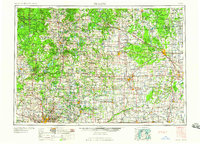 1959 Midland1959 Print · USGSMid-century Michigan comes alive in this survey of the central Lower Peninsula, from the streets of Grand Rapids to the Houghton Lake timberlands. Genealogists and rail fans can trace the Ann Arbor RR and Chesapeake and Ohio RR through towns like Big Rapids and Mount Pleasant.
 - 1961 Map of Grand Rapids
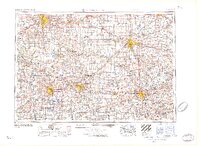 1961 Grand Rapids1961 Print · USGSSouthern Michigan at the dawn of the 1960s reveals a region shaped by major river systems and a robust rail network. Trace mid-century industrial growth and land use from Grand Rapids to the Fort Custer Military Reservation and Gun Lake.
 - 1962 Map of Grand Rapids
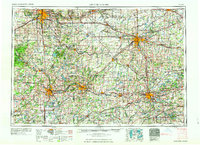 1962 Grand Rapids1962 Print · USGSMid-century Southern Michigan is mapped here at a time of massive growth, showing the expanding urban footprints of Grand Rapids and Lansing. Researchers can trace the legacy of the Grand Trunk Western RR, find historic boundaries of the Fort Custer Military Reservation, or locate sporting camps around Gun Lake.2 unique versions available
 - 1966 Map of Midland
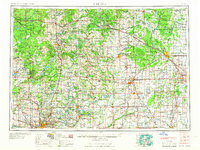 1966 Midland1966 Print · USGSCentral Michigan in the mid-1960s shows a landscape of growing manufacturing hubs and active resource extraction. Genealogists and historians can trace the rail corridors of the Grand Trunk Western or locate family-named landmarks near Oil wells and the Muskegon River.
 - 1967 Map of Palo, 1968 Print
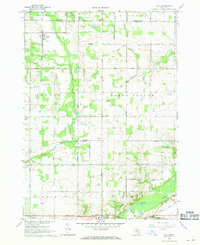 1967 Palo1968 Print · USGSMid-century Ionia and Montcalm counties are captured here just as the rural school and rail systems remained central to the landscape. Genealogists can locate family landmarks like the North Plains Cem, Hayes Sch, and the tracks of the Grand Trunk RR.2 unique versions available
 - 1967 Map of Hubbardston, 1968 Print
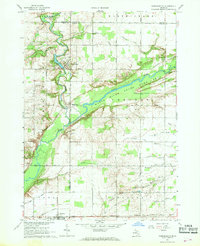 1967 Hubbardston1968 Print · USGSThe borderlands of Ionia and Clinton counties in the late sixties reveal a landscape of river-fed agriculture and expanding state lands. Genealogists and local historians can trace the foundations of Hubbardston and Pewamo or locate rural sites like West Side Cem and the Grand Trunk rail corridor.
 - 1972 Map of Belding, 1974 Print
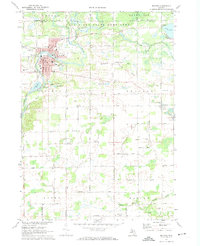 1972 Belding1974 Print · USGSThe Ionia County countryside is captured here in the early seventies, centered on the river-fed industrial core and rural townships. Researchers can trace family history through landmarks like Seeley Church of God, River Ridge Cem, and the old Chesapeake and Ohio rail line.
 - 1972 Map of Shiloh, 1974 Print
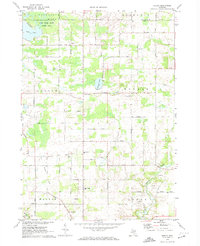 1972 Shiloh1974 Print · USGSIonia and Montcalm counties are shown in the early seventies, centered on rural farming communities and the local school system. Researchers can trace family-named roads and sites like Higbee Cem, Shiloh, and the Old Grade railroad bed.
 - 1972 Map of Smyrna, 1974 Print
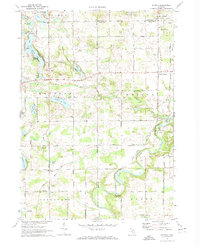 1972 Smyrna1974 Print · USGSIonia and Kent counties come alive in this early 1970s survey, showing the rural landscapes around the Flat River before modern expansion. Genealogists can trace family names through the Otisco Cem and Mason Cem, or locate the historic Whites Bridge (Covered) and the Smyrna settlement.
 - 1978 Map of Westphalia, 1979 Print
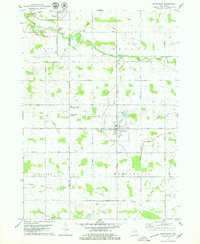 1978 Westphalia1979 Print · USGSClinton and Ionia counties are shown in the late seventies as a network of farm-to-market roads and tight-knit villages. Researchers can trace family roots through St Marys Cem or locate the old Grand Trunk Western rail line at Pewamo.
 - 1978 Map of Eagle, 1979 Print
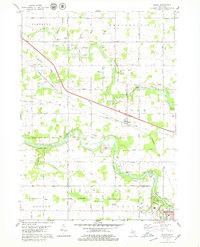 1978 Eagle1979 Print · USGSClinton County and the outskirts of Grand Ledge are captured in the late seventies, showing a landscape shaped by two major river systems. Genealogists can locate North Eagle Cem and Niles Cem, or trace the rail-side settlement at Eagle.
 - 1978 Map of Ionia, 1979 Print
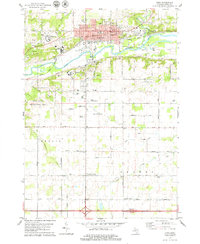 1978 Ionia1979 Print · USGSIonia and its surrounding townships are shown here in the late seventies, centered on the strategic confluence of the Grand River and Prairie Creek. Genealogists and local researchers can trace the locations of the Ionia State Reformatory, the Little White Ch, and several family cemeteries like Tuttle Cem.
 - 1978 Map of Freeport, 1979 Print
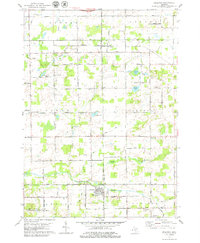 1978 Freeport1979 Print · USGSThe borderlands of Kent, Ionia, and Barry counties are captured here in the late 1970s as a landscape of rural townships and river valleys. Genealogists can trace family footprints at Fuller Cem, the crossroads of Bowne Center, and schools like Lake Sch.
 - 1978 Map of Portland North, 1979 Print
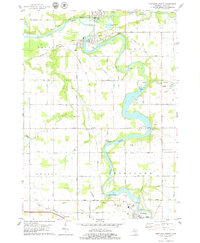 1978 Portland North1979 Print · USGSIonia County at the height of the 1970s shows a landscape defined by the convergence of the Grand River and Maple River. You can trace the industrial footprint of Muir, Lyons, and Portland through old rail grades, the Webber Dam, and the Keefer Cem.
 - 1978 Map of Portland South, 1979 Print
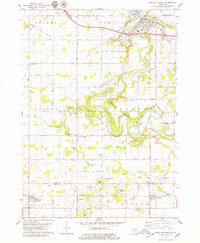 1978 Portland South1979 Print · USGSThe Grand River valley in the late seventies reveals a landscape of river-town growth and rural persistence near the Ionia and Eaton county line. Researchers can locate family landmarks like Knox Sch, East Sebewa Cem, and the old Grange Hall.
 - 1978 Map of Lowell, 1979 Print
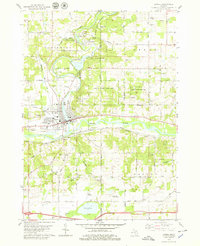 1978 Lowell1979 Print · USGSThe river-and-rail hubs of Kent and Ionia Counties are shown here in the late seventies as the region balanced industrial transit with conservation. Researchers can trace the heritage of Fallassburg, locate rural landmarks like McBride Cem, or follow the Grand Trunk Western line through Lowell.
Showing maps 1-25 of 108
Top cities of Ionia County
Frequently asked questions
- What are the different types of historical maps available for Ionia County?
- What is the oldest map of Ionia County?
- Where can I purchase historical maps of Ionia County for my home or office?
- Where can I download high-res historical maps of Ionia County?
- Are there historical topographic maps available for Ionia County?
- Is there historical aerial imagery available for Ionia County?
- Where are historical maps of Ionia County sourced from?