Old Maps of Kalamazoo County, Michigan for Metal Detecting
Plan your next treasure hunt with 148 historic maps of Kalamazoo County. Find old homesites, ghost towns, trails, and gathering spots that may be lost to time — perfect for identifying promising metal detecting locations.
- Locate forgotten sites: Uncover places like long-lost settlements, abandoned rail lines, or gathering spots.
- Plan better hunts: Use map overlays combined with LiDAR or satellite views to narrow in on historically rich areas.
- Made for detectorists: Thousands of hobbyists use these maps to discover relics, coins, and hidden history.
Use these historic maps to boost your research and find new opportunities beneath the surface of Kalamazoo County.
Kalamazoo County, MI maps
(148)- 1916 Map of Kalamazoo, 1956 Print
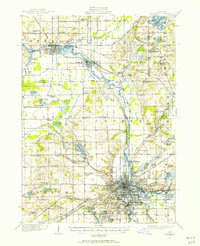 1916 Kalamazoo1956 Print · USGSKalamazoo and the paper-mill towns of the Kalamazoo River valley are captured here during a time of industrial expansion and rail growth. Researchers can trace the early city grid, rural schoolhouses like Honeysette School, and institutional landmarks like the State Hospital.3 unique versions available
 - 1918 Map of Kalamazoo
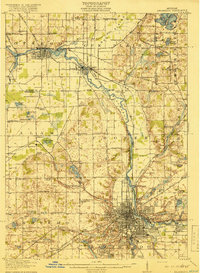 1918 Kalamazoo1918 Print · USGSThe Kalamazoo River valley in the late teens served as a powerhouse for Michigan rail and industry, from the mills in Parchment to the Otsego Dam. Genealogists can locate family sites near rural landmarks like Daugherty Corners, Oshtemo, or the Grand Prairie School.4 unique versions available
 - 1918 Map of Galesburg
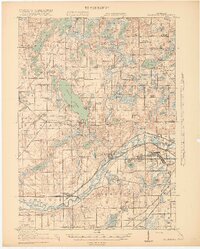 1918 Galesburg1918 Print · USGSKalamazoo and Barry Counties appear during the First World War, showing a landscape defined by the massive Camp Custer military reservation. Researchers can trace rural life through a network of dozens of one-room schoolhouses, the Michigan Central rail line, and summer colonies on Gull Lake.5 unique versions available
 - 1918 Map of Leonidas
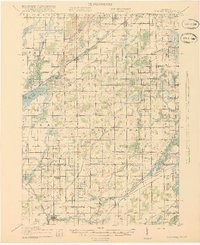 1918 Leonidas1918 Print · USGSSouthern Michigan at the close of the Great War reveals a landscape of tight-knit farming townships connected by the GRAND RAPIDS AND INDIANA RR. Genealogists can trace family roots through numerous district schools and landmarks like Beard Church, Dutton Cemetery, and Kings Mill.3 unique versions available
 - 1922 Map of Schoolcraft
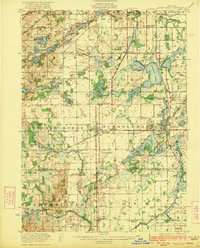 1922 Schoolcraft1922 Print · USGSSouthern Kalamazoo and northern St. Joseph counties are captured here in the early 1920s as a thriving hub of rail transport and rural education. Genealogists can trace family footprints through dozens of local sites, from the rail junction at Schoolcraft to the lakeside Ramona Park and the Flowerfield Sta.5 unique versions available
 - 1943 Map of Kalamazoo
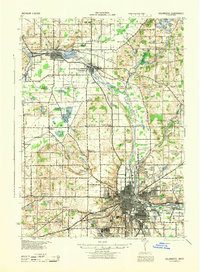 1943 Kalamazoo1943 Print · USGSMid-century Kalamazoo and its northern satellite towns are shown here during a period of industrial and rail prominence. Genealogists can locate dozens of rural landmarks, from Nazareth Academy to local schoolhouses like Grand Prairie Sch and Star Sch.
 - 1943 Map of Schoolcraft
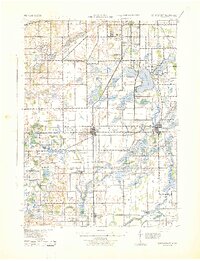 1943 Schoolcraft1943 Print · USGSKalamazoo and St. Joseph counties are shown here during the early 1940s, a landscape defined by glacial lakes and the expansive Schoolcraft Prairie. Trace family roots at Vicksburg or locate historic rural schools like Lost Island Sch and Brick Sch.
 - 1944 Map of Leonidas
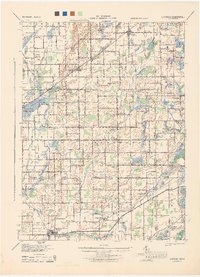 1944 Leonidas1944 Print · USGSThe rural borderlands of Kalamazoo and St. Joseph counties are shown here as the region's agricultural and rail networks reached their mid-century peak. Genealogists can trace family locations near dozens of named schools and landmarks like Dutton Cemetery, Kings Mill, and Beard Ch.
 - 1944 Map of Galesburg
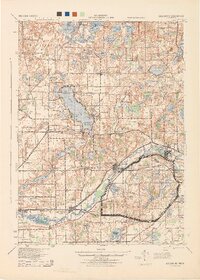 1944 Galesburg1944 Print · USGSDuring the height of World War II, this region was defined by the presence of Fort Custer and the busy Michigan Central rail corridor. Researchers can trace dozens of early rural schoolhouses like Toad Hollow Sch and Grey Sch alongside the sprawling waters of Gull Lake.
 - 1944 Map of Marcellus, 1965 Print
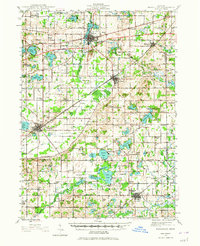 1944 Marcellus1965 Print · USGSSouthwest Michigan townships in Van Buren and Cass counties are documented here during the mid-1940s as a landscape of interconnected glacial lakes and rail lines. Researchers can trace old rural schools like Durkee Sch, the Pere Marquette rail corridor, and family burial grounds such as Wildey Cem.3 unique versions available
 - 1946 Map of Marcellus
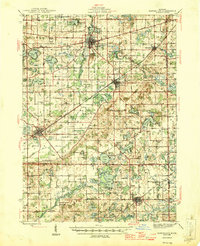 1946 Marcellus1946 Print · USGSThe rural landscape of Cass and Van Buren counties comes alive in the mid-1940s, showing a transition between railroad hubs and quiet farming hamlets. Genealogists can locate family-named landmarks such as Chamberlain Cem and historic schools like Porter Center Sch or Shannon Sch.2 unique versions available
 - 1946 Map of Gobles, 1948 Print
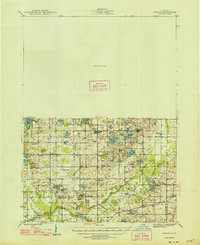 1946 Gobles1948 Print · USGSVan Buren County was a landscape of small school districts and lakeside camps just after the war. You can trace the New York Central rail line through Kendall, locate the Wolf Lake Fish Hatchery, and find family roots at the Robinson Cem.
 - 1947 Map of Augusta, 1955 Print
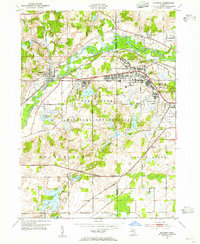 1947 Augusta1955 Print · USGSThe Kalamazoo and Calhoun county line was a hub of military and medical activity in the late 1940s. Researchers can trace the extensive grounds of the Fort Custer Military Reservation and locate local landmarks like the Veterans Hospital and Martin Sch.
 - 1947 Map of Delton, 1955 Print
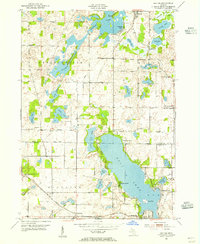 1947 Delton1955 Print · USGSThe glacial lake country of Barry and Kalamazoo counties comes into focus in the years following the war. Researchers can trace the heritage of local school districts and small rail junctions through sites like Calkin School, Richland Junction, and the Cressey Cemetery.
 - 1947 Map of Galesburg, 1955 Print
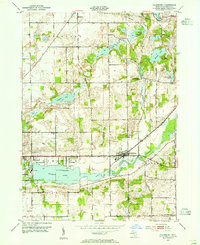 1947 Galesburg1955 Print · USGSGalesburg and the Kalamazoo River valley are seen here just after the war, showcasing the region's transition from rural mills to industrial centers. Researchers can trace family history at Shafter Cem, locate the Indian Mounds on Rowe Island, and see the early layout of Morrow Lake.
 - 1947 Map of Banfield, 1955 Print
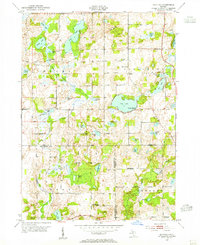 1947 Banfield1955 Print · USGSBarry County was a landscape of quiet glacial lakes and rural schoolhouses just after the war. You can trace the development of lakeside communities like Poplar Beach or locate family roots at Banfield Cem and the King Sch.
 - 1947 Map of Galesburg, 1965 Print
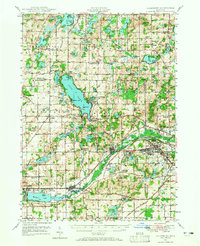 1947 Galesburg1965 Print · USGSThe Kalamazoo and Barry County line comes alive in the late 1940s, showing a landscape of lakeside retreats and growing military installations. Genealogists can trace family names at Stony Lake Cem or Bansfield Sch while exploring the pre-interstate corridors of Augusta and Galesburg.
 - 1947 Map of Leonidas, 1976 Print
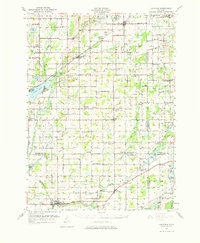 1947 Leonidas1976 Print · USGSSouthern Michigan rural life is captured here in the late 1940s, showing a landscape defined by small crossroads settlements and the family-run farms between them. Researchers can trace the exact locations of vanished country schools like Hull Sch and rural landmarks such as Kings Mill and Wakeshma Tabernacle.
 - 1948 Map of Gobles
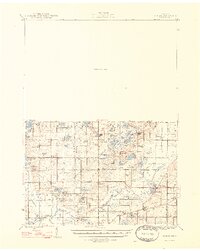 1948 Gobles1948 Print · USGSVan Buren County was a landscape of small farmsteads and scattered schoolhouses just after the war. Family historians can locate rural landmarks like Robinson Cem, the Wolf Lake Fish Hatchery, and dozens of local schools including Evergreen Sch and Almena Sch.3 unique versions available
 - 1949 Map of Gobles
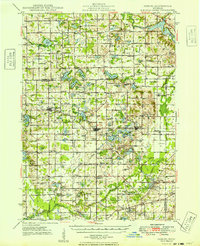 1949 Gobles1949 Print · USGSVan Buren and Allegan counties appear here at the end of the 1940s, a landscape defined by small-town rail stops and a dense network of country schools. Researchers can trace family sites near Robinson Cem, explore the old New York Central line through Berlamont, or locate the Wolf Lake Fish Hatchery.2 unique versions available
 - 1950 Map of Leonidas
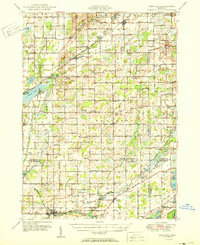 1950 Leonidas1950 Print · USGSSouthern Michigan’s borderlands at mid-century are defined by the winding St Joseph River and a patchwork of rural school districts. Genealogists can trace family roots through landmarks like Gilson Cem, Dutton Cem, and the numerous rural schools including Factoryville Sch.2 unique versions available
 - 1950 Map of Galesburg
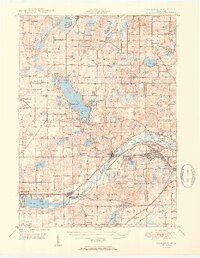 1950 Galesburg1950 Print · USGSSouthwestern Michigan at mid-century shows a landscape defined by the expansion of Fort Custer and the busy rail corridors of Galesburg. Researchers can trace old family schoolhouses like Hoover Sch and Toad Hollow Sch alongside the summer resorts of Gull Lake.2 unique versions available
 - 1958 Map of Grand Rapids, 1973 Print
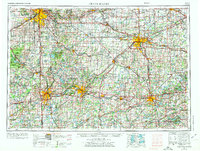 1958 Grand Rapids1973 Print · USGSSouthern Michigan at the peak of the postwar era shows a landscape of burgeoning cities and new interstate highways. Trace family roots and regional growth in Grand Rapids, Battle Creek, and the glacial lake country around Gun Lake or Gull Lake.2 unique versions available
 - 1961 Map of Grand Rapids
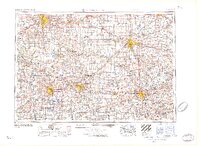 1961 Grand Rapids1961 Print · USGSSouthern Michigan at the dawn of the 1960s reveals a region shaped by major river systems and a robust rail network. Trace mid-century industrial growth and land use from Grand Rapids to the Fort Custer Military Reservation and Gun Lake.
 - 1961 Map of Banfield, 1962 Print
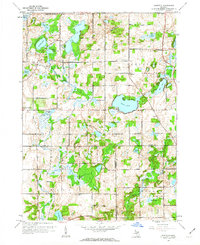 1961 Banfield1962 Print · USGSIn the early 1960s, this area of Michigan was a landscape of small crossroads and rural schools. You can trace the lineage of local education and community life at sites like Banfield Sch, King Sch, and Stony Lake Cem near the shores of Fine Lake.3 unique versions available
Showing maps 1-25 of 148
Top cities of Kalamazoo County
Frequently asked questions
- What are the different types of historical maps available for Kalamazoo County?
- What is the oldest map of Kalamazoo County?
- Where can I purchase historical maps of Kalamazoo County for my home or office?
- Where can I download high-res historical maps of Kalamazoo County?
- Are there historical topographic maps available for Kalamazoo County?
- Is there historical aerial imagery available for Kalamazoo County?
- Where are historical maps of Kalamazoo County sourced from?