Old Maps of Lake County, Michigan
Explore 166 old maps of Lake County, spanning from 1931 to today. These high-resolution historic maps reveal how streets, neighborhoods, landmarks, and natural features evolved over time — perfect for genealogy, metal detecting, research, and local history exploration.
What you can do with these maps:
- See how Lake County changed over time: Compare historical maps to modern-day views to trace roads, homesites, rail lines & more.
- View detailed metadata: Each map includes creators, publishers, year, scale, and archive source.
- Overlay maps with satellite & LiDAR: Visualize the past alongside modern tools to explore terrain & human change.
- Trusted historical sources: Maps sourced from the USGS, Library of Congress, and other archives.
- Access maps your way: View online, download high-res files, or order prints for personal or research use.
Start exploring old maps of Lake County to uncover forgotten places, hidden landmarks, and the deep history beneath your feet.
Lake County, MI maps
(166)- 1931 Map of Baldwin NW
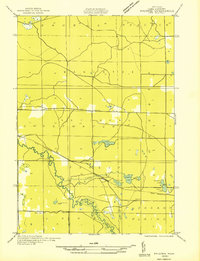 1931 Baldwin NW1931 Print · USGSLake County's timber and river country is captured here in the early thirties, just as federal forest management was taking hold. Researchers can locate the settlement of Wingleton, the local Town Hall, and the original path of U S Highway No 10.
 - 1931 Map of Custer NE
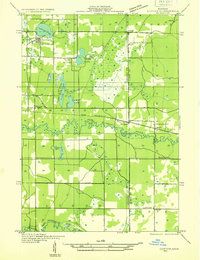 1931 Custer NE1931 Print · USGSMason County in the early 1930s is a landscape of winding rivers and country schoolhouses. Genealogists and local historians can trace the foundations of Tallman and Walhalla, or locate landmarks like the Dunbar Fire Tower and the Swedish Settlement Sch.
 - 1931 Map of Chase NE
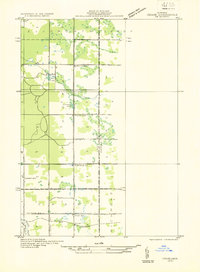 1931 Chase NE1931 Print · USGSOsceola and Lake counties appear in the early 1930s as a landscape of rural schoolhouses and rail-side settlements. Local historians can trace the foundations of Oliver along the Pere Marquette railroad or locate old school sites like Rosenburg Sch and Spears Sch.
 - 1931 Map of Baldwin NE
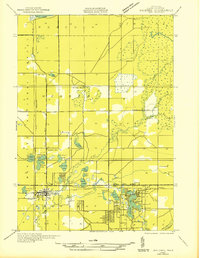 1931 Baldwin NE1931 Print · USGSLake County at the start of the 1930s shows a landscape of dense state forests and scattered rural school districts. Genealogists can trace the early layout of Idlewild and find vanished local landmarks like Cherry Valley Sch and Kinney Sch along the Pere Marquette line.
 - 1931 Map of Custer SE
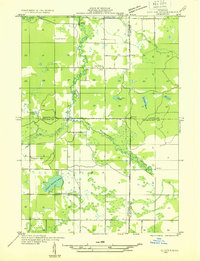 1931 Custer SE1931 Print · USGSThe rural borderlands of Mason and Oceana counties are captured here in the early 1930s, showing a landscape of small farmsteads and wetlands. Genealogists can locate family-named landmarks like Carr Sch and Waddell Sch or trace the South Branch Pere Marquette River.
 - 1932 Map of Freesoil SE
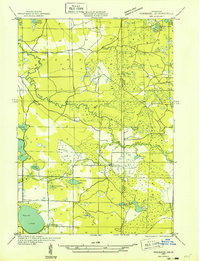 1932 Freesoil SE1932 Print · USGSIn the early 1930s, Mason County’s inland river systems and timbered townships remained largely defined by their water-driven geography. Genealogists and local historians can trace family locations near Millerton, the Round Lake Sch, and the banks of the Big Sable River.2 unique versions available
 - 1932 Map of Chase NW
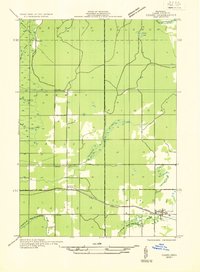 1932 Chase NW1932 Print · USGSLake County at the start of the 1930s was defined by its railroad hamlets and intersecting river systems. Researchers can locate the Cherry Valley Sch, trace the Pere Marquette tracks through Nirvana, and follow the Baldwin River.
 - 1933 Map of Peacock SE
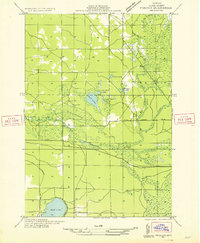 1933 Peacock SE1933 Print · USGSThe Little Manistee River valley in the early 1930s reveals a landscape of expansive wetlands and early state roads. Genealogists and historians can trace routes along State Highway No 37 and identify family-named landmarks like Ingerman Lake and Stewart Lake.
 - 1933 Map of Peacock SW
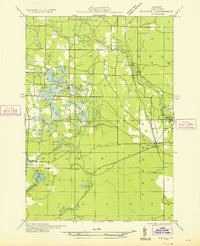 1933 Peacock SW1933 Print · USGSLake County was a landscape of winding rivers and hidden lakes in the early thirties as the region transitioned from logging to early recreation. Researchers can trace the rail-and-road connections at Peacock, locate the Bass Lake Sch, and find the Gremont Club near the Little Manistee River.
 - 1933 Map of Luther SE
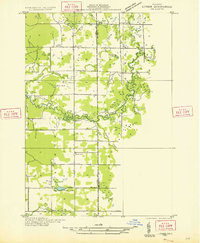 1933 Luther SE1933 Print · USGSOsceola County timberlands and river valleys are captured here during the early 1930s, showing a landscape defined by water and woods. Genealogists can locate family landmarks like the Dover Cem, Bristol, and rural schoolhouses including Keats Sch.
 - 1933 Map of Peacock NE
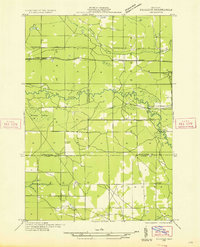 1933 Peacock NE1933 Print · USGSNorthern Michigan's forest and river country is captured here during the early 1930s as modern highways and power lines first cut through the woods. Genealogists and local historians can locate the Choker Cem and trace the footprints of the Hoxeyville Sch and Town Hall.
 - 1933 Map of Luther SW
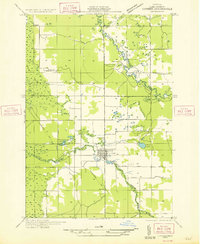 1933 Luther SW1933 Print · USGSThe Pine River and Little Manistee River wind through Lake County during the early 1930s, centering on the village of Luther. Genealogists and local historians can trace the grid of the village, the North Park Cem, and the old Voss Sch.
 - 1933 Map of Luther NW
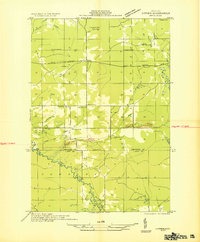 1933 Luther NW1933 Print · USGSIn the 1930s, the Pine River valley in Wexford County was a landscape of small crossroads and rural schools. Genealogists can trace the rural landscape of Hoxeyville, locating the Clay Hill Ch, the Banker Sch, and the riverside bends of the Pine River.
 - 1933 Map of Peacock NW
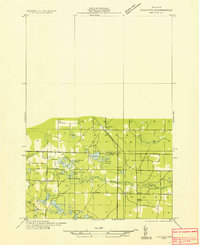 1933 Peacock NW1933 Print · USGSNorthern Michigan timber and rail country comes to life in this early 1930s survey of the Manistee and Lake County line. Genealogists and local historians can trace the early footprints of Dublin and Irons, alongside rural landmarks like Fairbanks Sch and Irons Cem.
 - 1954 Map of Traverse City, 1965 Print
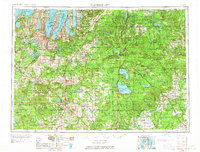 1954 Traverse City1965 Print · USGSNorthern Michigan’s vast lakeshores and timberlands are captured here in the mid-fifties, showing the region before the modern interstate era. Genealogists and researchers can trace rail connections like the Detroit and Mackinac RR or find old communities such as Suttons Bay, Elk Rapids, and Prudenville.4 unique versions available
 - 1954 Map of Milwaukee, 1967 Print
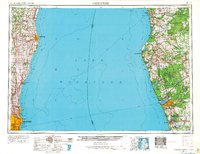 1954 Milwaukee1967 Print · USGSCoastal life and maritime commerce across Lake Michigan are seen here during the mid-fifties, bridging Wisconsin's industrial hubs and Michigan's timberlands. Genealogists and historians can trace the rail lines of the Grand Trunk Western and find long-established ports like Ludington, Port Washington, and Muskegon.3 unique versions available
 - 1954 Map of Midland, 1967 Print
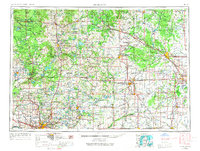 1954 Midland1967 Print · USGSMid-Michigan at the peak of the post-war era shows a landscape balancing industrial growth in Midland with the deep timberlands of the Manistee National Forest. Researchers can trace the legacy of the timber and rail era along the Pennsylvania RR or find family roots in river towns like Chesaning and Big Rapids.4 unique versions available
 - 1954 Map of Manitowoc, 1968 Print
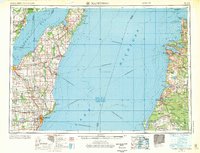 1954 Manitowoc1968 Print · USGSLake Michigan served as a vital transit corridor in the mid-fifties, with car and auto ferries linking the industrial ports of Wisconsin to the Michigan timberlands. Genealogists and maritime historians can trace active ferry routes like the Ann Arbor Railway Car and Auto Ferry and locate early settlements from Brussels to Algoma.2 unique versions available
 - 1957 Map of Freesoil, 1958 Print
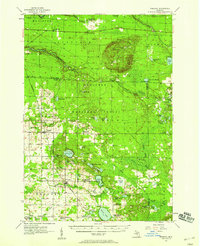 1957 Freesoil1958 Print · USGSNorth of the Mason County line in the late fifties, the landscape is a patchwork of national forest and fading rural school districts. Genealogists can locate family landmarks like Tomaszewski Sch or trace the Chesapeake and Ohio rail line through Freesoil.3 unique versions available
 - 1957 Map of Luther, 1958 Print
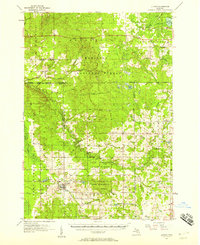 1957 Luther1958 Print · USGSThe Lake County timberlands and rural crossroads are captured here in the late fifties as small villages thrived amidst the state and national forests. Researchers can trace family roots at Banker Cem and North Park Cem, or locate landmarks like Clay Hill Ch and Luther.4 unique versions available
 - 1957 Map of Wellston, 1958 Print
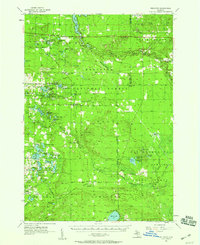 1957 Wellston1958 Print · USGSThe Manistee forestlands come to life in the late fifties, showing a landscape defined by timber history and glacial lakes. Trace the Old Grade Railroad or locate local landmarks like Honeyville Sch, Stronach Dam, and the Irons Lookout Tower.3 unique versions available
 - 1958 Map of Traverse City
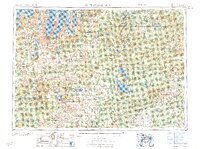 1958 Traverse City1958 Print · USGSNorthern Lower Michigan was a landscape of vast state forests and burgeoning lakeside retreats in the late fifties. Genealogists and historians can trace the rail corridors of the Ann Arbor RR and find established settlements from Elk Rapids to Houghton Lake.2 unique versions available
 - 1958 Map of Manitowoc
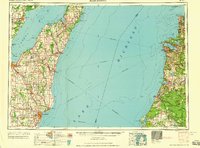 1958 Manitowoc1958 Print · USGSLake Michigan and its shorelines are shown in the late fifties when maritime transport defined the region. Researchers can trace the routes of the Ann Arbor Railroad Ferry or locate old settlements like St. Nazianz, Rostock, and Two Creeks.
 - 1958 Map of Midland
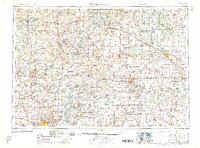 1958 Midland1958 Print · USGSCentral Michigan in the late fifties is captured here during a period of transition for its university towns and industrial hubs. Genealogists and researchers can trace family lines through old rail-stop towns like Breckenridge and Chesaning or locate property near the Muskegon River and Prairie Farm.
 - 1958 Map of Milwaukee
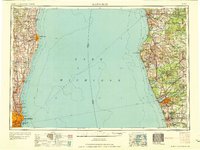 1958 Milwaukee1958 Print · USGSThe shorelines of Lake Michigan in the late fifties reveal a landscape of bustling ferry ports and growing industrial suburbs. Genealogists and historians can trace rail networks like the Chesapeake & Ohio and locate landmarks such as Little Sable Point and Holy Cross Church.
Showing maps 1-25 of 166
Top cities of Lake County
Frequently asked questions
- What are the different types of historical maps available for Lake County?
- What is the oldest map of Lake County?
- Where can I purchase historical maps of Lake County for my home or office?
- Where can I download high-res historical maps of Lake County?
- Are there historical topographic maps available for Lake County?
- Is there historical aerial imagery available for Lake County?
- Where are historical maps of Lake County sourced from?