1900s (20th Century) Maps of Ludington, Michigan
Explore 6 historic maps of Ludington from the 1900s (20th Century). These maps offer a rare glimpse into what life looked like during the 1900s — showing old roads, neighborhoods, homes, and landmarks that have changed or disappeared over time.
Whether you're researching your family's past, planning a metal detecting trip, or studying how Ludington's landscape evolved across the 1900s, these high-resolution maps are a powerful tool for exploring the history of this region.
- Focus on a specific era: All maps on this page are from the 1900s, giving you a focused view of this time period.
- See what’s changed: Compare century-old streets, trails, and buildings to today's modern landscape using overlays and satellite layers.
- Research with precision: Use these maps for genealogy, historical research, land use analysis, or educational projects.
- View, download, or print: Maps are fully viewable online in high resolution, and can be downloaded or printed for your own records.
Start exploring Ludington's history through authentic maps from the 1900s. This is your window into the past.
Ludington, MI maps
(6)- 1932 Map of Ludington
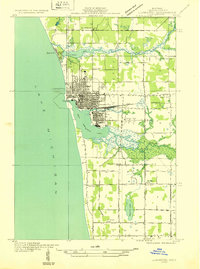 1932 Ludington1932 Print · USGSLudington and the Mason County coast are shown here in the early 1930s as a thriving rail-to-lake transit hub. Researchers can trace the original street grids and find vanished rural landmarks like Eagle Sch, the Grange Hall, and the Ludington & Northern rail line.
 - 1954 Map of Milwaukee, 1967 Print
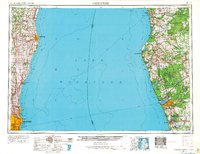 1954 Milwaukee1967 Print · USGSCoastal life and maritime commerce across Lake Michigan are seen here during the mid-fifties, bridging Wisconsin's industrial hubs and Michigan's timberlands. Genealogists and historians can trace the rail lines of the Grand Trunk Western and find long-established ports like Ludington, Port Washington, and Muskegon.3 unique versions available
 - 1958 Map of Milwaukee
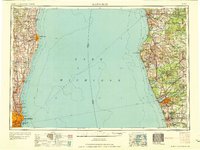 1958 Milwaukee1958 Print · USGSThe shorelines of Lake Michigan in the late fifties reveal a landscape of bustling ferry ports and growing industrial suburbs. Genealogists and historians can trace rail networks like the Chesapeake & Ohio and locate landmarks such as Little Sable Point and Holy Cross Church.
 - 1959 Map of Ludington, 1960 Print
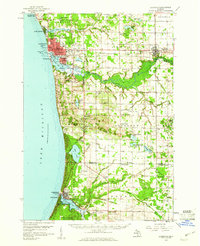 1959 Ludington1960 Print · USGSMason County and the Lake Michigan shore are captured in the late fifties as a thriving maritime and agricultural region. Researchers can trace the waterfront rail operations of the Chesapeake and Ohio or locate family sites like Smith Corners, Zion Ch, and Lakeview Cem.3 unique versions available
 - 1983 Map of Ludington
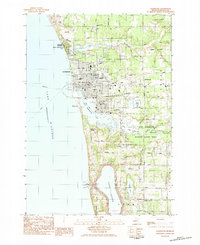 1983 Ludington1983 Print · USGSLudington and the Mason County coast are captured here in the early eighties as a hub of Lake Michigan shipping and hydroelectric power. Trace the rail lines of the Chesapeake and Ohio, find local landmarks like White Pine Village, or locate family sites at Lakeview Cemetery.
 - 1983 Map of Ludington, 1984 Print
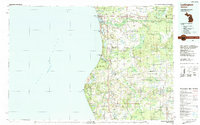 1983 Ludington1984 Print · USGSThe Michigan shoreline during the early eighties comes alive in this survey of the dunes and woodlands. Trace the Chesapeake and Ohio rail route through Ludington and Hart, or find family landmarks like Meisenheimer Corners and Wiley.
End of results
Showing maps 1-6 of 6
Top cities near Ludington
- Amber historical maps
- Weare historical maps
- Scottville historical maps
- Pentwater historical maps
- Custer historical maps
- Free Soil historical maps
Top neighborhoods of Ludington
Frequently asked questions
- What are the different types of historical maps available for Ludington?
- What is the oldest map of Ludington?
- Where can I purchase historical maps of Ludington for my home or office?
- Where can I download high-res historical maps of Ludington?
- Are there historical topographic maps available for Ludington?
- Is there historical aerial imagery available for Ludington?
- Where are historical maps of Ludington sourced from?