Old Maps of Mecosta County, Michigan
Explore 143 old maps of Mecosta County, spanning from 1954 to today. These high-resolution historic maps reveal how streets, neighborhoods, landmarks, and natural features evolved over time — perfect for genealogy, metal detecting, research, and local history exploration.
What you can do with these maps:
- See how Mecosta County changed over time: Compare historical maps to modern-day views to trace roads, homesites, rail lines & more.
- View detailed metadata: Each map includes creators, publishers, year, scale, and archive source.
- Overlay maps with satellite & LiDAR: Visualize the past alongside modern tools to explore terrain & human change.
- Trusted historical sources: Maps sourced from the USGS, Library of Congress, and other archives.
- Access maps your way: View online, download high-res files, or order prints for personal or research use.
Start exploring old maps of Mecosta County to uncover forgotten places, hidden landmarks, and the deep history beneath your feet.
Mecosta County, MI maps
(143)- 1954 Map of Midland, 1967 Print
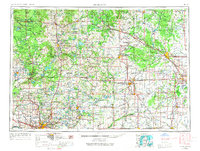 1954 Midland1967 Print · USGSMid-Michigan at the peak of the post-war era shows a landscape balancing industrial growth in Midland with the deep timberlands of the Manistee National Forest. Researchers can trace the legacy of the timber and rail era along the Pennsylvania RR or find family roots in river towns like Chesaning and Big Rapids.4 unique versions available
 - 1958 Map of Midland
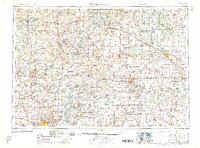 1958 Midland1958 Print · USGSCentral Michigan in the late fifties is captured here during a period of transition for its university towns and industrial hubs. Genealogists and researchers can trace family lines through old rail-stop towns like Breckenridge and Chesaning or locate property near the Muskegon River and Prairie Farm.
 - 1958 Map of Sand Lake, 1960 Print
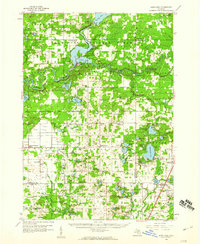 1958 Sand Lake1960 Print · USGSWest-central Michigan at the close of the fifties reveals a landscape shaped by the meeting of the Muskegon rivers and the expansive Manistee National Forest. Genealogists can locate family names and sites at Ensley Center, the Lady of Guadalupe Mission, and the Sand Lake Cem.2 unique versions available
 - 1958 Map of Woodville, 1960 Print
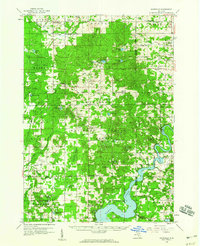 1958 Woodville1960 Print · USGSNewaygo County and the Manistee National Forest are shown in the late fifties as a landscape of timber-town history and modern energy production. Researchers can locate family landmarks like the Old Prairie Everett Cemetery, Big Jackson School, and the remote Trumbull Corners settlement.3 unique versions available
 - 1958 Map of Big Rapids, 1960 Print
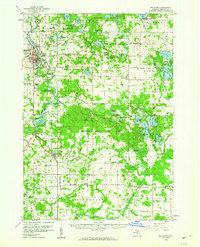 1958 Big Rapids1960 Print · USGSBig Rapids and the Muskegon River valley are captured here in the late fifties, showing a landscape of dense forests and glacial lakes. Genealogists and local historians can locate early landmarks like Ferris Institute, Austin Ch, and family plots such as Holt Cem.3 unique versions available
 - 1959 Map of Midland
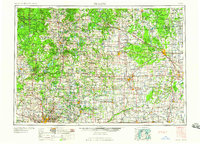 1959 Midland1959 Print · USGSMid-century Michigan comes alive in this survey of the central Lower Peninsula, from the streets of Grand Rapids to the Houghton Lake timberlands. Genealogists and rail fans can trace the Ann Arbor RR and Chesapeake and Ohio RR through towns like Big Rapids and Mount Pleasant.
 - 1959 Map of Howard City, 1960 Print
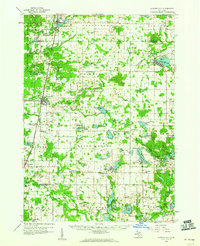 1959 Howard City1960 Print · USGSMontcalm and Mecosta Counties thrived as a patchwork of farming and rail-side villages in the late fifties. You can trace early family sites at Little Denmark, the James Ch Settlement, and numerous rural schools like Huggard Sch or Gaffield Sch.2 unique versions available
 - 1959 Map of Lake, 1960 Print
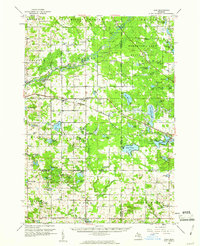 1959 Lake1960 Print · USGSOsceola and Mecosta Counties were a mix of timber-state forests and oil exploration during the late fifties. Researchers can trace rural landmarks from Sears to Brinton, including the County Home, local sites like Martin Sch, and the Chesapeake and Ohio rail line.2 unique versions available
 - 1959 Map of Evart, 1960 Print
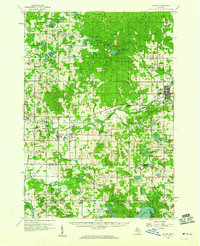 1959 Evart1960 Print · USGSOsceola and Mecosta counties are shown here in the late fifties, featuring the rail hubs and river valleys that shaped the region's growth. Genealogists and historians can locate rural schools like Watson Sch, the Osceola Oil Field, and family landmarks such as Crapo Cem.3 unique versions available
 - 1959 Map of Reed City, 1960 Print
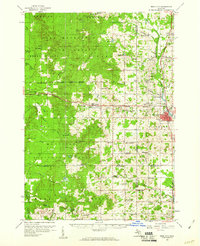 1959 Reed City1960 Print · USGSOsceola and Lake Counties are captured here in the late fifties, defined by the meeting of major rail lines and dense public forests. Researchers can locate dozens of rural landmarks, from the Fish Hatchery near Paris to schools like Rehkoff Sch and Zion Ch.2 unique versions available
 - 1964 Map of Edmore, 1965 Print
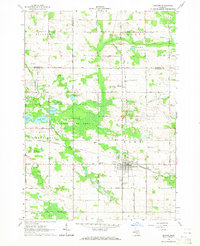 1964 Edmore1965 Print · USGSThe village of Edmore is documented here in the mid-1960s at its junction with the Chesapeake and Ohio railroad. Genealogists and local historians can locate early landmarks such as Vinewood Cem, St Mary Ch, and the Cutler Savage Ch.
 - 1964 Map of Six Lakes, 1965 Print
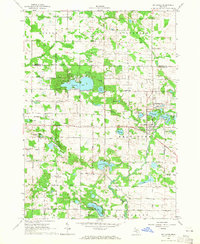 1964 Six Lakes1965 Print · USGSThe mid-Michigan village of Six Lakes flourished as a lakeside rail hub in the mid-1960s. Genealogists and local historians can trace the foundations of Belvidere Ch, locate family plots at Evergreen Cem, and follow the Chesapeake and Ohio railroad corridor.2 unique versions available
 - 1964 Map of Mecosta NW, 1965 Print
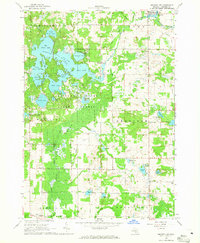 1964 Mecosta NW1965 Print · USGSMecosta County in the mid-sixties reveals a landscape defined by the expansive Martiny Lake wetlands and the village of Barryton. Researchers can trace old family sites and rural landmarks like the Johnson Landing Field, Winchester Dam, and Sheridan Ch.
 - 1964 Map of Blanchard, 1965 Print
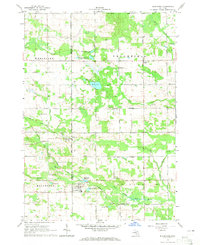 1964 Blanchard1965 Print · USGSIsabella and Mecosta counties in the mid-1960s reveal a landscape of rural townships and rail-side villages. Researchers can trace family roots at Pine River Ch or Decker Cem and locate historic water features like the Blanchard Millpond.2 unique versions available
 - 1964 Map of Mecosta, 1965 Print
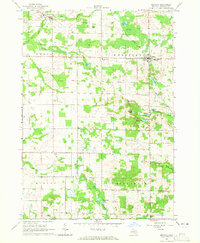 1964 Mecosta1965 Print · USGSMecosta County in the mid-1960s shows a transition between the old rail era and modern agricultural life. Genealogists can trace family names and local landmarks at Halls Corner, Wamboldt Cem, and the Remus Landing Field.2 unique versions available
 - 1964 Map of Sherman City, 1965 Print
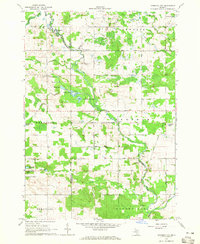 1964 Sherman City1965 Print · USGSMid-century Isabella and Mecosta Counties are captured here as the rural landscape transitioned through an era of local resource extraction and agriculture. Researchers can locate the Sherman City Cemetery, the Forest Hill Church, and the winding course of the Chippewa River.3 unique versions available
 - 1966 Map of Midland
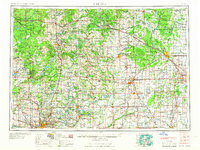 1966 Midland1966 Print · USGSCentral Michigan in the mid-1960s shows a landscape of growing manufacturing hubs and active resource extraction. Genealogists and historians can trace the rail corridors of the Grand Trunk Western or locate family-named landmarks near Oil wells and the Muskegon River.
 - 1976 Map of Big Rapids SE, 1979 Print
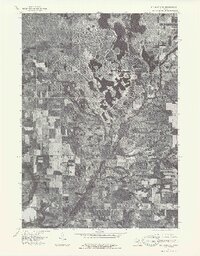 1976 Big Rapids SE1979 Print · USGSThe rural landscapes of Mecosta County are shown in fine detail in the mid-1970s through this aerial-imagery survey. Genealogists and historians can trace the early residential layouts around Lake Mecosta and the historic settlement patterns of Altona and Sylvester.
 - 1976 Map of Evart SW, 1979 Print
 1976 Evart SW1979 Print · USGSIn the mid-1970s, the rural landscapes of central Michigan remained dominated by the winding Muskegon River and timbered tracts. Researchers can trace the layout of small communities like Hersey and Grant Center or examine the 1976 field patterns near Reed City.
 - 1976 Map of Big Rapids SW, 1979 Print
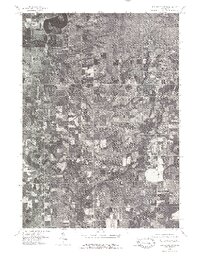 1976 Big Rapids SW1979 Print · USGSMecosta County at the height of the 1970s shows a landscape of river-fed farm country and small village hubs. Trace rural roads to find the village of Stanwood or the riverbanks near Rogers Dam Pond and Higbee Corner.
 - 1976 Map of Howard City NW, 1979 Print
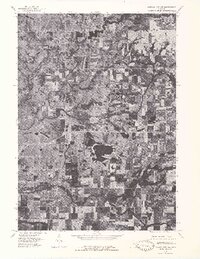 1976 Howard City NW1979 Print · USGSMontcalm County farmland and river valleys are captured in detail in the mid-seventies, showing the region's rural character. Trace the meandering Little Muskegon River and explore the historic footprints of Morley and Howard City.
 - 1976 Map of Big Rapids NW, 1979 Print
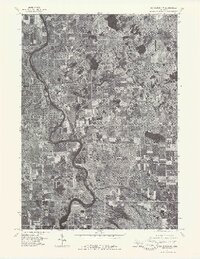 1976 Big Rapids NW1979 Print · USGSBig Rapids and the surrounding Mecosta County countryside are captured in this mid-1970s aerial survey during a period of steady growth. Researchers can trace the exact 1976 shoreline of the Muskegon River and see the early residential footprints near Clear Lake.
 - 1976 Map of Big Rapids NE, 1979 Print
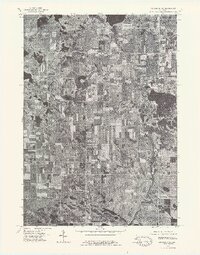 1976 Big Rapids NE1979 Print · USGSMecosta County farmland and glacial lakes are captured in high detail during the mid-seventies. This orthophoto allows researchers to trace the exact boundaries of rural farmsteads near Rodney and the shorelines of Chippewa Lake and Horsehead Lake.
 - 1976 Map of Howard City NE, 1979 Print
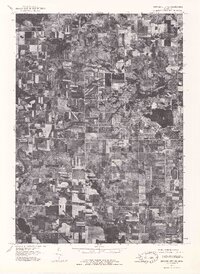 1976 Howard City NE1979 Print · USGSMontcalm County farmland and the village of Lakeview are captured during the mid-seventies in this detailed aerial orthophoto. Researchers can trace the development of the lakeshore around Tamarack Lake and follow the path of Tamarack Creek.
 - 1979 Map of Mecosta, 1982 Print
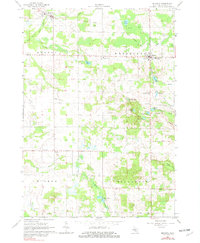 1979 Mecosta1982 Print · USGSMecosta and Remus appear at a crossroads of rail and agriculture in the late seventies. Researchers can locate family landmarks like Morgan Cem, trace the Old Railroad Grade, or find the St Michael Sch in Wheatland.
Showing maps 1-25 of 143
Top cities of Mecosta County
Frequently asked questions
- What are the different types of historical maps available for Mecosta County?
- What is the oldest map of Mecosta County?
- Where can I purchase historical maps of Mecosta County for my home or office?
- Where can I download high-res historical maps of Mecosta County?
- Are there historical topographic maps available for Mecosta County?
- Is there historical aerial imagery available for Mecosta County?
- Where are historical maps of Mecosta County sourced from?