Old Maps of Warrendale, Detroit for Metal Detecting
Plan your next treasure hunt with 18 historic maps of Warrendale. Find old homesites, ghost towns, trails, and gathering spots that may be lost to time — perfect for identifying promising metal detecting locations.
- Locate forgotten sites: Uncover places like long-lost settlements, abandoned rail lines, or gathering spots.
- Plan better hunts: Use map overlays combined with LiDAR or satellite views to narrow in on historically rich areas.
- Made for detectorists: Thousands of hobbyists use these maps to discover relics, coins, and hidden history.
Use these historic maps to boost your research and find new opportunities beneath the surface of Warrendale.
Warrendale, Detroit maps
(18)- 1905 Map of Detroit
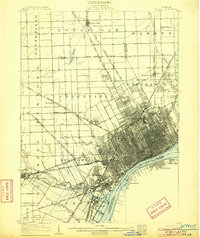 1905 Detroit1905 Print · USGSDetroit and its surrounding townships are shown at a pivotal moment of expansion during the early 1900s. Genealogists and historians can trace the development of early suburbs like Highland Park and Royal Oak along major transit arteries like Grand River Ave. and the numerous electric railways.2 unique versions available
 - 1918 Map of Detroit
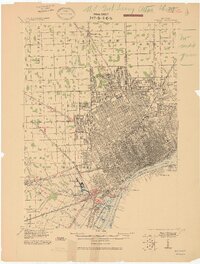 1918 Detroit1918 Print · USGSDetroit and its surrounding townships appear at the height of the early industrial era, captured just after the close of the Great War. Local researchers can trace the growth of the Ford Motor Co. empire near Navarre P.O. and explore the historic rail corridors of Hamtramck and Royal Oak.
 - 1924 Map of Detroit
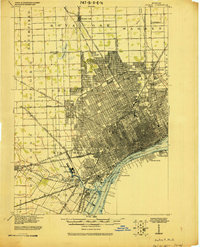 1924 Detroit1924 Print · USGSDetroit and its industrial satellites thrive during the peak of the automotive era. Genealogists and historians can trace the early factory footprints of Dodge Bros. or locate old neighborhood landmarks like Navarre P. O. and Mt. Olivet Cemetery.
 - 1934 Map of Detroit
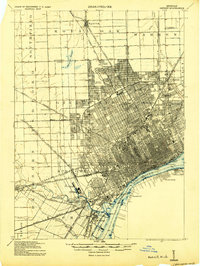 1934 Detroit1934 Print · USGSThe Detroit riverfront and its rising industrial suburbs are captured here during the peak of the automotive boom. Genealogists and historians can trace the early footprints of the Ford Motor Co and local landmarks like Olivet Cemetery or the State Fair Grounds.
 - 1936 Map of Dearborn
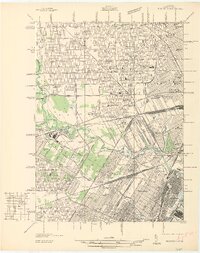 1936 Dearborn1936 Print · USGSMid-century Dearborn and West Detroit are captured in 1936, showing a landscape defined by the rise of the automotive industry. Genealogists and historians can locate early neighborhood schools like Mackenzie HS and landmark sites like Ford Airport and Greenfield Village.
 - 1942 Map of Dearborn
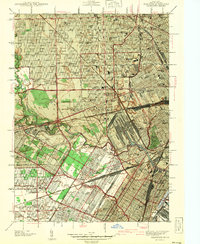 1942 Dearborn1942 Print · USGSDearborn and the industrial Detroit fringe are captured here at the height of the early war years. Genealogists and historians can trace dozens of neighborhoods and schools, from Fordson High Sch to the grounds of Greenfield Village and Camp Legion.2 unique versions available
 - 1952 Map of Dearborn, 1954 Print
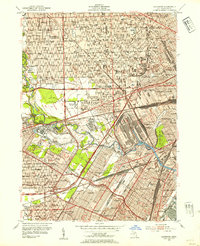 1952 Dearborn1954 Print · USGSMid-century Dearborn and western Detroit show a landscape defined by the automotive industry and rapid postwar expansion. Researchers can trace the massive rail yards, the Ford Rotunda, and neighborhood landmarks like Greenfield Village and Woodmere Cemetery.2 unique versions available
 - 1954 Map of Detroit
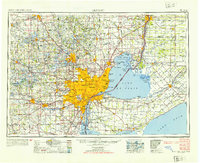 1954 Detroit1954 Print · USGSThe Detroit metro and its Ontario neighbors are shown at the height of the mid-century industrial era, just as the suburbs were rapidly expanding. Researchers can trace the massive rail networks of the Wabash Railroad or locate landmarks like Grosse Ile and Selfridge Air Force Base.
 - 1961 Map of Detroit, 1973 Print
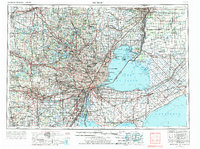 1961 Detroit1973 Print · USGSThe international border between Michigan and Ontario was a bustling industrial corridor in the early sixties. Researchers can trace the transit networks and riverfront infrastructure connecting Detroit to Windsor via the Detroit-Windsor Tunnel and major air hubs like Willow Run Airport.2 unique versions available
 - 1965 Map of Detroit
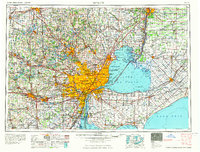 1965 Detroit1965 Print · USGSThe industrial corridor between Michigan and Ontario is captured here at mid-century, showing the dense rail and river networks of the Great Lakes. Local historians can trace the paths of the Grand Trunk Western RR and locate key landmarks like Selfridge Air Force Base and Grosse Ile.
 - 1968 Map of Dearborn, 1970 Print
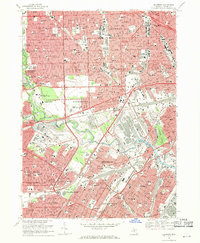 1968 Dearborn1970 Print · USGSMid-century Dearborn and West Detroit are captured here at a peak of industrial and suburban development. Genealogists and local historians can locate dozens of neighborhood parish schools, the Evergreen Cem, and the iconic Greenfield Village grounds.4 unique versions available
 - 1985 Map of Detroit
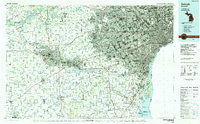 1985 Detroit1985 Print · USGSSoutheast Michigan in the mid-eighties shows a landscape defined by industrial power and suburban reach from the Detroit River to the Huron Valley. Researchers can trace the rail lines of the Conrail, explore the grounds of the University of Michigan, and locate numerous sites like Mt Olivet Cem.
 - 1989 Map of Detroit, 1991 Print
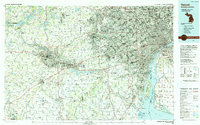 1989 Detroit1991 Print · USGSSoutheast Michigan and across the river into Ontario reached a point of peak metropolitan density at the end of the 1980s. Local researchers can trace the footprint of the University of Michigan campus, the industrial waterfronts of Wyandotte, and the extensive grounds of Glen Eden Cem.
 - 2011 Map of Dearborn, 2011 Print
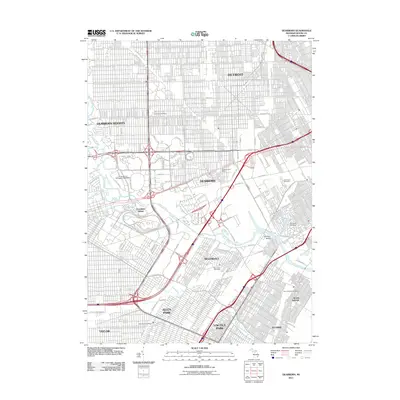 2011 Dearborn2011 Print · USGSWayne County’s industrial and educational landscapes are captured here at the start of the 2010s. Genealogists and local historians can trace the borders of Greenfield Village, locate Evergreen Cemetery, or find the secluded Fordson Island along the River Rouge.
 - 2014 Map of Dearborn, 2014 Print
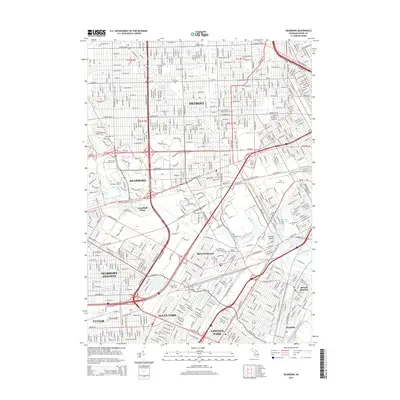 2014 Dearborn2014 Print · USGSThe industrial heart of Wayne County comes into focus in the mid-2010s, showing the dense urban centers of Dearborn and Detroit. Genealogists and historians can locate legacy landmarks like the Ford Cem, Greenfield Village, and the residential blocks of Melvindale.
 - 2017 Map of Dearborn, 2017 Print
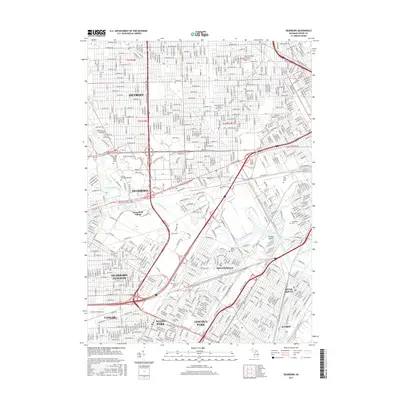 2017 Dearborn2017 Print · USGSGreater Detroit and Dearborn are shown in high detail during the late 2010s, tracing the heavily developed corridors of the Rouge River. Researchers can locate historic burial grounds like Ford Cem, the sprawling Greenfield Village, and the industrial geography surrounding Fordson Island.
 - 2019 Map of Dearborn, 2019 Print
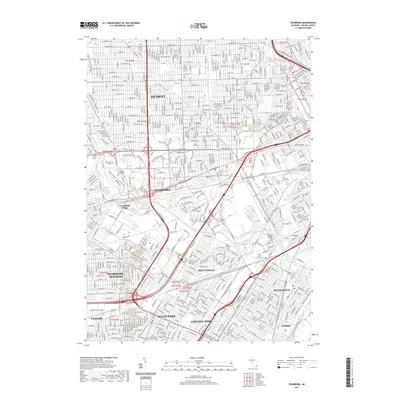 2019 Dearborn2019 Print · USGSThe industrial heart of Wayne County comes alive in this recent survey of the Rouge River corridor. Researchers can trace the layout of Greenfield Village, locate family plots in Woodmere Cem, and explore the rail networks of Dearborn and Detroit.
 - 2023 Map of Dearborn, 2023 Print
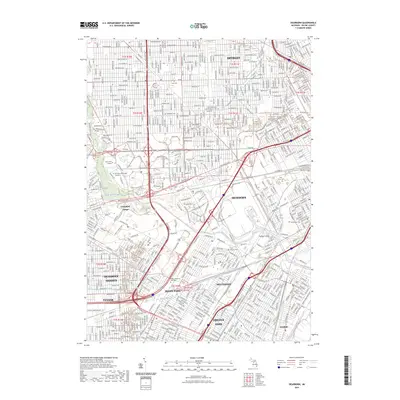 2023 Dearborn2023 Print · USGSMetro Detroit's industrial and cultural hub is shown in thorough detail during its modern era of growth. Researchers can locate established neighborhoods and institutions like Greenfield Village, Henry Ford College, and the Holy Cross Cemetery.
End of results
Showing maps 1-18 of 18
Frequently asked questions
- What are the different types of historical maps available for Warrendale?
- What is the oldest map of Warrendale?
- Where can I purchase historical maps of Warrendale for my home or office?
- Where can I download high-res historical maps of Warrendale?
- Are there historical topographic maps available for Warrendale?
- Is there historical aerial imagery available for Warrendale?
- Where are historical maps of Warrendale sourced from?