Old Maps of North St. Paul, Minnesota for Academic Research
Study the evolution of North St. Paul with 50 high-resolution historic maps. Whether you're teaching, researching, or modeling changes in land use, these maps provide essential visual documentation of urban, environmental, and geographic change.
- Analyze long-term change: Track patterns in development, transportation, and natural features.
- Ideal for environmental or urban studies: Support academic projects with primary historical map data.
- Use in the classroom or lab: Educators and researchers rely on these maps to bring historical context to life.
These maps are a powerful tool for teaching, research, and visualizing how North St. Paul has changed over the decades.
North St. Paul, MN maps
(50)- 1896 Map of St. Paul
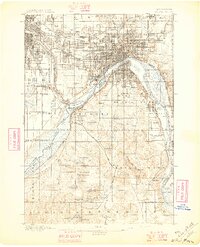 1896 St. Paul1896 Print · USGSSt. Paul and the surrounding river townships are captured in the mid-1890s during a period of massive railroad and urban expansion. Genealogists and historians can trace the early footprints of Mendota, South St. Paul, and St. Anthony Park along with the grounds of Fort Snelling.11 unique versions available
 - 1902 Map of White Bear
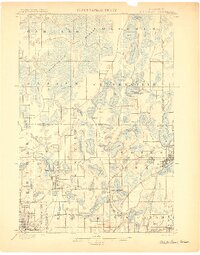 1902 White Bear1902 Print · USGSThe lake-dotted landscape northeast of the Twin Cities is captured here at the start of the twentieth century. Researchers can trace early railroad junctions and industry at the Minneapolis Stock Yards, or locate old settlements like Lino, Cardigan, and New Brighton.4 unique versions available
 - 1946 Map of Hudson, 1954 Print
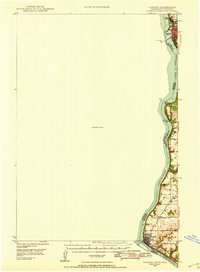 1946 Hudson1954 Print · USGSThe riverfront communities of the St. Croix Valley are captured here just after the war, showing the distinct border towns of Wisconsin. Genealogists and local historians can trace the streets and benchmarks of Hudson, North Hudson, and Prescott.
 - 1948 Map of Stillwater, 1962 Print
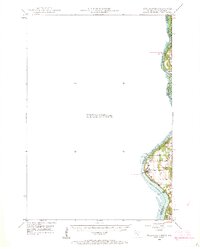 1948 Stillwater1962 Print · USGSThe St. Croix River valley comes to life in the late 1940s, capturing the river border between Minnesota and Wisconsin. Trace local genealogy and geography through the streets of Houlton, the Houlton Cem, and the historic Marine Ferry crossing.2 unique versions available
 - 1949 Map of Hudson
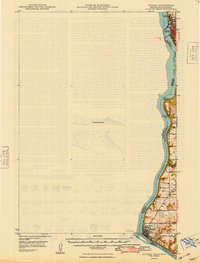 1949 Hudson1949 Print · USGSThe riverfront communities of St. Croix and Pierce counties are captured here in the late 1940s as the rail-and-river economy flourished. Genealogists and historians can trace the paths of the Chicago St Paul Minneapolis and Omaha line through Hudson and down to the river junction at Prescott.
 - 1949 Map of Stillwater
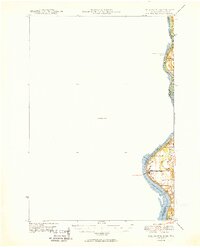 1949 Stillwater1949 Print · USGSThe St Croix River valley in the late 1940s shows the border settlements of Minnesota and Wisconsin before modern sprawl. Researchers can trace the layout of Houlton, find the Houlton Cem, and locate the Boy Scout Camp along the wooded river bluffs.2 unique versions available
 - 1949 Map of Lake Elmo, 1958 Print
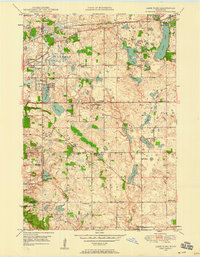 1949 Lake Elmo1958 Print · USGSWashington County at the end of the 1940s is a landscape of rural schoolhouses and pristine glacial lakes. Researchers can locate numerous local landmarks like Union Cem, St John Sch, and the Chicago and North Western rail line.
 - 1950 Map of Lake Elmo
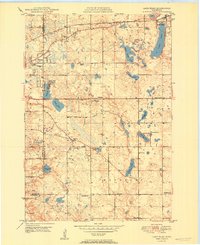 1950 Lake Elmo1950 Print · USGSThe townships of Oakdale and Woodbury are captured in the mid-fifties, showing a landscape of small lakes and rural schoolhouses. Genealogists can trace family roots at Union Cem or locate historic school sites like Gillie Sch and Salem Sch.2 unique versions available
 - 1951 Map of White Bear Lake East, 1952 Print
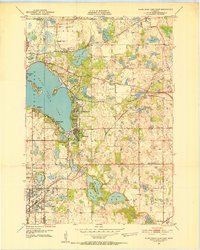 1951 White Bear Lake East1952 Print · USGSThe lakeside communities of Washington County are shown at a point of significant growth in the early fifties. Genealogists and local historians can trace the early footprints of Mahtomedi, locate rural landmarks like Castle Sch, or identify the original site of the White Bear Airport.3 unique versions available
 - 1951 Map of St. Paul East, 1953 Print
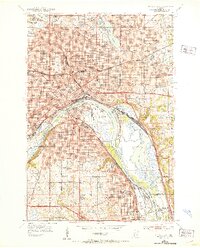 1951 St. Paul East1953 Print · USGSSaint Paul during the early fifties reveals a thriving river-and-rail hub anchored by the State Capitol and a dense network of neighborhoods. Researchers can trace the mid-century city layout, from institutional landmarks like Gillette State Hospital to the industrial Stock Yards and Holman Airport.2 unique versions available
 - 1951 Map of St. Paul, 1959 Print
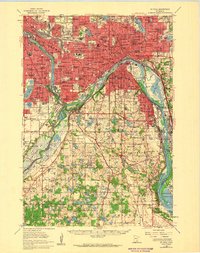 1951 St. Paul1959 Print · USGSThe Twin Cities region during the post-war boom shows the rapid growth of St Paul and Minneapolis toward their southern suburbs. Genealogists and historians can trace numerous rural landmarks like School No 73, Roselawn Cemetery, and the St Johns Cem before suburban sprawl fully arrived.2 unique versions available
 - 1952 Map of White Bear Lake West, 1954 Print
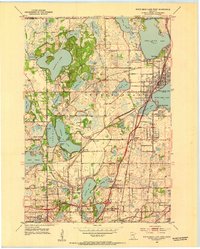 1952 White Bear Lake West1954 Print · USGSRamsey County in the early fifties shows a landscape of expansive lakefronts and emerging suburbs before the peak of mid-century sprawl. Genealogists can trace early landmarks like Little Canada and Bethany Cem, or follow old rail lines through Cardigan Junction.3 unique versions available
 - 1953 Map of Saint Paul, 1964 Print
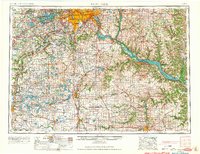 1953 Saint Paul1964 Print · USGSThe Twin Cities and the Mississippi River valley are captured here at a mid-century turning point. Trace the early growth of Minneapolis and Saint Paul alongside landmarks like Lake Minnetonka and the St Croix River.4 unique versions available
 - 1953 Map of Stillwater, 1980 Print
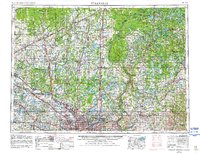 1953 Stillwater1980 Print · USGSThe Twin Cities and the St. Croix Valley are captured in this mid-century survey as the interstate era began to transform the Upper Midwest. Genealogists and historians can trace the rail-and-river geography of Stillwater, locate landmarks in Anoka, or explore the sprawling St Croix State Park.
 - 1955 Map of New Brighton, 1959 Print
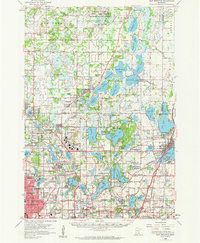 1955 New Brighton1959 Print · USGSThe northern reaches of the Twin Cities were undergoing a post-war transformation in the mid-fifties as suburbs pushed into the lake country. Researchers can trace the massive Twin Cities Arsenal, find the old Red Brick Sch, and locate the Abandoned Aqueduct winding toward the city.
 - 1955 Map of Stillwater, 1965 Print
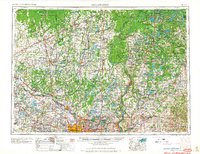 1955 Stillwater1965 Print · USGSThe Upper St. Croix Valley and the growing Twin Cities area are shown here during the mid-fifties, before the interstate era transformed the regional commute. You can trace the lines of the Northern Pacific RR through towns like Rush City or locate the Saint Croix Indian Reservation.
 - 1958 Map of Stillwater
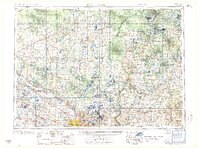 1958 Stillwater1958 Print · USGSThe Upper Mississippi and St. Croix River valleys appear in the mid-fifties as the Twin Cities expanded north. Genealogists can locate family landmarks like Oak Park Cem, Saint Michael Church, and the Soo Line RR rail corridors.2 unique versions available
 - 1959 Map of Saint Paul
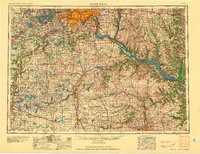 1959 Saint Paul1959 Print · USGSThe Twin Cities and southeastern Minnesota appear here in the late fifties, showing the peak of the rail era and post-war suburban growth. Genealogists can trace family footprints near Lake Minnetonka, the Univ Of Minn Rosemount Research Center, or the growing neighborhoods of Richfield.2 unique versions available
 - 1965 Map of Stillwater
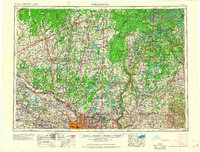 1965 Stillwater1965 Print · USGSThe Twin Cities and the St. Croix Valley are mapped here during a period of significant post-war growth and industrial transit. Genealogists and historians can trace rail lines like the Northern Pacific RR through towns such as Rush City, Amery, and Balsam Lake.
 - 1967 Map of White Bear Lake East, 1969 Print
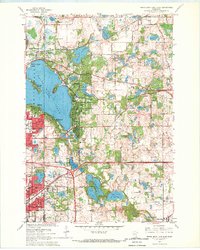 1967 White Bear Lake East1969 Print · USGSThe eastern shores of White Bear Lake and the surrounding Washington County suburbs are captured here in the late sixties as residential growth accelerated. Researchers can trace local history through the Northern Pacific rail line and sites like St Marys Cem, Manitou Island, and Northport Airport.5 unique versions available
 - 1967 Map of St. Paul East, 1969 Print
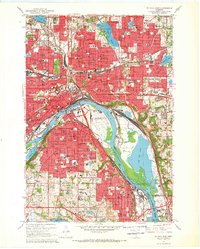 1967 St. Paul East1969 Print · USGSThe Twin Cities region shows its mid-century industrial and civic expansion in this survey of the riverfront and downtown core. Researchers can trace the development of neighborhood institutions like Oakland Cemetery, the Stockyards in South St. Paul, and the St Paul Cathedral.5 unique versions available
 - 1967 Map of Lake Elmo, 1969 Print
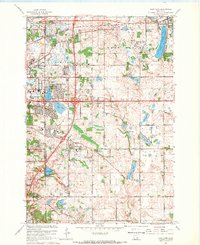 1967 Lake Elmo1969 Print · USGSWashington County undergoes a post-war suburban transformation in the late sixties as new developments rise near the Twin Cities. Researchers can trace local genealogy and land use through Union Cem, St John Ch, and the many schools like Royal Oak Sch.4 unique versions available
 - 1967 Map of White Bear Lake West, 1969 Print
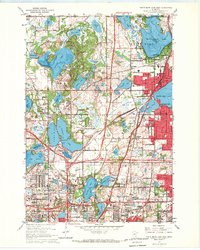 1967 White Bear Lake West1969 Print · USGSSuburban Ramsey County comes into focus in the late sixties as residential growth surrounds its many glacial lakes. Researchers can trace the development of Vadnais Heights and Little Canada, or locate local landmarks like Benson Airport and the Soo Line railroad.5 unique versions available
 - 1975 Map of Stillwater
 1975 Stillwater1975 Print · USGSThe Twin Cities and the St. Croix Valley are captured in the mid-seventies, showing the urban growth of Minneapolis and St Paul. Researchers can trace old rail corridors of the Northern Pacific RR and locate tribal lands at the Mille Lacs Indian Reservation.2 unique versions available
 - 1985 Map of Saint Paul
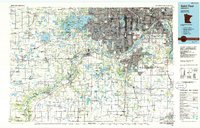 1985 Saint Paul1985 Print · USGSThe Twin Cities metropolitan area and its southern suburbs are captured here in the mid-eighties as the urban landscape expanded toward the Minnesota River. Researchers can trace the layout of the Fort Snelling Military Reservation, find local landmarks like St Benedict Church, and study the rail routes of the Soo Line.2 unique versions available
Showing maps 1-25 of 50
Top cities near North St. Paul
- Minneapolis historical maps
- Saint Paul historical maps
- Bloomington historical maps
- Woodbury historical maps
- Eagan historical maps
- Burnsville historical maps
See more
Top neighborhoods of North St. Paul
Frequently asked questions
- What are the different types of historical maps available for North St. Paul?
- What is the oldest map of North St. Paul?
- Where can I purchase historical maps of North St. Paul for my home or office?
- Where can I download high-res historical maps of North St. Paul?
- Are there historical topographic maps available for North St. Paul?
- Is there historical aerial imagery available for North St. Paul?
- Where are historical maps of North St. Paul sourced from?